Interview with Shoichiro Toyoda (Second-generation leader and Honorary Chairman of Toyota Motor Corporation)
Interview with Ye Jiaying (A Master of Classical Chinese Literature)
Interview with Rutherford Chang (American conceptual artist, Director of ASE Group)
Interview with Toshinori Yamamoto (Former Chairman of the Japanese Chemical Giant, TOSOH)
北島義俊きたじま よしとし (大日本印刷(DNP)元代表取締役社長兼会長)
Unlocking the Mysteries of the Human Body
Daily Discourse: Each Originally Like an Eminent Monk, Wandering Through Many Lives Stained by Emotion
Daily Discourse: Diligent practice reveals the innate selflessness; through no-self, the Buddha's path is attained
A Century of Wandering: The Spirit of Toowoomba
Making Good Use of Buddha's Power
Recorded by 釋法儒法師
Date recorded 13 June 2026
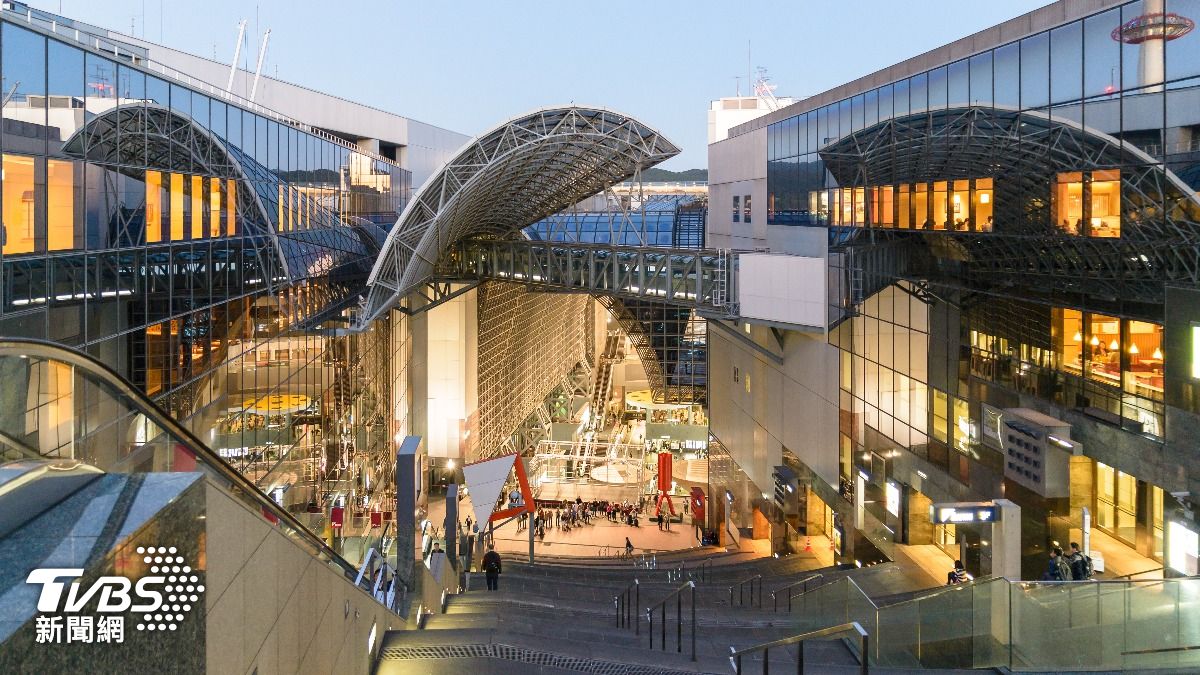
Hiroshi Hara is a master Japanese architect and Professor Emeritus at the University of Tokyo. He criticised modernism through spatial theories such as the 'Aperture Structure', integrated global settlement research, designed magical realist landmarks like Kyoto Station and the Umeda Sky Building, and mentored Pritzker Prize winners such as Kengo Kuma and Riken Yamamoto.
Interviewer: Venerable Shi Fa Ru
Date: 13th Day, 13th Month, 2026
Hiroshi Hara:
I am very grateful to and Practitioner Su for giving me this opportunity to participate in the design project for the 'New Namo Amitabha Buddhist Hall' at the Hsiang Kuang Buddhist Centre in Australia. This is a very special and meaningful design project for me, and it can be said that it is an important milestone in my design career.
Before this, I had never participated in a design with such full religious faith. In this design, I have learned a lot, especially in observing and learning new insights about the spiritual world from a spiritual perspective and vision, and applying these insights to architectural design. For me, this was an unprecedented experience, and it has been a major breakthrough in my overall design concept, truly allowing me to break free from my original spatial concepts.
Most of my previous designs focused on the application of vertical structures and vertical spatial distribution. However, this design project involves building a magnificent and awe-inspiring structure on a very wide and flat piece of land, to embody the spirit of Buddhism and Namo Amituofo—a spirit of vast mind-capacity that embraces immeasurable and boundless sentient beings. This is indeed a perspective I had never explored before.
All of this must be traced back to when I was saved by Namo Amituofo. In fact, the reason I am able to speak to you all and write these messages now is that I have already passed away. This means my physical body is no longer here; what remains is my spirit alone. My life as a human being has ended, but the death of the physical body does not mean the disappearance of the soul, and at this moment, I am verifying all of this: my spirit still exists in this world after the death of the physical body.
To my shame, my spirit did not go to a very good place after death; instead, I entered the 'Copper Pillar Hell' to undergo punishment. This is a common flaw among artists in their pursuit of beautiful things. In Japan, there are no taboos regarding relationships between men and women, and it is considered a relatively open country, so I was not too surprised by this outcome.
However, what caught me off guard was that I did not expect that everything I had done in the human world would require me to pay a price after becoming a spirit. That is to say, when living in the human world, every word, every action, every little detail—even just a single thought or mental note—will affect the destination of one's spirit after death.
I did indeed enter the Copper Pillar Hell after death, and after suffering for more than a year, I was saved from hell. This does not mean that my time for punishment in hell had expired. I later understood that the reason I was able to leave hell at that time was because I was transferred to the Hsiang Kuang Pure Land Buddhist Centre in Australia. Namo Amituofo and Practitioner Su at this Centre worked together to save me from hell, which allowed me to truly escape the pain of punishment and have the opportunity to come to the temple.
At the temple, there is a spiritual world called the 'Western Land of Nature'. The spirits in this world can sit peacefully and steadily on lotus seats. The light here is immeasurable, making one feel at ease, and the environment is quite beautiful. This is a world similar to heaven, where one can be without any worries, does not need to fear anything, and can gradually heal one's wounded heart and alleviate the fear and pain of having once suffered in hell.
This is the most natural and sincere feeling in the Western Land of Dharma Nature. Since I was saved from hell, I have been staying in the Western Land of Dharma Nature until now. At first, I did not fully understand what kind of place this was; my memory remained in the pain of the extreme punishment of hell, with my whole body festering and trembling uncontrollably. I could never understand why I had entered such a painful world to suffer.
Later, when I arrived at the Land of Dharma Nature, I gradually calmed down, and my heart slowly stabilised. Only then did I understand that all of this was the natural consequence of my own actions while I was alive. This is also something everyone should be vigilant about: no matter how brilliant one's achievements are in life, as long as there is any deviation, it will affect one's destination after death. Therefore, everyone must be cautious.
At first, I did not understand these principles, nor did I even know of the existence of the spiritual world. It was not until I entered the Land of Dharma Nature and listened to the teachings of Namo Amituofo and the daily Dharma talks by Practitioner Su that I gradually understood the difference between the spiritual world and the space where humans live, and realised that the 'spirit' truly does not die; it is neither born nor destroyed. The spirit exists eternally; when the physical body disappears after death, the spirit remains.
And the destination after death is determined by one's hobbies and interests while alive, or by one's final thought before death. While alive, the actions one performs that are beneficial to oneself but not to others, as well as personal desires, will naturally lead one to different places after death according to one's mental state:
This is one of the reasons why I have such great respect for the Hsiang Kuang Pure Land Buddhist Centre in Australia. If it were not for the explanations provided by the Hsiang Kuang Pure Land Buddhist Centre, Namo Amituofo, and Practitioner Su, I would never have had the opportunity to understand such complex principles in this lifetime.
Even though I am very skilled in spatial geometry and architectural creation, I did not understand the price that needed to be paid behind it. Without Buddhist education, there is no way to understand these principles. No matter how rich my architectural knowledge, how abundant my experience, or how advanced my techniques, I had never touched upon this aspect of the spiritual world.
After learning about the spiritual world in the Land of Dharma Nature, the most direct manifestation is that when I create and draw the temple architecture, I can directly present the Buddhist concepts and ideas I have learned in the architectural design. In fact, when I was first named to collaborate with another architect, Hiroyuki Wakabayashi, to design this temple building, I was a bit surprised, as I had never been involved in the formal and large-scale design and planning of Buddhist architecture, and this was an emergency task assigned to me.
According to the normal design process, one must have sufficient research and preparation time to design a work that possesses scale, design sense, innovation, and practicality, and where all elements can be perfectly combined. However, this time, the design and drawing began immediately after receiving the notification, which is completely different from the methods in the human world.
It is truly magical, and I now understand that this must be the blessing of Buddha's power. When I create, I can often see an ideal image, and I can clearly see the future scene: that is the scene of Practitioner Su and the fourfold assembly participating in the Dharma assembly, attending classes, and using this environmental space in the future.
Although the images are fragmented and intermittent, as soon as I see these scenes, I can understand how the architecture, rooms, or floor plans that need to be designed should be planned. Because I have already foreseen the future usage, I can naturally plan accordingly, just as if I were personally in the already-built Namo Amitabha Buddhist Hall, watching everything happen, recording it in my heart, and recalculating and planning the design of this hall.
It is precisely because of this that I was able to simplify the entire design process and effectively finalise the basic structure of the design within two days. This is an experience I never had even when I was alive. In the past, I needed to conduct extensive research and seek inspiration, trying to draw inspiration from nature and the macro-environment to incorporate into my creations.
However, the magical part of creating the architecture for the Namo Amitabha Buddhist Hall this time is that there was almost no need for repeated exploration. This may be due to observation at a spiritual level, so there was no need for overly complex thinking or aesthetic judgment through physical eyes; instead, I could enter into every usage scenario from the most direct spiritual perspective, thus being able to quickly and effectively draw the architecture and structure required by the temple. In addition to the application of my own professional expertise, in the Land of Dharma Nature, I can consult Namo Amituofo, Teacher Practitioner Xia Lianju, and Practitioner Su at any time through spiritual, heart-to-heart communication.
How should this new Namo Amitabha Buddhist Hall be constructed to meet the standards and needs of the temple? Namo Amituofo, Teacher Practitioner Xia Lianju, and Practitioner Su were all able to provide important suggestions and design concepts at any time, allowing me to execute them quickly and find the corresponding results. Therefore, this design process was quite magnificent.
In the process of designing, I also learned many Buddhist concepts and how to embody and implement Buddhist teachings in architecture, allowing the architecture to 'represent the Dharma' and demonstrate the spirit and core philosophy of Buddhism.
The 'Namo Amitabha Buddhist Hall' built this time is a combination of East and West, and a fusion of ancient and modern; it is a very special building. It is not composed of a single culture or element, but rather, by taking the best from each and incorporating them, it has formed a quite remarkable high-end construction project. The reason for gathering various cultures and various designs from ancient and modern times, both domestic and foreign, is also a form of representing the Dharma.
The Dharma represented is like the two hundred and ten billion Buddha lands that the Bhikshu Dharmakara learned about before Lokesvararaja Buddha in the world, and then 'selected what he desired', choosing the content he deemed suitable, effective, and capable of saving immeasurable and boundless sentient beings, thereby forming a Buddha land.
In the Land of Dharma Nature, the design I learned is also like this. I combined the many branches of knowledge I had learned and read, as well as design styles and concepts, with cultural elements from various schools, ultimately forming the current design. This design largely retains an element of Buddhism's broad acceptance of sentient beings. The building is constructed on a wide, flat lawn, located in the centre of this land, expressing the concept of sentient beings from all directions taking refuge in the centre together; everyone moves towards the centre, and the Buddha is in the centre, receiving the sentient beings who are flocking from all directions, which embodies the Buddha's mind-capacity.
The circular building expresses the harmony, softness, and straightforwardness of the Dharma. For the personalities and habits of various sentient beings, it conveys a concept of softness, compatibility, inclusion, and understanding; no matter which direction sentient beings come from, they can be accepted in a positive way. This is the implication of the circle representing a 'positive welcome' from all directions.
In the circular building, the obvious design highlights are as follows:
For the Western Land of Ultimate Bliss, this 'seven' expresses a number of perfection. Just as mentioned in the Infinite Life Sutra, 'seven rows of railings, seven rows of nets', this number represents the perfection of the Pure Land, so this ingenuity was cleverly designed into the number of steps.
In the Namo Amitabha Buddhist Hall, there are mainly ten sky-supporting pillars.
(a) Responsibility and perseverance: These ten pillars express the spirit of Buddhism in suffering on behalf of sentient beings, supporting the Buddha's family business with perseverance, and taking on the responsibility of spreading the Dharma and saving sentient beings in the world.
(b) Meaning of perfection: The number 'ten' also symbolises perfection, expressing the perfect wish to receive sentient beings in the Ten Directions (of the Dharma Realm).
(c) Respect and awe: When the public and believers see these ten magnificent and grand sky-supporting pillars, on one hand, it shows the tall and elegant temperament of the temple, and on the other hand, it also makes sentient beings naturally develop a sense of respect and awe for the Namo Amitabha Buddhist Hall.
Facing these ten pillars that stand between heaven and earth is like remembering Namo Amituofo standing without rest 24/7, continuously and compassionately standing to welcome sentient beings. In the circular building, the first floor is mainly the lecture hall, used for Practitioner Su to give Dharma talks, hold classes, and teach. The central lecture desk is located at the centre of the circular building, signifying the Buddha's one mind. Teaching and calling out to all directions with one mind—that is, the Buddha teaching with one sound—can naturally extend to the Ten Directions (of the Dharma Realm), allowing sentient beings from all directions to clearly hear the Buddha's teachings.
In the lecture hall, the semi-circular, fan-shaped seating distribution allows every practitioner listening to the Dharma in the hall to clearly face the speaker in the centre. At the entrance in front of the lecture hall, there is a foyer for everyone to change into indoor shoes, where a tall and kind Maitreya is enshrined.
This Maitreya Bodhisattva expresses a kind welcome to everyone, which in itself is a 'Dharma', representing that the Buddha's teachings are approachable and one with everyone. The Buddha's teachings are not a high-and-mighty lecture, but a form of Dharma that is integrated with everyone, inclusive, accepting, and actively inviting, allowing the public to learn happily and joyfully.
It is precisely for this reason that Maitreya Bodhisattva is enshrined at the very front, serving to welcome and embrace all those who come to the hall to listen to the teachings and study Buddhist education. Further ahead, outdoors, lies a circular lotus pond. This circular lotus pond symbolises the meaning of perfection. In the Western Land of Ultimate Bliss and the Western Land of Dharma Nature, the lotus represents the Buddha and also signifies a state of purity. The lotus is like a parent to everyone in the Western Land of Ultimate Bliss; it is an indispensable medium that allows everyone to possess a pure body, and it is also a representation of purity and being untainted. Therefore, before entering the hall, walking around the lotus pond allows everyone to naturally wash away the impurities from their bodies and settle their minds. Following this, one respectfully ascends the seven marble steps (which also symbolise perfection). Upon entering the main gate, you will see the smiling Maitreya Bodhisattva. After paying respectful homage, you remove your outdoor shoes and enter the Namo Amitabha Buddhist Hall with a respectful heart to listen to the Buddha’s teachings. This is the fundamental design concept for this part of the Namo Amitabha Buddhist Hall. Behind the Namo Amitabha Buddhist Hall is the Sutra Library, which contains the Messages from Namo Amituofo’s Heart collected by the temple over many years, the Teacher’s teachings, and numerous interview transcripts. These rich and abundant historical materials are stored in the Sutra Library, providing future practitioners with resources to read and study. At the same time, a reading area has been set up near the outer circular edge of the Sutra Library. The edge of the reading area is surrounded by a glass curtain wall, providing excellent natural lighting. Sitting in the reading area, one can both settle the mind and view the outdoor scenery; the environment is very suitable for relaxing and reading. On the other side behind the hall is the area where male lay practitioners and monks reside. It also includes a spacious office for male practitioners, used for receiving guests. If small or medium-sized groups need to meet, or if there is a need to hold simple meetings with vendors or visitors, this is a very suitable venue. It has a large capacity and covers a significant area, with public toilets attached, making it a convenient place for everyone to receive guests. The entire floor area is six hundred ping, which is equivalent to nearly two thousand square metres. In addition to the first floor, the entire building has three levels. The second floor is primarily a Buddha hall used for holding , with the following features: 1. Buddha Hall Space and Design: (a) The Buddha hall occupies half the area of the second floor and is designed with a two-storey high ceiling, appearing quite grand and dignified. (b) The Buddha statues can be made taller accordingly, reflecting the vast and magnificent aura of the Buddha hall. (c) The Buddha hall on the second floor has three doors, designed in imitation of traditional Chinese temple architecture. (d) A public space is provided outside the Buddha hall, which can serve as a preparation area before entering. 2. Corridors and Lighting: (a) The Buddha hall is surrounded by curved, circular corridors, which can be used by the public during morning services or when chanting Buddha's name while walking. (b) The corridors use glass curtain walls, providing bright lighting and a wide field of view, allowing the public to observe changes in the sky while walking and visualising. 3. Other Functional Areas: (a) Dormitories: Located on the other side, providing accommodation for relevant personnel. (b) Office: Attached office space, which can be used for temporarily receiving guests or holding various meetings. Inside, there are two staircases connecting the second and third floors, leading to the third floor. The third floor is also planned as an accommodation area to meet various lodging needs. Overall, the entire circular building mostly uses glass curtain walls and maintains a good field of view, allowing everyone to observe the entire temple grounds, providing ample aesthetic appeal. In terms of space usage, the entire building covers nearly two thousand square metres, with a magnificent presence; the space used for Dharma assemblies is nearly one thousand square metres, which is very generous. Furthermore, the two-storey high ceiling design provides more flexible space for the design of the Buddha statues. The entrance to the entire Buddha hall adopts a more traditional temple architectural design, embodying the concept of inheriting traditional culture. The main body of the building is primarily in bright, white, and gold colour schemes, giving people an experience of extreme purity and brightness, as if the temple is radiating golden light. This also expresses the concept of the Western Land of Ultimate Bliss, which is filled with light, beauty, purity, and absolute Goodness everywhere. I am truly grateful to have been able to participate in such an architectural design. This is not just because I have learned more design concepts or participated in such an opportunity; more importantly, the magnificent meaning behind designing the Namo Amitabha Buddhist Hall far exceeds any work I have designed before. This is not a matter of the level of design concepts, but rather that in all my past works, most were to demonstrate my level of control over space, geometry, and architectural elements, and to try to expound a concept and a story through architectural structure and design. However, apart from making those who see it for the first time brighten their eyes, the actual benefits of these things are not great. This is not to belittle the utility of these buildings, but to let everyone understand that these buildings are ultimately external—they are external things that cannot be taken away after death. Just like now that I have died and am left with only a spirit, no matter how glorious my past works were, they cannot follow me. Even though I have participated in many design projects and various architectural plans, for me, who has already died, in terms of being a spirit, those things do not help me much. But designing the Namo Amitabha Buddhist Hall is not like that. The core concept of the Namo Amitabha Buddhist Hall’s design is to help everyone understand Buddhist education, allowing everyone to settle their Body-Mind-Spirit together and come to the Namo Amitabha Buddhist Hall to study Buddhist education together. The core of studying Buddhist education lies in letting go of one’s worldly past and letting go of subjectivity and prejudice. When stepping onto the seven steps of the Namo Amitabha Buddhist Hall one by one, one gradually lets go of past arrogance and subjectivity, sincerely learning true Buddhist education from the tall and majestic Buddha before one, and learning to understand the truth of the spiritual world clearly. This is the true meaning of the Namo Amitabha Buddhist Hall. Being able to participate in such a design and helping immeasurable and boundless sentient beings in the future to learn Buddhist education has incomparable meaning to me, far exceeding any work I have created before. The most magnificent part of this time is that I did not design the building solely according to my personal preferences or artistic concepts, but constantly sought guidance from Namo Amituofo, Teacher Practitioner Xia Lianju, and Practitioner Su, and discussed and planned together with another designer, Hiroyuki Wakabayashi, and the fourfold assembly. The final result’s magnificence comes from the combination of multiple factors: 1. Combined with the Wisdom of Namo Amituofo and Teacher Practitioner Xia Lianju from the spiritual realms. 2. Combined with the real needs of the human world. 3. Combined with practical considerations in building construction. It was only through the interweaving of these elements that such a great and glorious work was finally completed. Although the Buddha’s teachings advocate not having a mind of gain or loss, the completion of this work is not my personal achievement, but rather I saw the
If you have any other questions, you may also submit an application to the temple to arrange a stay for a period of time, allowing everyone to more clearly understand the purpose and goal of this design. In addition to the website, billboards have also been set up in Japan. Near the expressway at Narita Airport in Chiba, and by the roadside in Katsushika Ward, Tokyo, billboards for Namo Amituofo and the Hsiang Kuang Pure Land Buddhist Centre in Australia have been set up. This is to provide everyone with more opportunities to learn about and connect with the temple, and to study Buddhist education, so that the problems of human ageing, illness, and the uncertainty of where one goes after death can be resolved at the root. It can be seen that the temple has made the greatest effort to help sentient beings in the human world; what remains is to wait for each individual's Causal Conditions to mature, and for them to truly desire to escape this worldly realm and the painful cycle of reincarnation. I hope that by reading this, you can understand that the meaning of life lies in understanding the truth of the spiritual realms and in achieving spiritual elevation. For those who are willing to believe in me, I hope you will take the initiative to contact the temple, or come to the temple to meet me; I can personally answer any questions you may have. If you have seen my latest architectural design, you should be able to understand that this is indeed my latest masterpiece, and there is nothing to doubt. The spiritual realm is truly wondrous; although my physical body has died, my spirit has not. My spirit can continue to utilise its expertise to contribute to the temple, which is also a way to repay the kindness of the temple in saving me from the hells. To those who know me, and to my students who are shining brightly all over the world, you have learned basic techniques from me, but please do not forget to learn the most important spiritual education and about the spiritual realms, so that you will not lose the true direction of your life. I am grateful to Namo Amituofo and Practitioner Su for giving me this opportunity to share my journey from the time I passed away until now. I also hope that those who have karmic affinity with me can use this opportunity to learn about Buddhist education and come to know Namo Amituofo. Namo Amituofo Hiroshi Hara [[BLOCK_0]]
Interviewer: Venerable Shi Fa Ru. Date: 14th day of the 14th month, 2026. Shoichiro Toyoda: Namo Amituofo. I am grateful to Namo Amituofo for this interview. Our family founded Toyota Motor Corporation, and I inherited the responsibility to ensure everyone can drive with peace of mind and safety. Th

Throughout her life, Ye Jiaying endured the pain of displacement and bereavement, yet she countered fate with the resilient "beauty of weak virtue," eventually becoming an internationally renowned master of classical literature. She taught at prestigious institutions in the East and West, including
As the son of one of Taiwan's wealthiest men, Chang Neng-chieh lived a legendary life of stark contrasts before his sudden passing. He shares his journey to the Western Land of Dharma Nature and his deliverance by Namo Amituofo and Practitioner Su.
Interview Chief Writer: Venerable Fa Hui. June 15, 2026. Toshinori Yamamoto: Namo Amituofo. At this moment, I am in the Western Dharma-Nature Land, looking at everything in the human world from a completely different perspective, which is quite different from what I saw when I had a physical body. I