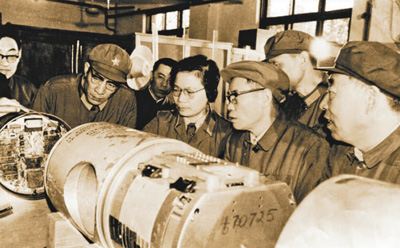
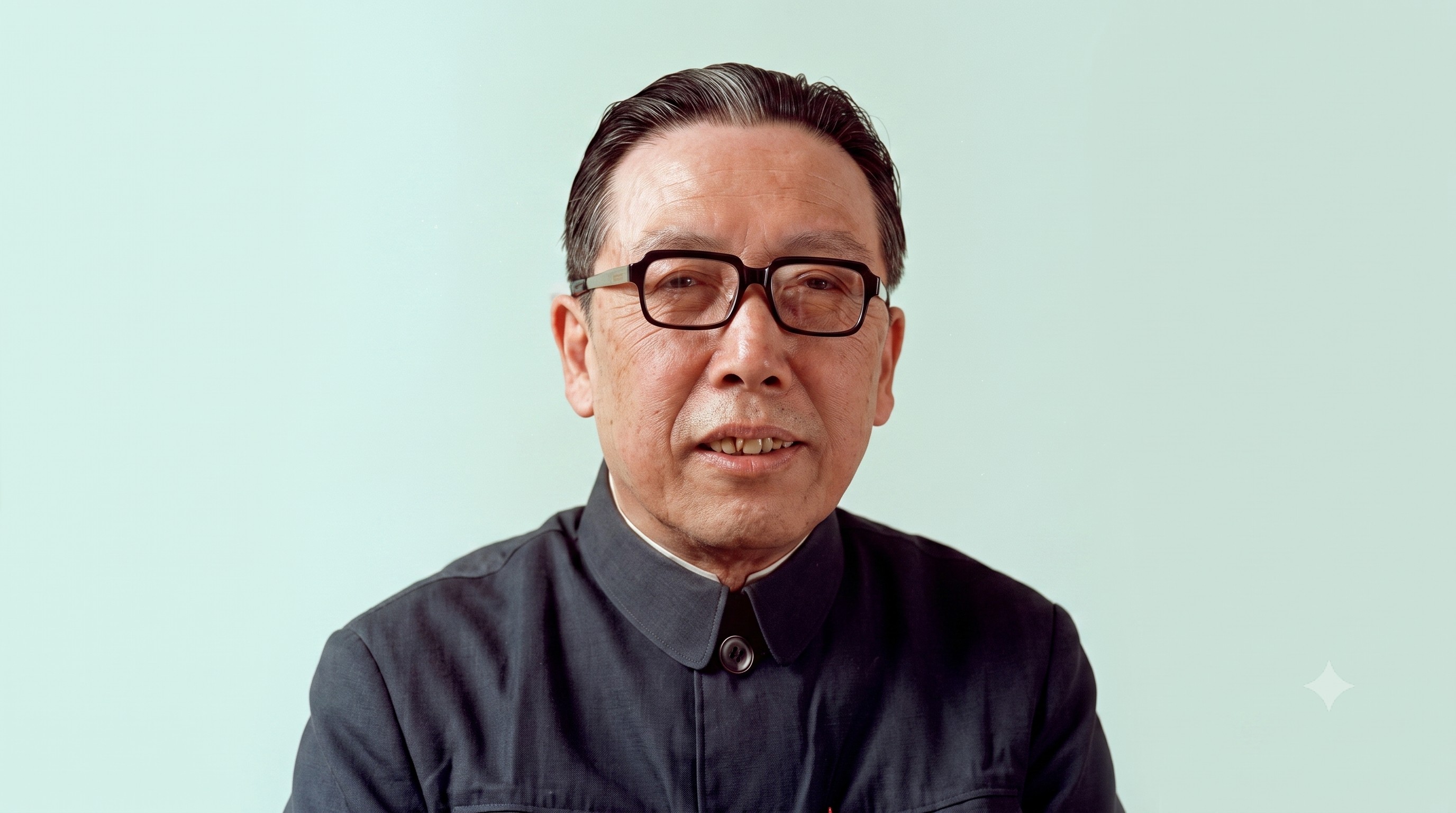
Brief Introduction: Academician of the Chinese Academy of Engineering, expert in field surgery. A core founder of modern trauma ballistics and military medicine in China, with significant contributions to the construction of the national defence medical system.
Interviewer: Venerable Shi Faru
12 July 2026
Wang Zhengguo:
Respected , respected Practitioner Su, fellow Venerables, fellow lay practitioners, and those who know me, greetings to you all. I am Wang Zhengguo.
I am now in the Western Land of Nature. This Dharma-Nature Land is a very wondrous place; it is somewhat different from the space or world in which we humans live. Here, there is absolute peace and harmony.
Do not underestimate the two words "peace and harmony." Whenever I speak of this, I am still filled with deep emotion, because for the person I was in the past, this was a very difficult term to hear. After all, in an era of multi-polar development and the successive rise of emerging powers, peace and harmony are not the primary pursuits of various nations; rather, striving for victory, seeking hegemony, and controlling resources and situations are the goals and governing policies generally promoted by governments and military regimes.
I was within the system, but I deeply felt that such policies had problems.
I was an expert in surgery. Surgery mainly studies various types of trauma, as well as injuries and emergency treatments caused by various accidents. Whether on the front lines of the battlefield, in rear medical positions, or in daily medical facilities, surgical techniques are applied to make precise judgments at critical moments when a life is at stake, rescuing people from the brink of death.
For the person I was in the past, I did not believe in the existence of ghosts or spirits. As a doctor, I viewed life and death with great indifference. After all, I witnessed lives struggling on the edge of death every day; those who were lucky or had great could survive, while for some lives that had reached their final stages, even the most brilliant doctor could hardly save them. This is the impermanence of human life, which is consistent with the impermanence mentioned in the Buddha’s teachings.
When I was in the world, I had read various religious books and had a superficial understanding of different religious concepts and views on life. I usually did not have much time to delve into profound religious theories, but these books provided me, as a doctor, with different perspectives, allowing me to respond to various unexpected situations with different realizations when facing patients at the critical moment of life and death. This also made me exceptionally calm, or even somewhat indifferent, when I was at the scene of major life-saving rescues in the past.
In my view, whether a patient could be saved depended on existing surgical medical technology, but it also depended on our level of understanding of the medical condition. However, I must also admit that there are many unknowns outside of medicine, which are not within the reach of ordinary people.
Facing that unknown realm, we could only rely on our limited knowledge to gently knock on this mysterious door. How deep and wide the world behind the door is, we could not predict. Sometimes, as soon as the door opened, it was a bottomless abyss, and life vanished in an instant, so fast that we were helpless, and we could only express our frustration.
Having experienced so many people coming and going in life and death, when it was my turn, it was a different realization. In this lifetime, I performed various major and minor surgeries for patients, and at the end of my own life, I also had to undergo various surgeries; thinking about it, it is very wondrous, or perhaps it was destined.
In this lifetime, I performed surgical treatments for many patients, but in my later years, I suffered from illness. If I did not have surgery, I feared it would be difficult to prolong my life, but after several surgeries, my body became weaker and weaker. This could not help but make me reflect: what is the meaning of "prolonging life"?
Life is so short and full of suffering; even if our medical skills are brilliant, and we manage to rescue a patient from the brink of death to live for a while longer, they will eventually face death. Whenever I thought of this, I would comfort myself: at least the other person had a few more years of time to complete the things they wanted to do in their heart.
But is that really the case?
Looking around, most people repeat their dull daily routines every day, but how many people's lives are what they want? And how many people can completely control everything about themselves and do what they want to do? In fact, most people cannot autonomously control their lives.
I relied on medical skills to rescue patients from the brink of death, gaining them five or six, or even ten more years of time. However, are their lives in these extra few years really full of meaning? Looking back at their lives before they fell ill and passed through the gates of hell, was there any meaning? If their past lives were truly meaningful, how could they have reached the point of life and death? Even if they were cured and their lives were saved, would their lifestyles really be different from before?
Some people might have a new realization in their state of mind after being reborn and make different life choices; but I can now honestly tell everyone: in fact, everyone has gone in the wrong direction. Because even if you arrange a more meaningful life, you have not escaped the shackles of this "body" in the end.
Everything in the human world, whether it is personal preferences, concepts, or the mental notes produced by the growth environment and educational influence, even if it leads to the goals and achievements of our life, all of this has not escaped the bondage of . In other words, no matter how much effort, heart, and time are invested, at the end of a lifetime, everything obtained cannot be separated from this body.
The most thought-provoking part of this is: when a person is dying, they still need surgery, need to receive treatment, and rely on various instruments and drugs to maintain the body, then isn't the effort of this lifetime a complete failure? The physical body, which cost a lot of time and money to maintain, is so unusable and unsightly in the end. What is barely maintained by medical equipment is just a decaying body, not a return to youth, but just struggling to maintain a trace of breath, and life can vanish at any time.
Investing a lifetime of effort into this body, and in the end, getting such a decaying result, may I ask what kind of achievement this is?
My life was just like this. Although my medical skills were affirmed by the public, and my research results and theories in the field of surgery were widely promoted, it seemed that I had saved many people; but as I said before, these people who were rescued did not truly live out the meaning of life. As for myself, even if I achieved many accomplishments in the field of surgery, I still could not escape the limitations of the body and eventually died along with the decay of the body.
When life comes to an end, the question worth exploring follows: where did the person go after passing away? What happened? After this body perishes, where will one go?
Many religions have mentioned similar questions, but I used to dismiss them; after all, I did not have time to ponder these ethereal things. For me, pursuing the achievements of this life was the most important thing. But at this moment, I am in the Western Land of Dharma Nature, my original body has died, and only a spirit remains, so I can understand: the value of this body is very low.
I learned a term in the Dharma-Nature Land, called "fussing over the body."
This word "fussing" is particularly meaningful. The so-called "fussing" is to be preoccupied, to rack one's brains, and to spend all resources and heart to manage it. For the sake of this body, emotions fluctuate, , anger, sorrow, and happiness, and various desires arise; we fully experience and are attached to everything the body brings, and this is "fussing over the body."
This term is very amusing to me because I spent my life studying surgery, which is essentially cutting up this body. Everyone is preoccupied with fussing over their bodies, but in the end, they are cut and damaged by doctors' surgeries, so what is there to fuss about?
I used to be busy fussing over the body, pursuing worldly achievements and fame, thinking this was a meaningful life. It was not until the body decayed and I could no longer fuss over it that I truly looked at all of this calmly.
Having lost the body and only having a spirit left, what exactly is there to "fuss" over? I will not hide it from everyone; in fact, after I died, I fell into the hells to receive punishment. The hell I stayed in is called the Amputation Hell, which is a hell where the limbs of the body are all cut apart.
At first, I was quite confused and full of fear. I did not know why I had to go to this place and receive such painful punishment. At the time, I vaguely wondered if it had anything to do with my surgery work when I was alive? After all, I did cut many people's bodies in this lifetime.
Now I understand that many surgeries were actually unnecessary. On one hand, it was due to medical habits formed over many years, and on the other hand, it was for the hospital's various assessment indicators and performance; regardless of the severity of the illness, I persuaded patients to undergo surgery. But surgery brings great suffering to the patient's physiology and mind. I had a very indifferent attitude, only pursuing efficiency and ignoring the patient's , repeatedly sending them to the operating table.
Although surgery is not necessarily a wrong decision, not all diseases require surgery. Even with anesthesia and related medical care, patients still have to endure the pain caused by surgery, and the fear in their hearts and the pain after the anesthesia wears off do not disappear. In the past, I did these things partly for my own interests and the hospital's assessment indicators, and partly for my own academic research. In short, all of this was not as glamorous as it appeared in everyone's eyes.
Looking back at all of this, I feel quite regretful. In this lifetime, I performed surgery on so many patients, and after I died, I fell into the hells and it was my turn to suffer the punishment of being cut by knives, and it was day and night, without a second of rest. The most terrifying thing is that there was no anesthesia at all, which is the most frightening part. This kind of pain, even for someone like me who has experienced great storms, was so painful that I screamed out loud, not just once or twice, but kept roaring and wailing continuously. This kind of punishment is like cutting the soul directly, and this pain is even more intense and obvious.
Regardless, in the end, I was very lucky to escape the punishment of the hells.
I was able to escape the hells entirely because of a temple called the Hsiang Kuang Buddhist Centre, which is located in Goombungee, Toowoomba, Queensland, Australia. In fact, in this lifetime, I never had any karmic affinity with the Hsiang Kuang Pure Land Buddhist Centre, yet they still had the heart to save my spirit from the hells.
At first, I did not understand the meaning of saving a spirit from the hells; I only knew that I could stop suffering for a while. When my mind calmed down a little, I was full of relief and sincerely felt gratitude. Later, in the Dharma-Nature Land, I realized that saving beings from the hells is by no means a simple matter.
When a person is in the world, they create many wrong things for the sake of this body; every mental note, every move, every word, and every action must be repaid in the hells. If one has harmed others, one must receive the corresponding punishment, and there can be no reduction or pardon.
Like us beings who have never been in contact with the Buddha’s teachings, after falling into the hells, it is difficult to understand the mistakes we made in the past. Most of the time, we can only guess the reasons at will, and the rest is incomparable painful crying and screaming; there is simply no time to reflect on our own mistakes. In such a situation, it is completely impossible to escape the hells.
This is a mechanism of judgment and punishment in nature; everything you do to others will eventually return to you. This is the basic principle of the universe, which Buddhism calls the laws of and cause and effect. This mechanism is very fair and strict, and there will never be any omissions, miscalculations, or injustices.
Looking back on my life, I created so much negative karma, performed so many surgeries, and committed so many mistakes; logically, it would be impossible to be saved from the hells in just one year. This is a very difficult thing. However, the Hsiang Kuang Pure Land Buddhist Centre did it.
I was able to escape the hells entirely because of a Buddha with a majestic form, respected and revered by countless beings, which is Namo Amituofo, who currently abides at the Hsiang Kuang Pure Land Buddhist Centre. The reason I was able to be saved from the hells is that Namo Amituofo, with the compassionate power of his awe-inspiring spirit and merits, helped me repay the various sins I created in the past.
However, repaying sins is not that simple; the Buddha must take these sufferings on my behalf. So who has the ability to do this? In fact, Namo Amituofo alone is not enough, because Namo Amituofo is a spirit, and he himself is the universal principle, and he cannot take the suffering on my behalf.
Practitioner Su of the Hsiang Kuang Pure Land Buddhist Centre is a great practitioner. He still has a body, and the role his body plays is very different from that of us ordinary people. Practitioner Su often gives teachings at the temple, saying that the human body must have "great application." The principle of these three words is very deep: the so-called "great" refers to a vast mind-capacity, where the beings drawn by Dharma affinity are immeasurable and boundless, covering an infinitely vast space; the so-called "application" means following the Buddha-heart and Buddha-vow of Namo Amituofo, letting go of all attachments to the body for the sake of saving beings, and diligently practising the delivery of sentient beings.
When Practitioner Su makes a mental note to invite Namo Amituofo to descend into the hells to save the suffering beings in the hells, Namo Amituofo can then exert his awe-inspiring power and merits to save beings like me who have fallen into the hells to suffer. Now that I am settled in the "Western Land of Dharma Nature," I can understand and describe this process of deliverance.
Saving beings from the hells is quite difficult. Beings suffering in the hells often have created serious negative karma, which is why they fall into the hells to suffer such terrifying and painful punishments; if one wants to save these beings, one must repay those sufferings on their behalf. Practitioner Su uses this vast mind-capacity to save countless beings in the hells.
However, when beings from the hells are saved, the infinite suffering beings we have harmed in the past, upon hearing our names or learning that our hellish punishment has been reduced, will anxiously and resentfully rush to the Hsiang Kuang Pure Land Buddhist Centre, seeking justice. Sometimes they take radical measures, even attacking Practitioner Su or causing his body to feel unwell. This is because the suffering that we should have endured is instead being repaid by Practitioner Su on our behalf. Practitioner Su has no complaints about this; having made the vow to deliver sentient beings, he moves forward without hesitation or second thoughts. This is something I deeply admire. When I was alive, I was a doctor and treated many patients. I know well that saving many people is not easy; one must be willing to bear the various situations that arise after saving them. If one’s heart wavers or retreats, one cannot truly save people; this requires unwavering determination. I see that the extent to which Practitioner Su delivers sentient beings far exceeds the scope of my medical practice. In China alone, countless lonely and helpless spirits drift in various spaces, trapped by karma and unable to escape. With a heart of , Practitioner Su brings Namo Amituofo to descend into these various spaces, emitting Buddha-light. Those beings who see the Buddha-light and are willing to follow can be instantly led to the Western Land of Dharma Nature. It was when I was in extreme pain in the hells that I saw the Buddha-light and immediately wanted to escape, which is how I entered the Western Land of Dharma Nature. As a medical practitioner, I sincerely admire the supreme Wisdom (Prajna) of Namo Amituofo and the spirit of Practitioner Su, who upholds the Buddha’s teachings and sacrifices himself to deliver sentient beings. This was extremely shocking to me. Back when I was alive, if anyone had advised me to study the Buddha’s teachings, I would have only sneered and replied, "Impossible". When I was alive, I championed medicine and science, and held three biases toward religion: first, that it did not align with national development policies; second, that it lacked scientific evidence; and third, that I often saw negative news related to it. Therefore, I had always kept the Buddha’s teachings at a distance and was unwilling to get involved. Furthermore, being within the system, the last thing I wanted was to be labelled or looked at differently. The beings that Practitioner Su wants to save now are exactly like me—people who only believe in materialism and have no religious faith, including those in the management of China. It requires immense effort to make those who believe in the Chinese Communist Party accept Buddhist education, yet Practitioner Su, knowing this, continues to work in China. His perseverance in cultivating and working diligently at every level is truly breathtaking. I have never seen anyone work so wholeheartedly to save a country. For Practitioner Su, there is no loss in whether or not he saves China, yet he truly regards saving China as his life’s mission, doing everything in his power to save it. Practitioner Su works day and night to perform
for the immeasurable and boundless suffering spirits of China. Through personal connections, followers, channels, the internet, and physical letters, he continuously transmits the sound of the Dharma and the Dharma Jewel into mainland China, hoping that more Chinese people will have the opportunity to come into contact with Buddhist education. Practitioner Su often says, "Save one whenever you can." Do not underestimate this sentence. It means: even if it exhausts all energy, uses every ounce of strength, or even requires sacrificing oneself, as long as one being can be saved, Practitioner Su will persist without fail. Speaking of this, I am deeply moved. Even as a medical practitioner, it is very difficult to reach such a state. A doctor’s mindset is usually more passive and indifferent, thinking that if a person dies, they die; if they can be saved, they are saved, and if not, there is nothing to be done. Practitioner Su, however, exerts all his strength to save all beings, yet he never truly becomes attached, without the slightest discrimination of gain or loss. This is truly a state that only a great practitioner can reach, far exceeding the level I could understand in the past. Namo Amituofo has descended to this world and currently abides at the Hsiang Kuang Pure Land Buddhist Centre in Australia, saving immeasurable and boundless suffering beings. I am very fortunate to have been saved by the Buddha, and my heart is filled with joy and gratitude. I am grateful to Namo Amituofo and Practitioner Su for giving me the opportunity to receive Buddhist education. Therefore, I have an obligation to promote this magnificent education to those with karmic affinity. There should be many people who knew me in China. If they have the chance to see this article, as long as it helps everyone understand the Buddha’s teachings and realise the various hardships that Namo Amituofo and Practitioner Su have endured to save sentient beings, then this article is worth it. The temple recently has a very important practice, which is the "Namo Amituofo Billboard". Practitioner Su encourages everyone to set up billboards according to their own abilities, which is of great help in saving spirits. As long as the billboard is erected, the Buddha-light will instantly bless the entire area, and the light emitted will cover all places where the billboard can be seen. The spiritual world is not limited by physical space, so the scope that a billboard can influence is vast and boundless. This is why, after setting up the billboards, there are overwhelming numbers of spirits coming to the Hsiang Kuang Pure Land Buddhist Centre seeking Chao Du. Do not think that this is just simple promotional material; Namo Amituofo has truly merged with the billboard, constantly leading sentient beings with karmic affinity. The Buddha is everywhere, but "two powers" must work in tandem:
: People in the world work hard to set up "Namo Amituofo Billboards".
: After the billboard is set up, Namo Amituofo emits light to lead beings. Only when these two powers work in tandem can the inconceivable majestic power and meritorious power of Namo Amituofo be exerted. In the current environment in mainland China where the spread of the Buddha’s teachings is restricted, this is a "skillful means" applied by Namo Amituofo; it is both the Buddha’s wisdom and the blessings of the masses in the country. Setting up a billboard is in itself a practice and an embodiment of compassion. I am grateful to Namo Amituofo for giving me the opportunity to tell these stories. Looking back on my life, I had no outstanding achievements in worldly matters, and my spiritual elevation was very limited. But fortunately, after my life ended, I was not trapped in the hells to suffer punishment; instead, I was saved by the Buddha, escaped the hells, and had the opportunity to study the Buddha’s teachings. I am already luckier than many people, and I am quite satisfied and grateful for this. I hope that more sentient beings with karmic affinity can also receive the benefits of the Dharma from Namo Amituofo. Wang Zheng-Guo