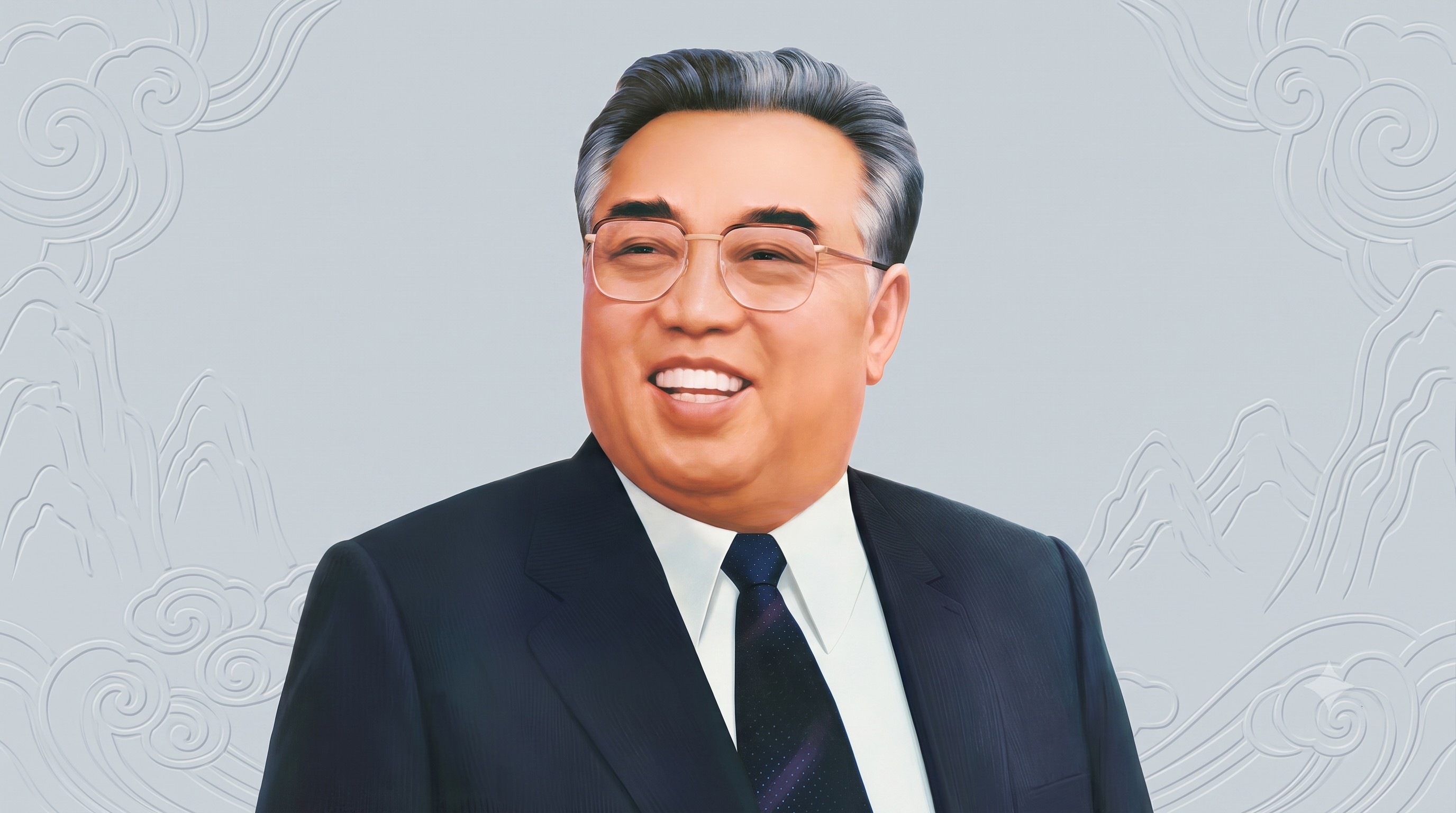
This is a record of an interview with Zhao Kuangyin, the founding Emperor Taizu of the Song Dynasty, who sought at the Hsiang Kuang Buddhist Centre in Australia. He now resides in the Western Land of Nature. This account reflects upon his life approximately 1,050 years ago. Recorded by the chief writer, Shi Faru, on April 19, 2026.
Zhao Kuangyin speaks:
". I am Zhao Kuangyin. To the people of the world, my name is likely synonymous with the 'yellow robe' incident. But let me tell you, in that era of chaos, the only way to seize the world was through raw, overwhelming military might. We were in the Five Dynasties and Ten Kingdoms period, a time following the collapse of the Tang Dynasty where the land was fractured and every warlord harboured dreams of becoming emperor. I served under Guo Wei, and as the situation shifted, I rose with it. When Guo Wei established the Later Zhou Dynasty, I continued to fight for the state. I participated in countless battles, personally ending the lives of countless enemy soldiers. I earned great merit in battle, and my rank climbed steadily.
I didn't care much for titles. All I wanted was to command more troops, to have more soldiers so I could exert my influence on the battlefield. My heart was set on serving the Zhou state, helping it unify the land. But fate is cruel—the rulers died one after another, and the young emperor was simply unable to hold the line against such a perilous situation. My fellow generals saw my courage, my decisiveness in battle, my precision in judgment, and my mastery of military strategy. They saw that I treated them like my own kin. They were willing to support me, to follow me in unifying China.
The Burden of the Yellow Robe
The 'yellow robe' ceremony was merely a formality. In my heart, I knew that the soldiers didn't truly trust the Zhou state; they trusted our army. The bond we had forged on the battlefield, the mutual trust we shared—that was what gave us the absolute confidence to unify the world. As the commander of that army, it was only natural that I was chosen as the Emperor of the Great Song. Yet, the path to the throne was far from easy.
In the chaotic times of the Five Dynasties and Ten Kingdoms, the political landscape shifted with terrifying speed, and the frequency of war was beyond anything seen in other eras. As the Emperor of the Great Song, my duty was to pacify the various factions, to truly unify China, and to ensure the Great Song Empire would endure forever. Having risen from the grassroots, I understood the needs of the people clearly, so I enforced strict military discipline. I had to ensure my army would not harm the civilians.
The Price of Ambition
However, when it came to enemy forces or battles that dictated the fate of the nation, I did not hesitate to kill. If they had to be removed, I removed them without a second thought. I had no useless , no 'womanly kindness.' In such a chaotic situation, stabilizing my own strength and ensuring the security of my state was the most urgent priority. In those times, who could guarantee their own survival? I would not hesitate to make any necessary sacrifice. When two armies clashed, the principle of my army was to annihilate the enemy. Facing a land divided by warlords, where hearts were easily swayed, the only things I trusted were my own army and the soldiers who had no background and followed me into battle.
After the Great Song Empire was established, I actively discussed with my ministers how to reform the imperial system. On one hand, I wanted to help the people recover and prosper; on the other, I needed to increase government tax revenue so we would have the financial resources to carry out construction and redeem land. I did indeed issue a series of new decrees and state-run systems. Regarding military power, to prevent the recurrence of warlordism and rebellion, I brought the central imperial guards back under direct government control, ensuring that the fragmentation of the past would not happen again.
Governance and the Weight of
I believed that I had managed the country and the military perfectly, and in the end, I helped the Great Song recover most of the land. In my later years, although my health was slightly failing, it did not hinder me from continuing to push forward my decrees and the great cause of unification. During the wars to unify the Great Song, I sent troops to fight countless battles, breaking down each faction one by one. Because of this endless process of war, I created immeasurable negative karma. To establish the Great Song Empire, the many evil deeds I committed left me entangled with . Before the Great Song had fully unified all of China, I passed away due to illness.
After death, I fell straight into hell. King Yama sentenced me to undergo the punishments of hell. The Blood Pool Hell, the Slicing Hell, the Amputation Hell, the Dismemberment Hell—I went through them all. I suffered for nearly a thousand years, and then I was reborn in the animal realm as a small insect. I spent nearly sixty years as an insect before I was finally illuminated by the golden light, allowing me to escape the animal realm.
From Hell to the Dharma-Nature Land
And now, led by the Buddha, I have arrived at the , which is a Buddha-land in the human world. Here in this Dharma-Nature Land, I have seen the infinitely noble Namo Amituofo. I am deeply moved; so, the true Buddha really does manifest in the world. During the Five Dynasties and Ten Kingdoms, the destruction of Buddhism was severe, yet I myself held firm faith in the Buddha's teachings. I believed that it was the Buddha's protection that allowed me to ascend the throne; I also knew that the Buddha's teachings were inherently good, so I promoted them in the world to prevent the people from suffering.
Apart from seeing the Buddha's statues in temples, I never personally saw the Buddha himself. It is said that those with supernatural powers can see Buddhas and Bodhisattvas, or that those with deep Dharma affinity can encounter them manifesting in the world. But despite being an emperor for many years, I never had the opportunity to see the Buddha. However, as a believer, I supported the operation of the Dharma during my reign, building and repairing temples, encouraging people to become monastics, and sending monks to India to retrieve precious Buddhist sutras, even ordering the printing of the using woodblocks. Because of this, I formed a Dharma affinity with the Buddha, which is why, after leaving hell, I encountered the Dharma again and was saved by Namo Amituofo and Practitioner Su, entering the Dharma-Nature Land. This shows that not a single moment is wasted. Doing good, accumulating merit, and following the Buddha's teachings while alive is truly vital. Although I did not fully understand this principle then, looking back now, it was truly because of that single thought of Goodness that I have the opportunity to be saved today. Namo Amituofo."
"After ascending the throne, I reduced the frequency of wars because I had come to understand the terrifying nature of the laws of karma and cause and effect. I was afraid of falling into the hells to suffer punishment. I also knew a little about the Buddha’s teachings, which emphasize the —abstaining from wealth, lust, fame, food, and sleep, as well as greed, anger, ignorance, arrogance, and doubt. I knew these were behaviors that would inevitably lead to .
I exercised restraint in my living expenses and the grandeur of my court, which did lessen my karmic burden in the hells. However, I had slaughtered too many people in my youth, and at the time, I viewed it as a 'necessary evil.' On the battlefield, I would transform into a completely different person—decisive and cold-blooded.
The Illusion of the Battlefield
Looking back now, the reason for such a stark contrast was that the 'me' on the battlefield was not truly myself; most of the time, I could not act independently. In reality, this body had long been controlled by my karmic creditors. Whenever the time came to decide the life or death of enemy soldiers, the demon crowds would incite me to commit the most ruthless acts of slaughter. They knew I was naturally suspicious and meticulous, so they would manipulate me into feeling extreme distrust toward others during my decision-making, which led to the cruel decisions I made in many campaigns.
True Dharma vs. Half-Baked Practice
Now, watching Namo Amituofo and Practitioner Su save infinite suffering beings, and seeing Practitioner Su strive to bring Namo Amituofo to the forefront, I finally understand that this pure, selfless Buddha-heart, which genuinely cares for all beings, is vastly different from the 'half-baked' Buddha’s teachings I had calculated for so long. True Buddha’s teachings are like Practitioner Su’s: selfless in saving the world, enduring attacks from demon crowds, and never wavering even when life itself is at stake. Even when under siege by demon crowds and suffering immense pain, Practitioner Su remains 'unmoved,' steady in the steps of saving the world, never retreating. And it is because of this Buddha-heart that Namo Amituofo can provide the Buddha's to help Practitioner Su save infinite suffering beings.
This is what truly awakened me. Why did I promote the Buddha’s teachings so extensively yet fail to clear my karmic debts? Why, despite my frugality and concern for the civilians, did I still have to go to the hells to suffer? Why, after serving my sentence, did I have to continue as a small insect, dying and being reborn over and over? It was all because my killing karma was too heavy, and my efforts were not truly aimed at saving beings.
The Weight of a Crown
My life as Zhao Kuangyin was not a legend. Being able to climb to the throne was due to the Blessings I had accumulated by saving infinite beings before the Buddha in past lives. But in this lifetime, I slaughtered countless people, exhausting the Blessings accumulated from the past. Thinking back on my life as an emperor now, it is truly a cause for sighing.
As the Buddha’s light shone upon me, I gradually regained clarity and remembered my original intention to help the civilians of the world. Initially, pacifying the chaos of war was merely to allow the civilians to have a stable life; unifying the Five Dynasties and Ten Kingdoms was also to allow them to return to a normal life. Yet, for the sins of this lifetime, I paid such a price. I can only say that without the guidance of Buddhist education, whatever one does in the human world is wrong. I am grateful to Namo Amituofo and Practitioner Su for saving me and allowing me to reach the Western Land of Dharma Nature. In the Western Land of Dharma Nature, I listen to the sutras, reflect, and recall many things from the past—all of which are an unbearable past. Now, I must continue my days with a brand-new identity.
A Warning to the Living
Having the opportunity to be interviewed, I hope that those who know of Song Taizu, Zhao Kuangyin, will remember: every bit of karma created for one’s own selfish gain will eventually be repaid. The laws of karma and cause and effect are not empty, and the spirit is indestructible. One does not know where they will suffer retribution in the future. If one has a human body and the opportunity to learn the Buddha’s teachings, one should seize it.
To learn the Buddha’s teachings, one must be sincere—sincerely saving the world and saving beings, rather than merely cultivating Blessings. Otherwise, when one appears in the world again, even if one becomes an emperor or a general, creating countless sins will eventually lead back to the six realms of rebirth and the suffering of the hells. By then, knowing one’s mistakes and knowing to repent will be of no use.
Namo Amituofo.
Zhao Kuangyin."
IN THIS COLLECTION
More from Twelve Rays Deliverance to China (Chinese Historical Figures)