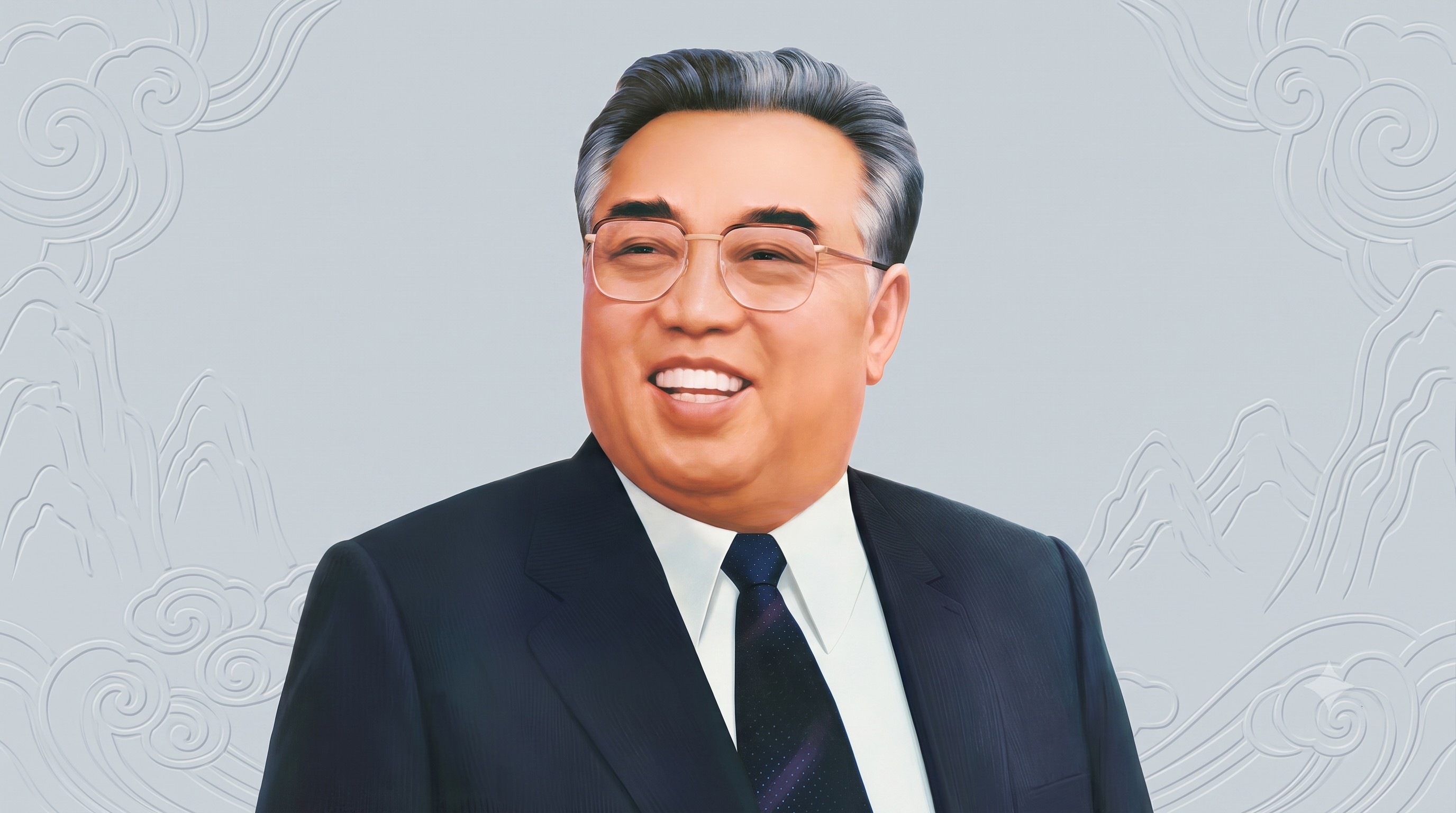
This is a record of an interview with the late scholar Liang Shuming, who sought Spiritual Deliverance at the Hsiang Kuang Buddhist Centre in Australia. He now resides in the Western Land of Nature. This account reflects upon his life approximately fifty years ago. Recorded by the chief writer, Fa Ning, on March 29, 2026.
Liang Shuming speaks:
". Today, I, Liang Shuming, sit beneath the seat of Namo Amituofo, feeling incredibly secure and at peace as I chant the six-character name, 'Namo Amituofo.' It is truly a sound that awakens one's Buddha-nature and true self—a sound so resonant it is like a thunderous wake-up call to the deaf.
I, Liang Shuming, was a man who walked the path of a scholar with dignity. However, I must confess that here, in this most extraordinary Pure Land—the Western Land of Dharma Nature—I have for the first time deeply and profoundly felt the immense impact that 'Namo Amituofo' has brought into my life."
The Weight of a Changing Nation
"Back then, as we transitioned from the late Qing Dynasty into the Republic of China, and eventually into the era of the new China, most people looked upon me as a man who studied Buddhism with a sense of disdain. The term 'studying Buddhism' was never once affirmed in a positive light. In those days of frequent warfare and widespread famine, people were obsessed with rapid development and the pursuit of material satisfaction. At the time, the Western nations were held up as the ultimate goal for our progress.
Everyone knew that the Western nations were leading China in economic and technological development. With the population exploding and people struggling just to put food on the table, the Chinese people clung desperately to the idea of 'the West.' They believed that only by adopting the democratic systems and economic policies of those Western nations could life truly improve. But was that really the case? People certainly needed to be fed, but what happens after one is full? That was a question I posed over a hundred years ago, and I did so with a very complicated heart."
A Father’s Final Question
"When I was very young, the Xinhai Revolution erupted in China—a massive upheaval that overthrew the Qing government. I participated in it as part of a youth group, and I witnessed the chaos that followed, from the corruption of the late Qing to the warlordism of the early Republic. These scenes left a deep scar on my soul. What I saw was not just a struggle for food or power, but a profound decay of humanity and morality.
I had long grown weary of this red dust of the mundane world. By the time I was twenty, I was prepared to renounce the world, become a monk, remain a vegetarian for life, and forgo marriage and children. I was single-mindedly determined to enter the gate of the Buddha and seek the true reality of the universe. I had read extensively, and although I was an intellectual, it was only the Buddhist sutras that truly captured my heart. I believed that while there are thousands of theories in this world and thousands of paths to guide beings toward the right way, only Buddhism could answer the fundamental questions of life and death and reveal the truth of the universe.
I had long felt a strong calling, and I once expressed to my father my determination to be ordained and seek the Truth. Alas, everything changed when I was in my early twenties. My father was also a well-read Confucian gentleman, and we shared many ideals. But faced with the loss of our nation and the collapse of morality, he left me with a single sentence before throwing himself into a lake to end his life. I remember that sentence so vividly: 'Will this world ever get better?' His eyes were filled with such helplessness and despair. I had thought he just needed time to process the state of society, and I had firmly supported him in doing good for the country and the people, hoping he might propose a different path for governance. I never imagined he would simply walk away. I heard nothing more of him until the news came that he had taken his own life."
From the Monastery to the University
"For a young man whose heart was not yet mature, this was a devastating blow. I felt an inseparable responsibility toward my country and all living beings. Although I studied Buddhism, I was not merely lost in theoretical study, nor did I wish to seek personal liberation through Buddhism. My thoughts went beyond that. I believed that Buddhism was the most important indicator for solving the various ailments of sentient beings, and I was deeply convinced that Mahayana Buddhism was a great education that truly helped beings solve problems from the root, from the depths of the heart. I realized very early on that Buddhism is not just a religion as people commonly describe it, but a complete education that brings true perfection to all beings.
I had many thoughts and that differed from the secular world of that time, but I had nowhere to express them. After my father's death, my conviction grew stronger. I wanted to find a path that could both renounce the world and save it, though my character was not yet stable. Under various influences, at the age of twenty-four, I chose not to enter the monastery, but instead accepted an invitation from Cai Yuanpei, the president of Peking University.
That letter arrived at just the right time. I had just completed a treatise on Buddhism that had received considerable attention. President Cai knew I was a talent; even though I only had a high school education and had never attended university, he had great confidence in me and hired me as a professor at Peking University. The course I taught was Buddhism, then titled 'Indian Philosophy.' With my heart not yet fully settled, I decided to try this teaching position, and thus, I shifted my focus from entering the monastery to entering the highest academic institution in the country, filled with its rich scholarly atmosphere."
The Idealist in the Rural Heartlands
"After stepping out of the mindset of becoming a monk and entering this academic hall, my heart underwent subtle changes. I was no longer as stubborn or radical in my determination to become a monk. Although I remained a vegetarian and did not intend to marry, things changed later. I did marry and had two sons, but I never fully immersed myself in family life. For me, affection was an optional existence. My relationship with my wife was more about family ties, or perhaps a sense of responsibility. I was a responsible husband, but I could not give her the emotional fulfillment she deserved.
During my time at Peking University, I met many people who would later become close to me, whether as comrades or political figures. The most famous among them was the future Chairman Mao, who was then a librarian at the university! Of course, by then, my mindset had shifted from a young man who wanted to be completely detached from the world to one who wanted to strive for the welfare of the people and encourage them toward goodness. My previous attitude of non-contention changed, but fortunately, I was not striving for myself. My lifelong ideal was to find a way for the people to live well and for the Chinese nation to walk on a true path of prosperity. Buddhism and Confucianism were the most important foundations for my thoughts. With these as my base, I was able to carry out the work I did for the nation and the people.
At that time, people's lives were generally very backward. I witnessed the various ills from the late Qing, the warlord era, the War of Resistance, the founding of the new China, and eventually the Cultural Revolution. I saw the development of China over the last century in my ninety-five years of life. I even participated in the later economic reforms. My life spanned the pain and , the suffering and happiness of several generations of Chinese people. I saw it all clearly. I also understood the human heart and human nature very thoroughly, which stemmed from my innate empathy—or what Buddhists call the heart of —which allowed me to remain highly sensitive throughout my life, discerning the suffering of the people and understanding the root causes of their pain.
I called myself a scholar all my life, but much of what I did was not what an ordinary scholar would do. I did indeed step into the realms of politics and education. You must have a deep impression of the fierce debates between Chairman Mao and me. After he became Chairman, we were no longer partners in the university, but moved into a relationship of superior and subordinate, filled with challenging and fearless speech. Chairman Mao was often displeased with me, but I was always outspoken, especially on matters of national livelihood. I stood firmly by my position and argued with him. As an agricultural society, I firmly believed that we must take the farmers as the foundation, base ourselves in the rural areas, promote development, and help farmers improve their living standards so that everyone could be fed and clothed; only then could the country move toward a better future.
Therefore, I later decided to resign from my teaching position at Peking University and resolutely walked into the countryside to truly live with the farmers and understand their situation and environment. I went into the rural areas alone to conduct investigations and reforms, and I presided over many rural construction projects and related work. That period was one of the most satisfying times of my life. I could practice my thoughts and educational methods for rural construction with a very free mindset, and I achieved excellent results. People called me a man of action, and they were not wrong. Although I had grand ambitions for my ideals, I believed that these should not remain on paper, but should be put into action and implemented for the benefit of the masses. If there were deviations in practice, I could correct them in time.
I have always believed that education and life are the two most important factors in national development. A country should not blindly pursue high-speed development, nor should it blindly imitate Western economic models as an indicator of progress. The people are the solid foundation, and they are the ones we should care for. Only when people are truly fed and clothed, and have a good spiritual sustenance—in those days, this was indeed the use of Confucian thought as the basic policy for humanistic education—and only after having this solid moral and economic foundation, could people possibly live a truly comfortable life."
"Of course, I never forgot my profound reverence for the Buddha’s teachings, nor my initial aspiration to one day delve deeply into the Dharma and attain true liberation. The social upheavals in China over the past few decades made me realise that the people must first reclaim their roots. Only by starting from the foundation could one then delve deeper into the Buddha’s teachings to rediscover the theories of the true self and Buddha-nature, which are a step above Confucian thought.
The Moral Foundation of a Nation
However, when people are generally struggling to have enough to eat, such lofty ideas seem far too distant and are difficult to deeply embed in the hearts of the people. Conversely, Confucian thought is the moral foundation of the Chinese people; it is something everyone is generally familiar with. Therefore, using Confucian thought to rectify people's moral values and help them achieve spiritual satisfaction was a crucial step.
After the War of Resistance Against Japan, my rural reconstruction project was forced to come to an end. Subsequently, the country fell into the Chinese Civil War. I did many things to mediate between the two sides, hoping to restore peace, but there was never a perfect outcome.
A Choice of Path
I once calmed my heart and decided that I would not enter politics in this lifetime. However, if the country needed my service, I would put forth my best efforts and express my own principles for governing the nation. Yet, if one were to truly participate in the political whirlpool, maintaining a clear mind and staying pure in the world for a lifetime is likely not an easy task. Therefore, my intuition told me that I could work for the people, but I would not engage in politics.
For the decades that followed, I worked hard to promote various policies that would help people move upward and toward Goodness. I wrote many books, also to rectify people's values, hoping that they would cherish their traditional culture, learn the principles of being a human being from it, and gain spiritual satisfaction.
In my later years, I even thought back to my youthful, ambitious desire to become a monk; this could be called a beautiful anecdote of my life. Although I did not become a monk, I did many good deeds, and in my heart, I felt satisfied.
The Pain of Cultural Loss
The period of my life that was the most struggling and deeply felt was the decade or so when the Cultural Revolution broke out. At that time, I witnessed with my own eyes people from all walks of life, from top to bottom, doing their utmost to overthrow the cultural essence and thoughts left behind by our ancestors. Whether it was Confucian culture or the Buddha’s teachings, both suffered severe destruction during this revolution.
The pain in my heart—everyone should be able to understand it, right? A country using the most arrogant methods to suppress and even destroy its most precious cultural heritage to the extreme; I don't think many countries in the world have experienced such a thing. What kind of immense spiritual pain and torture must people have gone through to engage in such acts of abandoning the spirit of their ancestors? After a hundred years of turmoil and instability, the Chinese people, in a state of severe lack of self-confidence, actually had no sense of cherishing their own culture, instead believing that these traditions were dragging them down in their progress.
When people generally held such views, I chose to step back and do my utmost to protect the remaining cultural heritage. I knew that saying more was useless, but when people forced me to speak a few words, forced me to criticise Confucian thought, I had to resist.
Integrity and the Universal Principle
I could remain silent, but I could not bring myself to say things that went against my conscience, against the Universal Principle, the Truth, and the Right Way, just to gain the approval of my superiors. Such things were absolutely not what I, Liang Shuming, could do. I have my own backbone; I have my own persistence. Perhaps people think that when the problem of food and clothing has not yet been solved, Confucian thought does not have much help; but in fact, the wisdom of our ancestors permeates both ancient and modern times. This is something everyone has failed to see.
Economic development is not difficult. With the wisdom and hard work of the Chinese people, achieving generational economic prosperity and technological advancement is something that can be easily attained. However, the wisdom of our ancestors is the crystallization of thousands of years of wisdom; it is the most fundamental morality of people's lives, the most fundamental thing, and it cannot be easily erased.
My life in my later years was indeed lived like a monk, with few desires, practicing meditation. But unfortunately, while I knew of Mahayana Buddhism, I did not truly understand Namo Amituofo and the Western Land of Ultimate Bliss. I did not truly place this six-character Buddha-name into my heart to achieve the realm of purifying myself and saving others. In this regard, I do indeed have a bit of regret in my heart.
Reflections from the Western Land
My state of mind at that time was already very different from when I was young. Having experienced a complex life of ups and downs, I knew then that I could no longer maintain the pure heart of my youth. Because I had experienced too much, it was inevitable that I would have my own knowledge, my own views, and various subjective ideas. As a scholar, I also contracted the inherent habits of scholars, namely the aforementioned subjective views and opinions.
Although I never noticed it, in subtle ways, whether in writing books or expressing my inner world, the remarks I made could no longer truly remain on the Universal Principle, the Truth, and the Right Way like a Buddha or . Of course, I never spoke evil words; it was just that my way of expression was not as ultimate and perfect as that of a Buddha or Bodhisattva. Many reflections are things I only slowly realised after entering the Western Land of Dharma Nature. Although I had heard of Namo Amituofo before, I did not yet know Practitioner Su, who is attaining Buddhahood in the human world. This person is truly miraculous, and I must explain it to the world one by one.
The Greatness of the Buddha-Name
Through a coincidence of Causal Conditions, I, Liang Shuming, heard this six-character Buddha-name after my passing, and only then did I more perfectly understand the vastness of the Buddha’s teachings. The concept of oneness that I previously advocated is truly embodied in Namo Amituofo and Practitioner Su. This is what I found astonishing at the time. Compared to the content of Practitioner Su’s Dharma talks, the theories I insisted on were far surpassed by his. With my decent foundation, I had a deep understanding of the Dharma he spoke. The only difference is that I used to practice Chan, whereas now I am learning under the influence of the Pure Land school; the two are indeed different.
The shock that the Pure Land school brought me is embodied in the achievements of Practitioner Su. Practitioner Su is learning from Namo Amituofo, wholeheartedly using one Buddha-name and one Infinite Life Sutra to purify himself and change his character through recitation and practice, thereby achieving what he has today.
The greatest shock this achievement brought me lies in the fact that the Buddha’s teachings can truly benefit the civilians. Although I previously agreed that the Buddha’s teachings have educational functions, it was limited to teaching; but Practitioner Su’s achievements transcend the limits of the physical body. He can use his spiritual to perform for countless suffering beings who have endured pain in China for thousands of years. This broadened my horizons. I had never thought that the Buddha’s teachings I advocated were even greater than I imagined; it turns out that the Buddha coming to save the world is a true reality. Various shocks forced me to pay my utmost respects to Practitioner Su.
A Life Worth Living
If life could be lived over again, and if I possessed a human body in today's society to practice, I would definitely follow Namo Amituofo and Practitioner Su to practice in a down-to-earth manner until I realise my true nature and attain Buddhahood, never retreating. I will uphold the persistence and belief I had in protecting the transmission of the Buddha’s teachings and Confucianism, acquire the true skills of Practitioner Su, and benefit the vast number of people and the immeasurable spirits in the space. This is indeed an extremely great undertaking!
Although everything Liang Shuming did in his life was for the country and the people, it was only for this one lifetime of people's illusory, physical bodies. Once life passes, even with great achievements, in the end, it leaves no trace. But if one can elevate their spirit like Practitioner Su and further help countless suffering beings reach the realm of a Buddha, the weight of the two is self-evident. The gap between the two is truly too great.
At this moment, if you ask me again, "Will this world get better?" I still believe that everything will get better, but my state of mind now is completely different from then—my hope is now entirely placed in the Buddha’s teachings. For me, knowing Namo Amituofo and Practitioner Su is the luckiest thing in this life. I am a person who is keen on learning the Buddha’s teachings, and I am also someone who has had a deep Buddhist affinity over many lifetimes.
The Only Path to Salvation
The thunderous name of Namo Amituofo, combined with the actual skills of Practitioner Su, is a great encouragement to the beings in the human world. Only then can people know that everyone has the opportunity to be like Practitioner Su, to realise their true nature and attain Buddhahood; it all depends on where this heart is. If I could have known the Buddha’s teachings earlier, I think I would not have done so many redundant things. Honestly following the Buddha, perhaps I could have cultivated the same world-saving skills as Practitioner Su, saving all the people of China, and allowing beings of ten thousand years to be saved.
Looking at such things, there is only one Practitioner Su in the world. This truly shocked the heart of Liang Shuming, and it also shocked the hearts of the people of the world. Compared to the Buddha’s teachings I have studied for a lifetime, there are actually such differences. I have always been proud of advocating Mahayana Buddhism, but I did not expect that the true Mahayana Buddhism within the Mahayana can only be seen at the Hsiang Kuang Pure Land Buddhist Center in Australia. Only after realising one's true nature, attaining Buddhahood, and making the Ultimate Vow to save the world can one have such skills.
Namo Amituofo.
Liang Shuming
IN THIS COLLECTION
More from Twelve Rays Deliverance to China (Chinese Historical Figures)