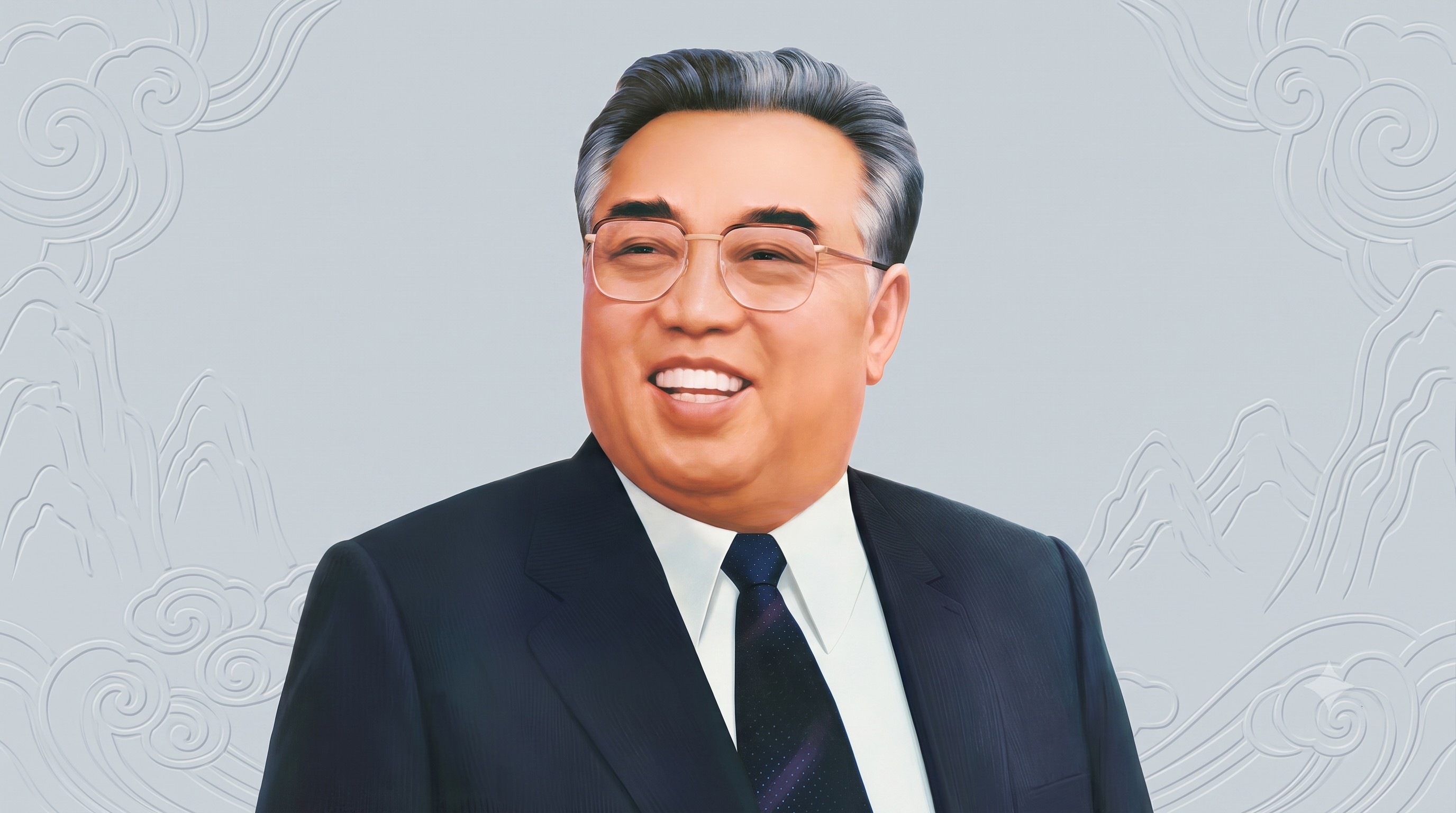
This interview features the Sage Mencius, who, having reached the Western Land of Ultimate Bliss, shares his reflections on the evolution of education, the essence of Confucian thought, and the transformative power of the Buddha-name. Recorded on April 8, 2025, at the Hsiang Kuang Buddhist Centre in Australia, this dialogue provides a rare perspective from a historical figure who has attained liberation through the guidance of Practitioner Su and the compassionate light of .
Mencius speaks:
"Mencius has arrived. At this moment, I feel deeply honoured to be interviewed here at the Hsiang Kuang Pure Land Buddhist Centre in Australia. This opportunity arose because my teacher, Confucius, had already been interviewed, and subsequently, Practitioner Su felt the inclination to invite me as well. Thus, I follow the wishes of the assembly and present myself as Mencius.
The names 'Confucius and Mencius' are, in the hearts of most people, synonymous with Confucianism. My teacher, Confucius, is the Most Holy Sage, while I have been honoured by later generations with the title of 'Sub-Sage'—a title I truly feel unworthy of! In truth, the Confucian studies of China are vast and profound, and in every dynasty, there have been scholars who have dedicated their lives to mastering them.
The Influence of a Mother's Guidance
I received a Confucian education from my earliest childhood. My mother, known to later generations as 'Mother Meng,' placed great importance on early childhood education, which allowed me to lay a solid foundation in Confucian studies while I was still very young.
My mother was extremely particular about the environment in which I was raised. The story of 'Mother Meng moving three times' is a true account that has been passed down through history. Our first home was near a cemetery, where I began to imitate the funeral processions, the drumming, and the wailing. When my mother saw this, she realised it was a problem: 'How can my son learn such mournful practices?' So, we moved near a marketplace. I had a very strong capacity for learning, and every day I listened to the peddlers calling out their wares and the shoppers bargaining. I mimicked their sounds and gestures with uncanny accuracy. My mother saw this and thought, 'This is not right! Is my son to become a mere street hawker?'
Consequently, we moved again, this time next to a school. Every day, I watched the students reciting poetry and chanting, and I would stand outside, following along and chanting with them. Later, my mother felt, 'This is excellent! This is the place where my son should live and learn.' Thus, I was nurtured and grew up in such an environment from my youth.
From the Warring States to the Western Pure Land
During the Warring States period, wars were frequent. Attending a school was the primary way to receive a complete Confucian education, and my mother arranged my studies accordingly. Once I entered the school, I learned very quickly and was highly regarded by my teachers.
In those days, politics was the path many scholars sought to advance their careers. After completing my studies, I travelled to various states, expressing my philosophy and allowing my disciples to receive and learn from it. I never wavered from my original intention. As the long years passed, I eventually returned to my hometown to focus on teaching. When my life reached its end, my physical body decayed, and the time for parting finally came. Once my worldly affinities were exhausted and my spirit departed from my body, my remains were laid to rest in the earth. My spirit then travelled directly to the Twenty-Eighth Heaven. It was a world of pure light, without any darkness. Upon entering this luminous realm, time flowed by, though I did not track the passing of years.
Then one day, I suddenly heard a voice calling to me: 'Mencius, please come to the Hsiang Kuang Chamber.' At that time, I was in a state of deep meditative concentration. In that realm, almost everyone remains in such a state, and there was no time for me to ponder; in an instant, a beam of light transported me to a specific place. It was very bright—it was the Hsiang Kuang Chamber of the Hsiang Kuang Pure Land Buddhist Centre in the human world. The one who called me was Practitioner Su. Because she had already guided my teacher, Confucius, to the Western Land of Ultimate Bliss and had delivered the seventy-two sages one by one, she now called my name to keep me at the Hsiang Kuang Chamber to listen to the sutras and hear the . Only after that was I guided to the Western Land of Ultimate Bliss, which is why I am here today to accept this interview at the Hsiang Kuang Pure Land Buddhist Centre.
Reflections on a Changing World
The Warring States period was over two thousand years ago. The world of that time differs vastly from the world of today. People's thoughts, concepts, speech, behaviour, clothing, attitudes, interactions, and the relationships between teachers and students are completely different. This is a natural evolution. Through the many dynasties that have passed, the methods of governance have also changed entirely.
Looking at the world today, I see that in my time, we used horse-drawn carriages for transport. Now, transportation is incredibly convenient, with vehicles like cars and trains that people of my era could never have imagined. By the same token, future modes of transport will likely be even faster than those of today.
The methods of education have also changed. From the traditional private academies to the present day, where civilians have equal access to education provided by the state, the difference is immense. In my time, it was private tutoring; families sent their children to a school, or wealthy families invited a teacher into their home for individual instruction. Today, I observe that schools use group education—this is the transformation of education.
The Synergy of Confucianism and Buddhism
I believe that Buddhist education and modern school education should coexist, as the former can fill the gaps in the latter. Most worldly education leans towards the infusion of knowledge, learning, memorisation, and examinations. Buddhist education, however, has no written tests, no Q&A sessions, and no reliance on couplets or poetry—which were considered the ancient methods of selecting talent. Today, the world uses a combination of technology and paper and pen, and the way questions are posed requires technological tools or paper-based methods. This is what I have observed from the Western Land of Ultimate Bliss.
Buddhist education aims to teach everyone about human and Goodness. Confucian education focuses on the cultivation of human integrity and the of one's innate goodness. In my time, Xunzi proposed that human nature is inherently evil, but I argued that human nature is inherently good—this is the core of Confucian philosophy. During the war-torn Warring States period, for an individual's educational philosophy to be accepted by the masses, it had to possess something unique or be able to reach the ears of teachers and the hearts of students to be passed down to future generations. The dialogues between me and my disciples were recorded in the book *Mencius*, which is why I am called the 'Sub-Sage'—a title I accept with humility. Every school of thought had its merits, but perhaps because I followed my teacher, Confucius, my teachings were more easily accepted by later generations.
Regarding the current state of education, the examination system has indeed changed due to the ravages of war. To adapt to the changing dynasties and environments, internal education in China shifted towards increasing the transmission of knowledge while reducing the emphasis on ethics and traditional education. Thus, it is quite different from traditional education.
Universal Truths and the Path to Liberation
Every dynasty's education has its problems, as well as its merits and areas for improvement. The goal is always to allow students to receive a complete education, develop a sound character, ensure the stability of the nation, harmony in the family, and provide a guide for personal self-cultivation. But Buddhist education transcends all of this! The Buddha’s teachings were expounded by Shakyamuni Buddha for future generations. The words spoken at that time were recorded by his disciples and passed down. Buddhism speaks of life and death, past and present lives, and the laws of and cause and effect. These things truly exist; people must not use their own shallow views to judge the truth of facts they have yet to discover.
Although the times have changed, the Universal Principle, the Truth, and the Right Way do not change. Regardless of the space or time, this world or other realms, the ten directions, the void, or the Milky Way, these truths are universally followed. This concept needs to be transmitted to the public through education, so that people understand they cannot simply act according to their own whims. Everyone must anchor their lives in this principle to be successful, to be in harmony with the laws of heaven and earth, and to follow the nature of all things. Such a life allows one to walk the path of life smoothly. It does not mean there will be no wind or rain, but that even when one encounters storms, one knows how to find shelter. After the storm passes, one must still stand tall and continue to walk straight ahead.
The Ultimate Destination of the Spirit
Now, I reside in the Western Land of Ultimate Bliss; it is truly the final destination for the spirit. In my era, Buddhism had not yet been introduced to China, so I reached the Twenty-Eighth Heaven. However, the Buddha’s teachings are even more magnificent. They do not merely cover the six realms of existence; they transcend them, even surpassing the liberation of the Sravaka sages, and go further to help one recover one's true self. The transmission of the concept of the 'true self' is a vital part of Buddhist teachings. Confucianism had not yet reached this depth. With the wisdom and compassion of our ancestors, the scope of what could be reached was limited to the heavens, the earth, and all things. The study of the Great Way does not depart from nature, nor from the relationships between people, the family, the society, or the nation. But the Buddhist liberation from life and death and the recovery of one's original nature go beyond this, pointing directly to the human heart.
The 'heart' is the most important thing. Our ancestors knew this long ago, but they did not explore it to the point of achieving such freedom. To be able to become a Buddha, to enter the Western Land of Ultimate Bliss—a place with no suffering and only —is to transcend life and death. In an environment of infinite life and infinite light, through step-by-step guidance and practice, one recovers one's true self. That is a world of extremely high spirituality. To enter it, in terms of Buddhist principles, one requires Dharma affinity. In my time, I was fortunate to have such a rare and precious spiritual connection, to be called by Practitioner Su to the Hsiang Kuang Chamber, to receive Buddhist education for a period, and then to be guided to the Western Land of Ultimate Bliss.
The Power of the Buddha-Name
In this light, Buddhism encompasses Confucianism. This seems to have become a fact that everyone can accept. Regardless, the most important thing is to be able to help people, to help all beings leave suffering behind, and to recover their true self and the infinite light within that nature. Awakening is not easily attained, but it can be achieved in the Western Land of Ultimate Bliss, a world of infinite light and infinite life.
The magnificent and swift path to Buddhahood lies entirely within the six-character Buddha-name: 'Namo Amituofo.' In the Western Land of Ultimate Bliss, the sound of 'Namo Amituofo, Namo Amituofo' is heard 24/7, in various tones. It is incredibly melodious, causing those who hear it to attain meditative concentration, purity, and a state of no-thought. These are all part of the process of recovering one's true self. Whether or not one can recover one's true self in this lifetime, the process always gives the fourfold assembly of disciples the opportunity to have a deeper feeling and realisation regarding the existence of the spirit. The existence of the spirit is formless and colourless, yet it can truly cause a transformation in one's mental state. When the spirit is purified to the point of transparency, that is the moment of Awakening. This is the goal of many practitioners.
The changes in China over the past two thousand years are immense, and Buddhism has suffered severe destruction. But China is a nation with incredibly vigorous vitality. Even though the people lived through the suffering of wars across various dynasties, those times have passed and have been pacified. However, the beings in the spiritual realms have not been pacified; they are still living in the pain of constantly spinning and searching for an exit. The Buddha is compassionate; he clearly sees the suffering of all beings, and thus, Practitioner Su has appeared in the world at this time to begin the work of . This is the magnificent benefit and salvation that Namo Amituofo has bestowed upon the beings of the spirit realm. In the Western Land of Ultimate Bliss, whenever I wish to see, I can see; whenever I wish to know, I can know, and the images appear right before my eyes.
The Continuity of Ethics
The so-called 'Five Relationships'—between ruler and subject, father and son, husband and wife, elder and younger, and friends—are a series of relationships and interactions that the sages taught us. We followed them, learned from them, and those who gained realisation could further develop them, even passing them down to future generations. In the current situation, these ethical relationships are often considered by modern society to be 'old-fashioned' matters that have nothing to do with oneself. In fact, one will eventually become an ancestor oneself. One's current actions and thoughts will also become the 'ideas of the ancestors' that future generations will speak of, perhaps even deeming them outdated, inefficient, or too rigid. I can see all of these situations from the Western Land of Ultimate Bliss. From the Western Land, I can see these processes, and up to the present day, I can feel a strong resistance to the practice of Confucianism.
Indeed, many ritual norms were passed down in Classical Chinese, and because the learning methods have shifted to the vernacular, they can no longer be transmitted effectively. Although these were teaching methods that the majority of people and young people could accept at the time, with the change of dynasties and the transformation of people's character, the level of identification with them has changed.
Most people can still identify with the importance of having children in a family. Although it is not as obvious as it once was, it can be seen in the expectations in the eyes of women and the hopes in their hearts. In any case, the traditional way of managing a family—where the husband works outside and the wife manages the home—has undergone significant changes. Today, men and women work together outside the home to earn an income.
A Final Message of Gratitude
At the Hsiang Kuang Pure Land Buddhist Centre in Australia, one can learn the great teachings of how to reach liberation from life and death, attain Awakening, and become a Buddha. This method is not something that can be learned through Confucianism alone. Fortunately, it can be received through Buddhist education, and if one can apply it well in daily life, it can change one's character and behaviour. This method is extremely subtle; it is a great Dharma.
The six-character Buddha-name, 'Namo Amituofo,' has a very magnificent influence and is the method of chanting the Buddha's name in the Pure Land Dharma Gate. In my time, I was guided to the Western Land of Ultimate Bliss by Practitioner Su and the fourfold assembly of disciples who chanted 'Namo Amituofo' together.
Now, in the Western Land of Ultimate Bliss, I am also constantly chanting 'Namo Amituofo, Namo Amituofo.' This has a different flavour than reciting poetry or ancient classics. The important thing is that one can attain meditative concentration, purification, elevate the quality of one's spirit, and gain natural abilities. This is what every Dharma Gate and every school of thought requires. The goal one seeks is attained within the Buddha-name of 'Namo Amituofo.'
Here, in the limited time I have, I have accepted this interview at the Hsiang Kuang Pure Land Buddhist Centre to recount the differences between my time and the modern era, and the influence of the Pure Land. If those who see and hear this can benefit from it, that would be the greatest comfort in my heart. This spiritual connection is rare and precious; to be able to use this method to expound my views and philosophy after more than two thousand years is truly inconceivable.
Here, I express my gratitude to Namo Amituofo and Practitioner Su for their guidance. I hope that future generations will also be able to learn and carry on these teachings.