From the Hells to the Western Pure Land
An Interview with Huang Zhongzhi, a Former Prison Guard
This is a record of an interview with Huang Zhongzhi, who sought deliverance at the Hsiang Kuang Buddhist Centre in Australia. He now resides in the Western Land of Ultimate Bliss. This account reflects upon his life and his subsequent service as a prison guard in the hells. Recorded by the chief writer, Shi Fa, on August 19, 2022.
Huang Zhongzhi speaks:
"Namo Amituofo. I grew up in an environment that was incredibly complex and chaotic. Today, I have arrived in the Western Land of Ultimate Bliss, and I am enjoying such a pure and tranquil land. My heart feels peaceful and secure. Finally, my heart has found a true place to rest. This feeling of inner stability is something I had been searching for my entire life, and now, I have finally found it here in the Western Land of Ultimate Bliss. The complex emotions and the dust of my past have all been washed away here.
I am filled with gratitude. I am grateful that the Buddha was willing to accept me. I am grateful for the guidance of Practitioner Su, and I am also grateful for the teachings I received from King Yama—every word and every sentence, I have taken to heart. Together with fifty-nine other prison guards, I offer my deepest gratitude and prostrations. I am Huang Zhongzhi. I was still young when I died. While I was alive, I seemed to just squander my time, but when I stood before King Yama, I finally woke up to the reality of my short and wasted life."
A Childhood in the Shadows of a Gambling Den
"My family ran a gambling den. My father was addicted to gambling and had accumulated a mountain of debt. To pay off these debts, he came up with a way to make money with money—by opening his own gambling house. To fund this, he borrowed a large sum from a friend, promising him that the business would be a goldmine and that he would return double the amount. His friend, seeing how confident my father was, lent him the money.
My father used those funds to set up a gambling den in a corrugated iron shack on the outskirts of the city. At first, it was just my father's friends who came, but soon, more and more people heard about it and wanted to try their luck. Initially, my mother and I did not live at the gambling den, but to manage it more closely, my father built a small shack next to it for us to live in.
The noise in the gambling den was deafening, especially at night when the crowds grew. I could hear everything—the shouting, the cheers of those who won, the anger of those who lost, and the sounds of violent disputes. My mother was my father's mistress. She was not his legal wife; they had met while he was hiding from his creditors. At the time, she was blinded by love, and that was how she ended up with him and became pregnant with me.
My father had another family, but his gambling addiction made them resent him, leading to constant arguments. Eventually, he stopped going home altogether, only returning when he was desperate for money. He called my mother 'Yuko,' and she was completely submissive to him. At first, he did not want her to give birth to me, but she insisted. She wanted someone to keep her company so she would not feel so lonely when he was away."
The Weight of a Broken Home
"My mother once tentatively asked my father for a formal status, but he rejected her harshly. That was the most terrifying side of him she had ever seen, and she never dared to bring it up again. He threw a cold warning at her, telling her to know her place and behave, or she would regret it. My mother was terrified by his words and obediently stayed in that little shack. Sometimes he would visit, but most of the time, he stayed in the gambling den.
From a young age, I was a highly sensitive child. I was easily frightened by loud noises, so I cried often. My mother, unable to soothe me and feeling overwhelmed by my crying, developed a very short temper with me. My father, meanwhile, was always gambling and never paid any attention to me. As I grew older, I felt more and more that our home lacked even a shred of warmth. The people who frequented the gambling den were a rough crowd with fierce faces. Naturally, I learned their body language—the way they walked with their legs spread wide, the way they shouted, their inner cowardice, and their greed. My mother never noticed me becoming like them; she only cared about whether my father came home to be with her.
When I reached school age, I started attending classes, but the energy I radiated was completely different from the other students. Naturally, I was ostracized. It felt like destiny—I fell in with the bad kids at school. I learned how to fight in gangs, smoke, and drink. I even brought my friends to my father's gambling den to watch. When my father saw me bringing friends, he did not scold me for keeping bad company; instead, he was delighted, thinking I was bringing him new customers. He would introduce my friends to every gambling game, and they listened with great interest, finding it all very exciting."
The Downward Spiral and the Aftermath
"My father would even give my friends some small change to try their luck. When they won, they would try to return the money to him, but he would say, 'Keep it, consider it a gift for meeting me. Come back and play again when you have the chance.' My friends would nod happily and go home. Our group of friends sought thrills just for the sake of fun. As we grew older, some joined gangs, some became local bosses, and some came to work at our gambling den. I had always lived in this environment, never knowing that there was anything wrong or inappropriate about it. My parents never once corrected me or taught me the principles of being a good person.
When I was twenty-one, the police surrounded our home and the gambling den, sealing everything off. The scene was chaotic; those who could escape did, and those who could not were arrested. My father, having anticipated this day, had already planned his escape route and fled through the back door before the police could find him. When my mother realized he had abandoned her, she suffered a mental breakdown. I, as his son, was taken to the police station and imprisoned for several years. By the time I was released, my mother had committed suicide, and there was still no word of my father. I was alone, fresh out of prison, and had no idea how to face the future.
For the first month after my release, I lived like a beggar, rummaging through trash cans for food. Eventually, an elderly man who ran a noodle stall took pity on me. He gave me a small place to stay and let me help out in the shop. I was so grateful to him; for the first time, I felt a sense of stability. To protect this peace, I worked incredibly hard at the noodle stall. Although my life had stabilized, I always felt like a person with a stain on my soul."
A Path Toward Redemption
"The old man had a son who had been disobedient; at sixteen, he had stolen a motorcycle and died in an accident after hitting his head on the ground. Because of his guilt over not having raised his son properly, the old man poured that care into me. He hoped I could restart my life and not be bound by the mistakes of my past. To help me, he gave me many inspirational books to read and took me to do community volunteer work, helping others get to know me and form a positive impression of me.
Through reading, I gained some insights into life and began to write them down. Through a series of Causal Conditions, some of my reflections reached the prison system. The prison invited me back to give speeches, teaching the inmates how to change their mindsets and restart a positive life. While doing this, I felt very happy. A premonition told me that my life would not be long, so I had to seize the moment and do as much as I could to atone for my past sins.
When I was twenty-nine, I suffered from constant headaches for several months. When I went to the hospital for a check-up, the doctor told me that I had several tumors in The Head. Surgery was extremely dangerous, and it was unclear whether they were benign or malignant. Regardless, if the tumors continued to grow, they would press on my brain nerves, causing my physical functions to degenerate and potentially leading to memory loss. I knew this was my . Although I was afraid, I dared not complain. While I was hospitalized, the old man came to take care of me. I cried and said to him, 'I am sorry.' He had always treated me like a son, and now I had let him down and caused him pain.
The old man patted me and told me to focus on recovering. He did not say much, but I knew he was heartbroken. I had a faint desire to hold on, to live long enough to show him filial piety, but my body would not allow it. After two years of suffering, I breathed my last in the early hours of the morning at the age of thirty-one. My short, chaotic life had come to an end."
The Mercy of the Buddha
"After my life ended, I stood before King Yama. He showed me the cruel scenes from my past as a gangster, where I had broken people's limbs. I wept uncontrollably, crying until I was weak. I truly repented and hoped that King Yama would give me a chance to atone for my past sins. I truly knew I was wrong. Seeing my sincerity, King Yama gave me the opportunity to serve as a prison guard. Although I had to oversee the punishments in the execution grounds, I also counseling the inmates to turn over a new leaf, sharing with them the laws of karma and cause and effect that had manifested in my own life.
I was very diligent. While in the hells, I listened to Practitioner Su's talks, and I specifically went to counsel the young inmates who had gone astray. I am grateful that the scriptures and Dharma introduced by Practitioner Su taught me about the Western Land of Ultimate Bliss and let me know that I should seek rebirth there. When I finally received the opportunity from King Yama to join the queue for rebirth in the Western Land of Ultimate Bliss, I was so grateful. Today, I and the other fifty-nine prison guards have finally waited for our rebirth in the Western Land of Ultimate Bliss. We are all so grateful and cherish this opportunity. We thank the Buddha and Practitioner Su for their ."
Huang Zhongzhi, with palms joined in prayer.
Namo Amituofo.
More from Hell Guards
The Historian's Sacrifice and the Path to Deliverance
This is a record of an interview with Park Ji-yeop, who sought deliverance at the Hsiang Kuang Pure Land Buddhist Centre in Australia. He now resides in the Western Land of Ultimate Bliss. This account reflects upon his life as a historian during the Joseon Dynasty. Recorded by the chief writer, Fa Ning, on May 17, 2026.
The Scholar Who Guarded the Hells
This is a record of an interview with Zhao Shuwen, who sought Chao Du at the Hsiang Kuang Pure Land Buddhist Centre in Australia. He now resides in the Western Land of Ultimate Bliss. This account reflects upon his life as a scholar and official during the Tang Dynasty, and his subsequent service as a guard in the hells. Recorded by the chief writer, Venerable Fa Hui, on May 10, 2026.
From the Mines to the Western Pure Land
This is a record of an interview with Gu Banjie, who sought deliverance at the Hsiang Kuang Pure Land Buddhist Centre in Australia. He now resides in the Western Land of Ultimate Bliss. This account reflects upon his life as an Indigenous Australian approximately 200 years ago. Recorded by the chief writer, Fa Ning, on May 8, 2026.
A Life Dedicated to the Harvest: The Testimony of Lin Huanda
Lin Huanda, a former agricultural technician who spent his life ensuring the people of China had enough to eat, shares his journey from the rice fields to serving as a prison guard in the underworld, and his final deliverance to the Western Pure Land by Practitioner Su.
More by Hsiang Kuang Pure Land Buddhist Centre
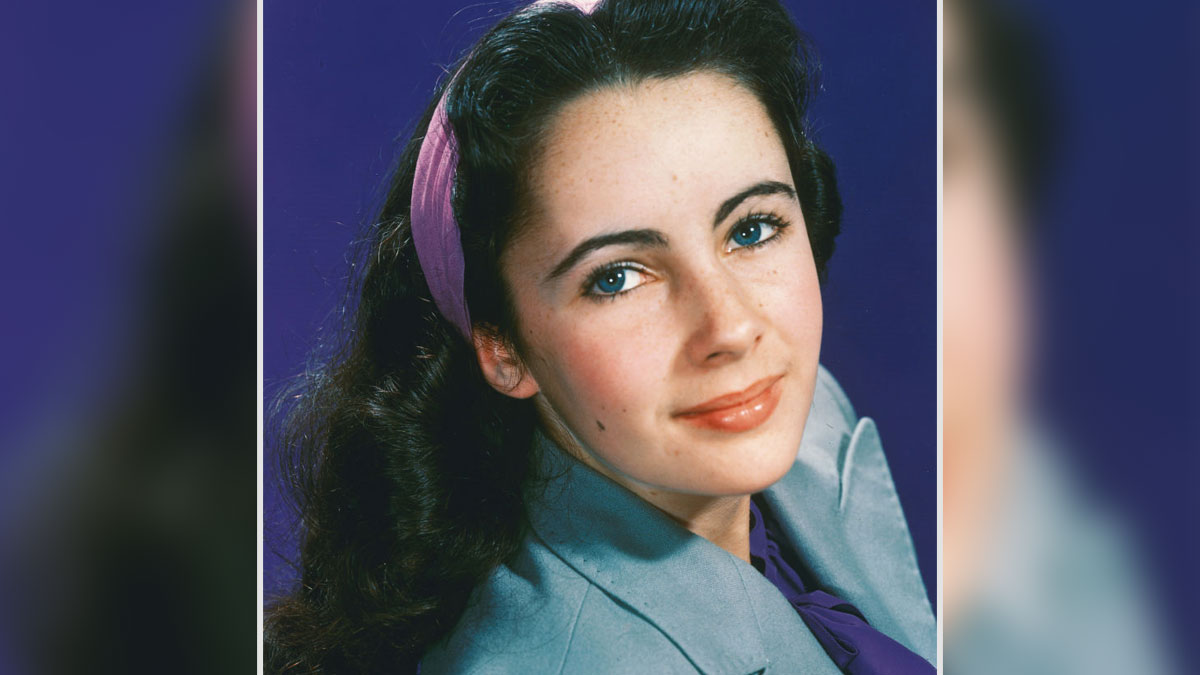
An Interview with Elizabeth Taylor (Famous Hollywood Actress)
A candid reflection from the spirit of Elizabeth Taylor, who shares her journey from the blinding lights of Hollywood to the serene, transformative teachings of the Buddha in the Western Land of Ultimate Bliss.

An Interview with Michael Jackson (King of Pop)
Michael Jackson shares his journey from the pressures of global fame to the peace of the Western Pure Land, revealing the truth behind his life and his ultimate deliverance.
A Voice from the Darkness: Helen Keller's Journey
Helen Keller, the renowned deaf-blind philanthropist, shares her journey from the darkness of the ghost realm to the light of the Western Pure Land of Ultimate Bliss, guided by the compassion of Namo Amituofo and Practitioner Su.

An Interview with Albert Einstein (Theoretical physicist)
Albert Einstein, once considered the most brilliant mind in human history, reflects on his life, the nature of 'science' versus the Truth of the Dharma, and his existence in the Western Pure Land.
A President's Repentance: Ronald Reagan's Journey to the Pure Land
Ronald Reagan, the 40th President of the United States, reflects on his life, his political career, and his profound journey from the depths of hell to the Western Land of Ultimate Bliss through the compassion of Namo Amituofo and Practitioner Su.
The Reflection of a Nation's Founder
This is a record of an interview with Kim Il Sung, the founder and former leader of North Korea, who sought deliverance at the Hsiang Kuang Pure Land Buddhist Centre in Australia. He now resides in the Western Land of Ultimate Bliss. This account reflects upon his life and the spiritual truths he has realised since his passing thirty-two years ago. Recorded by the chief writer, Venerable Fa Hui, on May 18, 2026.
About the Author
Hsiang Kuang Pure Land Buddhist Centre
Contributed to Pure Land Buddhism knowledge library