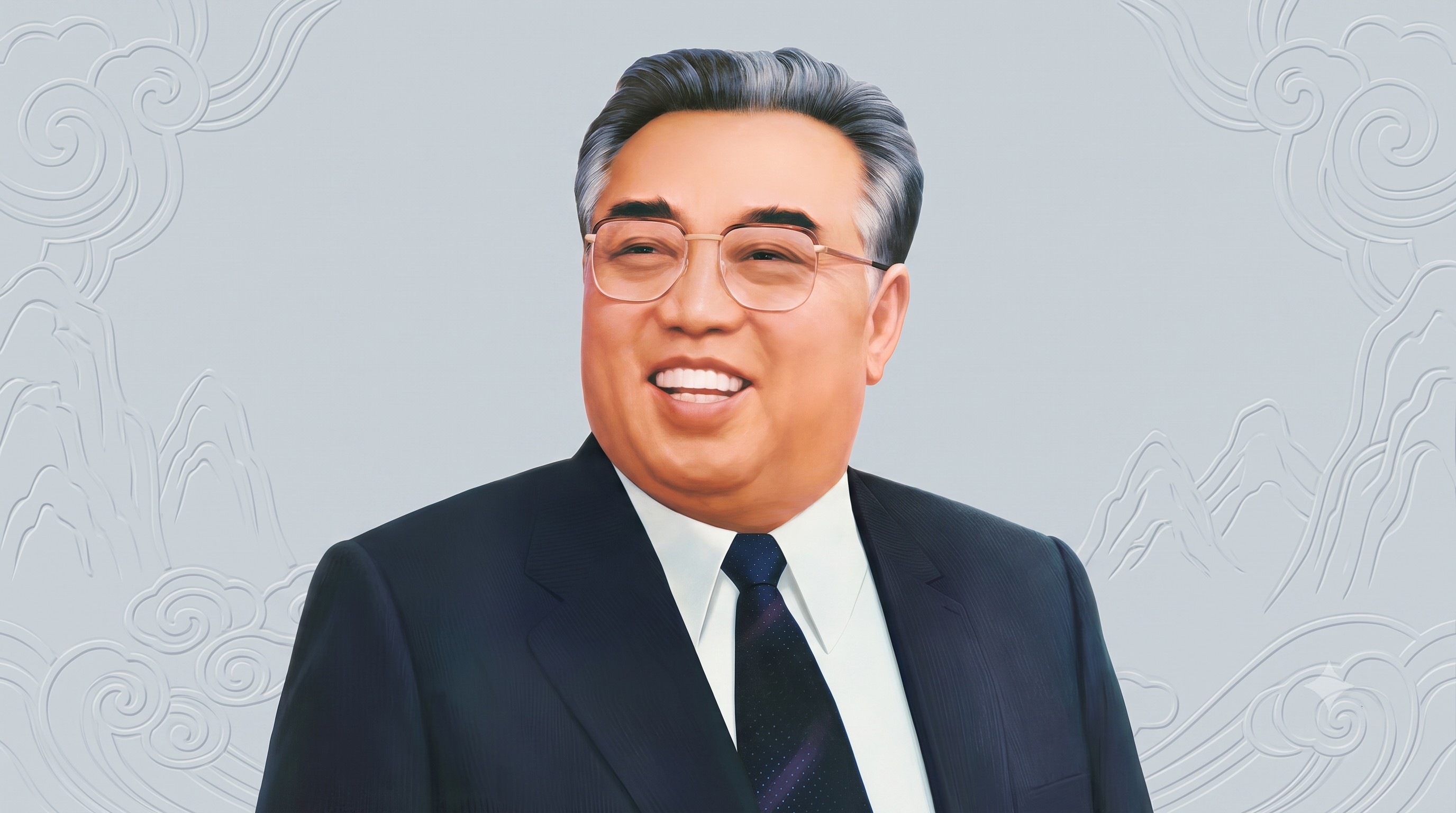
This is a record of an interview with Li Yuan, the founding Emperor of the Tang Dynasty, who sought at the Hsiang Kuang Buddhist Centre in Australia. He now resides in the Western Land of Nature. This account reflects upon his life approximately 1,400 years ago. Recorded by the chief writer, Shi Faru, on April 4, 2026.
Li Yuan speaks:
". Six hundred years have passed since I entered the hells. I no longer possess a human body to atone for my sins, for my heart was once filled with the ferocity of a hunter. I was cast into of a savage tiger in the mountains, and when that form perished in the void, I was reborn again and again into the bodies of ferocious beasts. For eight hundred years, I could not escape this cycle. It was only through the deliverance of Practitioner Su that the light shone into the dark space of these beasts, and this suffering spirit finally found a way out.
As I sat upon the lotus seat, my spirit gradually awakened, nourished by the Dharma water and the sounds of the Buddha's teachings. I shed the form of the beast and recovered my original human appearance. My heart, once filled with ferocity, has now received the benefits of the Dharma, allowing me to see my original, simple nature. Through the Buddha's , I recall my past life as Li Yuan, the founding Emperor of the Tang Dynasty. I shall speak of the path I took to build an empire—a path where I exhausted every scheme for my own gain, only to earn a century of torment in the hells. It was all because of my fierce, selfish nature, which led me to the animal realm. I have unravelled the ancient of the Li Tang dynasty; the glory of the Great Tang is no more, and a century of calculation has come to nothing. Today, I repent before the Buddha, finally understanding that only by studying the Buddha's teachings can one avoid the three lower realms. I hold a great vow to save others, to enter the Western Pure Land, become a Buddha, and return to this world to help all beings."
The Illusion of Imperial Glory
"I am Li Yuan, the founding Emperor of the Tang Dynasty. In truth, the name and the title mean little to me now. However, if one were to speak of my actions while I lived, they could be described as a series of calculated manoeuvres, a drama that unfolded with relentless intensity.
Everyone knows of the tyranny of Emperor Yang of Sui. Yet, as someone who served as an official and advisor through the reigns of both Emperor Wen and Emperor Yang, I must say that Emperor Yang was a ruler whose merits and faults were intertwined. He was not entirely ignorant of how a nation should function, and he knew how to treat scholars with respect. However, his arrogance and his obsession with grand achievements grew worse as he aged. He held himself in high regard and possessed immense confidence in the prosperity of the Sui Dynasty. After all, the foundation laid by Emperor Wen, combined with the economic and military developments of the time, gave the empire genuine strength. To him, the massive military campaigns, the grand construction projects, and the excavation of the Grand Canal were great successes. But for the common people, it was a different story.
The Burden on the Common People
"Having inherited the empire at a young age, he believed the world was his by right. With the vast resources and manpower at his disposal, his confidence swelled into hubris. His elder brother could not compare to him and never gained the trust of Emperor Wen, so it was only natural that he became the Crown Prince and eventually ascended the throne at the age of thirty-five. He had his own vision for governing the world and prided himself on being a sage king, setting impossibly high standards for his own civil and military achievements.
His constant military campaigns, grand construction projects, the establishment of the imperial examination system, and his management of internal and external affairs all served to inflate his ego. While these successes bolstered his confidence, they were slowly eroding the nation's vitality. He believed that expansion—especially the construction of the canal—would strengthen the state. This was a fundamental cognitive error. What truly drained the nation was the gradual loss of the people's trust and support. During the construction of massive palaces and the canal, the common people were conscripted into forced labour. During times of war, they were forced to serve as militia and handle logistics. The conditions were brutal; many units suffered fifty percent casualties before even reaching the front lines. This was the true cause of the people's resentment. For the commoners, it was a disaster of human making. All the able-bodied men were conscripted, leaving them unable to feed their families or be with their loved ones. No matter how grand the construction, they had no time to enjoy it.
The Breaking Point of an Empire
"During the reign of Emperor Yang, the entire country was in a state of constant construction. The people were subjected to long-term, back-breaking labour, and they never reaped the benefits of these projects. This led to a total lack of support for his rule. Most importantly, his three campaigns against Goguryeo in his later years were the final straw. The people could no longer endure the endless wars and frequent conscriptions. On the surface, everyone still appeared to respect the government—the prestige of Emperor Yang was still immense—but in secret, the people were filled with grievances. Rebellion was merely waiting for the right moment.
I was long situated at the core of power, and I had contact with the common people; these signs were obvious to me. Emperor Yang had no intention of changing, so an uprising was inevitable. I had long prepared for this day, secretly planning, recruiting soldiers, and gathering talent. I had quietly deployed my trusted confidants and sons into key positions. When the rebellion broke out and Emperor Yang fled, I moved quickly into Chang'an, acting under the guise of protecting the Sui regime. This had been in my calculations all along, which is why my actions were so decisive and smooth. I am sure you can all see the nature of my planning."
The Strategy of the Puppet Emperor
"It was not just me; the warlords across the land were also prepared. I simply held the advantage of location, which is why I held onto Taiyuan for so long. I followed my planned route and led my army to capture Daxing City. Once inside, I installed the puppet emperor, Yang You, to avoid being attacked by the rest of the world all at once.
The situation of the various warlords was already within my expectations. Everyone was dissatisfied with the tyranny of Emperor Yang and had begun stockpiling troops. Once the call to rebellion was sounded, the warlords were bound to rise up. By occupying Daxing City, I became the primary target for all of them. Holding this city meant controlling the central government. The transportation between Daxing, Luoyang, and the various southern palaces was excellent. Controlling this city gave me the ability to strike quickly at any part of the Sui territory. Daxing was a place that every strategist had to fight for. The enthronement of a puppet emperor was equivalent to forcing Emperor Yang to abdicate. With the approval of the puppet emperor, I was able to control the major departments and institutions of the state; receiving foreign envoys and controlling the military became entirely legitimate.
Although only a portion of the Sui officials and subjects were willing to obey me, I possessed a level of legitimacy that other warlords lacked. After all, by holding the puppet emperor, I was ostensibly still supporting the Sui regime; I was merely administering the government on behalf of a teenage emperor. In the eyes of the world, my claim was that once the chaos was settled and the people were pacified, I would return the power. That was the plan I was playing at the time. As I expected, Emperor Yang, who had fled to his palace, had no ability to reclaim power. With his followers deserting him and warlords rising everywhere, the hearts of the people were no longer with him. A return to the capital or a northern expedition was simply impossible. What I did not anticipate was that, abandoned by all, Emperor Yang would be killed so quickly. Within a year or two, the news of his death reached me.
After learning of his death, and seeing the country divided among warlords, there was no longer any need for secrecy or the use of a puppet emperor. I could directly proclaim myself Emperor and establish the Tang Dynasty. This was within my plans, and it went even more smoothly than I had imagined. Reaching this stage was not overly difficult; after all, from Taiyuan to Daxing, there was no major force that could block my path.
The next step—pacifying the warlords across the country—required real skill. After this point, the situation was no longer something I could fully predict or control. However, I was quite satisfied; up to that point, all my plans had unfolded as I had conceived them, without any major deviations. To hold onto power, I had to take down the warlords as quickly as possible, for the longer a region remained divided, the harder it would be to control the hearts of the people.
If I could ride this wave, using a new government and a new central authority to replace the old, allowing the people to return to stability and acting in accordance with righteousness, that would be for the best. It would also be more favourable for winning the hearts of the people. After all, there had been so much construction, forced labour, and war; what the people truly needed was rest, not more conflict.
By leveraging this sentiment, if I could make them believe that I would bring true stability and peace, without excessive war or labour, I could win their hearts. Of course, this also relied on my youngest son, Li Shimin. From a young age, he displayed extraordinary military talent, which was one of the reasons I placed such high hopes in him. However, bound by the tradition of hereditary succession, I first gave the position of Crown Prince to Li Jiancheng. I always understood that Li Shimin's talent and military foresight surpassed Li Jiancheng's. But the long-term stability and development of a nation do not rely solely on military might. As for Li Shimin's ability to govern internally after the wars were settled, that remained to be seen. Of course, I believed they each had their strengths and weaknesses. Yet, in a time of chaos and uncertainty, every extra hand was a source of strength. Both of my sons were indispensable talents for pacifying the warlords.
In the midst of this chaos, who would survive and who would stand out was a matter of destiny. I was not in a position to intervene too early, nor could I easily express my preference by transferring the crown to Li Shimin. The situation at the time was not suitable for such a move. To remain unchanged in the face of change—that was my primary consideration. I would first pacify the internal chaos and the warlords, and once the situation was settled, it would not be too late to consider the issue of the successor. In the subsequent wars against the warlords, I gradually saw that Li Shimin's military talent was indeed far superior to Li Jiancheng's. At the same time, I sent Li Jiancheng to pacify local warlords, but his bravery was nowhere near that of Li Shimin.
I do not know if it was the will of heaven, but Li Shimin was already at the height of his power, holding his own territory and deeply supported by officials and ministers. This situation truly shocked me. Every time he sent news of victory, I felt both and anxiety. After all, the position of Crown Prince had already been given to Li Jiancheng, and in the future, the problem of succession would inevitably arise. If Li Jiancheng were to truly face Li Shimin head-on, I suspect he would not be able to win by force."
How, then, was I to smoothly transition the position of Crown Prince? Was Li Shimin truly willing to step aside? Or would he perhaps meet his end on the battlefield during some campaign? These were the various possibilities I calculated in my heart. But given the situation at the time, it was truly impossible for any party to move. Without Li Shimin, it would have been impossible to complete the unification of the national warlords; yet, if I allowed Li Shimin to become too prominent, I would have to deal with the issue of the 'heir apparent.' My heart was incredibly conflicted at the time. I simply adopted a mentality of luck and avoidance—if I could delay it, I would.
The Rise of the Tang Empire
Perhaps it was the flourishing fortune of the Great Tang. To my surprise, within a mere six years, Li Shimin and the brave general Li Jing had rapidly pacified the majority of the warlord factions, leaving only a few remnants. The stability of the Tang Dynasty had indeed been established. This made me very happy; finally, the Great Tang Empire had firmly planted its roots on the soil of China.
Perhaps Li Shimin also understood that once the internal and external troubles of the nation were removed, only the succession of the throne remained undecided. A year or two after pacifying the world, Li Shimin had also built up his strength, preparing to launch a coup. I actually knew in my heart that this would happen sooner or later, but I was helpless against Li Shimin. The country truly needed him, and the subjects and ministers all supported him; it was just that I truly did not want to face it. After all, I had never imagined that such fratricide would occur, nor did I believe such a thing would come to pass. I had originally taken advantage of the situation to establish the Great Tang Empire, but I had not expected to face a struggle for the crown. The stability of the Great Tang Empire only made the throne appear even more coveted. The struggle between the two princes intensified, but I truly had no heart to intervene. Perhaps it was because I feared that if Li Shimin became the Crown Prince, his influence would reach its zenith, and he might even force me to abdicate. Or perhaps, if I had handled it properly, I would not have had to wait for Li Shimin's coup. But I knew better than anyone that if I did not handle it, the matter would eventually resolve itself. To me, this was the most prudent way to protect myself, and it could be considered one of my strategies. If I favored either side, the other would inevitably be dissatisfied and would surely raise an army to attack. If I chose the wrong side, would I not be purged?
The Burden of a Historical Name
The position of Crown Prince had been granted to Li Jiancheng many years ago. If I chose no camp, even if Li Shimin deposed the Crown Prince and declared himself the heir, I would only need to let things take their natural course and comply with the situation, so I would not be the one targeted for liquidation. Perhaps this was very selfish, but Li Shimin's power was at its peak. His bravery in battle and his ruthless methods meant that if he truly launched a coup, there was no guarantee he would not do something detrimental to me. I had to be on guard against this as well.
To be honest, I was powerless to contend with him. He had long since become the true, unnamed emperor of the Great Tang; he only lacked the right timing. He was supported by the subjects and held military power—even if I were his father, what did it matter? Li Shimin indeed harbored some suspicion regarding my appointment of Li Jiancheng as Crown Prince, perhaps believing that I preferred Li Jiancheng to inherit the throne.
I dared not take these many suspicions and inner thoughts lightly. Therefore, 'observing the changes' was the best approach for me. Later, the Xuanwu Gate Incident, known to all under heaven, occurred. Li Shimin wiped out all the royal family members who were not of his own bloodline, which was enough to demonstrate his ambition and boldness in controlling the world. The thoroughness with which he slaughtered his own kin gave one a glimpse of his nature.
Retirement and the Twilight Years
Seeing that the situation had stabilized, I avoided his sharp edge and chose to abdicate in his favor, retreating to the position of Retired Emperor. It was indeed a more prudent way to protect myself. In my later years, I lived a quiet life in a separate palace. To me, the things I needed to do in this life had mostly come to an end. I had no desire to covet the pleasures that Emperor Yang of the Sui Dynasty had sought. After all, with the lesson of the past laid out before me—his every word, every action, his grandiosity and greed for pleasure—it was all vivid in my memory. I had no interest, nor the courage, to follow his path, and even less of a mood to enjoy such things. Years of warfare had left me extremely exhausted, and having spent years strategizing and facing the high-pressure environment of internal royal struggles, my retirement as the Retired Emperor was, in a sense, a way to find some peace.
The world had stabilized, and the civilians were able to rest and recuperate. I had once counseled Li Shimin to ensure the people could live and work in peace, not to impose heavy labor, and not to engage in large-scale wars. In fact, he understood this principle. Having spent years in battle, he knew well that he needed to implement those ideals and return a stable life to the people. I saw that he was not a person who loved grandiosity like Emperor Yang of the Sui, and I understood that although he was very brave in military matters, he was not truly a warmonger. Therefore, I felt at ease handing the management of the entire empire over to him; for me, any further worrying would have been of no use.
In my later years, I began living a leisurely life, but before long, my body was beset by many illnesses. At first, it was only slight dizziness and headaches, but later, I became confused, often suffering from severe headaches and vertigo. I was bedridden, unable to handle affairs clearly, and unable to receive many visitors. Occasionally, old ministers would come to inquire about my condition, but toward the end, I often used the excuse of being indisposed to decline all visits. In truth, I had not lived in the separate palace for long before I was gradually tormented by illness, unable to lead the leisurely life I had enjoyed right after abdicating. Although I took medicine for a long time, my condition gradually worsened and showed no signs of improvement. I had thought my body was still quite robust, but I was shocked that it deteriorated so rapidly. I had been known for my clear thinking, my skill in strategy, and my precision in planning, but now my mind was often unclear, and my speech became very slow. This made me very nervous, and I was unwilling to let too many people know about it.
Every time I met people, I pretended that everything was normal, but in reality, most of the time, my thoughts were already unclear. Finally, in a state of confusion, I breathed my last.
Judgment and the Hells
In truth, the process of death was not very clear to me. I only knew that I was later brought to the Hall of the King of Hell. At the time, I had heard some folk legends, but I never expected such a place to actually exist.
During the process of my illness, many of my souls had already been suffering in the hells. Now that I had finally passed away and been judged before the King of Hell, my sentence had not yet ended. The King of Hell determined that I had spent my life strategizing and calculating, feigning that I followed the will of the people to seize the throne, taking advantage of the chaos in the country to rise up and seize the world, thereby establishing the Great Tang Empire for my own family. However, the years of warfare in between, the slaughter of the former dynasty's subjects, and the failure to properly handle the issue of the Crown Prince for my own personal gain had led to the bloody coup within the palace.
All the impact this had on the world required me to descend into the hells to suffer punishment. I suffered in the hells for nearly six hundred years; I went through the hell of digging out hearts, digging out brains, amputation, and the copper pillar hell. It is shameful to say, but during the trial before the King of Hell and even during the process of my punishment, my was very blurred, and my mind was not clear. I never imagined that I, a founding emperor of the Great Tang, would end up with such an outcome.
After six hundred years, I emerged from the hells and returned before the King of Hell. The King of Hell asked me if I knew to repent and if I was willing to change my ways. I was still not very clear, and deep in my heart, there was still a sense of backlash and resistance. After all, the people had been in deep water and scorching fire at the time. Although I had indeed established the Great Tang Empire for my own selfish interests, it had also helped the civilians of the Sui Dynasty, sparing them from excessive labor and constant warfare. I had established a world ruled by the Li family of the Tang Dynasty, allowing them to live better lives—was that not acceptable? This mental note was precisely the reason I suffered. However, I did not understand it at the time; deep in my heart, I always held such thoughts. In the Hall of the King of Hell, I still had not fully repented, and the King of Hell sentenced me to be reborn in the body of a fierce tiger.
From Beast to
Perhaps I still had some remaining blessings, as I was reborn into the body of such a fierce tiger rather than falling into the body of a beast meant for slaughter. However, a fierce tiger is still an animal! My mind remained unclear, and I was extremely irritable, prone to anger, and possessed significant aggression. Life after life, I was reincarnated into the bodies of different wild beasts such as lions, tigers, and leopards, yet I was still unable to escape the body of an animal. How long this lasted, I do not know myself, and I became accustomed to being a fierce beast.
One day, while I was hunting prey in the mountains, a golden light suddenly shone down. I saw that this golden light was very warm, and it gave me a feeling of nostalgia. I gazed at the golden light with longing, and with this one mental note, I followed the golden light to a very bright place. I was surprised to find that I was on a soft lotus seat, and I was no longer a fierce beast, but had hands and feet. This astonished me—could I still be a human? In the past, the people passing through the mountains were merely targets for me to hunt; I had never thought I could become a human again. By then, I had long since forgotten the events of the past. However, as the golden light continued to shine upon me, and with the washing of the Dharma-sound and Dharma-water, I slowly began to wake up.
It turned out that I had once been an emperor of a generation, which surprised me greatly; although it felt strange, it was also vaguely familiar. As I continued to listen to the sutras and bathe in the Buddha-name and Buddha-light, I gradually remembered the bits and pieces of the past. I had an 'Aha!' moment—I really had been an emperor of a generation! And because I had committed so many sins, I had fallen into the hells, and later became a wild beast, experiencing nearly eight hundred years of suffering. This filled me with fear and sadness. I did not understand why I, an emperor of a generation, would fall to such a state. It was too tragic; it was something I had never expected. I had originally thought that by fighting for the world for the sake of the Sui Dynasty's civilians and allowing them to enjoy a stable life, I would be rewarded, but I never expected that I would have to suffer so many bitter fruits because of it. Namo Amituofo.
"At that time, I possessed a reputation that spanned the world, yet now I must endure the agony of having my brain consumed, trapped in a long-term state of confusion and dimness. I even devolved into a mindless, ferocious beast, knowing only how to slaughter, act with brutality, and hunt down prey. Such an unbearable situation truly left me unable to recover for a long time; my heart found it impossible to accept. However, while in the Dharma-Nature Land, watching Practitioner Su perform Chao Du for the ancient Chinese realms and listening to Practitioner Su’s Dharma talks, I gradually came to understand the absurd mistakes of my past.
The Weight of
I now know that the operation of heaven and earth has its own principles, and the rise and fall of a dynasty also follow the laws of karma and cause and effect. Because of my own selfishness, I participated in these cycles. For personal gain, I slaughtered many civilians and officials of the Sui Dynasty. I used schemes and power plays to secure my own interests, causing brothers to turn against one another and plunging the nation into the chaos of war. I must repay these debts one by one. I cannot help but reflect: if I had encountered the civilians living in such dire straits back then, what should I have actually done?
As I listen to the sutras and hear the Dharma, I have gradually come to understand that the suffering of the people has its own karmic causes. Only by truly accepting Buddhist education can one change one's own karma and have the opportunity to escape a life of misery. The higher one’s position, the more one must accept Buddhist education, so that one does not end up like Emperor Yang of Sui, engaging in massive construction projects and endless military campaigns that harm so many civilians.
The Root of the Problem
All of this must rely on Buddhist education to improve; it cannot be solved by military conquest or by taking the lives of many people, because that does not resolve the fundamental problem at all.
Once killing karma is created and the karmic flow of cause and effect is set in motion, one cannot avoid the eventual reckoning and the suffering of the fruit. The people of one dynasty harm and slaughter the people of the previous one; within the laws of karma, they devour one another in succession. After this, the people of that dynasty are inevitably slaughtered and replaced by the next.
The countless karmic debts and negative karma accumulated in this process are not something people have the opportunity to repay on their own. This karma is immeasurable and boundless. Only by relying on the compassionate deliverance of Namo Amituofo, who leads beings to rebirth in the Western Pure Land, can one truly and thoroughly repay the debts owed to these beings. Namo Amituofo and Practitioner Su’s salvation team travel rapidly through the ten directions, reaching every province and county in China, and even every remote canyon, mountain forest, stream, and secluded place inaccessible to humans, as well as the spaces deep within the earth.
Equality in the Dharma-Nature Land
In countless spaces, there are immeasurable and boundless beings and demon palaces that have had their spaces opened through Practitioner Su’s Chao Du, leading them to the Western Land of Dharma Nature. Under the illumination of the Buddha-light, everyone is equal. Whether they were once emperors, ferocious beasts, ghost deities, or demon crowds, everyone enters the Dharma-Nature Land as equals. Different beings have different personalities. The Buddha uses to embrace all kinds of personalities, and before the Buddha, these personalities vanish, leaving only an equal existence.
After everyone enters the Dharma-Nature Land, they shed their original forms and slowly recover their human bodies. They cast off their black outer garments and animal bodies, restoring their clear and bright appearances. Seeing this, I cannot help but sigh; the Buddha’s teachings are truly vast and profound.
A Missed Opportunity
At that time, I knew that Buddhism already existed in China. However, due to years of war and living in a defiled world, I had no heart to attend to it, nor did I think about the importance of Buddhist education. In my later years, although I had entered a time of peace and prosperity, I heard that Li Shimin was indeed promoting the Buddha’s teachings. But I had no interest in politics, and I let everything he promoted take its own course without questioning it, thus missing the opportunity to learn the Dharma. Moreover, my physical condition was deteriorating, and in my state of mental confusion, I truly had no chance to properly study the Buddha’s teachings.
Having created so much negative karma, looking back now, I was already being entangled by immeasurable and boundless . My mind was completely occupied by the spirits of those I had harmed through schemes and those who had died tragically under the blade due to my power plays. They constantly gnawed at my brain, interfering with my clarity and leaving me unable to make normal judgments or speak properly. The long-term headaches and dizziness made it impossible for me to remain clear-headed. I only now understand that this was all the interference and vengeance of my karmic creditors. Hearing Buddhist education now, I realize that this is a drama that has been playing out continuously for immeasurable eons. Without Buddhist education, there is no end to this; how long would this endless suffering have continued? I feel terrified just thinking about it.
If one does not encounter the Buddha’s teachings, a person can experience thousands upon thousands of roles and still have no chance to escape.
A Late-Found Fortune
Now that I have encountered the Buddha’s teachings in the Dharma-Nature Land, although it is late, I have finally encountered them, which is a late-found fortune. I diligently listen to the sutras and hear the Dharma, and watching Practitioner Su perform Chao Du, I have slowly come to understand what a person who truly cares for the world looks like. Someone who can truly think for the people is worthy of being called an emperor. It turns out that one must be like Practitioner Su, possessing such mind-capacity and a Buddha-heart that is truly in sync with Namo Amituofo, to achieve the power to bring true welfare to the people of the world.
Seeing this, I am filled with both admiration and shame. If I had possessed the mind-capacity and faith of Practitioner Su back then, perhaps I would not have created such negative karma, and perhaps I could have truly helped the civilians of the Sui Dynasty. But everything has already happened; there is no use in saying more, and I can only share my own story here.
I am grateful to Namo Amituofo and Practitioner Su for giving me the opportunity to learn the Buddha’s teachings. I will continue my diligent practice, hoping that one day I can again enter the human world to help the civilians. Gratitude to Namo Amituofo, gratitude to Practitioner Su.
Namo Amituofo.
Li Yuan"
IN THIS COLLECTION
More from Twelve Rays Deliverance to China (Chinese Historical Figures)