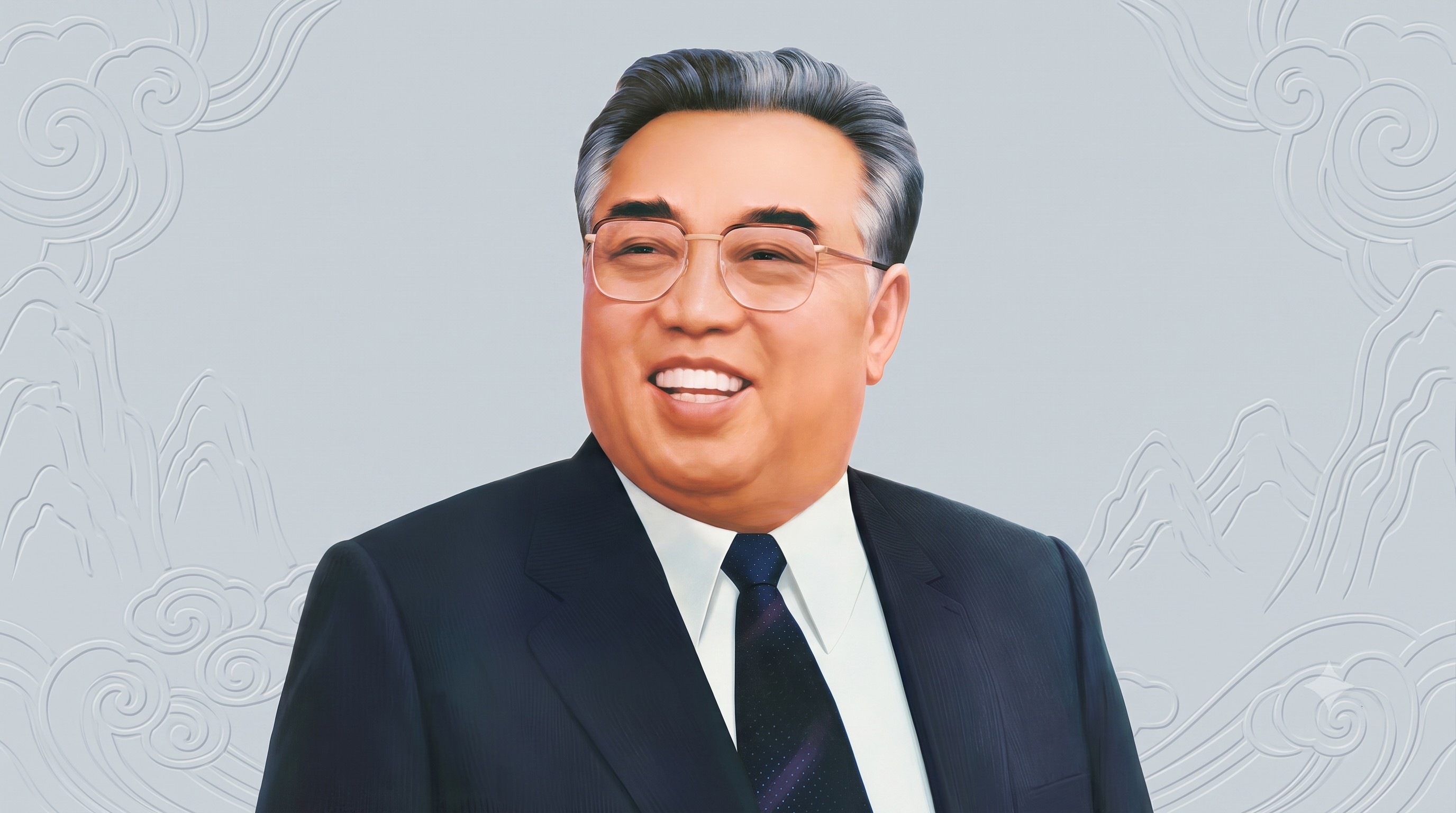
This is a record of an interview with Wei Qing, the Great General of the Western Han Dynasty, who sought [Spiritual Deliverance] at the Hsiang Kuang Buddhist Centre in Australia. He now resides in the Western Land of Nature. This account reflects upon his life approximately 2,100 years ago. Recorded by the chief writer, Fa Ning, on April 16, 2026.
Wei Qing speaks:
""—this is the first name of a Buddha I ever learned, and it is truly magnificent. During my life as Wei Qing, I never once studied the Buddha’s teachings. I spent my entire life engaged in the brutal slaughter of the battlefield, though in my heart, I always harboured a sincere desire to save my country and help the people. Although I was a renowned Great General of the Western Han Dynasty, my temperament was not actually cruel; I was, in truth, a rather gentle person. I know this is difficult for people to believe! Because of my humble origins and the various circumstances I faced, I never dared to adopt the ruthless, iron-fisted style that many other generals of my time possessed.
Today, as I sit here in the Western Land of Dharma Nature to share my story, my heart is filled with profound emotion. I truly hope that my life can serve as a cautionary tale for others. Like many other historical figures from China who have arrived here in the Western Land of Dharma Nature, I feel an overwhelming sense of regret for everything I did in the past. You could call this a confession of repentance. I have observed many other famous figures who have been interviewed here; while they were alive, because they had never received any Buddhist education, they mistakenly believed that everything they did was right and that their sacrifices were worthy of praise. However, after experiencing the reality of —and especially after receiving the salvation of the Buddha—everyone is filled with a sense of humility and modesty. I, Wei Qing, share this exact state of mind. The of Namo Amituofo has melted our hardened hearts.
A Confession of a Former General
Although I was a general with a gentle temperament, I was, after all, a commander who killed countless people. Even though more than two thousand years have passed, the memory of it still makes my skin crawl. In the past, I killed without blinking an eye. I operated under the mindset that as long as they were the enemy army, they had to be destroyed. It created a binary world in my mind: I was right, they were wrong; I was the victor, they were the defeated. I felt that I stood high above them, representing the glory of the Han Dynasty, while other ethnic groups were merely obstacles that we were obligated to eliminate. I told myself that for the sake of protecting my home and country, I had no other choice.
I grew up during the Western Han Dynasty, a time when Emperor Wu of Han was filled with grand ambitions to stabilise and expand the borders of our nation. The most troublesome issue at the time was the massive Xiongnu army to the north. For many years, the Xiongnu had posed a multi-faceted threat to the northern regions of the Han Dynasty. Emperor Wu had many great generals under his command, all of whom viewed the pacification of the Xiongnu—or the arrangement of political marriages—as their life’s work.
The Burden of Loyalty and the Xiongnu
I have not yet encountered other great generals here in the Western Land of Dharma Nature, but I have seen some acquaintances from the Western Han period. Although I never met them personally while we were alive, seeing them here now and listening to their stories is like looking into a mirror of my own past. Even though a millennium has passed, the memories remain as vivid as if they happened yesterday.
The historical figures I speak of here in the Western Land of Dharma Nature include people like Su Wu, the shepherd, who once represented the Han Dynasty during the reign of Emperor Wu to negotiate peace with the Xiongnu. My role was the exact opposite of his: he went to negotiate, while I went to wage war. I fought against the main force of the Xiongnu, time and time again, driving them so far away that they dared not return. People have always praised my military record, and it is true that I was incredibly loyal to the Emperor, to the people, and to the Han Dynasty. Because of this, I was showered with praise by the Emperor throughout my life, and receiving promotions and titles became a common occurrence.
From Slave to General
What the world does not know is that I came from a very humble background. As a child, I was essentially a slave. Because I was an illegitimate son, I held no status in my family whatsoever. Eventually, I ran away and made my way to the estate of Princess Pingyang, where my mother worked, and I became a stable hand. Through a series of twists and turns, my sister—who also held a lowly status—unexpectedly became a consort to the Emperor. Because of a chain of events, I was noticed by the Emperor and transformed into a military commander.
At the time, my status was not high, but the Emperor personally selected me to lead an expedition against the Xiongnu. I fought alongside several other armies, and I emerged as the final victor in what is now known as the Great Victory at Longcheng. At Longcheng, I engaged the Xiongnu in a fierce battle. Relying on my extraordinary courage and strategic planning, I dealt them a crushing defeat. Consequently, I gained the Emperor’s complete trust and was heavily relied upon, thus beginning my career as a Great General.
The Weight of Command
At the time, I did not feel that killing on the battlefield was wrong. I displayed my superior military talent again and again, and I could even say that I did so with ease. At the same time, I treated my subordinates very well; I often lived and ate among them, and I never scolded them. I was considered a very tolerant and compassionate general. As for the civilians of the Han Dynasty, I cherished them deeply. However, regarding the Xiongnu, my perception was the same as everyone else’s: they were merely a foreign threat to our Han Dynasty.
In my heart, I viewed them as inferior. In battle, I never showed mercy. I truly killed every Xiongnu I encountered, and I showed no compassion to the Xiongnu generals or soldiers who fought against me. This was, after all, the direct order given to us by Emperor Wu of Han.
Although my life was very smooth and my temperament was gentle, there was always a sense of inferiority deep within me. I was often terrified. The Emperor’s authority was absolute, and I was occasionally the subject of his suspicion, dissatisfaction, or distrust. My military achievements were so staggering that people were somewhat wary of me, fearing that my merits might overshadow the Emperor’s own, or that my influence was becoming too great.
The Descent into Hell
I understood the principle of self-preservation, so I thought about it constantly. Whether it was to protect myself and my family from the Emperor’s displeasure, or to calculate the precise odds of victory on the battlefield, my mind was always engaged in extremely meticulous thought. I thought very deeply; I was not a reckless general who only knew how to charge forward. I could make precise plans and arrangements for all the materials, food distribution, budgets, and transportation required for a war. The fellow soldiers who fought alongside me were always at ease with my planning.
Yet, this tendency to overthink and worry prevented my soul from ever finding true liberation. My life was nothing but fighting and thinking, thinking and fighting. Everyone knew of my loyalty and righteousness, and that was never in question. But beneath a seemingly magnanimous exterior, there were many hidden aspects that left me feeling deeply anxious.
Later in life, I left the human world due to an illness when I was only about fifty years old. By the standards of life expectancy at that time—and especially for a general—I was considered a long-lived man. I had killed countless enemies in my life, and as I grew old, I began to suffer from hallucinations. I felt as though I were about to be killed, or perhaps executed by the Emperor. Because I had spent my life in deep contemplation and had killed so many, the retribution I faced in my later years was inevitable.
The illness came on very quickly. You could say that once my found me, they showed no mercy, and my body collapsed almost instantly. I had no strength to do anything; I could only lie on my sickbed and wait for the end of my life. The torment I endured was truly unbearable, accompanied by countless hallucinations and images of the people I had killed, appearing one after another before my eyes. My hands were stained with the blood of the Xiongnu—tens of thousands of them, their families, countless horses and cattle, and civilians. Anyone who had been killed by me or by my army appeared before me. These visions, which felt both real and illusory, lasted for a long time and caused me immense suffering.
After I died, I went directly to hell to undergo punishment. Some people ask if I knew I was wrong. At the time, I was somewhat confused, because as a Great General of the Han Dynasty, I felt I had done nothing wrong. I had acted for the sake of the country and the people, and I had only killed the so-called barbarians of the opposing side. But for those who know the Buddha’s teachings, and from my perspective now, looking back at everything from the Western Land of Dharma Nature, the conclusion is clear: I was absolutely, fundamentally wrong! My perspective at the time was limited to the Han Dynasty; I did not truly understand the concept that all people are equal, nor did I know that killing is the destruction of life. It was a grave mistake. The principle that a life must be paid for with a life is the Law of Cause and Effect. But I had no opportunity to encounter the Buddha’s teachings—one could say the Dharma had not yet reached the heart of China—so I had no concept of any of this.
From a young age, I knew the Confucian values of benevolence, righteousness, propriety, wisdom, and faith, as well as the concepts of loyalty and righteousness. In my heart, these represented loyalty to the country, the imperial court, and the people. Therefore, everything I did was in complete accordance with the Emperor’s orders. The days spent suffering in hell were incredibly painful and long. At the time, I did not know what I had done wrong; I only vaguely felt that the karmic creditors were coming to claim my life. I truly thought I had only committed an unavoidable error, never deeply considering the act of killing as a moral failure. Of course, while in hell, I was in too much agony to think clearly; I was trapped in an endless cycle of suffering. I suffered in many different hells, including the hell of amputation, the hell of the blood pool, the hell of heart-gouging, and the hell of brain-gouging. Because I had killed so many, and because so many beings had been harmed by my meticulous military plans, these were all debts I had to repay. That is why I descended into so many hells to settle different karmic sins. Looking back now, I spent 1,500 years in hell—it was a truly painful and long period of time.
Fortunately, just before I was about to ascend from the hells, I had the opportunity to hear the Buddha’s teachings while still in that dark realm. Although I am not certain which Buddha it was, it was truly the most important lesson of my life. When I was in the depths of extreme agony, the Buddha’s Dharma felt like a cool, refreshing breeze brushing against my ears. Even though my body was still suffering immensely, I finally realised that I had been wrong, and I was finally able to willingly repay all the sins I had committed. While the physical pain persisted, the suffering in my heart began to fade away. Amidst that excruciating physical torment, I sincerely and openly repented. I repented to all the Xiongnu whose heads I had severed, to all the generals, soldiers, and horses I had slaughtered, and to all the innocent civilians whose lives I had taken.
The Path of Repentance and Release
Although I never intentionally sought to kill the innocent throughout my life, on the battlefield, death was inevitable. Many of those deaths were beyond my control or autonomy. Therefore, in the hells, I repented deeply to them and expressed my willingness to repay every debt. No matter how long the punishment in hell lasted, I was prepared to make amends. This heart of repentance shortened my time in the hells, allowing me to emerge a little earlier than I otherwise would have.
Later, King Yama sentenced me to the ghost realm. Transitioning from hell to the ghost realm was indeed much more bearable. Although the ghost realm is dark, dull, and filled with a sense of desolation, at least I was no longer subjected to those harsh punishments. Furthermore, in the space I occupied, I could witness the changes in the world I once lived in compared to the present. It was during the Ming Dynasty, and I could observe the rise and fall of dynasties; the standard of living had improved, and the spiritual world of the people had evolved as well. Within that space, I diligently searched for traces of the Buddha. Having encountered the Buddha during my days of punishment in hell, my heart was filled with immense , knowing that the Buddha would surely appear in this world again.
Observing the Human World from the Ghost Realm
Although the ghost realm is full of suffering, being able to observe the human world and participate in its activities is a far better existence. Our living space actually overlaps with the human realm, so for me, observing human life was quite easy. I, Wei Qing, was always keen on observing the changes in people, events, objects, and scenery. By then, the nation and the world had undergone so many transformations. The Ming Dynasty was a relatively peaceful era without many wars, so I felt at ease staying there, wandering about.
The happiest thing for me back then was discovering that the Buddha’s teachings had already taken deep root in China. As I wandered, I saw major temples and realised that many people already held the concept of the Buddha in their hearts. Many practitioners also knew to chant the Buddha’s name. It was then that I realised the Dharma sounds I had heard long ago must have come from the name "Namo Amituofo." Hearing the six-character name "Namo Amituofo" once again on Chinese soil filled my heart with great joy. Thus, I knew that the people of China must have the same opportunity for salvation as I did. Although I did not know when that day of salvation would arrive, the name of the Buddha always brought me peace of mind.
A New Life in the Western Land of Dharma Nature
This name, "Namo Amituofo," remained rooted in my heart as a being of the ghost realm for several hundred years. I wandered there until recently, when the land of China underwent earth-shattering changes. Arriving in today’s China after so many years, I was able to hear the Buddha’s Dharma sounds once again, and this time, I truly encountered the Buddha in person. Along with many other ghosts wandering in China, I was saved by the Buddha during a great deliverance conducted by Namo Amituofo and Practitioner Su not long ago. Arriving in the Western Land of Dharma Nature, compared to the days in hell and the ghost realm, is truly, truly bright and joyful. I am immersed in complete Dharma-joy and tranquility. I have never experienced such a wonderful feeling; I had never even imagined it. In the Western Land of Dharma Nature, I have completely surrendered myself to the Buddha. I feel very secure, peacefully chanting the Buddha’s name and performing prostrations on a lotus flower, spending this period of practice in serenity.
The Great Deliverance of Practitioner Su
This period has also allowed me to witness firsthand the vast Chao Du conducted by Practitioner Su, an awakened being in the human world, across mainland China. This is a truly extraordinary event. Countless, immeasurable beings have benefited from it, including myself, many historical figures, ordinary civilians, and countless ancient demons. What a magnificent feat this is! Practitioner Su, who has realised his true nature and attained Buddhahood, follows Namo Amituofo to deliver immeasurable beings and demon crowds in China, Taiwan, Southeast Asia, and beyond. This spirit of fearing no difficulty and acting with directness has moved Namo Amituofo to reside at the Hsiang Kuang Pure Land Buddhist Centre in Australia, and to establish the Western Land of Dharma Nature as a Buddha-land for Practitioner Su. As a transit station to the Western Land of Ultimate Bliss, the Western Land of Dharma Nature can lead immeasurable beings like us to first arrive here to listen to sutras, hear the Dharma, chant the Buddha’s name, perform prostrations, and purify our body and mind, without having to suffer the pains of the six realms of rebirth. Once purification is complete, everyone can choose to go wherever they wish.
A Warning from History
Of course, I, Wei Qing, advise everyone here to chant "Namo Amituofo" until the very end; rebirth in the Western Land of Ultimate Bliss is the only true goal. I am also waiting with such attachment in the Western Land of Dharma Nature, hoping that one day the Buddha will take me back to the Western Land of Ultimate Bliss, so I never have to suffer the pains of the six realms of rebirth again. Whether one can go to the human realm or the heavenly realm from here, those are only temporary pleasures; in the end, one is still spinning in the cycle of rebirth with no end in sight.
In my previous life, I, Wei Qing, killed countless people. If I were to return to the human realm to live, I fear that my karmic creditors would have sought me out very quickly to demand repayment for my past karmic debts. Therefore, I am absolutely determined to chant the Buddha’s name to the end and practice very diligently in the Western Land of Dharma Nature. Having experienced so many years of suffering, it was the Buddha’s teachings that lit a lamp for me, allowing me to escape the sea of suffering early while in hell. Although I encountered the Buddha a bit late, being able to meet the Buddha at my lowest point fills me, Wei Qing, with a deep sense of gratitude.
The Truth of Compassion
After several hundred years, now that I have the opportunity to thoroughly understand the Buddha, I am deeply moved by the Buddha’s compassion; the heart to save beings has never stopped. Just as when I was suffering in hell, my heart always hoped for a lamp to appear and guide me on the right path, and the Buddha appeared to teach the Dharma to the beings in hell.
Coming to the Western Land of Dharma Nature today is also due to my past Buddhist affinity, which allowed me not to forget the existence of the Buddha during my life in the ghost realm, and subsequently, I was led by the Buddha to this bright world. Now, before Namo Amituofo and Practitioner Su, I have been completely reborn, transformed, and have started a new life.
A Call to Peace
Watching Practitioner Su’s Chao Du, with his countless manifestations carrying the Buddha’s twelve golden lights, saving countless beings from various spaces back to the Western Land of Dharma Nature, I also see some of the beings I killed at that time still lingering in space, while others have already been saved by Practitioner Su to the Western Land of Dharma Nature.
My warriors, soldiers, and the civilians of that time suffered for a long time in space, and now many have been brought into the Western Land of Dharma Nature by Practitioner Su’s deliverance. It is evident that the turbidity in the air and the resentment of beings have indeed decreased significantly. Today, Namo Amituofo residing in the world is truly a joyous event. I, Wei Qing, have known the Buddha for over five hundred years, and now that I have truly returned to the Buddha’s seat, I am filled with gratitude and hope to repay the Buddha’s kindness well here. I hope my story can serve as a mirror for everyone, to realise that only the Buddha’s compassion is the true Universal Principle, the Truth, and the Right Way, and to understand that my so-called life of loyalty was actually a life of endless slaughter; such a path was never the Right Way. I have also learned that one cannot blindly follow the orders of an emperor, nor can one blindly believe that the enemy is an inferior race, leading to cold-blooded killing.
Of course, people today are no longer as brutal as they were in the past, fighting wars for territory, but in many regions outside of China, there are still many conflicts occurring. People take war lightly, not knowing the horror of killing and that the laws of and cause and effect are never wrong. If my interview can be seen by everyone, and they can know that killing is not to be done and that harming life is inherently wrong, it could help reduce the wars in today’s society. Not just my story, but many historical figures who have been interviewed share many similarities: we all killed, we all acted for the sake of country and people, and we all ended up in hell.
This is an unchanging law throughout the ages, and everyone should be able to see it clearly from the many such interview stories. All acts of taking another’s life are wrong.
Well, I, Wei Qing, have said so much, and I hope that everyone will have the opportunity, just like me, to know Namo Amituofo, to know the true Universal Principle, the Truth, and the Right Way, and to be able to truly practice, realise one’s true nature and attain Buddhahood, just like Practitioner Su, and save countless suffering beings.
This is the direction that all beings in the human realm should actively develop and strive for. Thank you all for giving me this opportunity to speak these words.
Gratitude to Namo Amituofo, gratitude to Practitioner Su.
Namo Amituofo
Wei Qing
IN THIS COLLECTION
More from Twelve Rays Deliverance to China (Chinese Historical Figures)