Chou Ping-chih was a physician who served in southern Taiwan during the Japanese colonial era. After a life dedicated to healing, he passed away at the age of fifty and spent decades serving as a prison guard in the underworld. Seeking deliverance from this cycle of suffering, he eventually encountered the teachings of Practitioner Su. This interview, recorded on September 13, 2020, captures his journey from his earthly medical practice to his ultimate rebirth in the of Ultimate Bliss.
Chou Ping-chih speaks:
". I am deeply grateful to Practitioner Su and to all the virtuous ones. It is through this Causal Condition that I have been able to attain rebirth in the Western Pure Land of Ultimate Bliss. I feel profound remorse; throughout my many lives, I was unable to achieve liberation. It is only now, through the compassionate power of Practitioner Su, that I have been granted this opportunity. I am filled with gratitude for this connection. On behalf of sixty other prison guards, I wish to express my thanks to the Buddha for His great , and to Practitioner Su. Namo Amituofo."
A Life Dedicated to Healing
"I was born in southern Taiwan during the Japanese colonial era. At that time, society was fraught with instability, and tensions between the Japanese and the Taiwanese were high. However, the Japanese administration did not bring only harm; they introduced excellent environmental improvement policies that successfully addressed many sanitation issues. I was a physician. It is often said that a doctor possesses the heart of a parent, and in my eyes, nothing was more important than the health and life of a person. Therefore, I held no racial prejudice. Whether Japanese or Taiwanese, anyone who came to me for help received my full effort to heal them. This was the path of medicine I pursued throughout my life.
Practicing medicine in such a society came with many limitations and significant dangers. In that unstable environment, violent incidents were constant. Social conflicts frequently erupted, leaving many injured, and many others lost their lives before they could even be treated. As a physician, I faced a difficult dilemma: which side should I treat first? Did my choice of whom to save imply support for one faction over another? Supporting a particular organization was a highly sensitive matter at the time. I recall instances after bloody clashes when, in the dead of night, people would hold guns to my head, forcing me to treat their wounded, and then threatening me to keep it strictly confidential. Such life-and-death struggles were frequent, and I could only do my best to save lives amidst the chaos.
I am a physician, and I wanted to use my abilities to protect these precious lives, regardless of the political storm swirling around us. Every breath I saved felt like a small victory against the encroaching darkness of that era."
Roots in Two Worlds
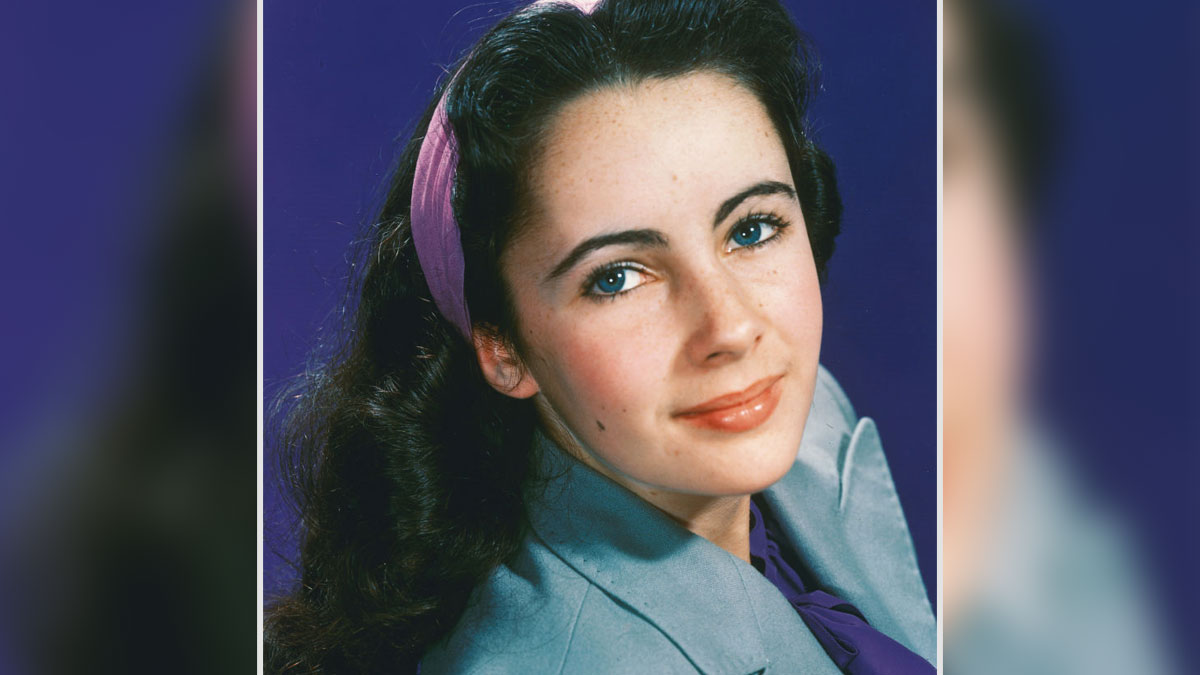
"My ancestors were from Spain, and both my parents were Spanish, but I was a native-born Taiwanese. I grew up in southern Taiwan, playing and growing alongside the local children. Apart from my blue eyes and golden hair, I was no different from them. I learned to speak Taiwanese and Japanese. I considered myself a child of Taiwan; I loved this land and all the life upon it.
Because of my parents' Spanish heritage, I once followed them back to Spain when I was young. However, I found that I preferred Taiwan. I asked my parents for permission to return to Taiwan to live alone. They were worried about the unstable political situation and the dangers I might face, fearing it would be difficult for me to build a life there. Yet, I insisted on returning, for Taiwan was my true home. After many discussions, my parents finally relented, but on one condition: I had to study medicine. They believed that only as a physician would I be less likely to be harmed in social conflicts. In a society where medical care was not yet advanced, physicians were respected and less likely to be killed.
Once they agreed, I quickly packed my bags. Though they were reluctant to let me go, they respected my decision. They provided me with enough money, and the next morning, I boarded the earliest ship, leaving Spain to return to the land I loved."
The Golden-Haired Doctor of the Village
"I truly believed I was Taiwanese. Though I had the face of a foreigner, I knew the blood flowing through my veins was the hot blood of Taiwan. Upon returning, I moved into the house my parents had left behind. Sleeping on that land again filled my heart with satisfaction. The next morning, I began my life plan. I enrolled in medical school, studied for several years, and then went to Japan for further studies. It was many years later when I finally returned to Taiwan as a qualified doctor.
The first thing I did was open a clinic in a remote village. Although it was a private practice, I often provided free medical care so that the impoverished Taiwanese could receive better treatment. I decided I would never leave Taiwan again. I sold my parents' house and invested all the proceeds into my clinic, purchasing medical equipment and setting aside funds for patients who could not afford care. Once everything was settled, I wrote a letter to my parents in Spain, thanking them and sharing my achievements.
After opening the clinic, I became known as the 'Golden-Haired Doctor.' Many people knew to seek out the Spanish doctor when they were ill. I treated many difficult cases, and many elders were deeply grateful for my charity. The clinic would often receive gifts of home-grown vegetables or fresh meat from various families. Although I was an immigrant, the villagers gradually treated me as one of their own. Since I was young—only twenty-seven or twenty-eight at the time—kind-hearted women in the village often tried to introduce me to young ladies. I would always smile and decline, until one day, I met a kind woman. We fell in love, married, and had a son and a daughter. My wife, who had also studied medicine, became my greatest support in the clinic.
As war approached, I discussed the situation with my wife. We entrusted our children to a trusted friend to be sent back to Spain to be cared for by my parents. I had hoped my wife would go with them, but she insisted that she was Taiwanese and would not abandon Taiwan. She chose to stay and continue operating the clinic with me, hoping to use her medical skills to give the injured and sick a better chance at survival."
The Shadows of War and the Final Reckoning
"During the war and the subsequent riots, wounded patients would often sneak into the clinic at night, and there were times when I was threatened at gunpoint. During that period, the clinic was always dangerous after dark. I mostly treated gunshot and knife wounds; some patients were so severely injured that they died on the operating table before dawn. For a long time, we performed various surgeries in the middle of the night. The state of social order was truly worrying.
My wife and I were often exhausted from these midnight surgeries. During the day, villagers would come for treatment, and no one knew that at night, the clinic was often filled with the heavy scent of blood. It was a haunting experience, one that left deep imprints on my spirit.
After more than a decade, following the restoration of Taiwan, the nights at the clinic finally returned to peace. The society stabilized, and my wife suggested we bring our parents and children back to Taiwan. My parents, being elderly, declined, so my wife and I returned to Spain to visit them and brought our children back. By then, they were adults. My son had become a doctor like me, having studied in Spain, and he brought advanced medical techniques back to Taiwan to help more patients.
My son shared my ambition to save those in need. Although we had not raised them personally, they grew up well under my parents' care. My daughter, though not a doctor, was dedicated to helping the poor; she became a teacher, hoping to teach children foreign languages and mathematics.
With my son taking over the clinic, my wife and I gradually retired. My wife, having missed out on years with our children, loved being by their side. Sometimes she helped at the clinic, and other times she accompanied our daughter at school. We were both very content and happy.
I retired at forty-seven. About three years later, I discovered I had nasal cancer. It spread rapidly. I did not tell my family until I began bleeding from my seven orifices, and they realized I was in the terminal stage. From the onset to my passing, it was only three years. My family did not have enough time to be with me, and I passed away at the age of fifty.
After I died, I entered a dark space. I seemed to walk forward endlessly, surrounded by darkness without a glimmer of light. I do not know how far I walked, but eventually, I stopped at a bridge. After crossing it, I saw light. Looking closely, I realized I had arrived before the King of Hell. I knew I had died. I had heard stories of hell in folklore and knew this was where souls were judged. I looked up and saw the King of Hell watching me. He looked stern and unsmiling. He struck his gavel and interrogated me about my life. He said that although I had spent my life healing people and saving the poor—which were good intentions—I had committed one sin: I had saved people who were not meant to be saved. He explained that these people were undergoing their , and by intervening, I had taken those karmic problems upon my own body. That was why I had suffered such a painful death from cancer in my prime; it was the result of unseen beings invading my body. He told me that I had already endured three years of retribution while alive, and now, having no place to go, I must serve as a prison guard to accumulate merit and serve beings, in hopes of eventually attaining spiritual liberation. I agreed to serve as a prison guard."
A New Beginning in the
"In the decades I have served as a prison guard, I have been very grateful for the King of Hell's guidance, which allowed me to see the truth of karmic retribution. A few years ago, I heard Practitioner Su lecturing on the scriptures. It was my first time hearing the Buddha's teachings, and I felt an unexpected sense of familiarity and was deeply moved. The King of Hell guided me to look into my past, and I discovered that I had a connection with Practitioner Su in the Tang Dynasty, where I was his disciple. Through the cycle of rebirth, I had forgotten, but now, encountering the Buddha's teachings again, I am filled with Dharma .
After listening to Practitioner Su's lectures in the underworld for several years, I finally had the opportunity today to register for rebirth in the Western Pure Land. I am deeply grateful for the compassion of Practitioner Su and the great compassionate power of the Buddha. Chou Ping-chih has finally been awakened and will no longer continue to reincarnate and create . Now that I have the chance to go to the Western Pure Land, I will certainly practice diligently, never forgetting the Buddha's grace, and in the future, I vow to save others as well.
On behalf of sixty prison guards, I express my gratitude to the Buddha for His great compassion, and to Practitioner Su. Namo Amituofo."
This interview was recorded by the disciple Shi Fa-xi.