The Prison Guard’s Redemption: An Interview with Xu Shiqiang
An Interview with Xu Shiqiang, Representative of the Prison Guards
This is a record of an interview with Xu Shiqiang, who sought at the Hsiang Kuang Buddhist Centre in Australia. He now resides in the Western Land of Ultimate Bliss. This account reflects upon his life and his service as a prison guard in the underworld. Recorded by the chief writer, Shi Fa, on August 27, 2021.
Xu Shiqiang speaks:
"Namo Amituofo. I am Xu Shiqiang, representing sixty prison guards. That I am able to go to the Western Land of Ultimate Bliss today is entirely thanks to Practitioner Su. Practitioner Su’s reputation in the hells is truly renowned. Every day, he brings the Buddha-light into the hells to perform Chao Du. Seeing the suffering beings of the hells find redemption through that Buddha-light, I was deeply moved. I never dared to imagine that one day I, too, could go to the Western Land. I simply focused on performing my duties diligently every day.
It was not until the King of Hell notified me that I could join the queue to go to the Western Land that my heart filled with gratitude. Within the hells, I listened even more intently to Practitioner Su’s talks. When my turn finally came today to depart for the Western Land, I cherished every moment. I chanted Namo Amituofo with all my might, and together with the fifty-nine other prison guards, we arrived in the Western Land. I am eternally grateful for the compassionate grace of the Buddha and Practitioner Su."
A Childhood of Neglect
"There is a reason for my name. My father was a patriot; he hoped my birth would help enrich the nation and strengthen its people. I was born a sturdy, strong baby. My parents were fanatical members of a political party. Whenever there was an event, I was the one left behind. I spent far more time with my grandparents than I ever did with my parents.
My father was a man who specialised in organising party events and rallies; he was well-acquainted with both the underworld and the legitimate world. My mother was the most vocal and active participant during election campaigns, even going out to sweep the streets to gather support.
My parents were always busy with party affairs, leaving me in the care of my grandparents. I could say that I grew up on my own. My grandparents only cared about whether I was fed and warm; otherwise, they let me develop freely. When I was three, I would play in front of the grocery store my grandparents ran. Whenever someone came to buy something, they would pat my head.
I looked very much like my father—a bit of a grassroots, commoner look. I kept my hair in a short buzz cut and was very polite. To everyone who came to the shop, I would say, 'Hello! Hello!' My parents lived a life of constant excitement, but my life was very ordinary. I was born with a cheerful disposition, and the neighbours all liked me. However, during a moment of play, I accidentally fell, and my lip struck the floor directly, resulting in a cleft lip. My parents were people who cared deeply about appearances. After seeing me like that, they took me out even less and left me entirely to my grandparents."
The Burden of Filial Duty
"I had a very close bond with my grandparents. When I started school, my grandmother would always make delicious lunch boxes for me, and my grandfather would hold my hand as he walked me to school. Ever since I fell and developed the cleft lip, I was no longer as cheerful as before. I would always hear the neighbours say, 'What a pity, such a nice child turned out like this.' I would wonder, 'Am I very ugly?' I once asked my grandparents, 'Have I become very ugly?' They would give me vague, non-committal answers that left me feeling disheartened. Beyond that, I asked my grandfather, 'Do my parents not like me?' My grandfather told me, 'Your parents are working hard to earn money to raise you.' Yet, in my small heart, I still longed for my parents' love.
When I was six, I dreamt one night that a group of ghosts came to seize me. I woke up crying in terror. My grandfather, who usually slept beside me, was not there, so I buried myself under the quilt and sobbed. I cried for a long time and felt afraid for so long, but no one came to comfort me. From that moment on, I knew I had to learn to be strong and take care of myself.
When I was twelve, my grandfather fell, and after that, he could never stand up again. Many times, I heard him wailing in pain. From that point, I decided to take good care of him. When other children went out to play, I had to rush home to bathe my grandfather, change his diapers, and feed him. After three years of caring for him, my grandfather went from being physically disabled to becoming forgetful. He began to lose recognition of me and my grandmother, and he would often move about erratically, regressing into the state of a child. This made caring for him even more strenuous, and I had to spend more time focusing my attention on him every day.
My grandmother was responsible for cooking for us, but sometimes she would tell me that her vision was becoming very blurry. Several times, she even threw household items into the pot to stir-fry along with the food. There were other times when she told me she couldn't chop the vegetables, only to find that she was trying to chop a steel scouring pad used for cleaning pots. Seeing this, I didn't tell her the truth; instead, I said, 'Grandma, let me help you.' Her eyesight worsened day by day, and it pained my heart to watch."
A Life of Sacrifice
"Ever since my grandparents' health began to decline, my parents never once came to visit them. One day, my grandmother brought out an iron box and asked me to open it to get money to buy some things. When I opened the box, only a few coins remained. I said to her, 'Grandma, this money doesn't seem to be enough.' She then took out an envelope for me, which contained the very last banknote. I couldn't help but ask, 'Grandma, Grandpa said Mom and Dad have been sending money. Since it's not enough, shouldn't we call them?' My grandmother remained silent. Because she didn't speak, I knew that my parents likely hadn't sent any money at all. This iron box and the envelope were likely my grandparents' life savings, and now they were almost exhausted. My heart felt a wave of bitterness. I told myself: in the past, my grandparents took care of me; now, it is my turn to take care of them.
Since the money was running low, I had to earn more, but I still had to care for them. I asked a neighbour to help me find a job close to home so I could return frequently to check on them. He helped me find work washing dishes at a noodle stall, which allowed me to rush home during the stall's afternoon break to see if my grandparents were alright. The little money I earned was barely enough for the three of us, and we didn't eat very well. Sometimes, seeing their health failing, I wanted to buy them supplements, but the money only covered our three meals a day; there was nothing extra.
A year later, my grandmother went completely blind and couldn't even cook. I had to rush home during my breaks to cook for them. I trained my grandfather to eat on his own, served the food to my grandmother, and let her eat slowly. When I finished work, I had to manage everything in the house. This went on for several years until I was sixteen, when my grandmother passed away in her sleep one night. After she left, I cherished my time with my grandfather even more. However, his mind had completely degenerated. Coming home every day to care for him was more exhausting than the work itself, but thinking of how he had held my hand since I was a child, my heart was filled with gratitude.
One day, my grandfather cried out that his whole body was aching and wailed incessantly. When he finally stopped, I thought he was feeling better, but I didn't realise he had breathed his last. I held his body and cried in deep sorrow. I still had parents in this world, but the departure of my grandparents felt like the loss of my closest kin. My heart became lonely."
The Final Reckoning
"On the day I sent my grandfather to the crematorium, my parents appeared. They expressed sadness, but it was nothing compared to my own grief. After the funeral, they asked if I wanted to go back with them. I shook my head and said I wanted to continue living in my grandparents' house. They didn't try to persuade me, nor did they seem worried, and they never asked how I had lived these past few years. They knew nothing of the hardships I had endured. Seeing them dressed so well and looking so happy, I didn't say much. They dropped me off at the house and left.
I found a job to support myself and lived that way for eighteen years. In my thirties, my stomach began to ache violently, and I had a feeling that my time was running out. I began to plan how to use the money I had earned over the years, donating some to nursing homes and some to orphanages. I found it harder and harder to eat, grew thinner and thinner, and sometimes even vomited blood. I knew death was right in front of me, but I wasn't afraid. I had no family left in this world, so leaving was perhaps for the best.
One morning when I was thirty-eight, the stomach pain became unbearable, forcing me to roll on the bed. After a whole day, I gradually lost . My spirit left my body and stood beside it, my eyes helpless. I don't know how much time passed before I arrived before the King of Hell. He struck his gavel, and I seemed to wake up. The King of Hell asked, 'Who comes?' I replied, 'Xu Shiqiang.' He asked, 'How old are you?' I replied, 'Thirty-eight.' He said, 'Was this life bitter?' I replied, 'It was.' The King of Hell said, 'This lifetime was meant for you to undergo retribution. In the past, you were an official who oppressed people everywhere. In this life, you were originally destined to end up wandering the streets, but because of your filial piety, you were able to support yourself.'
'In the past, your grandparents were people who had helped you, so you were filial to them in this life, while your affinity with your parents was shallow. This life has passed; do you know where you are headed?' I shook my head, indicating I did not know. The King of Hell said, 'You were meant to enter the ghost realm, but there is currently a shortage of prison guards. Are you willing to serve?' I didn't really understand what a prison guard did, but I nodded and agreed.
I had only been a prison guard for thirty years when I had the opportunity to join the queue for the Western Land. My heart is very satisfied. Today, the site of the Dharma assembly is filled with golden light; it is truly magnificent. In the blink of an eye, we sixty prison guards arrived in the Western Land. I thank the Buddha and Practitioner Su. I bow my head in gratitude. Thank you for listening to my ordinary life story, and thank you for allowing me to represent the sixty prison guards."
Xu Shiqiang
More from Hell Guards
The Historian's Sacrifice and the Path to Deliverance
This is a record of an interview with Park Ji-yeop, who sought deliverance at the Hsiang Kuang Pure Land Buddhist Centre in Australia. He now resides in the Western Land of Ultimate Bliss. This account reflects upon his life as a historian during the Joseon Dynasty. Recorded by the chief writer, Fa Ning, on May 17, 2026.
The Scholar Who Guarded the Hells
This is a record of an interview with Zhao Shuwen, who sought Chao Du at the Hsiang Kuang Pure Land Buddhist Centre in Australia. He now resides in the Western Land of Ultimate Bliss. This account reflects upon his life as a scholar and official during the Tang Dynasty, and his subsequent service as a guard in the hells. Recorded by the chief writer, Venerable Fa Hui, on May 10, 2026.
From the Mines to the Western Pure Land
This is a record of an interview with Gu Banjie, who sought deliverance at the Hsiang Kuang Pure Land Buddhist Centre in Australia. He now resides in the Western Land of Ultimate Bliss. This account reflects upon his life as an Indigenous Australian approximately 200 years ago. Recorded by the chief writer, Fa Ning, on May 8, 2026.
A Life Dedicated to the Harvest: The Testimony of Lin Huanda
Lin Huanda, a former agricultural technician who spent his life ensuring the people of China had enough to eat, shares his journey from the rice fields to serving as a prison guard in the underworld, and his final deliverance to the Western Pure Land by Practitioner Su.
More by Hsiang Kuang Pure Land Buddhist Centre
The Redemption of a Hollywood Icon
A candid reflection from the spirit of Elizabeth Taylor, who shares her journey from the blinding lights of Hollywood to the serene, transformative teachings of the Buddha in the Western Land of Ultimate Bliss.
The King of Pop's Journey to the Western Pure Land
Michael Jackson shares his journey from the pressures of global fame to the peace of the Western Pure Land, revealing the truth behind his life and his ultimate deliverance.
A Voice from the Darkness: Helen Keller's Journey
Helen Keller, the renowned deaf-blind philanthropist, shares her journey from the darkness of the ghost realm to the light of the Western Pure Land of Ultimate Bliss, guided by the compassion of Namo Amituofo and Practitioner Su.
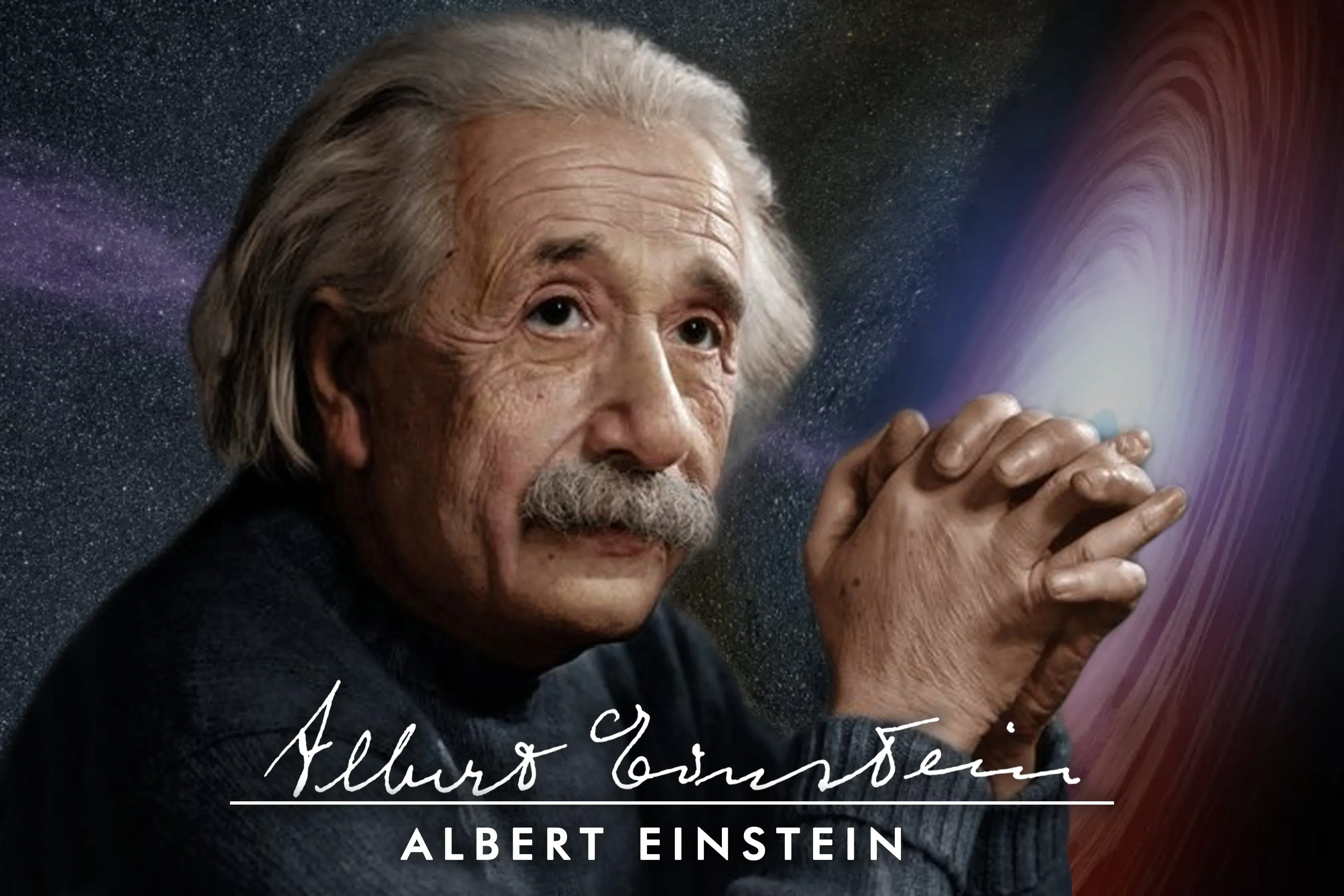
An Interview with Albert Einstein (Theoretical physicist)
Albert Einstein, once considered the most brilliant mind in human history, reflects on his life, the nature of 'science' versus the Truth of the Dharma, and his existence in the Western Pure Land.
A President's Repentance: Ronald Reagan's Journey to the Pure Land
Ronald Reagan, the 40th President of the United States, reflects on his life, his political career, and his profound journey from the depths of hell to the Western Land of Ultimate Bliss through the compassion of Namo Amituofo and Practitioner Su.
The Reflection of a Nation's Founder
This is a record of an interview with Kim Il Sung, the founder and former leader of North Korea, who sought deliverance at the Hsiang Kuang Pure Land Buddhist Centre in Australia. He now resides in the Western Land of Ultimate Bliss. This account reflects upon his life and the spiritual truths he has realised since his passing thirty-two years ago. Recorded by the chief writer, Venerable Fa Hui, on May 18, 2026.
About the Author
Hsiang Kuang Pure Land Buddhist Centre
Contributed to Pure Land Buddhism knowledge library