This is a record of an interview with Hiromoto Kawaryo, who sought at the Hsiang Kuang Buddhist Centre in Australia. He now resides in the . This account reflects upon his life in a Japanese fishing village approximately several decades ago. Recorded by the chief writer, Shi Fa, on February 15, 2026.
Hiromoto Kawaryo speaks:
". I am Hiromoto Kawaryo. I was born in a small fishing village near what is now Hokkaido. In those days, obtaining fish to eat was no simple matter. With the introduction of new steam-powered fishing vessels, many people were desperate to head out to sea, hoping to strike it rich by catching vast quantities of fish.
A Poisoned Sea and a Shattered Life
One day, a competitor, blinded by jealousy, poisoned our waters. The result was catastrophic. Countless fish died; even if you managed to catch them, they were inedible. The surface of the sea was littered with the bloated carcasses of fish and shellfish. Because no one cleared the remains, the entire area became toxic and foul-smelling. For a village that relied entirely on fishing for survival, this was a lethal blow.
At the time, I was a minor leader in our village—a small business owner with a few partners. We had been thriving, but faced with this man-made disaster, I had no choice but to accept my fate. I disbanded my crew, and my wife and I turned to selling rice balls to survive. Our region was famous for its glutinous rice, and the mochi, rice balls, and dumplings we made were exceptionally delicious. People from far and wide would travel just to buy our rice or the food we crafted from it. Seeing this opportunity, my wife and I built a life around our little stall. It was a good life, all things considered.
The Kindness of a Rice Ball Vendor
Initially, I felt quite depressed by the sudden change in fortune, but my wife was a talented cook and a constant source of encouragement. Neither of us was stingy; we packed our rice balls with generous portions of ingredients. They were healthy, delicious, and affordable. We knew everyone was struggling, so we kept our prices low. I was fortunate to have found a new way to earn a living, so I felt deeply grateful. I would often take our unsold rice balls to the homes of those in need in the village. I would tell them, 'These did not sell and are not fresh enough to keep, please help me by eating them.' In truth, our business was booming! Ha! But I told that little white lie so they would not feel like they were accepting charity.
A Face Like a Fish
One day, a customer approached our stall whom I recognised immediately. It was Honfuji Yoshiryo, a man from the neighbouring village who had been the prime suspect in the poisoning of our waters. He had been my greatest rival in the fishing industry. After I left the trade, I never inquired about him again. What was done was done; my father had always taught me to be magnanimous and move forward with a clear conscience. I had held onto that lesson my entire life.
He approached our stall and said, not very politely, 'Boss! I will take all the rice balls you have today!' I did not take it to heart. In business, harmony brings wealth; there was no point in making things difficult for myself. I forced a smile and looked up, ready to agree, but what I saw terrified me. His face looked like a fish, yet it was still human. I quickly realised it was Honfuji. He recognised me, too. I did not want to get involved, but he suddenly began to weep in front of me and poured out the story of his life over the past few years.
The Price of Greed
It turned out that Honfuji really was the one who had poisoned our sea. He had indeed monopolised the local fishing industry and amassed a fortune, but his family began to suffer from strange illnesses. Some developed skin diseases where scales grew like fish skin; others had eyes that became unnaturally large and round, just like a fish's. He himself was becoming more fish-like every day. He said it was a life worse than death. He dreamt every night of countless fish coming to seek revenge for the cruel way he had caused them to die.
I sat in silence for a long time. Finally, I told him, 'I sell rice balls now. I do not make much money, but I am stable and content. If you take the wealth you gained from poisoning the sea and give it to those in need, and pay to have our waters cleaned and restored, you will surely feel much better.' Upon hearing this, he knelt on the ground, sobbing uncontrollably. He followed my advice, distributed his wealth to the needy in our village, and restored the sea to its former state. His 'fish face' improved significantly; at least it was no longer as severe as before.
The Spirit Within the Rice Ball
I spent the rest of my life selling rice balls until the day I died, leaving this world with great contentment. We had no children—perhaps because of the harm I had caused to fish in my earlier years—but I did not dwell on it. After hearing what happened to Honfuji's family, I sensed that the good and evil deeds of a family are interconnected. I feared that my past actions in the fishing industry might affect my descendants, so my wife and I decided to walk this path together, just the two of us. My wife was always so reasonable and supportive; I respected her deeply and consulted her on everything.
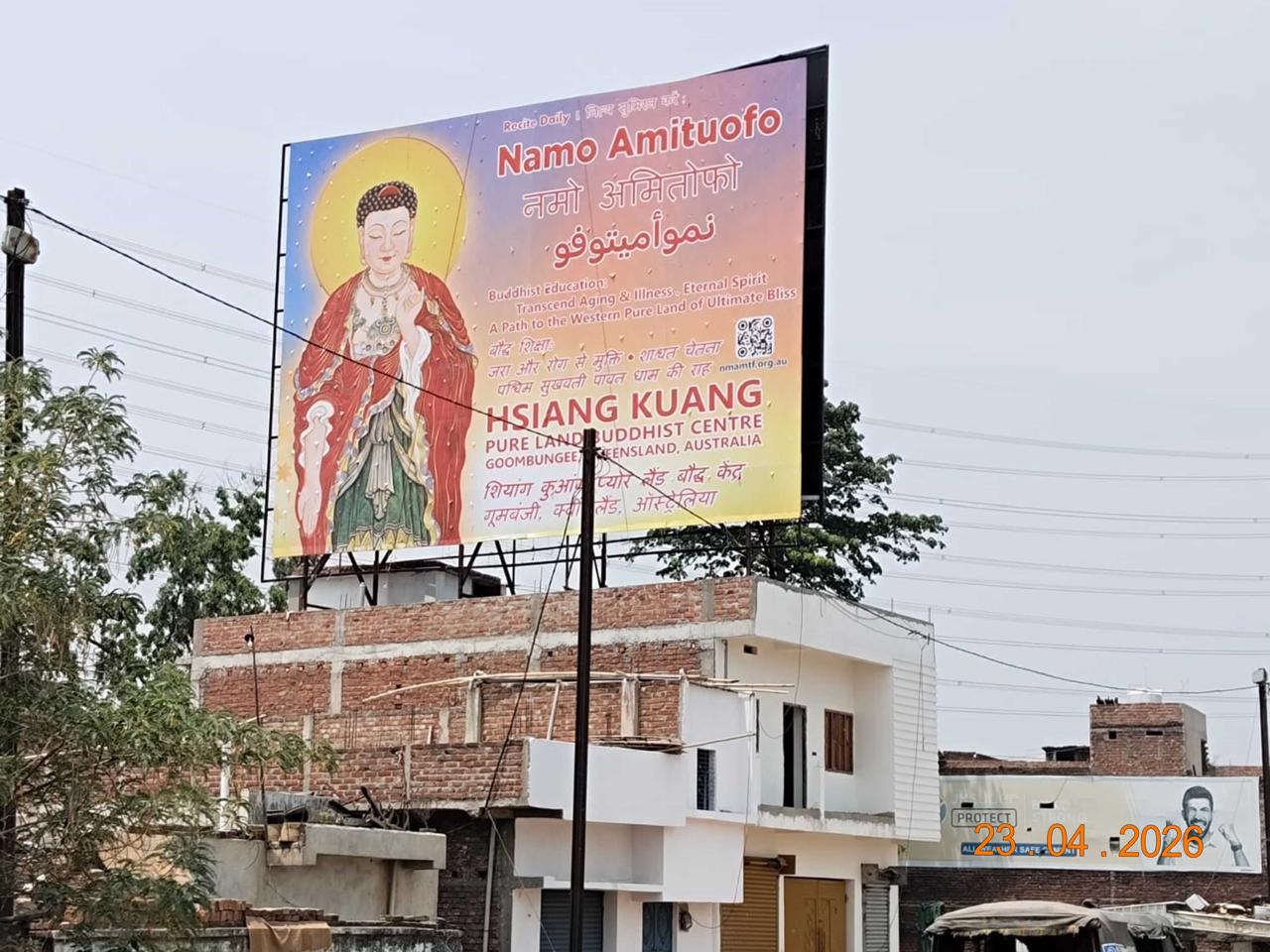
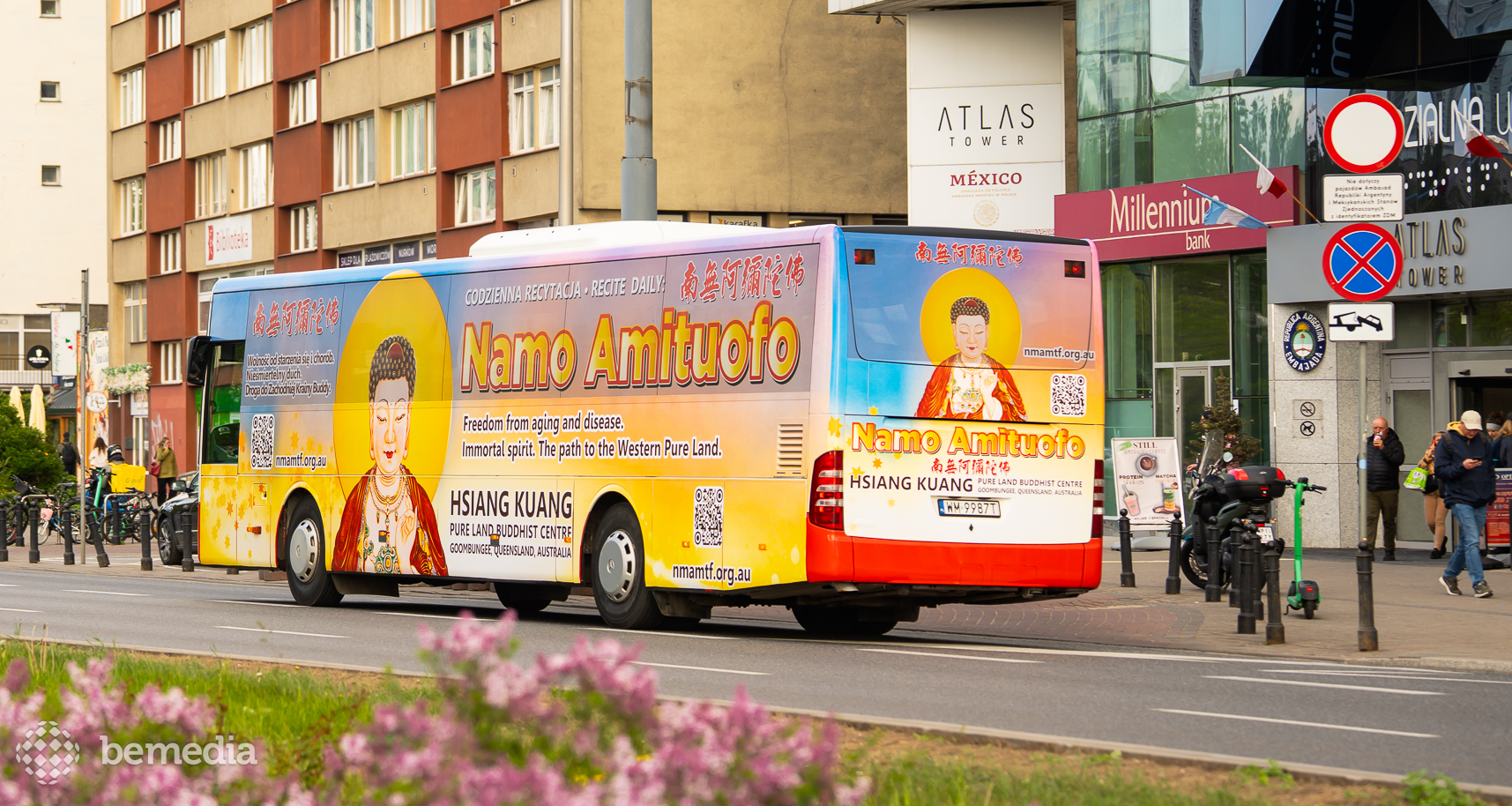
After I died, I became a rice ball. When people ate me, they would show a happy, grateful smile. That sense of 'gratitude' is what I hoped to bring to people. One day, someone eating one of my rice balls saw the Namo Amituofo signboard set up by the temple in Japan and recited the Holy Name 'Namo Amituofo'. My spirit was released from the space of the rice ball.
Deliverance and the -Nature Land
Seeing the golden light emitted by the Namo Amituofo signboard filled me with . I came to the Hsiang Kuang Pure Land Buddhist Centre to seek Chao Du. Many, many Japanese spirits came with me, and we were all happily guided by Practitioner Su into the Western Dharma-Nature Land.
Though I cannot leave my lotus seat in the Western Dharma-Nature Land, I feel no sense of restraint. I can see Namo Amituofo smiling at me and radiating light, and I can hear the chanting of the Holy Name 'Namo Amituofo'. Most remarkably, I can even hear the Dharma talks given by Practitioner Su.
I have come to realise that every little thing is governed by the laws of and cause and effect. After listening to Practitioner Su, I feel so fortunate that I stopped my fishing business when I did; otherwise, I shudder to think what might have become of me. My spirit is becoming clearer, and I can see everything that happened in the past. The spirits of the fish I killed are still there. It is a good thing I changed my profession later in life. Most importantly, by encouraging Honfuji to restore the sea, I may have saved myself from becoming like him—it was only a matter of time.
A Warning to the Living
I once thought I was a good person, so I assumed my spirit would not suffer after death. Even as a rice ball, I was a 'kind-hearted rice ball' and felt quite happy, but I never imagined the dangers lurking beneath. The principles of cause and effect are truly vital. In the spiritual realms, there are all kinds of spirits; after death, the soul can end up in the most bizarre places—even as a rice ball. Where is the exit for us spirits? Fortunately, because the Hsiang Kuang Pure Land Buddhist Centre and Practitioner Su exist, we have a chance to be saved. I hear that here, we can end the cycle of rebirth and go to the Western Pure Land of Ultimate Bliss. This is a precious opportunity, and I am filled with immense gratitude.
In the Western Dharma-Nature Land, I have seen Practitioner Su manifest thousands of billions of bodies, using his to save sentient beings. I have realised that even the mountains, rivers, earth, flowers, trees, and plants have spirits. Seeing them saved makes me very happy. I have only just begun to understand the truth of these things, and I feel an increasing sense of awe toward the cycle of rebirth. I have decided: I must get to the Western Pure Land of Ultimate Bliss as quickly as possible. I hear that by chanting the Buddha's name and making vows, one can go there. Now, I chant 'Namo Amituofo, Namo Amituofo' constantly, hoping to be reborn in the Western Pure Land of Ultimate Bliss soon.
I hope the people of Japan will come here to see for themselves; there is so much to be gained. The Centre's mission is to be free from aging, free from illness, and to realise that your spirit never dies. You can come and verify this for yourselves. If anyone who makes a living by fishing reads this interview, I hope you will take it as a warning.