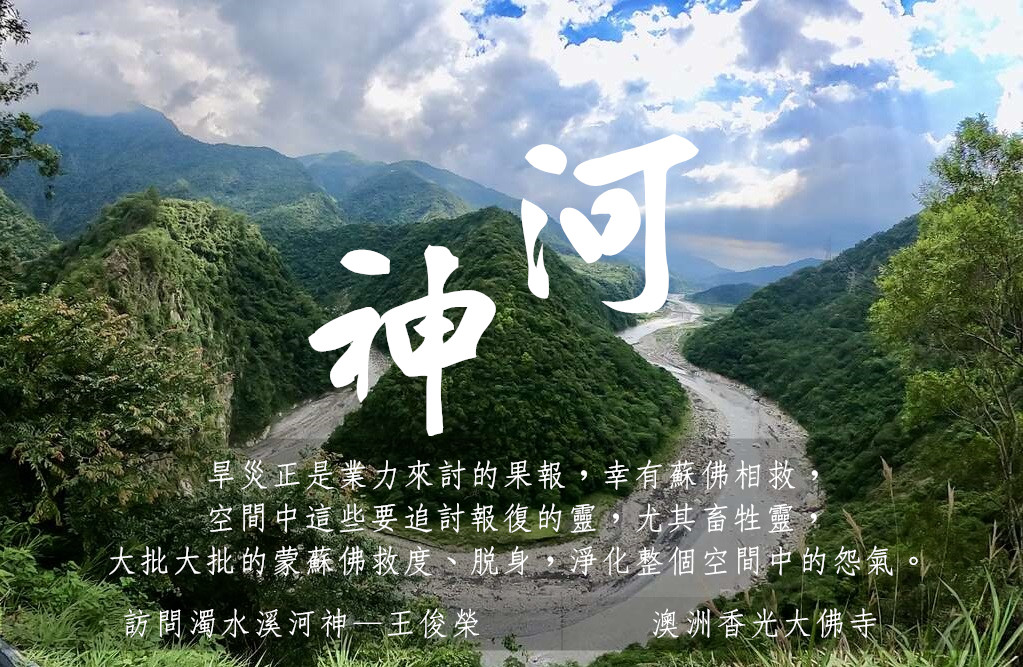
An Interview with Wang Jun-rong, a River Spirit
Do Not Cling to Bodily Sensations
Interview with Gu Fangzhou (Chinese Virologist)
Interview with Zhao Ning (Co-founder of WuXi AppTec)
No Longer Distinguishing Right from Wrong
Interview with Li Yining (The Theoretical Founder of China's Shareholding System Reform)
Wang Jun-rong, a river spirit who once guarded a section of the Zhuoshui River in Taiwan, sought deliverance from the suffering of his environment and the sentient beings trapped within it. He eventually found salvation through the compassionate intervention of Practitioner Su. This interview was recorded on April 18, 2021, at the Hsiang Kuang Buddhist Centre, where Wang Jun-rong now resides in the .
Wang Jun-rong speaks:
". I, Jun-rong, along with all the sentient beings within the river, kneel in gratitude to Practitioner Su. Thank you, Practitioner Su, for saving Taiwan. Taiwan is finally saved!
I am Wang Jun-rong, the river god of a small section of the Zhuoshui River. In the decades since I became a river god, I have wept every single day. My river has become more polluted with each passing day, and the creatures within it find it increasingly difficult to survive. Even the water itself, which was once abundant, has gradually diminished. Many animals that rely on the river for survival have had their lives endangered, not to mention the fish and shrimp within the river, which have no way to preserve their lives and can only wait for their next destination in the cycle of rebirth.
Watching the river become like this, I, as the river god, have been completely helpless. I feel ashamed before all the sentient beings in the river. Every one of them is living a life of hardship. If I could protect them, they might suffer a little less, but I have been utterly unable to make any difference. Every day, I stand on the surface of the river, watching the entire waterway with a heavy heart. When the river dries up to the point where the bed is exposed, I can only stand on the stones of the riverbed, covering my face and weeping.
Who will save us? I looked up to the heavens and pleaded with the Divine: 'I beg you, please save us, these pitiful souls!' My plea finally saw a ray of hope several years ago.
It was a winter morning several years ago, before the sky had fully brightened. Most life was still in deep slumber. Hibernating animals had not yet awakened throughout the winter; humans, who work at sunrise and rest at sunset, had not yet fully stirred; some birds and animals active in the dark were preparing to return to their nests before dawn. As for the creatures in the river, some were still swimming slowly, while others were in a state of stillness. The entire world was quiet, and the space was filled with peace.
I was still guarding the river. Whether day or night, I have remained stationed here, never leaving, and I am clearly aware of any movement within the river. Suddenly, a golden light appeared and then vanished. I was startled and puzzled, wondering, 'What was that?' I continued to wait, eyes fixed, wanting to see clearly what it was.
The golden light appeared again. I opened my eyes wide to look. It was a figure radiating light, arriving with a powerful golden glow. A burst of Buddha-music emanated through the space—I had never heard such music, which caused my very heart to tremble.
Having been a river god for so long, I had never encountered such a scene. I dared not move, fearing I might disturb the glowing figure before me. I watched quietly, listening to the soft Buddha-music. I clearly heard every word of the music; it was the holy name 'Namo Amituofo!' I had heard Namo Amituofo while I was alive, and people in Taiwan often chant this name, so it was not unfamiliar to me. However, I had never heard the Buddha-name chanted in a way that was so moving, completely shaking my inner heart.
I followed along in my heart, chanting this Buddha-name. It was the first time I felt peace within. When I wanted to continue watching, the golden light had already vanished from before me. The entire process lasted only a few brief seconds. I observed the river after the golden light had passed; it seemed that a few spirits were missing, though not many. I investigated those missing spirits; they were Buddhists who had studied the Buddha’s teachings while alive. After seeing the golden light and hearing the Buddha-name, they had quickly followed that light and departed. Many sentient beings were asking me, 'What was that light just now?' I did not know yet, so I could not answer them.
After that day, every morning, I could see the same magnificent sight. The golden light came daily, and the Buddha-name was proclaimed daily. I became increasingly clear that this was the golden light coming to save us—the true Buddha had arrived! More and more spirits in the space began to wait for this golden light. At that time, everyone called Practitioner Su 'Great Su.' Every morning, one could hear the spirits calling out, 'Great Bodhisattva Su is here! Great Bodhisattva Su is here!' Those spirits willing to follow Great Bodhisattva Su would depart when the golden light arrived.
I shed tears of emotion, grateful to Great Bodhisattva Su. After waiting so long in suffering, we were finally saved! However, the speed of pollution in Taiwan's rivers and the speed at which spirits were increasing in the space far exceeded the speed at which Great Bodhisattva Su was performing at that time. There are spaces within spaces, stacked layer upon layer. In the Zhuoshui River alone, which I guard, there are countless billions of layers of space. For as long as the river has existed, there has been space, not to mention that space can also be formed between every second. The vastness of the space and the multitude of spirits are not things that can be saved in a single day.
I am a child of Taiwan, born after the restoration of the island. I have always believed that those born in Taiwan are the most blessed people, because Taiwan is truly a treasure island.
Taiwan, shaped like a sweet potato, has nurtured so much life! Almost all kinds of fruits and vegetables can be successfully grown on this treasure island, allowing the Taiwanese people to enjoy a variety of delicious produce. In the era I was born, the four seasons were distinct; it was clear when it should be cold and when it should be hot. Although my family didn't have much money to buy clothes for us many children, every child had a few sets of summer clothes, a few sets of winter clothes, and a few thin jackets for spring and autumn. Summer clothes were never worn in winter. So, in winter, Mother would pack all the summer clothes of us dozens of children into a trunk and put them away. When summer arrived, she would take them out and pack away the winter clothes. However, the climate is now blurred. In winter, people wear short-sleeved summer clothes; in summer, it is so hot that it is almost impossible to survive. The speed of climate change is extremely rapid, and the crops on the entire island of Taiwan have changed along with the climate. Farmers must change their planting methods to adapt, but when they encounter insufficient rainfall or sudden natural disasters, they are often left in agony, crying out in distress.
I still remember in my childhood, every summer, we would definitely catch fish in the river or stream. When my feet touched the water, the chill would make me feel refreshed all over, and I couldn't help but shout, 'Wow! So cool! So comfortable!' In the clear water, one could see fish swimming one after another from the surface. It seemed as if one could even count the grains of sand and stones at the bottom of the river. However, the rivers today cannot be compared to the past at all. Whether it is trash, waste, or industrial wastewater, it can all be seen in the water. If one wants to see children playing in the river, that is simply impossible. My river has become like this, and I have bitterly prayed for the day when the turbid water would become pure again, but I have waited in vain for that day to come.
I am a Taiwanese child who grew up by the stream. There were twelve children in my family, and I was the seventh. Living in the simple countryside, we naturally possessed the qualities of simplicity and honesty, which was the way most Taiwanese people were at that time. If a neighbor gave us a bunch of bok choy, we would immediately return two bunches of green onions. When we saw someone we knew on the road, we would politely ask, 'Have you eaten?' Hearing the familiar sound of the popsicle vendor, we children would immediately rush out of the house in a swarm. My family didn't have money, so Mother could only give us a little bit of money to buy one popsicle. Twelve children would share one popsicle, taking turns licking it, all showing satisfied smiles. If a neighbor's chicken ran out, someone would ask, 'Whose chicken is that?' Auntie Ah-hao would say, 'That's the one Lai-wang raised!' After saying this, Auntie Ah-hao would immediately help Uncle Lai-wang chase the chicken back into the coop and even help him close the fence, ensuring no chicken theft would ever happen. Early in the morning, when Grandfather opened the front door, he would immediately say to Father, 'It will rain this afternoon; don't take the rice out to dry.' This was the purity of our era. We didn't need televisions or weather forecasts; we could naturally tell the weather from the sky. Taiwanese people were just that clean and simple.
My grandparents and parents were all very simple, and they taught us children to be very honest. From childhood to adulthood, we never told a lie because we didn't know what a lie was. We said what we knew, and if we did something wrong, we would honestly admit it. If my eldest brother made a mistake, Mother would shout, 'Kneel!' All twelve of us would kneel down, lining up neatly, and accompany him until the punishment was over.
Getting married and having children was a very normal thing for us. If a child reached the age of marriage and was not yet wed, the neighbors would start to care: 'When are you getting married?' I was that person who had reached the age of marriage but had not yet taken a wife. Every time the grandmothers, aunts, and uncles in the village saw me, they would ask, 'Ah-rong! When are you getting married? I'm waiting to drink at your wedding!' Every time I was asked this, I didn't know how to answer, so I could only smile and scratch my head, saying, 'Not yet! If there is news, I will definitely tell you!' I don't know why, but my siblings all got married one after another, and only I had no news. I didn't want a matchmaker to introduce anyone; I just wanted to let things take their natural course.
I was young, strong, and unmarried, so I had plenty of time and energy to serve the villagers. I took the initiative to take on many tasks in the village. Whenever I saw something that needed maintenance, I would do it. At that time, the water resource we all relied on was the stream near our homes. Many households planted crops by the stream and used the stream water for irrigation. Many women would go to the stream to wash clothes, including my mother, who would carry a large basket of clothes to the stream every day and wouldn't return until it was time to prepare lunch. We children would also follow Mother to the stream to play, getting soaked all over, and by the time we walked home, our clothes were almost dry. Therefore, this stream was very important to us. I put a lot of effort into maintaining it, cleaning up any dirt immediately, and even gathering many young, capable people to set up a covenant to protect the cleanliness and safety of the stream together. Especially after heavy rains, when the stream water rose and the current accelerated, many playful children would still want to go to the stream to play in the water. Even if the wind and rain were strong, I would wear a raincoat and stand guard there, fearing that a child might fall in.
In the twenty-eighth year of my guarding the stream, a group of people from out of town moved into the village. They had a group of very mischievous children. No matter how many times I warned them not to go to the stream to play after heavy rain, they still went. That time, I had a severe cold, my head was aching, and I was lying in bed resting, coughing incessantly. After taking medicine, I was dizzy and half-asleep. Suddenly, I heard the sound of rain. I asked Mother, 'Is it raining outside now?' Mother said, 'Yes! It's raining very hard, the stream should be flooding again.' I immediately jumped out of bed. Seeing my reaction, Mother hurriedly said, 'It's fine! It's fine! You are so sick, don't go out!' I listened to Mother and lay back down, but the more I lay there, the more uneasy my heart became. I endured the pain, climbed out of bed, put on my raincoat, and ran to the stream to patrol. I had just arrived at the stream when I heard children screaming for help. I quickly jumped into the stream to save them. This time, the stream was flowing several times faster than usual. These children were still young and were about to be swept away. I used all my strength to pull them to the shore, but because I had exhausted my energy and was dizzy, my foot slipped, and I was immediately swept away by the stream. I had no strength to struggle; the medicine had just been taken, and my whole body was weak. I quickly drowned in the stream, ending my forty-nine years of life.
I saved many lives for this stream throughout my life. After my soul left my body, I was appointed as the river god of a small section of the Zhuoshui River, continuing to guard the river.
The Taiwan treasure island of today has changed; it is completely different from how it was when I was alive. Human hearts have changed, and the reason for this change is money. Since the 1980s, Taiwan's economy took off rapidly. From that time on, human hearts changed. There is a saying, 'Taiwan money floods the ankles.' At that time, it was very easy to make money in Taiwan. Many people became rich instantly during that period, becoming millionaires and billionaires, and their hearts became greedy as a result.
As soon as there is money, human hearts begin to turn bad and create . Desire, desire—everyone's face is written with full desire. With money, any desire can be satisfied, and people dare to do anything. Factories were built in large numbers, various construction projects began, toxic waste gases were emitted into the air, large amounts of waste were dumped into rivers, and industrial wastewater was discharged. The entire air, land, and rivers were all polluted.
In addition to environmental pollution, even the hearts of Taiwan's children have been polluted. Children born after the 1980s are called the 'Strawberry Generation,' all as fragile as strawberries. They live in comfortable environments, have never suffered, and are each the apple of their parents' eyes, pampered and spoiled. This makes them unable to endure hardship, easily hurt, and prone to learning bad habits. Most of these children, besides failing to achieve anything, are addicted to technology, creating endless sins. The children are confused and corrupted; the pillars of the nation have problems. The children have sins, the parents have sins, and Taiwan's leaders have sins. Karma is stacked layer upon layer, all piled up over the sky of Taiwan. When the time comes, it is time to receive the retribution.
Taiwanese people have brains, are smart, and react quickly. They produce many products, including technological goods. It seems to bring economic benefits, but they do not know that as long as one product affects a person's heart, a sin is created. Not to mention that so many products are sold at home and abroad, the sins created are uncountable.
The originally simple Taiwanese people, under the education of the modern environment, have begun to learn to compete—competing in schools, competing in workplaces, and competing between nations. The source of this competitive model is the entire environment. Therefore, the sins created in the process of competition, besides each person receiving their own retribution, are a collective karma that no one on the island of Taiwan can escape.
The number of spirits in the river increases year by year, especially the demon realms pressed at the bottom of the river, which are increasing rapidly. Polluted, dirty water is also a form of punishment for the demon crowds; the dirtier and more turbid the water, the more demon crowds are pressed within it. When I see many child spirits among these demon crowds, my heart breaks. Children are innocent; to suffer such retribution for a moment of deviation, I cannot bear it!
Watching the changes in Taiwan helplessly, I sigh at how human hearts have become like this. If human hearts had been taught early on, and everyone knew the laws of karma and cause and effect, I believe that the drought would not have happened today.
In the entire space of retribution, there are also a large number of animal spirits, fish spirits, and other meat-based sentient beings. Every day, trucks full of pigs and chickens are transported to be slaughtered all over Taiwan, and fishing boats bring in boatload after boatload of fish and seafood to be sold everywhere. People eat and eat without any restraint. The resentment of these animals and sea creatures is still pursuing retribution in the space, waiting to retaliate against the ruthless humans.
The drought is the retribution of karma coming to collect. Sentient beings are about to suffer. I cannot bear it, yet I cannot stop the laws of karma and cause and effect. Now, fortunately, there is Practitioner Su to save us. The spirits in the space who are seeking revenge, especially the animal spirits, have been saved by Practitioner Su in large batches, freeing themselves and purifying the resentment in the entire space. The golden light covers the entire island of Taiwan, from north to south, all receiving the Chao Du of Practitioner Su. The spirits stacked layer upon layer are like thick soil, accumulating in the entire space. Practitioner Su saves them one by one, helping sentient beings leave suffering behind.
Jun-rong is infinitely grateful in his heart. I kneel and kowtow, grateful to the Buddha, grateful to the of Practitioner Su's for saving us.
Namo Amituofo.
Wang Jun-rong
Memorial Tablet: All sentient beings in Taiwan's major rivers, river gods, and the immeasurable and boundless animal spirits, demon crowds, and other resentful spirits seeking retribution in the space, immeasurable numbers, represented by: Wang Jun-rong (seeking restoration, purification, peace of mind, and the elimination of memories)
Entering the Western -Nature Land of the Hsiang Kuang Pure Land Buddhist Centre
Chu Dong-yi, a former stone spirit who spent centuries observing the cycle of human suffering, recounts his transformation into a Thunder God and his profound experience witnessing Practitioner Su's deliverance of the spirits of Southern Taiwan. Seeking deliverance from his long existence as a guardian spirit, he eventually found his way to the Western Dharma-Nature Land of the Hsiang Kuang Pure Land Buddhist Centre in Australia.
Hsu Chao-shui, a former noodle shop owner from Hengchun, shares his transformation from a local deity to the Electricity God of Southern Taiwan, and his experience assisting Practitioner Su in bringing life-saving rain to the drought-stricken island.
Huang Jianqun, a Thunder God tasked with bringing rain to Taiwan, recounts his experience witnessing Practitioner Su's inconceivable power to deliver sentient beings and resolve the karmic grievances that plagued the island's water supplies.
This is a record of an interview with Su Furong, who sought Chao Du at the Hsiang Kuang Pure Land Buddhist Centre in Australia. He now resides in the Western Dharma-Nature Land. This account reflects upon his life approximately 1,200 years ago. Recorded by the chief writer, Venerable HaiZe, on April 27, 2021.
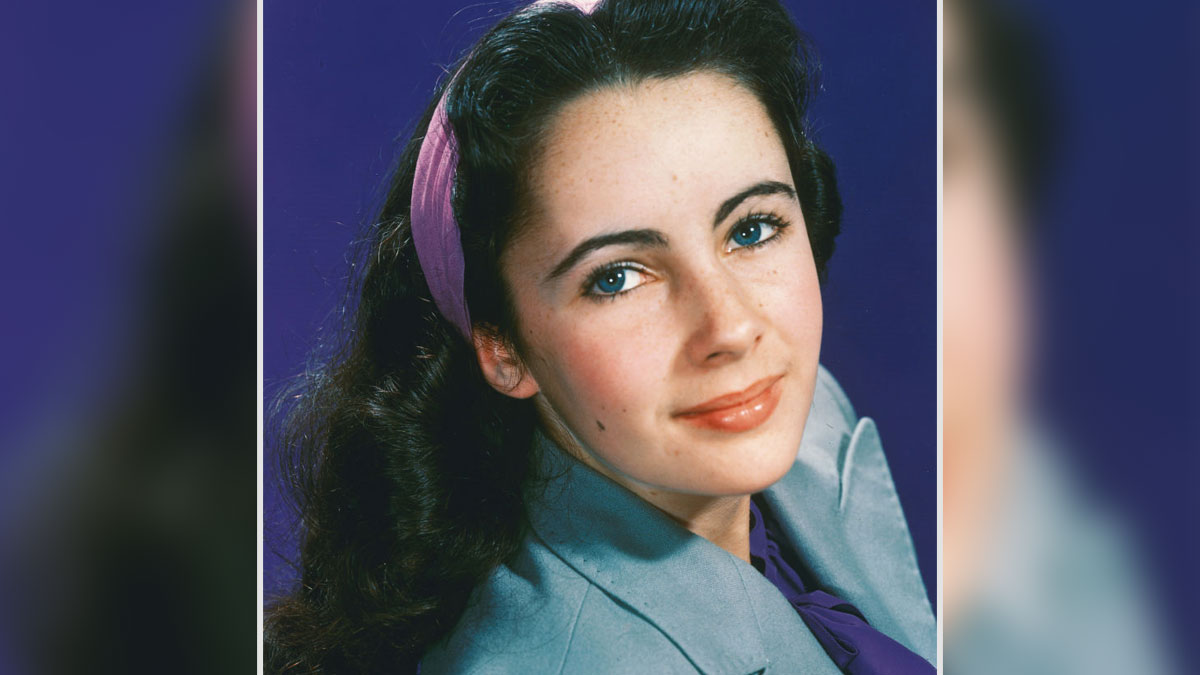
A candid reflection from the spirit of Elizabeth Taylor, who shares her journey from the blinding lights of Hollywood to the serene, transformative teachings of the Buddha in the Western Land of Ultimate Bliss.

Michael Jackson shares his journey from the pressures of global fame to the peace of the Western Pure Land, revealing the truth behind his life and his ultimate deliverance.

Helen Keller, the renowned deaf-blind philanthropist, shares her journey from the darkness of the ghost realm to the light of the Western Pure Land of Ultimate Bliss, guided by the compassion of Namo Amituofo and Practitioner Su.

Albert Einstein, once considered the most brilliant mind in human history, reflects on his life, the nature of 'science' versus the Truth of the Dharma, and his existence in the Western Pure Land.

Ronald Reagan, the 40th President of the United States, reflects on his life, his political career, and his profound journey from the depths of hell to the Western Land of Ultimate Bliss through the compassion of Namo Amituofo and Practitioner Su.
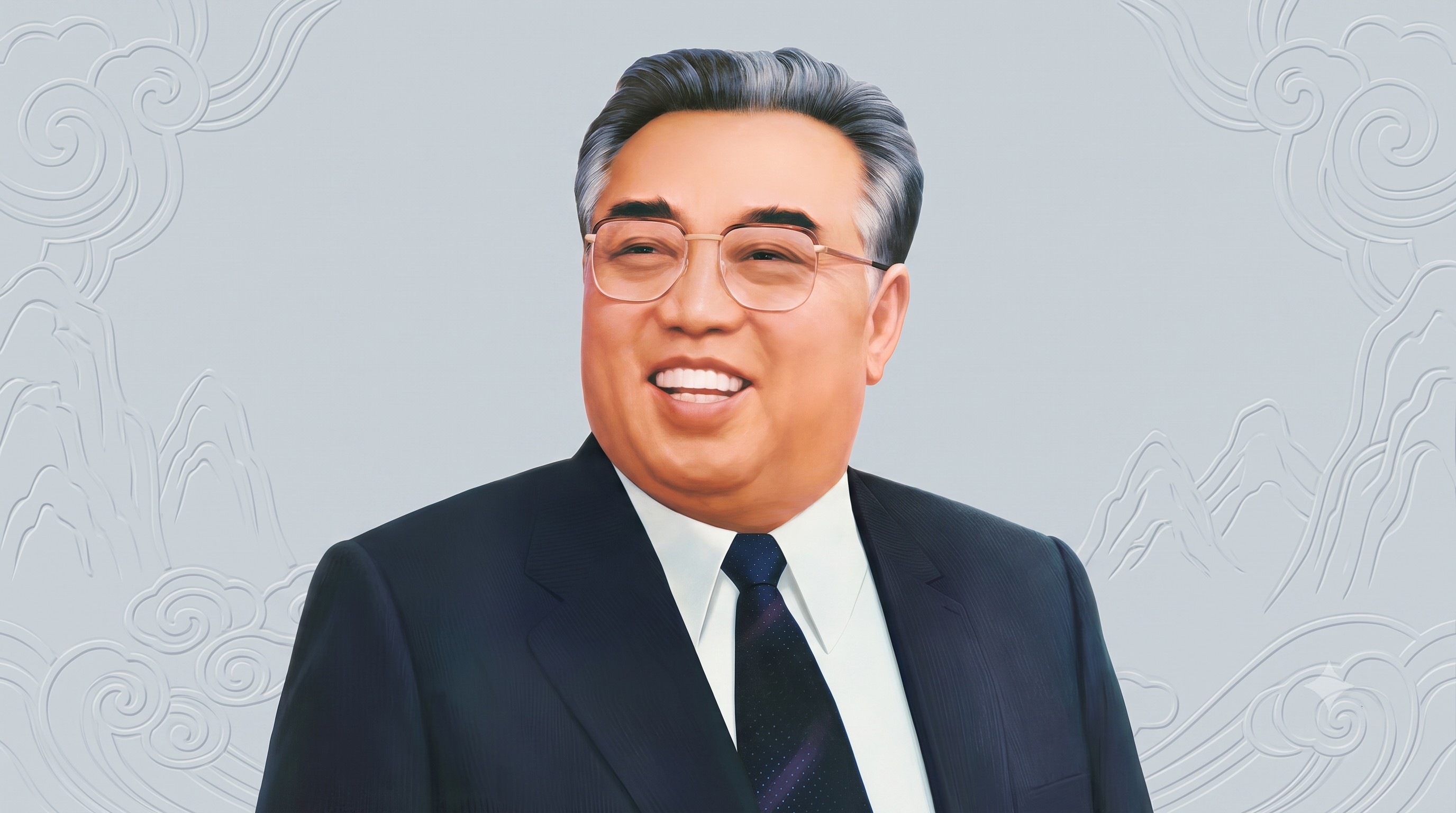
This is a record of an interview with Kim Il Sung, the founder and former leader of North Korea, who sought deliverance 32 years ago. He now resides in the Western Land of Ultimate Bliss.
Hsiang Kuang Pure Land Buddhist Centre
Contributed to Pure Land Buddhism knowledge library