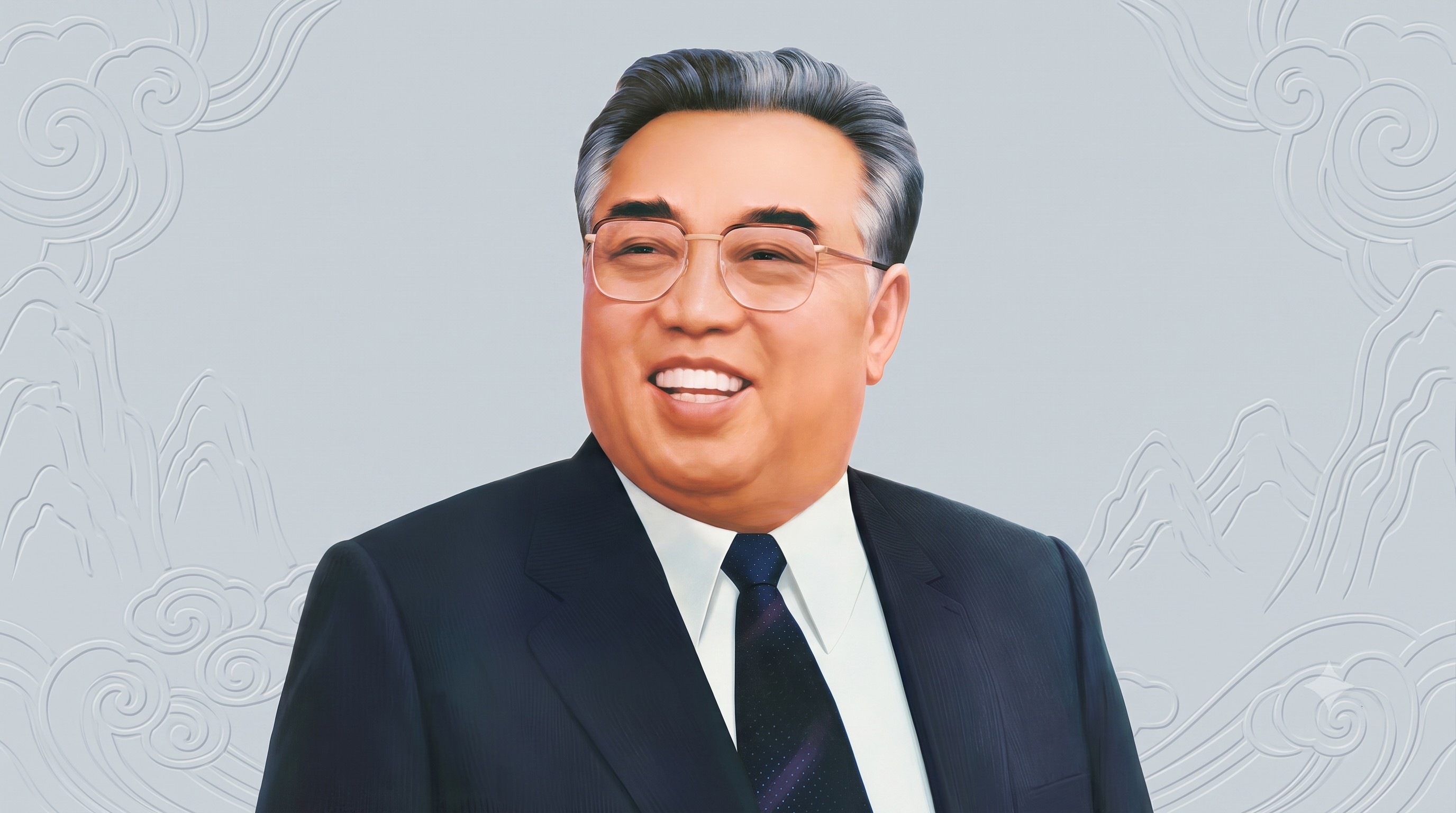
This is a record of an interview with Zheng Xuan, who sought Spiritual Deliverance at the Hsiang Kuang Buddhist Centre in Australia. He now resides in the Western Land of Nature. This account reflects upon his life approximately 1,809 years ago. Recorded by the chief writer, Shi Fa Hui, on April 17, 2026.
Zheng Xuan speaks:
". During my time in the world, I enjoyed great renown. Please understand, this was never something I actively sought or chased; it was simply the natural result of my life's work. In truth, I never had any desire for political power or the hollow vanity of fame. However, when it came to the pursuit of knowledge, I was utterly uncompromising. I held a deeply pious conviction regarding my studies, a steadfastness that defined my very existence. I believed then, as I do now, that only with the utmost sincerity of heart could one truly grasp the profound mysteries and the essential essence contained within the sacred classics. This was the creed I lived by: absolute sincerity toward the texts I studied, and absolute sincerity toward the convictions within my own heart. I longed to achieve a state of 'unity of heart and action'—where my inner realisations were perfectly mirrored by my external conduct, where my thoughts, words, and deeds were in total harmony, without the slightest contradiction. Yet, I must be honest with the world: this was a state I deeply craved, perhaps even a luxury I dared to dream of, but one I never truly attained in my mortal life."
The Weight of History and the Test of Character
"Perhaps it was the era in which I lived that made this so difficult. Once I became famous, the number of students who came to my door seeking guidance was countless—truly, it was overwhelming. The greatest test, however, came during the twilight of the Han Dynasty. It was a time of chaos, with warlords carving up the land, the tyranny of Dong Zhuo, and the subsequent political manipulation by figures like Li Jue. Amidst such constant warfare and shifting loyalties, if one harboured even the slightest thought of self-preservation or personal gain, how could one remain truly upright? How could one stand without fear, without hesitation, and authentically practise the profound wisdom of the classics in one's daily life? That was the true test of one's inner cultivation."
"It is only now, after encountering the Buddha's teachings, that I understand what Practitioner Su calls 'working on .' Ha! To hear such direct, powerful words from the mouth of Practitioner Su—an awakened being who has realised his true nature and attained Buddhahood—is truly humbling. One dare not take such words lightly. After all, he is a 'Buddha who has already attained,' not like us, who are merely 'future Buddhas' yet to reach that state. These are truths I have only come to understand after receiving Buddhist education. I hope you will forgive me for 'showing off' a little by sharing these insights."
to the Buddha Within
"Indeed, in the light of Buddhist education, I have come to realise that every single being is a Buddha. We are all Buddhas by nature, possessing the same original nature, the same equal wisdom, and the same virtues and capabilities as the Buddha himself. It is only that our inherent wisdom and abilities have been obscured and covered by layers of pollution. In the '' of faith, vows, and practice, the element of 'faith' is paramount. In Confucianism, we speak of the belief that 'at birth, human nature is inherently good.' But the Buddha's teachings go a step further, telling us that 'Faith is the source of the path and the mother of all virtues.' To realise that faith is so vital—it was like a bolt of lightning that jolted my confused spirit awake."
"If I were to ask why I could not achieve that unity of heart and action I so desired during my life, the answer is now clear. When I heard this teaching, it was like a flash of golden lightning piercing the long, dark sky, illuminating the shadows in my heart. I finally understood: I was missing that crucial 'final push'—the power of true faith. In the context of the Buddha's teachings, believing in one's own good roots and believing in the Buddha is not just important; it is the most essential element. Without this foundation, there can be no progress in practice, and certainly no hope of realising one's true nature and attaining Buddhahood."
The Missing Link: The Power of Faith
"One must believe that Namo Amituofo is a Buddha who has already achieved perfection, believe that Practitioner Su is a Buddha who has already achieved perfection, and—most importantly—believe that one's own self, despite being a heavy-laden ordinary person, is a Buddha who has yet to achieve perfection. This conviction must be deeply planted and cultivated within the heart during one's practice. If one cannot put in the work to build this genuine faith—faith in the Dharma, faith in Namo Amituofo, faith in Practitioner Su, and faith in the very name 'Namo Amituofo'—then when one encounters or the interference of demon crowds, one will be completely at the mercy of one's . One becomes nothing more than a 'marionette on a string,' pulled this way and that without any power to resist."
Suffering as a Catalyst for Wisdom
"The Buddha's teachings are truly vast, and my appreciation for them is perhaps deeper than most. From a young age, I exhausted my life's energy studying the I Ching, the Gongyang Zhuan, and the various essential Confucian classics. Later, I wrote commentaries on the 'Three Rites' and many other texts, hoping to provide a unified, standard interpretation that would benefit future generations. This was one of my deepest wishes amidst the chaos of the late Eastern Han. I wanted these classics and my commentaries to be passed down, so that those who came after me could be nurtured by the principles within and derive supreme benefit from them."
"I was called a child prodigy, and throughout my life, I was helped by many noble people. I had the honour of studying under the great master of classics, Ma Rong, a connection that occurred through the natural unfolding of Causal Conditions, for which I am deeply grateful. Looking back now, I see that everything unfolds within the Law of Cause, Condition, and Effect. My life was marked by a major turning point: the 'Dang-gu' incident, where I was implicated and banned from holding office for life. Yet, as the saying goes, 'Misfortune may be a blessing in disguise, and blessing may hide the seeds of misfortune.' This cycle of cause and effect is a truth I have always held dear."
Beyond the Worldly Path
"During those fourteen years of forced retirement from public life, I had an abundance of time to focus entirely on my research. It was not a misfortune at all; it was a great blessing. It is as the Buddha's teachings say: 'Only by letting go can one truly gain.' It was this very experience that forced me to set aside the entanglements of the official world and worldly affairs, allowing me to dive deep into my studies. My understanding of the classics grew immensely during those years. I realise now, after listening to Practitioner Su's Dharma talks, that one's recognition of 'suffering' is vital. If a person does not feel the suffering of the world, how would they ever embark on the path of practice?"
"In those years of wandering and fleeing political persecution, I gained a profound understanding of the suffering of the people, my own suffering, and the suffering of the scholars of my time. The word 'suffering' is truly a treasure. I discovered that the more deeply I felt this suffering, and the more clearly I understood the hardships of others, the more my heart opened to the desire to help. It was then that I had breakthroughs in my understanding of the classics. I began to perceive the wisdom and the deep essence hidden between the lines—the sparks of beauty that ignited during those fourteen years of suffering. Now, here in the Western Land of Dharma Nature, receiving the education of the Hsiang Kuang Pure Land Buddhist Centre, I understand that 'knowing suffering' is only the first step. The true path is to leave behind this chaotic, murky, impermanent world of illusions. This is a path I never imagined in my life—that one could actually 'transcend the world' while still in it. This is the inconceivable, magnificent Dharma that only the Buddha's teachings can provide: the path of practice. Through purification, we reclaim our original nature, transcend the six realms of rebirth, and no longer play the part of those who continue to grow and consume beings without pause. Instead, we attain the supreme Buddha's path and gain the ability to deliver sentient beings, just as Practitioner Su demonstrates for us all. Namo Amituofo."
During my lifetime, I experienced the chaos of the late Eastern Han Dynasty, from the tyranny of Dong Zhuo to the political maneuvering of Li Jue, the Yellow Turban Rebellion, and the subsequent era of warlordism. These tumultuous periods of history were the backdrop of my life. Amidst this, I am comforted by the fact that I remained steadfast in my devotion to the study of the scriptures and faithful to the path and beliefs I held in my heart. I did not allow myself to be tainted by fame or profit; one could say that I lived a life of detachment from such worldly pursuits.
A Life of Integrity and Scholarly Devotion
Regardless of my personal aspirations or the constraints imposed by the political climate, I never held any official government office throughout my life. By the time the fourteen-year ban on my activities was lifted, my accomplishments in the study of the classics were widely known, and I enjoyed great renown. Many people, upon learning of my reputation, hoped to recruit me into government service. The positions they offered were quite significant, yet I firmly declined them all. No matter the form of their request, my inner conviction remained unshakable—I would not allow myself to be entangled in those affairs. At the time, various factions and warlords of the imperial court sought me out for various reasons, but I rejected them one by one. This is something that Zheng Xuan finds comfort in even now; I remained consistent in this principle and was never swayed by external pressures to make the wrong decision.
I have always believed that the importance of the study of the classics lies not merely in the rituals of governance, but in the cultivation of one's character and moral foundations. Whether it is the Confucian classics, the I Ching, or the Gongyang Zhuan, these texts can bring great awakening and serve as a powerful tool for moral education. This is the reason why I dedicated myself to the preservation of the classics during the late Eastern Han Dynasty and spent an immense amount of effort writing commentaries on a wide variety of texts. I deeply believed that once people truly grasped the principles taught in these scriptures, they could achieve a sublimation from the depths of their hearts—a refinement of character and a cultivation of personality. More importantly, Zheng Xuan believed that the significance of the study of the classics was to help people adjust their hearts.
The Profound Truth of the Buddha's Teachings
Now that I have encountered the Buddhist education at the Hsiang Kuang Pure Land Buddhist Centre, I realise that all of my previous efforts were merely circling within the confines of the worldly realm. Although Confucian teachings and the I Ching contain principles regarding the operation of the universe, they are far from being as profound, vast, detailed, and complete as the Buddha's teachings. Zheng Xuan now listens to the sutras and hears the Dharma, and I have come to a deep realisation that the Buddha's teachings are the Great Dharma that every individual needs to learn. In this suffering world, only by studying the Buddha's teachings can one transcend the pain of the cycle of rebirth; only by studying the Buddha's teachings can one understand where one's spirit goes after death; and only then can one turn around one's destiny instead of being controlled by karma, karmic creditors, and demon crowds. This is the Great Dharma that everyone should study.
When I was alive, I did not have the opportunity to understand these truths because I never let go of my devotion to the study of the classics, always believing that it was the highest and most supreme truth I had ever encountered. Thus, I delved into it constantly, yet even after a lifetime of research, I still did not grasp the essence of the scriptures. Compared to the sages and predecessors who originally passed down these classics, Zheng Xuan knows that there is still a vast difference—the difference between the mundane and the holy, between the polluted and the transcendent. It is a very clear distance.
The Simplicity of the Ultimate Path
The Buddha's teachings I hear now at the Hsiang Kuang Pure Land Buddhist Centre discard complex texts and philosophies; they simply teach everyone to look well, think well, and speak well, putting in the work from the heart. The straightforward language reveals the universal principle, the Truth, and the Right Way. Its essence is purity and goodness, with the phrase Namo Amituofo as its core, while teaching the masses to make vows to save sentient beings. It is so simple to adjust one's personality from the root of the heart, turning all thoughts into purity and goodness, until everything becomes this phrase, Namo Amituofo. Through the blessing of the supreme power and merit of Amitabha Buddha, one gains the ability to save sentient beings. In the process of saving sentient beings, one is simultaneously resolving conflicts with the beings within one's own body. Under the premise of such unretreating vows and actions, one continuously saves sentient beings while also ensuring that the beings within oneself are saved. This has truly opened Zheng Xuan's eyes, condensing such profound principles into such simple scriptures.
Only a person like Practitioner Su, who has realised their true nature, could deliver such vivid, heart-touching, and surgical-precision Dharma talks. Through Practitioner Su's demonstrations, people truly understand what the Buddha's teachings are, what the universal principle, the Truth, and the Right Way are, and avoid falling into the traps of academic study, thoughts, attachments, and rigid patterns, which would cause them to lose the opportunity for spiritual success. This is truly the great of Amitabha Buddha and Practitioner Su.
Defining the Universal Principle
What exactly is the universal principle, the Truth, and the Right Way? In my past process of academic study, I would often pose a critical question regarding the core philosophy of a given classic. When I could provide a truly thorough explanation for that question, Zheng Xuan would consider that I had a certain level of understanding of that classic, and only then would I have the confidence to teach the principles I had realised to others. This was my basic requirement for myself when I was a scholar.
Zheng Xuan is now, in a sense, learning the Buddha's teachings from Amitabha Buddha, so I must ask this most important question: what exactly is the universal principle, the Truth, and the Right Way? The answer is very simple; one only needs to observe Practitioner Su. Because Practitioner Su is indeed, as he says, the embodiment of the Truth, the practitioner of the universal principle, the Truth, and the Right Way; his thoughts, intentions, words, and actions do not deviate from the universal principle, the Truth, and the Right Way by even a fraction. This is what is called a Buddha.
A Grand Display of Compassion
Furthermore, one can understand the answer to this question by looking at Practitioner Su's recent grand in China. From the Western Land of Dharma Nature, Zheng Xuan saw Practitioner Su using his countless manifestations, with lightning speed, appearing in the sky over China. With countless billions of manifestations, he surrounded the area from all directions, bringing the twelve lights of Amitabha Buddha to shine forth, leading immeasurable and boundless sentient beings into the Western Land of Dharma Nature. This included countless demon crowds, all of whom were subdued under the radiance of the Buddha-light. It was truly a magnificent scene. This was not through words or language, but allowed Zheng Xuan to experience in the most intuitive way the true power of the Buddha's teachings to save sentient beings. It was not about discussing mysteries or wonders, but directly demonstrating the great power of the Buddha's teachings.
It turns out that the universal principle, the Truth, and the Right Way are the ultimate compassion—it is what Practitioner Su calls compassion, compassion, and compassion again. It is truly having no trace of selfishness, completely letting go of this self, and acting entirely for the sake of sentient beings.
Even when his body is covered in scars from bearing the suffering of sentient beings, his vow and action to save them do not diminish, and his great vow to rescue sentient beings from suffering does not retreat. This is what Practitioner Su's grand Chao Du in China demonstrated to Zheng Xuan—the very essence of what is taught in the Infinite Life Sutra: arouse the mind and single-mindedly recite Namo Amituofo. It is truly beyond words.
The Importance of a True Teacher
When I was alive, as someone dedicated to learning, I could understand how important a good teacher is to one's progress. Today, the fourfold assembly at the Hsiang Kuang Pure Land Buddhist Centre has the guidance of three Buddhas: Amitabha Buddha, Teacher Practitioner Xia Lianju, and Practitioner Su. This lineup of teachers is extremely magnificent. On the path of learning, this allows everyone to avoid taking many unnecessary detours. There are many critical points that, without the guidance of an enlightened teacher, or without being given a wake-up call at the right moment, one might never realise in a lifetime.
Now, in the Western Land of Dharma Nature, seeing Practitioner Su's unconventional and flexible way of teaching, as well as his personal example and verbal instructions, and how he patiently and tirelessly protects the fourfold assembly and nurtures them to grow strong, Zheng Xuan feels truly respectful and moved. To have such a Buddha in the world to protect the disciples of the Buddha, allowing those who are sincere in their practice to have the opportunity to attain Buddhahood with his help, is a very important matter.
If there could be one more person in the world who has realised their true nature and attained Buddhahood, it would mean that immeasurable and boundless sentient beings would have the opportunity to be saved. This is because everyone has different Dharma affinities, and every person's connected sentient beings are immeasurable and boundless.
A Final Vow
Having said so much, the most important thing for Zheng Xuan now is to make a vow to recite this phrase, Namo Amituofo, and seek rebirth in the Western Land of Ultimate Bliss—not to enjoy myself there, but to attain Buddhahood in the West and then, like Practitioner Su, return to the world to save immeasurable and boundless suffering spirits.
A life dedicated to the study of classics, achieved within the ,
Regrettably, I did not encounter the Buddha's teachings, nor did I know to seek to leave the cycle of rebirth,
After death, I wandered in the ghost realm, lost and adrift in the world,
Fortunately, I met Amitabha Buddha and Practitioner Su, and finally returned to the Great Dharma to enter the Western Land.
At the end of that life, Zheng Xuan left the world due to illness. After death, I wandered in the ghost realm, watching everything in this world for over 1,800 years. I witnessed the rise and fall of warlords and witnessed the various transformations of the study of the classics—Confucianism and Taoism—from the late Eastern Han Dynasty to the present. It truly makes Zheng Xuan sigh. Everything in this world is indeed impermanent; what, then, is truly unchanging?
Now, I am very fortunate to have met Amitabha Buddha and Practitioner Su and to have come to the Western Land of Dharma Nature at the Hsiang Kuang Pure Land Buddhist Centre. I have finally understood that what is unchanging is the Buddha-nature within the true self of every spirit; what is unchanging is the possibility for every spirit to attain Buddhahood; what is unchanging is the great vow of rebirth in the Western Land of Ultimate Bliss. There, spiritual life has no expiration; it is a world of infinite lifespan and ultimate without suffering. It is the ultimate destination prepared by Amitabha Buddha for every spirit, and it is the true hometown of every one of us. Zheng Xuan's wish now is to go home and follow the compassionate father Amitabha Buddha in practice, until I attain Buddhahood. I hope to have the opportunity in the future to be like Practitioner Su, saving immeasurable and boundless suffering spirits.
Well, gratitude to Amitabha Buddha, gratitude to Practitioner Su, and gratitude to every member of the fourfold assembly at the Hsiang Kuang Pure Land Buddhist Centre.
Zheng Xuan
IN THIS COLLECTION
More from Twelve Rays Deliverance to China (Chinese Historical Figures)