Transforming Karmic Debt into Filial Piety
An Interview with Qin Shuitian, a Former Prison Guard
Qin Shuitian, a former prison guard in the hell realms, sought deliverance through the compassionate guidance of Practitioner Su. He now resides in the of Ultimate Bliss. This interview was recorded on March 2, 2024.
Qin Shuitian speaks:
"I am chanting Namo Amituofo incessantly, my heart overflowing with gratitude. I am deeply thankful to Practitioner Su for leading us sixty prison guards to the Western Pure Land of Ultimate Bliss, allowing us to find our way back to our spiritual home after wandering so long in the confusion of samsara.
The End of Wandering
At this moment, as the cycle of rebirth finally comes to a halt, I can at last find relief from the restlessness and suffering that samsara brings. We kneel before the Buddha in sincere , our hearts filled with an incomparable peace and .
Is it truly over? Not quite. I know my spirit will not simply remain here in stillness. I believe that one day, I will still descend to the human world to save beings; that is the vow and responsibility I have set for myself."
A Silent Beginning
"When I was three years old, my father discovered my condition and, in a fit of rage, shouted at my mother, 'What kind of son have you given birth to? He cannot say a single word! Is he a mute?' My mother retorted, 'Is it all my fault? He is your son too. If he cannot speak, you share half the responsibility!'
My father was right; I was indeed a mute. By the age of five, I still could not speak, only emitting incoherent sounds. I was unable to utter a single word.
My father felt ashamed to have a mute son; he desperately wished to deny that I was his child. Yet, I did not resent being mute. In my hazy memories, I could still vaguely see the events of the past, and I could even faintly hear sounds."
The Roots of Hatred
"In those blurred memories, I saw the past between my father and me. In a previous life, we were mortal enemies. We despised each other, and I was constantly berating him, using cruel words to deliberately humiliate him. My father, unwilling to be insulted, retaliated by cursing me, swearing that I would be a mute in my next life. We lived as neighbours across from each other, and he would frequently splash excrement at my house, while I did the same to his. Neither of us would yield, and neither wanted to move away. We were bitter enemies, arguing incessantly every single day.
The words spoken back then truly came to pass. The curse from my neighbour—who is now my father in this lifetime—made me a mute. It was also because I had constantly spewed such hateful words that I reaped this . Fate arranged for him to give birth to a mute son, causing him, a man who cared deeply about his reputation, to feel immense shame."
The Burden of the Past
"When I first witnessed this past, my heart was heavy with sorrow. I felt a sense of resentment, wondering why fate had arranged things this way and why our past had been filled with such mutual hatred. From the moment I was born, my father disliked me. Even when my mother was away, he would secretly pinch and hit me. Even when I was lying quietly in my cradle, he would look at me with disdain.
As I grew older, his hatred for me intensified. Many times, he did not act like a father at all; he was more like my enemy. Yet, I said nothing. I never told anyone. No matter how he treated me—how unreasonably he scolded or beat me, or even when he drove me out of the house and forbade me from returning—I endured it all in silence."
Choosing a Different Path
"If I had not already known of our past, I would have found it difficult to swallow such treatment. It was precisely because I saw that we had been locked in a struggle where neither would yield that we ended up as father and son in this life, still unable to live in harmony. Therefore, in this lifetime, I did not want to repeat the past. If I had not possessed the awareness to stop myself and endure, and had instead continued to argue with my father, I believe that, given our past hatred, we would have inevitably inflicted irreparable harm upon each other. That harm would certainly not have been limited to this one lifetime; it would have continued for many more, manifesting through different relationships to settle our karmic debts."
The Test of Twelve Years
"At twelve, I was forced to leave home. My father told me, 'I have raised you for twelve years, and that is enough. Go out and beg for your own food! This house will not tolerate your presence any longer. If you do not leave, I will splash you with excrement until you choose to go yourself.' Hearing the mention of excrement, I immediately recalled the past; we really had spent our time splashing each other like that. I never expected that in this life, my father would say the exact same words. He had no idea that he had done the same in the past.
When my father drove me away, I left without saying a word. It was not like before, when he was my mortal enemy; back then, the more he drove me away, the more I would refuse to leave, retorting, 'Why should I be the one to leave and not you?' That was how our grievances grew deeper. Now, I chose not to. If my father wanted me to leave, I would leave. I wanted to resolve the hatred of our past. Moreover, since he was my father in this life, I had no reason to disobey him. So, when he told me to go, I had no choice but to go."
The Power of Filial Piety
"Many villagers, seeing how my father treated me, felt indignant on my behalf, wondering how he could be so unreasonable toward a child. They saw me as a very well-behaved boy and could not understand why I had been born into such a family, suffering such cruel abuse. Every time the villagers spoke up for me, I would simply smile and say nothing. To me, the past was already in the past. I would not bring it up again; it was enough that I knew it in my heart. This 'knowing' was not about holding a grudge, but about letting go—about not walking the same path again. I had to change. No matter how unreasonably my father treated me, I would change myself and learn to accept it.
As I became more obedient, the development of events became truly miraculous. My father learned that a relative had taken me in, so he knew where I was staying. Sometimes he would suddenly appear at my relative's house and bring me food. I was surprised; if my father did not want me, why would he come to bring me food? Nevertheless, I accepted it with a heart full of gratitude. I continued to care for him and be filial, just as I had before. Even when we were separated, I would write him letters of blessing during festivals. When I started working at fourteen, I even sent money back to him every month."
Resolving the
"These actions of mine gradually dissolved the enmity between my father and me, and our relationship began to improve. My father appeared at my relative's house more frequently, often making excuses to visit, though I knew he was coming to see me. By the time I was fifteen, my father took the initiative to ask if I wanted to move back home. I agreed immediately; living at home allowed me to care for him and show my concern more directly, without needing to write letters, and he no longer had to travel a long distance to find me.
The villagers were very happy to see me return home. I realised that I had karmic connections with these villagers as well—not all from the same lifetime, but some from three lives ago, some from ten, and some from fifteen. Each connection was different, but they were all good affinities, which is why they treated me so well, caring for me as if I were their own child."
The Inconceivable Law of
"I say that the laws of karma and cause and effect are truly inconceivable. After so many years, having gone to different places and reincarnated for several lifetimes, we were still able to meet again in this life. I saw clearly that if I had used my past personality and habits to treat my father in this life, we would have created yet another debt of hatred, waiting to be settled in the next life.
Are you asking if I was truly such a good-tempered person in this life? Of course not. Look at the life where we were neighbours; my personality was so strong, and every word I spoke was so cruel. That personality was still embedded in my bones; it followed my spirit into this body, so I still possessed that nature in this life. However, for the sake of change, for the sake of resolving things with my father, and for the sake of changing our destinies—which was a way of saving both myself and my father—I chose to endure. My endurance was not a painful suppression, but a genuine desire to change."
The Path to Deliverance
"The process of change was extremely painful because I had to act in a way completely contrary to my nature. Even when my father committed various malicious acts to hurt me, I still had to be a filial son, continuing to honour him. I could not reject him as my father simply because of the harm he caused me. After I made these changes, my life became very smooth. My fortune was good, my health was sound, and I married a virtuous wife who accompanied me until the end of my days.
I left the human world at the age of seventy-eight. Just before I breathed my last, my karmic creditors manifested as my father before me; they were deliberately trying to seize me. But I did not fall for it, because the hatred between my father and me had already been resolved. When they appeared in his form, I felt nothing. As soon as I felt no reaction, I saw a turkey suddenly appear and then vanish. It was then I realised that I had originally been destined to be dragged away by these karmic creditors to become a turkey."
A New Beginning in the Pure Land
"The officials of hell came for me and brought me before King Yama. King Yama saw me and praised me for being remarkable. I did not dare to accept such praise, as this was what I should have done. I was very fortunate to have the ability to see the past. King Yama said, 'Some people see their past and do not necessarily achieve this; they might even hate their fathers more because of it.' King Yama was right; it depends on how each person views their past and how they change and let go. That past no longer exists; it is only this body that retains the memory.
Later, King Yama granted me the position of a prison guard. It was my filial heart and the many good deeds I performed in this life that gave me this opportunity. I served actively in hell, and later, I had the chance to hear Practitioner Su give talks. When I heard about the laws of karma and cause and effect, I was deeply moved. I shared the Buddha’s teachings incessantly in hell, hoping that everyone would have the chance to hear the Dharma and seek rebirth in the Western Pure Land. I also hoped with all my heart for the chance to be reborn in the Western Land of Ultimate Bliss. As it turned out, I had the karmic affinity to be placed on the list for Practitioner Su to lead to the Western Land of Ultimate Bliss. I am so grateful.
Today is the day that I and the other fifty-nine prison guards have arrived in the West. Our hearts are filled with Dharma joy, and we are beyond grateful.
Namo Amituofo.
Qin Shuitian, bowing in prostration."
More from Hell Guards
The Historian's Sacrifice and the Path to Deliverance
This is a record of an interview with Park Ji-yeop, who sought deliverance at the Hsiang Kuang Pure Land Buddhist Centre in Australia. He now resides in the Western Land of Ultimate Bliss. This account reflects upon his life as a historian during the Joseon Dynasty. Recorded by the chief writer, Fa Ning, on May 17, 2026.
The Scholar Who Guarded the Hells
This is a record of an interview with Zhao Shuwen, who sought Chao Du at the Hsiang Kuang Pure Land Buddhist Centre in Australia. He now resides in the Western Land of Ultimate Bliss. This account reflects upon his life as a scholar and official during the Tang Dynasty, and his subsequent service as a guard in the hells. Recorded by the chief writer, Venerable Fa Hui, on May 10, 2026.
From the Mines to the Western Pure Land
This is a record of an interview with Gu Banjie, who sought deliverance at the Hsiang Kuang Pure Land Buddhist Centre in Australia. He now resides in the Western Land of Ultimate Bliss. This account reflects upon his life as an Indigenous Australian approximately 200 years ago. Recorded by the chief writer, Fa Ning, on May 8, 2026.
A Life Dedicated to the Harvest: The Testimony of Lin Huanda
Lin Huanda, a former agricultural technician who spent his life ensuring the people of China had enough to eat, shares his journey from the rice fields to serving as a prison guard in the underworld, and his final deliverance to the Western Pure Land by Practitioner Su.
More by Hsiang Kuang Pure Land Buddhist Centre
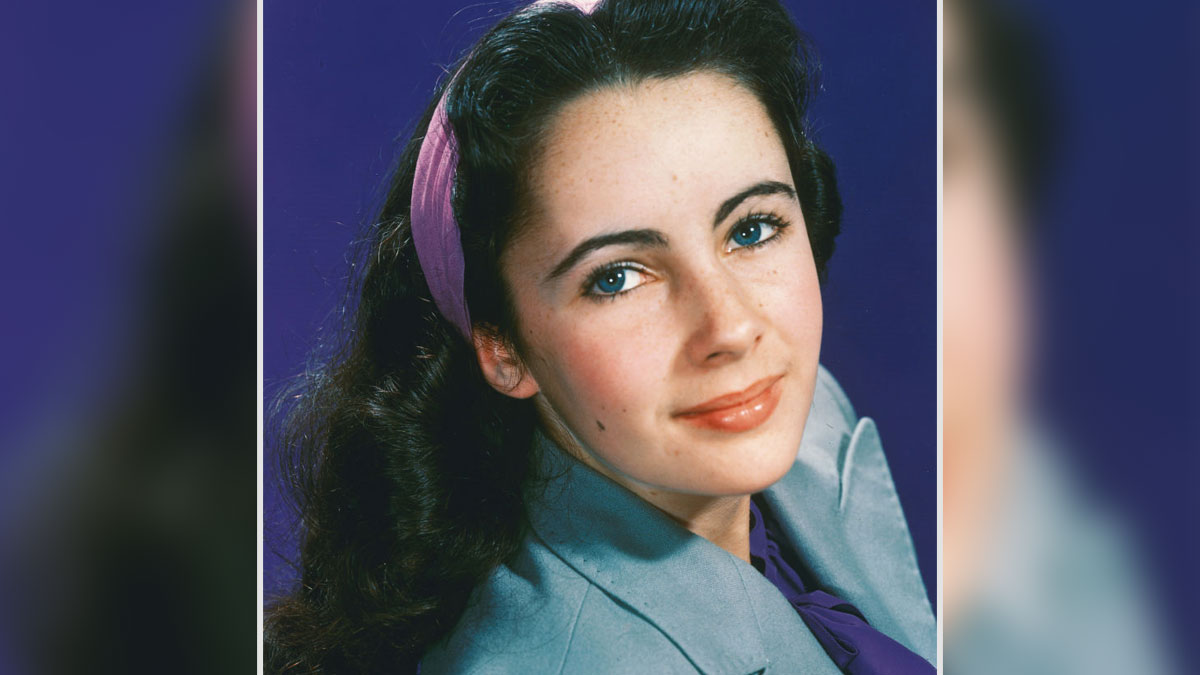
An Interview with Elizabeth Taylor (Famous Hollywood Actress)
A candid reflection from the spirit of Elizabeth Taylor, who shares her journey from the blinding lights of Hollywood to the serene, transformative teachings of the Buddha in the Western Land of Ultimate Bliss.

An Interview with Michael Jackson (King of Pop)
Michael Jackson shares his journey from the pressures of global fame to the peace of the Western Pure Land, revealing the truth behind his life and his ultimate deliverance.
A Voice from the Darkness: Helen Keller's Journey
Helen Keller, the renowned deaf-blind philanthropist, shares her journey from the darkness of the ghost realm to the light of the Western Pure Land of Ultimate Bliss, guided by the compassion of Namo Amituofo and Practitioner Su.
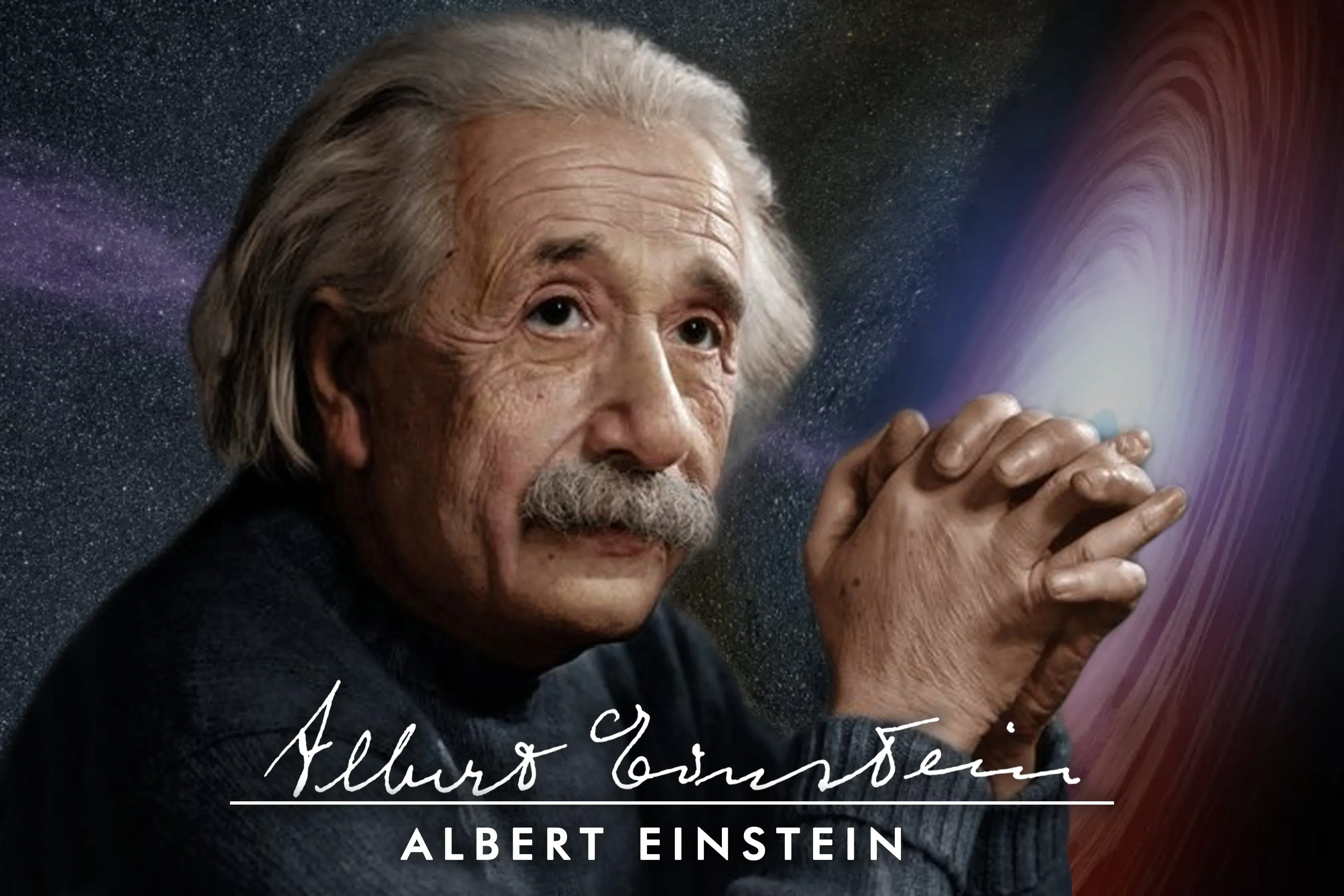
An Interview with Albert Einstein (Theoretical physicist)
Albert Einstein, once considered the most brilliant mind in human history, reflects on his life, the nature of 'science' versus the Truth of the Dharma, and his existence in the Western Pure Land.
A President's Repentance: Ronald Reagan's Journey to the Pure Land
Ronald Reagan, the 40th President of the United States, reflects on his life, his political career, and his profound journey from the depths of hell to the Western Land of Ultimate Bliss through the compassion of Namo Amituofo and Practitioner Su.
The Reflection of a Nation's Founder
This is a record of an interview with Kim Il Sung, the founder and former leader of North Korea, who sought deliverance at the Hsiang Kuang Pure Land Buddhist Centre in Australia. He now resides in the Western Land of Ultimate Bliss. This account reflects upon his life and the spiritual truths he has realised since his passing thirty-two years ago. Recorded by the chief writer, Venerable Fa Hui, on May 18, 2026.
About the Author
Hsiang Kuang Pure Land Buddhist Centre
Contributed to Pure Land Buddhism knowledge library