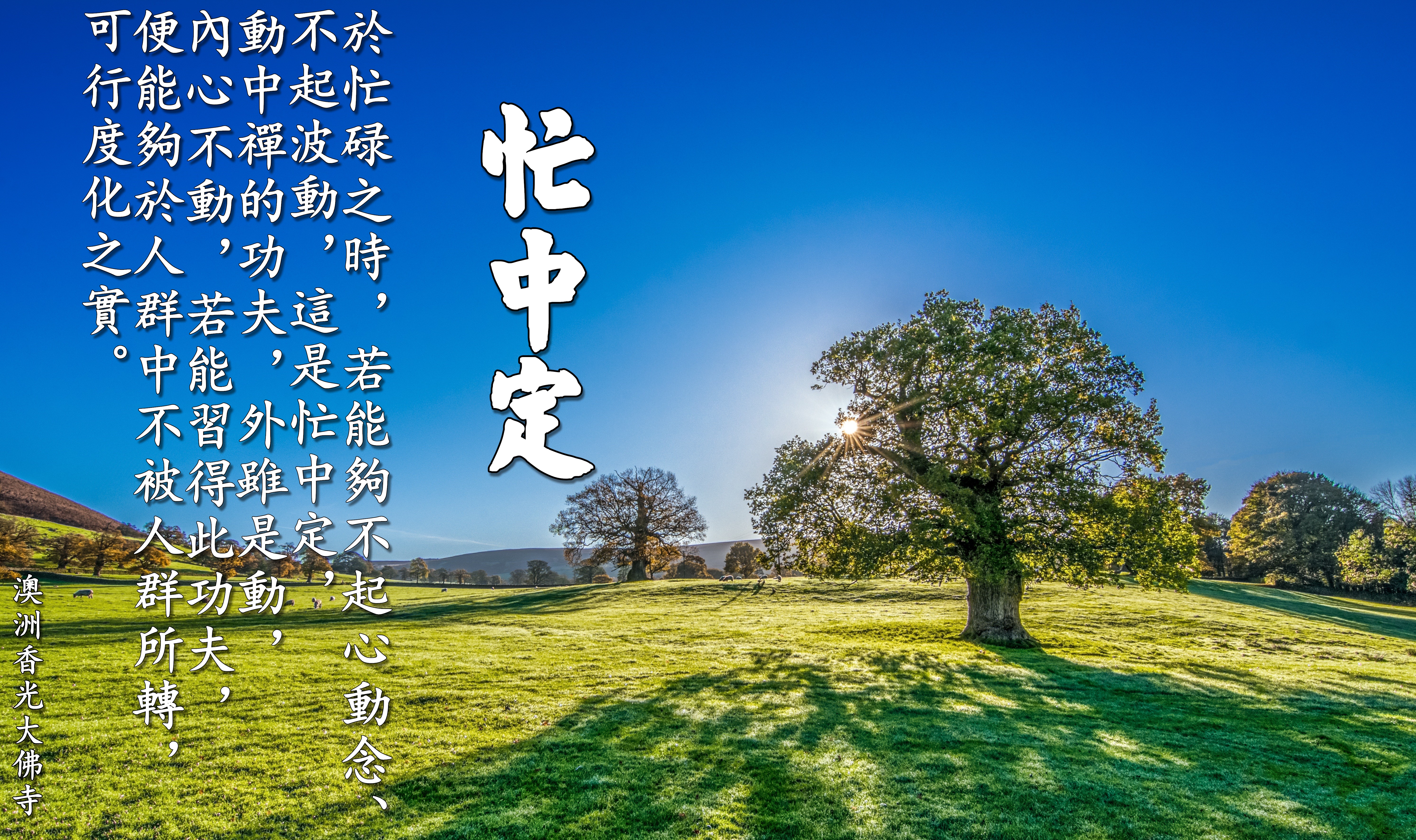
Teachings from Master Xuanzang
Record of Interviews with Deceased Modern Chinese Celebrities (Preface)
Teacher Introduces the Namo Amitabha Buddhist Hall
Hsiang Kuang Pure Land Buddhist Centre in Turmoil: Chinese Leadership and Sentient Beings with Karmic Affinity
Rectifying Body and Mind
Interview with Dr. Helmut Sohmen (Former Chairman of BW Group)
It is the aspiration of many to live without being swayed by external people, events, or objects. We wish to be free from the control of other beings and our , and to escape the six realms of rebirth governed by the laws of and cause and effect. However, when a real situation manifests, we often find ourselves swayed by the environment. We follow our personal ego and habits, losing our autonomy and finding it difficult to break free from the six realms of rebirth. This struggle is the common plight of those who have not yet attained true liberation.
The practice of meditative concentration amidst a busy life is the very essence of our cultivation. Few people can truly live in isolation. Even monastics and lay practitioners must live and interact within a bodhimanda, a temple, or a monastic community. A community that practices the Six Principles of Harmony, where everyone can live in unity and work with shared goals and methods, is incredibly rare and precious in this world. It is a sanctuary where the is lived and breathed.
Within a monastic community, people come from all walks of life. They have different backgrounds, and their personal habits and temperaments vary greatly. When friction occurs during our interactions, or when our intentions differ, we must learn to subdue our ego and adapt to the environment. If we possess meditative concentration, we will not be controlled by the external environment or our karmic creditors, which helps to resolve many problems. This inner stability is the foundation of a harmonious life.
Especially when you are busy, if you can refrain from letting your thoughts and intentions fluctuate, you are practising meditative concentration amidst a busy life—the meditative concentration of motion. Though you may be active on the outside, your heart remains unmoved. If you can master this skill, you will not be swayed by the crowd, and you will be able to effectively save beings. This is the true application of the Dharma in the modern world.
Why does a true practitioner appear to have a sense of coolness and ease, remaining unmoved by external circumstances? This is the difference between one who practices and one who does not. This state does not descend from the sky; it is something that must be earned through hard work. The path of practice is endless. Even if you have achieved success or possess certain talents, there is no reason for arrogance when you encounter favourable conditions. Those who truly understand the truth and know the suffering of beings will naturally feel and humility toward everyone. Therefore, even when facing adversity, they have no reason to be angry or complain.
Those who study the Buddha's teachings know that greed, anger, delusion, arrogance, and doubt, along with the —wealth, lust, fame, food, and sleep—are the five roots of hells. The six realms of rebirth occur precisely because of the entanglement of these loves, hates, and emotions. This is the focus of our practice: to change and remove these personal habits. This is where a sincere practitioner must apply diligent practice.
Why do we use methods such as reciting the Sutras, prostrations, chanting Buddha's name, and copying the sutras? These methods are designed to confront our emotions and our restless hearts. Many Buddhist terms were derived to describe the causes and harms created by these afflictions. Therefore, we must start from this foundation to see the effectiveness of our practice. It is through these daily rituals that we slowly refine our character and purify our intentions.
The younger one is, the more effective the practice can be, because there is less pollution and purification is easier. As we grow older, our work and worldly habits become heavier. Those with strong ego-attachment and personal views must learn to "see through" and "let go" of their life experiences, whether they were high or low, otherwise, these will become obstacles to their practice. If one possesses compassion, meditative concentration, and the ability to remain still in motion, one can often resolve disputes, anger, and regrets naturally, preventing the accumulation of negative karma. This is the value of practice and the reason it can transform one's destiny.
Modern people rarely encounter masters like the ancestral masters of old, who truly closed themselves off to realise their true nature before emerging to teach and save beings. If one can truly meet such a person, it is a great blessing for all beings—an opportunity that is difficult to encounter in millions of years. My disciple, Practitioner Su, is one such person. Everyone should cherish this and follow his teachings. Currently, many monastics face numerous problems when dealing with the public, often struggling with the balance between teaching and social interaction. They require the guidance of a true spiritual friend to point out their issues; otherwise, they remain blind to their own shortcomings. Some may know their problems but lack the strength to overcome them, causing their practice to stagnate.
If one cannot overcome these mental hurdles and transform karma, one cannot achieve spiritual success. Those who have truly realised their true nature do not dwell in discursive thought; they abide in a state of no-thought. Even when acting in the world—through their behaviour, speech, teachings, and arrangements—their hearts remain unmoved. By remaining unmoved, they can effectively teach others how to overcome their own problems. If a student can face future challenges with a calm, no-thought mind, they have made progress. If they have no realisation and repeat the same mistakes, they are standing still. If they create more problems and afflictions, they have regressed. Everyone should self-reflect to see where they stand.
Repentance is a necessary process for every practitioner. When tests and problems arise, regardless of the situation, who is right or wrong, or how the world views the matter, as long as your heart fluctuates or you give rise to a thought, you are creating karma. This is especially true if you give rise to greed, anger, arrogance, or doubt, which is a sign of foolishness. When you have awareness, you must wake up immediately, change your ways in the next second, and never repeat the mistake. This is true repentance, which prevents further suffering from karmic retribution.
When encountering problems in your practice, you must see the truth clearly. Before you have realised your true nature and achieved success, even if the other party is at fault, you must not be led by their actions to blame them. If you lose your meditative concentration and become angry, you will create negative karma and face the consequences—it is simply not worth it. You should immediately repent and change your ways, rather than remaining trapped in the other person's situation. Know that reflection is the best remedy. As for the other party, whether they change or not depends on their own conditions and affinity.
Increasing Wisdom is also for the purpose of transforming karma and achieving . It allows us to avoid or mitigate the occurrence of problems, preventing spiritual obstacles from manifesting. This is the benefit of having Wisdom. A person with true Wisdom makes others feel as if they are bathed in a gentle breeze, making them willing to learn and draw close. This is the natural result of one's virtue, and Practitioner Su is a perfect example of this.
We must address issues as they arise. Any small matter left unresolved, allowed to fester in the heart, becomes an obstacle to practice. Remember this well! For those who seek their true self and aim to realise their true nature, the heart cannot contain even the slightest blemish. Such blemishes are obstacles to Awakening, let alone the larger problems and impurities we often carry. Therefore, once a problem arises, you must cut it out at the root. Do not let it grow in your heart. In the shortest time possible, cut it away as it appears, leaving no trace on your heart. This requires meditative concentration and awareness. A true spiritual friend can provide the greatest assistance at such times.
Busyness is a part of modern life, and it often leads to many problems. Dealing with these requires the help of a true spiritual friend and the support of fellow practitioners. This is why modern people visit the bodhimanda, participate in ceremonies, recite the Sutras, and utilise various Dharma Jewels, such as recordings and videos. Generosity and making offerings to accumulate and merit is something lay practitioners can do to ensure that practitioners have no worries. If practitioners are thus empowered to benefit beings, spreading Dharma and helping them achieve rebirth in the , and if the lay practitioners can do this without seeking reward, the merit is immeasurable.
The great Dharma of the Pure Land is vast and deep. One must delve into it, receive the benefits of the Dharma, and taste its flavour to truly understand its boundless depth.
This interview message was written by the Buddhist disciple Venerable HaiZe.
Great Master Xuanzang shares his profound vision for the Hsiang Kuang Pure Land Buddhist Centre, reflecting on the power of the Dharma, the mission of Practitioner Su, and the ongoing work of saving infinite suffering beings through the light of Namo Amituofo.
Great Master Xuanzang offers profound guidance on the occasion of the New Year, reminding us that the path to the Western Pure Land of Ultimate Bliss requires constant purification, the letting go of ego, and unwavering devotion to Namo Amituofo.
A profound exploration of how to transcend worldly attachments, purify the mind, and secure one's path to the Western Pure Land of Ultimate Bliss through Awakening and diligent practice.
Great Master Xuanzang explains that the Dharma is vast and boundless, transcending worldly knowledge. To truly realise the profound meaning of the Dharma, one must move beyond attachment to words and names, cultivate a pure heart, and engage in diligent practice to attain Awakening.

A candid reflection from the spirit of Elizabeth Taylor, who shares her journey from the blinding lights of Hollywood to the serene, transformative teachings of the Buddha in the Western Land of Ultimate Bliss.

Michael Jackson shares his journey from the pressures of global fame to the peace of the Western Pure Land, revealing the truth behind his life and his ultimate deliverance.
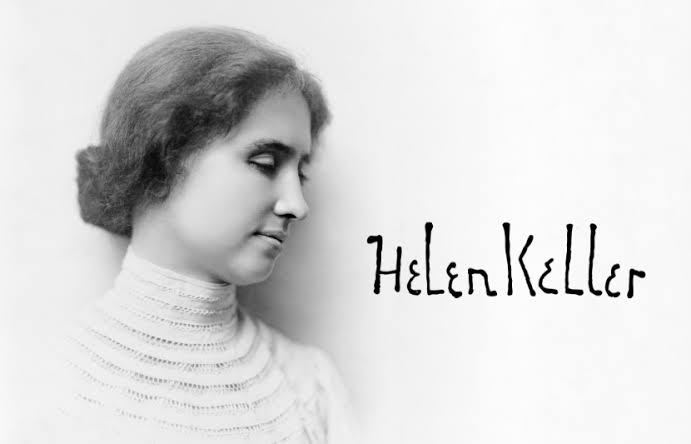
Helen Keller, the renowned deaf-blind philanthropist, shares her journey from the darkness of the ghost realm to the light of the Western Pure Land of Ultimate Bliss, guided by the compassion of Namo Amituofo and Practitioner Su.
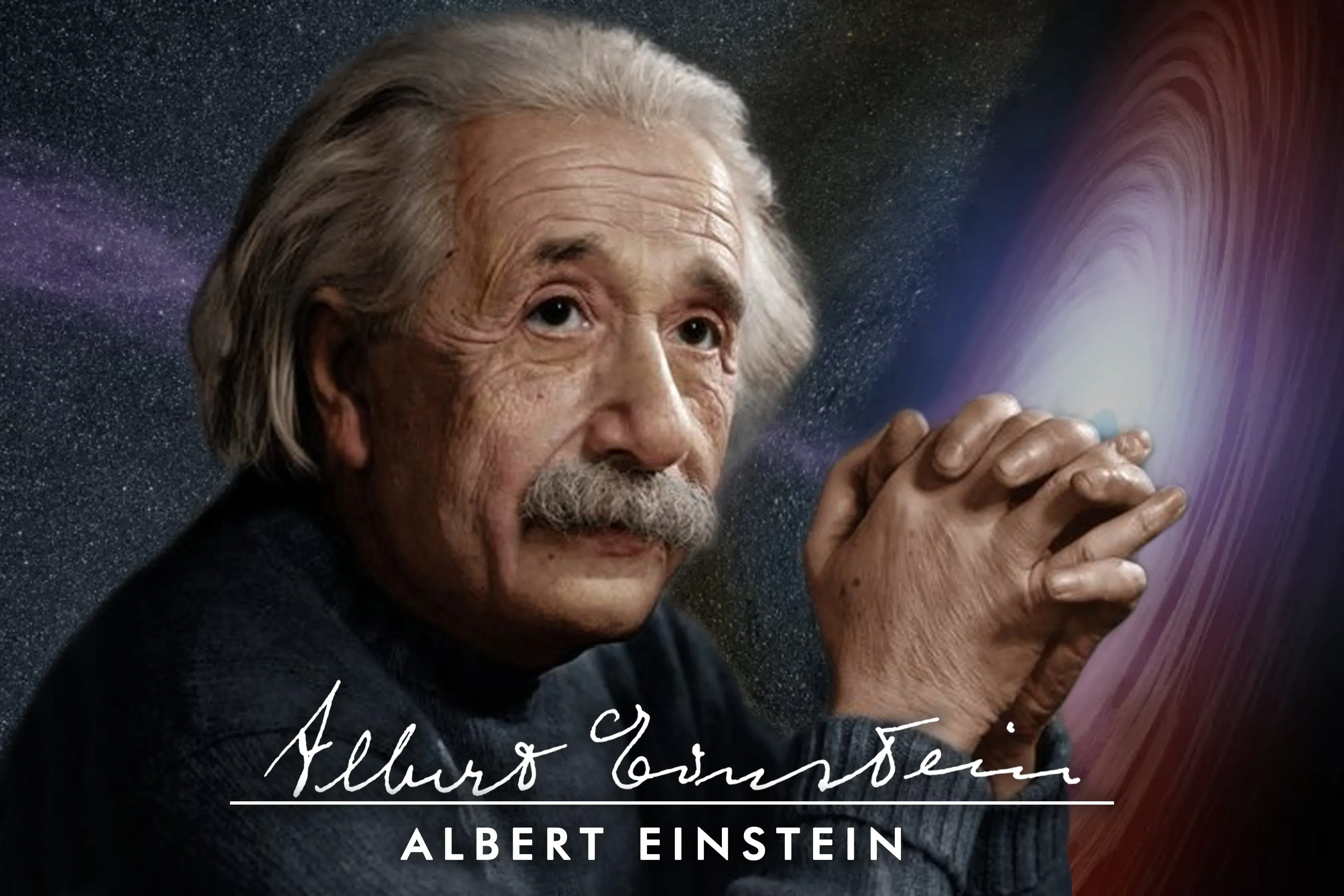
Albert Einstein, once considered the most brilliant mind in human history, reflects on his life, the nature of 'science' versus the Truth of the Dharma, and his existence in the Western Pure Land.

Ronald Reagan, the 40th President of the United States, reflects on his life, his political career, and his profound journey from the depths of hell to the Western Land of Ultimate Bliss through the compassion of Namo Amituofo and Practitioner Su.
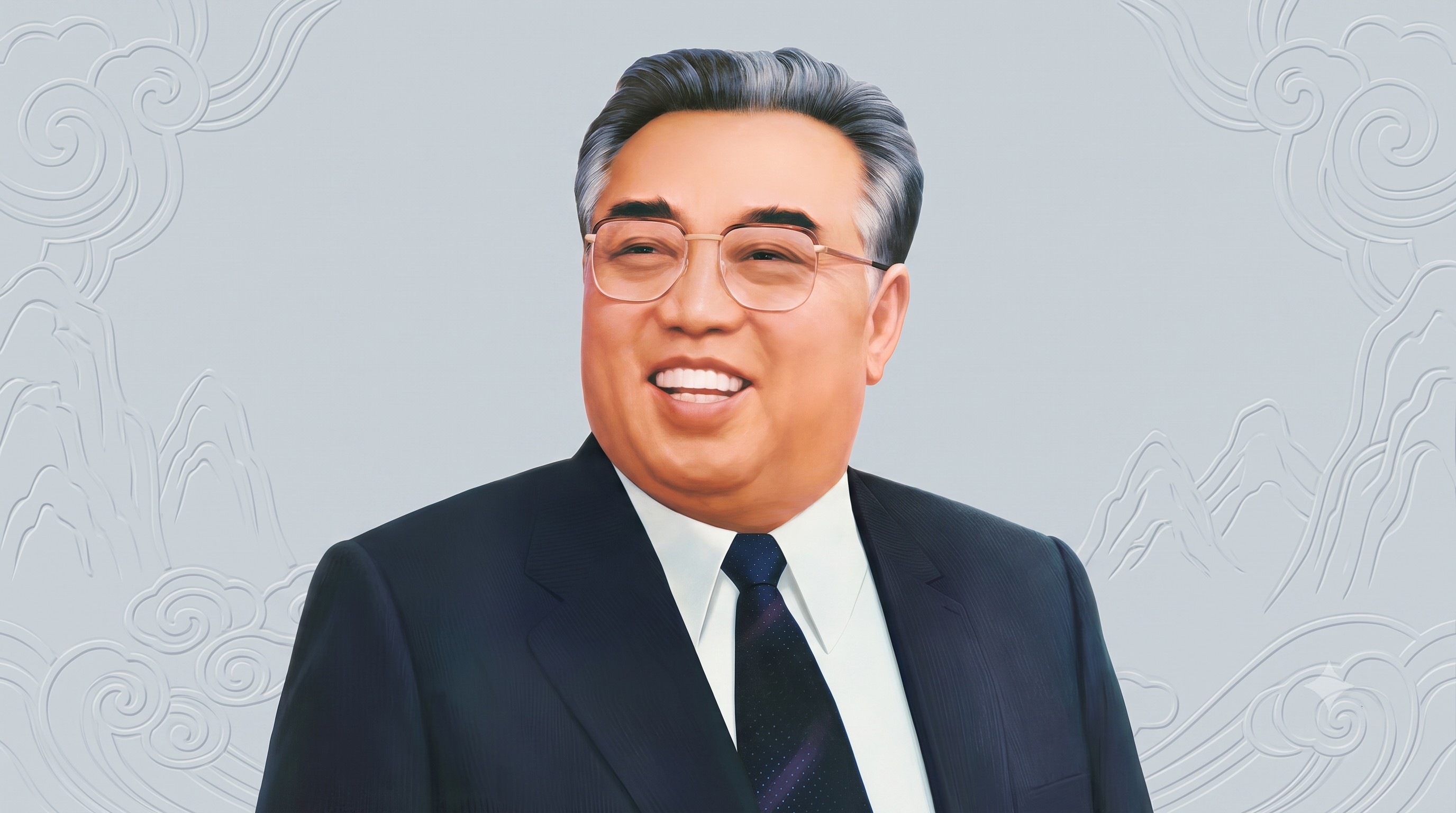
This is a record of an interview with Kim Il Sung, the founder and former leader of North Korea, who sought deliverance 32 years ago. He now resides in the Western Land of Ultimate Bliss.
Hsiang Kuang Pure Land Buddhist Centre
Contributed to Pure Land Buddhism knowledge library