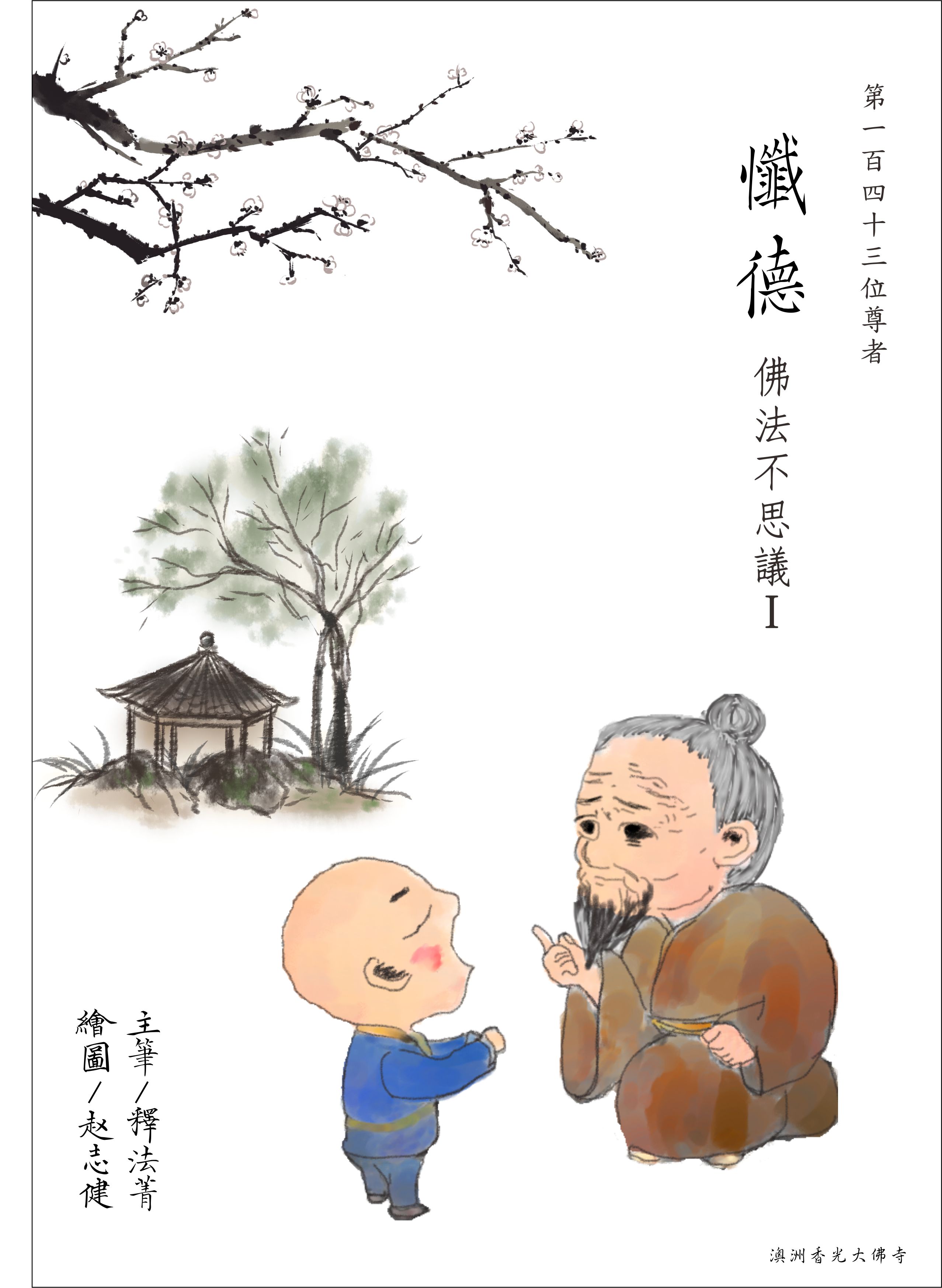
This interview was conducted with Ashvaghosha, who offered profound guidance on the nature of thought and the path to liberation. This account was recorded by the chief writer, Venerable HaiZe, on April 6, 2019, at the Hsiang Kuang Buddhist Centre in Australia, where the Bodhisattva sought to clarify the mechanics of the mind for the benefit of all sentient beings.
Bodhisattva Ashvaghosha speaks:
". Today, I feel a profound sense of relief and . This morning, I witnessed the extraordinary golden light radiating from the Hsiang Kuang Pure Land Buddhist Centre. It turns out that Practitioner Su, with her great wisdom, has resolved the doubts of many beings, providing clarity on how 'thought' enters into different spaces. The only way to confront, subdue, and eventually sever these thoughts—to prevent , mental projections, and illusory spaces from arising—is to rely on the six-character name blessed by the Great Vows of Namo Amituofo: Namo Amituofo. Only then can the true self-nature manifest.
The Value of Truth
This is a profound truth that all sentient beings with karmic affinity should know, understand, and realise. Once understood, one must practise with unremitting diligence to see one's true nature and ensure the salvation of all spirits. This is the essence of the Buddha-heart—a state of oneness. Where there is no perception, there is emptiness; yet within this emptiness, there is no lack. Every aspect of this truth is real and never departs from the righteous path. It is incredibly precious, far surpassing any wealth or treasure in this world. In response to the situation today, I wish to speak with everyone about the 'coarse manifestations of thought.'
The Habit of Thinking
Thinking is a habit that people in this world have become accustomed to. We live our lives guided by thought, which drives our Body, Speech, and Mind to create . Whether these actions are good, evil, or neutral, as long as one has not yet realised their true nature, remains stained by karma. Any thought or mental projection that arises is considered 'karma.' We often hear the phrase 'confusion gives rise to karma.' This means that confusion is the starting point of karma-creation. Confusion and the creation of karma are essentially the same in quality. It is better to understand the meaning of these terms than to become attached to the literal words themselves. If the meaning of a passage is clear, there is no need to interpret it word by word.
The Nature of Mental Stains
Thought is a collective noun, a concept of a coarse nature. It gathers various mental projections, messy thoughts, and impurities. Even if a thought is 'righteous,' from the perspective of the truth of -nature, it is still a stain. To have a thought is to be stained: good thoughts are stains, evil thoughts are stains, righteous thoughts are stains, and evil thoughts are also stains. Only 'no-thought' is unstained; only 'no-thinking' is unstained. To truly achieve a state of no-thought and no-thinking is to be pure. To reach a state of pure goodness, one must be free from thought.
The Vibration of Thoughts
Thoughts are composed of mental projections. In the time it takes to snap one's fingers, 3.2 billion thoughts have already passed. One can see how subtle these thoughts are. Yet, every thought takes form, creates waves, and vibrates through space. If a sentient being with karmic affinity happens to be in that space and receives the vibration of that thought, they may resonate with it. This leads to spiritual attachment, which further increases the turbidity and pollution of the body.
The Power of Buddha-Recitation
Because thoughts are so subtle, they are difficult for most people to perceive. This is why they constantly create spaces of thought, leading to the rise of confusion and a forest of afflictions. When you wish to heighten your awareness, you must be mindful the moment a thought arises. Going a step further, you must prevent the thought from arising at all. If there is no thought, there is no 'space' for confusion, afflictions, and karmic force to manifest. To achieve this, one needs the power of meditative concentration. The deeper your meditative concentration, the more you can suppress and block the generation of thoughts. The most powerful tool for this concentration is the six-character name: Namo Amituofo. Therefore, everyone must learn the true skill of chanting the Buddha's name to enter the heart and attain concentration—this is the , which is the only way to truly sever thoughts and thinking.
The Illusion of Space
The danger of thought is that by the time you realise you are thinking, you have already fallen into a web of thought, and countless immeasurable projections have already been scattered into space. Thoughts possess energy. Righteous thoughts have positive energy, while messy or evil thoughts have negative energy. This energy determines the kind of space that the thought enters. The most familiar space to people is dreaming; what is seen and done in a dream is entirely illusory, and upon waking, the dream-realm vanishes. Space is illusory, and dream-realms are also illusory.
Service and Merit
For the lay practitioners and volunteers at the temple—whether you are working in the fields, the kitchen, handling external affairs, or cleaning—if you volunteer your heart to serve the public, that thought is a 'good thought.' Because the thought has arisen, it forms a 'thought-space.' This space is formed by good intentions—the space of working in the fields, the space of cooking meals, or the space of running errands. Within these, there is a chance for illusory dream-realms to arise. If others have similar thoughts, they may enter that space, leading to or a loss of focus. Volunteering to serve the public with a thought is a good thought, so the resulting reward is . The karma manifested is good karma, but the Blessings derived from such good karma will eventually be exhausted.
The Path of No-Thought
However, if you perform the same service for the public without a heart of attachment, without thought, without thinking, and without any other intentions—if you do not even have the thought that you are 'serving the public,' but simply do it, doing while not doing, and not doing while doing—then there is no opportunity for thought, space, or affliction to arise. This is 'merit.' This merit can help one end the cycle of birth and death and transcend the three realms. This merit is the provision that helps one enter the Western Land of Ultimate Bliss. This is the appearance of a pure, selfless state practised by those who have realised their true nature. It is in accordance with the Truth, without discrimination, without grasping or rejecting. It is extremely precious!
Conclusion
Those who have realised their true nature have six roots that are pure. They use their and their awareness to interact with the outside world. Because they do not fall into thought, no consciousness-projections arise. They do not use consciousness to discriminate; their awareness flows directly. What is manifested and obtained is the realisation of Truth—a state of sincerity and purity.
Therefore, thinking is of no benefit. Only the six-character Buddha-name can confront the habit of thinking. Before you have realised your true nature, if it is difficult to achieve a state of no-thinking or no-thought, please replace it with good thoughts. This is still good karma and will lead to good rewards. 'Grow , achieve the fruit of .' To think well, see well, and do well is good; but to do it directly, without thinking, without seeing, and without doing, is even better. That is when you will realise your true nature!"