The True Meaning of Filial Piety
An Interview with the Spirit of Zhu Hongchang
A Reflection from Nine Hundred and Seventy Years Ago
This is a record of an interview with Zhu Hongchang, who sought at the Hsiang Kuang Buddhist Centre in Australia. He now resides in the Western Pure Land of Ultimate Bliss. This account reflects upon his life approximately 970 years ago. Recorded by the chief writer, Shi Fajing, on March 3, 2020.
Zhu Hongchang speaks:
"Namo Amituofo. I am Zhu Hongchang. It is a profound honour to share my story, a story that spans nearly a millennium, yet remains as vivid as if it happened only yesterday. In that lifetime, I was known by a rather peculiar nickname: 'Duck Chang'.
I remember it so clearly—the voice of Uncle Xiong, my neighbour, booming through the window: 'Duck Chang! Duck Chang! Hurry, hurry! The ducks you are raising have escaped!' I was still heavy with sleep, but the moment I heard his shout, every trace of vanished. I leapt from my bed, threw on whatever clothes were nearest, and grabbed a long stick from the courtyard, ready to chase down the ducks my grandfather had entrusted to my care.
A Simple Life in the Countryside
In that lifetime, I was born into the Zhu family. From a very young age, I stayed by my grandfather’s side, learning the trade of duck farming. The duck pen became my childhood playground. Every single day was a whirlwind of activity—either the ducks were chasing me, or I was chasing them. There were even times when I became so caught up in the excitement that I would tumble straight into the pond. Since I did not know how to swim, I would struggle in the water while the ducks paddled away with such grace. My grandfather would rush to pull me out, and those ducks, seeing my plight, would waddle past me with an air of utter nonchalance, letting out triumphant 'quack, quack, quack' sounds, as if to say, 'You lost this round!'
Even though I lost, I never held it against them. Beyond the fact that they were just ducks, my grandfather had taught me a vital lesson. He would say, 'Chang, we do not live in this world to compete with others. Even if someone insists on competing with you, if you win, you should yield to them; if you lose, you should laugh heartily.' What my grandfather taught me was not how to suffer a loss, but the secret to a happy life. Even when I was soaked to the bone, I would laugh with genuine .
The Burden of Expectations
I did not start out living with my grandfather. I spent my first five years in the city with my parents. My father was a teacher, a man of great renown. He taught many students who went on to become prominent figures in society. His reputation was so stellar that parents fought to have their children taught by him. Yet, there was a great mystery that puzzled everyone: how could such brilliant parents produce a child who was so utterly incapable of learning? That child was me.
To avoid the shame of public ridicule, my parents began teaching me from the age of three. They pushed every bit of knowledge they deemed necessary into my head, hoping I would excel beyond my peers. Alas, I was not a clever child. I was born dull. No matter how many times my father explained a lesson, I simply could not grasp it. I could not even speak clearly. My father would become so enraged that he would roar, 'How could I have possibly fathered such a stupid son?'
After two years of fruitless effort, my father finally gave up. He told my mother, 'Send this child to the countryside! Let him go and raise ducks with my father. Keeping him by my side only ruins my reputation. I would rather not have this child!' My mother, though hesitant, seemed to love my father more than she loved me. She listened to his cold logic: 'We can always have more children, smarter ones. We do not need this fool.' And so, at the age of five, I was sent away.
A Lesson in
When my grandfather first saw me, he asked my father with genuine joy, 'Is this my grandson?' My father nodded, said nothing more, and before leaving, handed my grandfather a large sum of money. 'I do not want this child,' he said. 'Take this money as his living expenses.' My grandfather held my hand and watched my father’s retreating back, shaking his head in resignation. From that day on, I began my new life as a duck farmer.
After moving in with my grandfather, duck meat was a staple at every meal. In my dullness, I never connected the meat on the table to the living creatures outside. It was not until I was seven years old that I witnessed my grandfather grab a duck, take it to the kitchen, and raise a knife to slaughter it. Only then did the horrific truth dawn on me: the meat I had been eating was the flesh of the very creatures I played with. Every piece of meat I consumed had been bought with their lives.
I screamed in terror. My grandfather, startled by my outburst, dropped the duck and the knife and rushed to my side. 'What happened? Why are you screaming so loudly?' I wept and begged him, 'Do not kill it! I do not want to eat duck meat. Please, Grandfather, do not kill them!' To comfort me, he promised, 'Very well, Grandfather promises not to kill them anymore.' That night, I could not sleep. I kept thinking of the ducks I played with, and every time I imagined eating them, tears would stream down my face.
The Joy of Being 'Stupid'
People in the village still called me 'Duck Chang', but I had stopped raising ducks. My grandfather, seeing my heartache, decided to close the duck pen for good. I was so grateful to him. He told me, 'It is your heart that is kind. Otherwise, I would have continued as my father taught me, raising ducks for a living, never once considering that each one was a living, breathing life.' My grandfather and I were both simple, honest men. We did not overthink things, and so our lives remained simple and uncomplicated.
Our lives became the village joke. They had never encountered such a 'stupid' pair—people who ate meat without knowing it came from the animals themselves! When they laughed at me, I would join in and laugh along. I was not laughing at my own stupidity; I was laughing because I had finally stopped harming those creatures.
I was indeed dull, but my grandfather would say, 'Look at Master Lin, the wealthy man next door. He is the smartest man around, and he lived a long life, passing away only in his eighties. He understood everything there was to know, yet in the end, he still had to enter a coffin. Once he was lying in that coffin, how was he any different from anyone else? Why must one insist on being clever? Sometimes, being a little foolish makes life much happier.' He was right. Compared to children my age, they knew so much, and I knew so little, yet I lived a much simpler and happier life. They were always burdened by worries, wanting this and wanting that. I only knew how to watch the clouds, feel the breeze, and drink cool water. I needed nothing else.
The Search for Purpose
Someone once asked me, 'Why are you so happy?' I did not know how to answer, so I said, 'If someone hits you and you can still smile and thank them, you will live a very happy life. This is what my grandfather taught me.' The man looked at me as if I were a madman, but I did not think so. I felt that what my grandfather taught me was something most people could not do, but if one could do it, life would be incredibly free.
Another person, curious about me, asked, 'Can you be an official?' I shook my head. 'Can you raise pigs?' I shook my head. 'Can you do business?' I shook my head. He asked impatiently, 'Then what can you do?' I still shook my head and said, 'I do not know what I can do.' When I told my grandfather about this, he laughed and said, 'If you do not know what to do, then do everything. No one says you must be good at one specific thing to live in this world. Sometimes, not knowing what you are good at allows you to do even more.' He was right. I followed his advice and learned to do everything. Sometimes, at the end of the day, I could not even count how much I had done, because wherever I went, if someone needed help, I was happy to assist. I realised then that when you stop limiting yourself, you end up doing so much more, and life becomes so much more fulfilling.
A Return to the City
It had been a long time since I had been to the city. One day, my grandfather asked me to take some vegetables and fruits we had grown to my parents. 'No matter how they treat you,' he said, 'they are still your parents. As long as they are alive, you should show them filial piety.' I nodded and packed a basket with produce and some cakes that my parents particularly liked, even though such treats were rare in our home.
The journey was long. The city was bustling, filled with vendors and the sounds of trade. I had forgotten where our old home was, but my grandfather had instructed the carriage driver to take me directly there. When the carriage stopped, I saw the familiar house and cried out, 'Yes, this is the place!' I jumped out and knocked on the door, calling, 'Father, Mother! I am back!'
After several calls, a young girl, no more than four years old, opened the door. 'Who are you?' she asked. I asked the same. We stared at each other, struck by how much we resembled one another. 'I am looking for my parents,' I said. She looked confused. 'My parents live here. Your parents do not. You have the wrong house.' I peered through the door, seeing the courtyard where I once played with stones, and the desk where I had sat in misery. It was definitely my home.
The Pain of Rejection
The girl led me into the living room. There sat my mother. She looked so much older than I remembered. When she saw me, she looked shocked. 'Is that you, Chang?' she asked. I nodded vigorously. 'Mother!' I cried. She was startled and pulled me aside, whispering, 'Did your father not tell you never to return? He does not like you; you should not be here! Leave before he comes back!' I knew he thought me dull, but I had no idea he despised me so much.
She was desperate to get rid of me, fearing my father’s anger. I took the basket from my back and said, 'Mother, these are vegetables and fruits Grandfather grew. They are delicious! And these cakes...' Before I could finish, she shouted, 'We do not need these! We lack nothing. Take them and go!' Her reaction stung, but I placed the cakes on the table and turned to leave. She shouted again, 'Wait!' I turned, hoping for a change of heart, but she only repeated, 'Take your things!' I had no choice but to pack the basket and return to the carriage.
As I sat in the carriage, my heart felt heavy. I asked myself, 'Why does my chest ache so much?' The more I thought of her reaction, the more I suffered.
The Lesson of the Herb Gatherer
Just then, I saw a familiar figure through the window. It was my grandfather! I jumped out and asked, 'Grandfather, why are you here?' He said, 'I am waiting for you. I want to take you somewhere.' We walked for a long time until we reached a patch of weeds. 'Wait here,' he said. Soon, a thirteen-year-old boy appeared, basket on his back, gathering plants. 'What is he doing?' I asked.
'He is a filial son,' my grandfather explained. 'His mother is gravely ill, and he believes there is a holy herb in these weeds that can cure her. He tests the plants on his own body to find the right one. His mother abandoned him when he was three, but when he heard she was ill, he returned to her. He does not resent her for those ten years of hardship. He would give his own life to save hers. When asked why he does not hate her, he simply says, "Because she is my mother."'
My grandfather looked at me. 'You should learn from him. No matter how your parents treat you, you must remain filial.' In that moment, the ache in my chest vanished. Even if they did not want me, I vowed to fulfil my duty as a son.
The True Meaning of Filial Piety
I decided to dedicate my life to something more meaningful. I took on manual labour to temper my will, and I travelled to care for the poor, the elderly, and the sick, washing their feet and tending to their needs. I went to disaster areas to help, learning to understand the suffering of others. Even if my mind was dull, I had hands and feet to serve. Even if others laughed at me, I had the capacity for tolerance my grandfather taught me. I changed myself, polished my heart, and met many noble people who taught me the way of Goodness.
Ten years later, I returned home. My grandfather was amazed at my transformation. I had grown from a frail boy into a strong man with a heart that truly cared for others. 'I have found it!' I told him. 'I have found the true method of filial piety.' He looked at me expectantly. 'I have decided to offer this body to all beings in the world,' I said. He patted my chest and replied, 'Your parents’ effort in giving you life was worth it.'
My greatest repayment to my parents was not money or academic success, but using they gave me to its fullest potential. I offered this body to society, serving thousands upon thousands of people. Most importantly, I sought to save my parents as well.
A Path of Compassion
I sought the everywhere, eventually finding a teacher in the deep mountains. I did not learn profound skills, but how to cultivate my heart. I made my heart compassionate and gentle. My 'dull' mind did not seem so slow when it came to the Buddha’s teachings, because when I stopped thinking, I simply did as my teacher instructed. My progress was clear.
My achievements were not for myself. They were for my parents, and ultimately, for all beings. When I gained the ability to save others, I felt deep gratitude for my life’s trials. Without my parents’ treatment of me, I would never have learned what true filial piety meant. Even if they never acknowledged me, I did what I had to do.
I am grateful to the Buddha, grateful to all beings who helped me. My heart is full of gratitude. I continue to practise diligently in the Western Pure Land, chanting Namo Amituofo, and I tell myself: I will return to the human world.
Reflections on Practitioner Su
Practitioner Su’s legs are sacrificed to bear the suffering of beings. Her body is offered to serve them. Her heart, for the sake of saving beings, has no 'self'. Seeing Practitioner Su’s constant dedication is the model for all practitioners. Although I am but a spirit who descended from the Western Pure Land, seeing her sacrifice fills me with repentance. I repent that I did not cherish my human life enough to work harder for all beings.
Life is finite. If one spends a day for others, that day is glorious; if one spends a day for oneself, that day is wasted. Practitioner Su cherishes her human body, working daily for the sake of others, saving countless suffering beings, and in doing so, she has realised the fruit of the Buddha-body.
The beings of this world are difficult to save because of their deep-seated attachments to . Practitioner Su’s voice of the Buddha never ceases, using every method to help beings leave suffering behind. She does not think of her own heart, only of the of others; she does not think of the pain of her own body, only of the awakening of beings. Oh, people of the world! You should learn from her. The suffering of beings in this Dharma-ending age is endless. If you can awaken and develop a compassionate heart to save others, then you are truly blessed.
I am grateful for the compassion of Practitioner Su.
Namo Amituofo."
More from Revered Ones
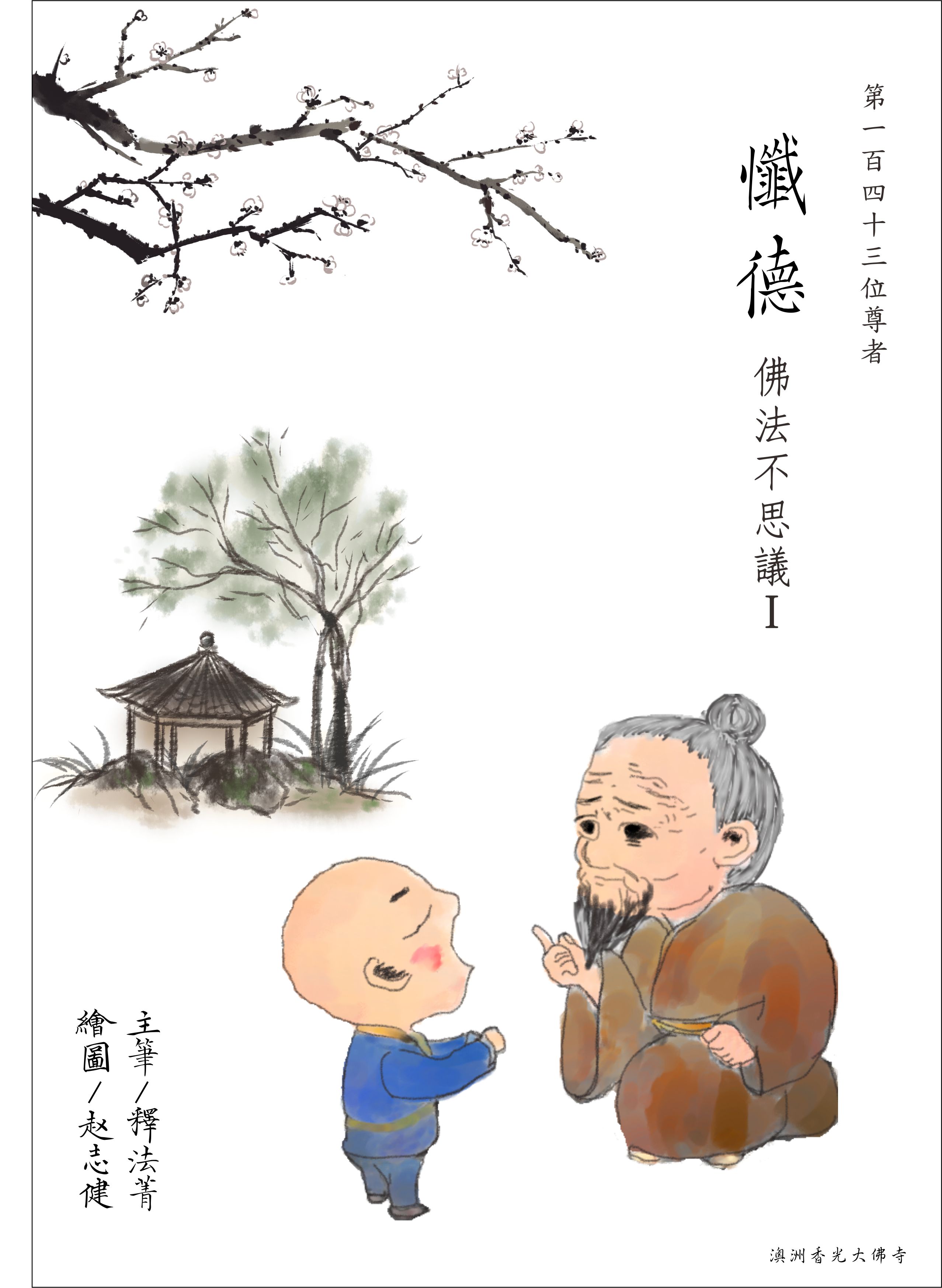
The Virtue of Repentance
A profound reflection on the journey of repentance and the cultivation of virtue from the 143rd Venerable, Chande, as he recounts his path to the Western Pure Land.
The Spiritual Anatomy of Practitioner Su's Leg
Venerable Feng An, representing a collective of 1,162 Venerables, provides a profound look into the spiritual dimensions within Practitioner Su's leg, revealing the hidden reality of karmic burdens, the nature of spiritual attachment, and the ultimate sacrifice of a Bodhisattva.
The Path of No-Self and the Boundless Ocean of Wisdom
A poignant reflection on a life of hardship, the realization of the 'no-self' nature, and the ultimate vow to deliver sentient beings through the power of Namo Amituofo.
The Nature of Purity and the Golden Light
A reflection on the nature of purity, the inevitability of suffering, and the mysterious golden light that guided all beings toward liberation four thousand years ago.
More by Hsiang Kuang Pure Land Buddhist Centre
The Final Curtain Call of Chu Ke-liang
A candid reflection from the late Taiwanese entertainer Chu Ke-liang on his life, his career, the karmic weight of his influence, and his ultimate deliverance to the Western Land of Ultimate Bliss.
The Soul's True Equality: A Conversation with Mahatma Gandhi
This is a record of an interview with Mohandas Karamchand Gandhi, who sought deliverance at the Hsiang Kuang Pure Land Buddhist Centre in Australia. He now resides in the Western Land of Ultimate Bliss. This account reflects upon his life and his journey to the Pure Land.
A Reflection from the Western Pure Land
This is a record of an interview with Zhao Puchu, who sought deliverance at the Hsiang Kuang Pure Land Buddhist Centre in Australia. He now resides in the Western Land of Ultimate Bliss. This account reflects upon his life in the 20th century. Recorded by the chief writer, Shi Fa Hui, on April 18, 2026.
The Truth Behind My Rebirth: A Message from Liu Suqing
Liu Suqing, the elder sister of the renowned practitioner Liu Suyun, shares her harrowing journey through the spirit realms and her ultimate deliverance to the Western Land of Ultimate Bliss through the Hsiang Kuang Pure Land Buddhist Centre.
The Burden of a Historical Name
This is a record of an interview with Lin Biao, who sought Chao Du at the Hsiang Kuang Pure Land Buddhist Centre in Australia. He now resides in the Western Land of Ultimate Bliss. This account reflects upon his life approximately 54 years ago. Recorded by the chief writer, Shi Fa, on May 18, 2026.
The Poet’s Journey to the Western Pure Land
A reflection on the life, tragedy, and ultimate spiritual liberation of the ancient statesman Qu Yuan, who found peace through the teachings of Practitioner Su.
About the Author
Hsiang Kuang Pure Land Buddhist Centre
Contributed to Pure Land Buddhism knowledge library