The Mark of Karma: A Prison Guard's Redemption
An Interview with the Spirit of Zhao Shunyu
This is a record of an interview with Zhao Shunyu, who sought deliverance at the Hsiang Kuang Buddhist Centre in Australia. He now resides in the Western Land of Ultimate Bliss. This account reflects upon his life and his subsequent time as a prison guard in the hells. Recorded by the chief writer, Shi Fa Jing, on April 3, 2021.
Zhao Shunyu speaks:
"Namo Amituofo. I am Zhao Shunyu. I have arrived in the Western Land of Ultimate Bliss, leading fifty-nine other prison guards behind me. We knelt before the Buddha, Namo Amituofo, and bowed in gratitude to Practitioner Su. At that moment, we were all moved to tears. After wandering for thousands of years, we have finally returned home. We had almost forgotten what our homeland looked like. Gazing at the scenery before us, feeling the dignity and goodness of the Western Land, I realise that this—this is our true home.
Children who have wandered far from home always carry a longing for their birthplace in their hearts. When we are born into the human world, we forget our past, yet we often feel an inexplicable emptiness and sorrow. It is the memory of our original nature, calling out to us, urging us to return home as soon as possible."
A Mark of Mystery and Misery
"When I was born, there was a mark on my forehead—a birthmark, pitch black and incredibly striking. Even if I had been handsome, this mark made me look hideous. My aunt said to my mother, 'Such a large birthmark on his forehead! Even if he were destined to be an emperor, this mark would block his path. You must find a way to remove it; it is too unsightly.' As a small infant, I suddenly burst into loud sobs at that very moment. My mother said to me, 'It is alright, it is alright, we will not remove the birthmark.' Only when she said this did I stop crying, leaving both my mother and aunt in a state of shock. My mother whispered to her, 'Could it be that this birthmark is connected to the child's destiny?'
The birthmark did not shrink as I grew older; instead, it grew along with me. By the age of five, it covered nearly half of my forehead. My mother asked me, 'Shunyu, would you like me to find a way to remove this mark? It is almost blocking your entire forehead.' No sooner had she finished speaking than my head began to throb with pain. I told her, 'This birthmark seems to understand what we are saying. It does not want you to remove it. Every time you mention taking it off, it causes my head to ache violently.' Hearing this, my mother had no choice but to abandon the idea, though she could only let out a long, helpless sigh: 'Sigh—.'
The Shadow Within
"My mother did not give up. She asked everyone she could find, trying to understand the connection between me and this mark. Every person gave a different answer. Some said the mark was a child my mother had aborted in a previous life, a spirit attached to my forehead, living with me every day, growing up with me, and enjoying the feeling of being cared for by parents. Others told her that the birthmark was surely a karmic creditor, controlling me from my forehead. Some suggested it was a mysterious sign, indicating a special mission in this life, while others claimed it was a ghost stuck to my face that needed to be exorcised. There were so many theories, and my mother did not know which to believe. In the end, she never found the true answer.
As I grew older, the influence of the birthmark became increasingly severe. It seemed capable of affecting my thoughts and changing my intentions. If I was not constantly vigilant, I would easily find myself acting according to its will.
For instance, there was one occasion when my mother asked me to take a basket of freshly picked persimmons to a neighbour. I was happy to help, picked up the basket, and prepared to leave. Before I had even reached the neighbour's house, the birthmark began to influence my mind. At the time, I did not realise it. It planted a thought in my brain: 'These persimmons are so delicious, why give them to others? Why not keep them for yourself?' This thought was so intense, so vivid, that I mistook it for my own. I listened to it. I sat under a large tree by the roadside and ate the entire basket of persimmons, savouring every bite. Only after I had finished did I feel a sudden jolt of terror: 'What am I doing? Why did I eat all the persimmons Mother asked me to deliver?' I was truly frightened, because I did not even like persimmons, yet I had devoured them all because of that intrusive thought.
A Turning Point in the Temple
"From that day on, I remained on high alert, but I lacked the spiritual sensitivity to detect when I was being controlled until it was too late. I often found myself performing actions that were not my own. What terrified me even more was that every time I obeyed the birthmark, it grew slightly larger. It was constantly expanding. It was not hard to imagine that if I continued to follow its lead, it would eventually cover my entire face, turning me into a 'black-faced man.' The thought filled me with dread.
I did not know how to escape it. The more I cared about it, the more I wanted it to leave, the more it controlled me. At times, I felt I had no agency over my own life at all. As the only son of the Zhao family, I was pampered, which fostered a terrible temper. I was easily angered, and the smallest things would make me fly into a rage. Whenever my father or grandmother saw me angry, they would immediately submit to my whims to appease me. This upbringing only made me more susceptible to control. Once, in a fit of rage, the birthmark caused my head to ache intensely, sending messages into my brain to pick up a stick and strike someone. I could not master myself; I actually picked up a thick wooden club and beat a passerby with whom I had been arguing until he was covered in wounds. In the end, my father had to pay a massive sum of money to resolve the matter.
Even with such a hideous mark, I was still the young master of the Zhao family, and no one dared to disobey me. But the mark made me increasingly despondent, and my temper grew more violent. Between the ages of twelve and sixteen, I completely surrendered to the control of the birthmark. I wanted to give up on my life, so I did whatever it demanded. During those years, I committed many heinous acts. I became someone else entirely, as if I were being replaced by the spirit within the mark. In those few short years, the mark grew rapidly, spreading from my forehead across my face, covering half of it.
The Path of True Change
"Someone once told me that when the mark covered my entire face, my life would come to an end. My family was terrified, fearing I would die, but I was stubborn and fearless. I seemed to be in a battle with this mark, using all sorts of extreme methods to resist it. No matter how many prayers or divinations my family sought, nothing could solve the problem. They could only watch me suffer.
By the age of eighteen, my face was almost entirely black. It was truly a terrifying sight. I rarely left the house, fearing I would frighten others. At that point, I was no longer myself. Just as I was about to lose all hope, a noble person appeared in my life: a monk who came to our home to beg for alms. My mother brought out fresh food for me to offer the monk. I lowered my head and poured the food into his bowl. I never expected that by planting this small seed of merit, my life would begin to take a turn.
After the monk accepted the offering, he said to me, 'Benefactor, there is still a chance, provided you are willing to change.' His words gave me the courage to lift my head. I knew I looked monstrous, but the monk seemed completely unmoved.
I followed the monk's advice and entered the temple to practice. The first thing I had to do was roll up my sleeves and serve the public. Even though my face was hideous, the monk insisted I show my face to the public with courage; only in this way could I eliminate my spiritual obstacles. He told me, 'When someone mocks you, keep your heart still, repent sincerely, and be grateful. With each instance, your spiritual obstacles will diminish.' This was not easy. Everyone who saw me showed expressions of pure horror. Sometimes I was startled by their reactions, but I kept telling myself: 'Repent, repent. This is what I deserve. I must not let my heart be moved; I must repent.'
By reminding myself again and again, my heart became much calmer. In less than three months, I was able to stand openly before everyone and speak naturally, no longer cowering or fearing their mockery.
From Hell to the Pure Land
"However, the birthmark still tried to control me, especially when my old temper flared up; it would seize the opportunity to attack my mind. When I tried to focus on the monk's talks, it would make me drowsy and unable to wake, causing me to fall to the floor and snore loudly. Faced with this, the monk would only ask me one question: 'Is it painful?' I would nod vigorously and reply, 'It is very painful.' The monk would firmly tell me, 'Then change completely!'
Yes, change completely. That was something I had never done. Before, I only knew how to fight against the mark; I had never thought of changing myself. But now, the suffering I endured forced me to admit my faults and truly repent. I knew my temper was the key to my being controlled. I resolved to change it. Even though it was not easy, I would use all my strength to do so, especially when I saw the past between the mark and me. I had no choice but to change. Only by changing could I repay the harm I had caused it.
I told myself: 'I am the least qualified person to be angry. No matter how others treat me, I have no right to be angry.' Whenever I felt anger, even a slight ripple, I could not forgive myself. My legs were covered in scars—that was my self-imposed punishment. Whenever I got angry, I would prick my thighs with a needle to remind myself that the result of anger is suffering for oneself.
The more I changed, the more I could master myself. I became increasingly aware of when I was acting as myself and when the mark was controlling me. Whenever it controlled me, I knew I still had areas to improve, which allowed it to manifest and seek revenge. I constantly observed myself and was willing to put in the actual effort to change.
In this process of change, one needs a sincere heart, firm perseverance, and the faith and determination that success is inevitable. The birthmark tested me repeatedly. It made me suffer, and in my lowest moments, I wanted to give up. But in the end, I did not. The strength that sustained me came from my repentance. I knew that if it were not for me, it would not have become what it was. So, no matter how painful it was, I chose to persevere.
Over five years, my face recovered for the most part. My sincere change caused the birthmark to shrink continuously, becoming smaller than it originally was. I became more capable of being myself, reclaiming my original appearance. My transformation gave many people faith in the Buddha’s teachings, especially the villagers who had initially looked down on me. Eventually, they became even more devoted to the Dharma than I was, including my family, who all began to believe in the Buddha because of my change.
The Zhao family fortune passed to my generation and did not continue further. I gave away all our wealth in Generosity. It was learning the Buddha’s teachings that gave me the concept of helping others through Generosity; it was also the Buddha’s teachings that made me want to learn to let go of everything.
In that life, although I practiced the Buddha’s teachings, I did not become a monk. I chose to protect the Dharma, often travelling between the temple and the secular world. I introduced the Dharma to people everywhere, hoping that more would understand the teachings and learn to change themselves and transform their through practice.
Regrettably, in that life, I did not know how to seek rebirth in the Western Land of Ultimate Bliss. After I passed away, my spirit was taken into the hells by the officials there. I served as a prison guard, responsible for managing the order of the criminals in the execution grounds. Seeing so many spirits suffering the torments of hell, I knew it was all caused by their own tempers. I was the same; if not for the teachings of the Buddha, I could never have changed, and I would have been one of those criminals.
It was the Buddha who saved me. Now, I have met the Buddha again. This time, I have listened to many Dharma talks given by Practitioner Su. I am no longer blindly practising; I understand the principles, and I know to seek rebirth in the Western Land of Ultimate Bliss. I am grateful to the Buddha for giving me this opportunity. This is a surprise that I, Zhao Shunyu, never expected.
I am grateful for the of the Buddha.
I am grateful for the compassion of Practitioner Su.
This interview message was recorded by the Buddhist disciple Shi Fa Jing."
More from Hell Guards
The Price of Revolution: A Prison Guard's Awakening
Chen Hongming, once an intellectual caught in the violent political upheavals of his time, reflects on his journey from the chaos of revolution to the depths of hell, and finally to the peace of the Western Pure Land of Ultimate Bliss.
The Jailer’s Release: From Hell to the Western Pure Land
This is a record of an interview with Muteng Yuan, who sought deliverance at the Hsiang Kuang Pure Land Buddhist Centre in Australia. She now resides in the Western Land of Ultimate Bliss. This account reflects upon her life during the Tang Dynasty. Recorded by the chief writer, Shi Fa, on May 2, 2026.
The Scribe Who Sacrificed for the Truth
This is a record of an interview with Qin Ruyu, who sought deliverance at the Hsiang Kuang Pure Land Buddhist Centre in Australia. She now resides in the Western Land of Ultimate Bliss. This account reflects upon her life during the Qin Dynasty, approximately 2,200 years ago. Recorded by the chief writer, Shi Fa, on April 26, 2026.
The Shepherd Who Found the Pure Land
Shamu Ke, a former shepherd from the grasslands of Xinjiang, shares his journey from a simple life tending to his flock to serving as a prison guard in the underworld, and finally attaining rebirth in the Western Pure Land of Ultimate Bliss through the compassionate guidance of Practitioner Su.
More by Hsiang Kuang Pure Land Buddhist Centre
The Redemption of a Hollywood Icon
A candid reflection from the spirit of Elizabeth Taylor, who shares her journey from the blinding lights of Hollywood to the serene, transformative teachings of the Buddha in the Western Land of Ultimate Bliss.
The King of Pop's Journey to the Western Pure Land
Michael Jackson shares his journey from the pressures of global fame to the peace of the Western Pure Land, revealing the truth behind his life and his ultimate deliverance.
A Voice from the Darkness: Helen Keller's Journey
Helen Keller, the renowned deaf-blind philanthropist, shares her journey from the darkness of the ghost realm to the light of the Western Pure Land of Ultimate Bliss, guided by the compassion of Namo Amituofo and Practitioner Su.
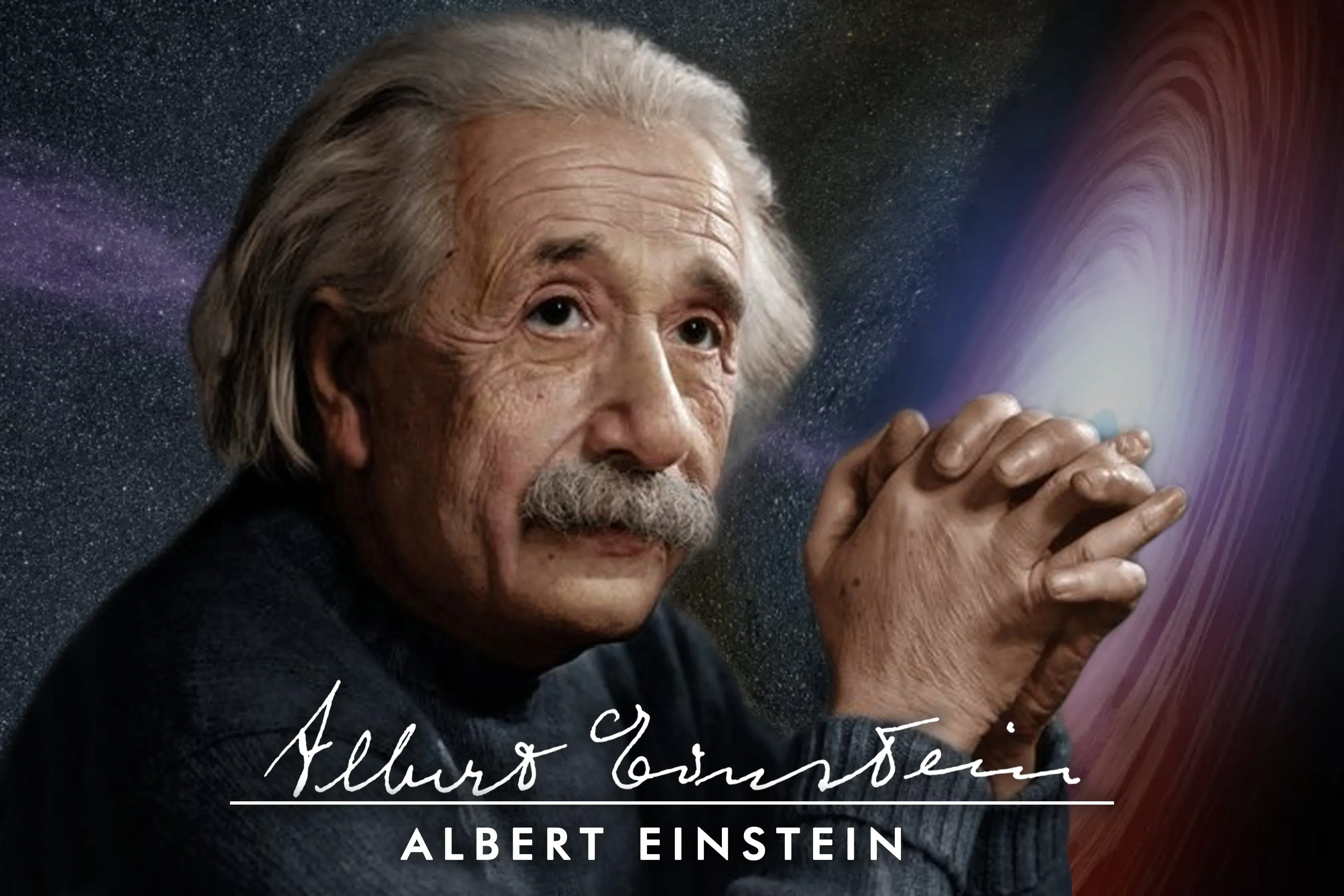
An Interview with Albert Einstein (Theoretical physicist)
Albert Einstein, once considered the most brilliant mind in human history, reflects on his life, the nature of 'science' versus the Truth of the Dharma, and his existence in the Western Pure Land.
A President's Repentance: Ronald Reagan's Journey to the Pure Land
Ronald Reagan, the 40th President of the United States, reflects on his life, his political career, and his profound journey from the depths of hell to the Western Land of Ultimate Bliss through the compassion of Namo Amituofo and Practitioner Su.
The Reflection of a Nation's Founder
This is a record of an interview with Kim Il Sung, the founder and former leader of North Korea, who sought deliverance at the Hsiang Kuang Pure Land Buddhist Centre in Australia. He now resides in the Western Land of Ultimate Bliss. This account reflects upon his life and the spiritual truths he has realised since his passing thirty-two years ago. Recorded by the chief writer, Venerable Fa Hui, on May 18, 2026.
About the Author
Hsiang Kuang Pure Land Buddhist Centre
Contributed to Pure Land Buddhism knowledge library