Jealousy and Praise: Teachings from Master Shang Xuan Xia Zang
Teachings from Master Shang Xuan Xia Zang
February 8, 2019
The Universal Buddha-Nature
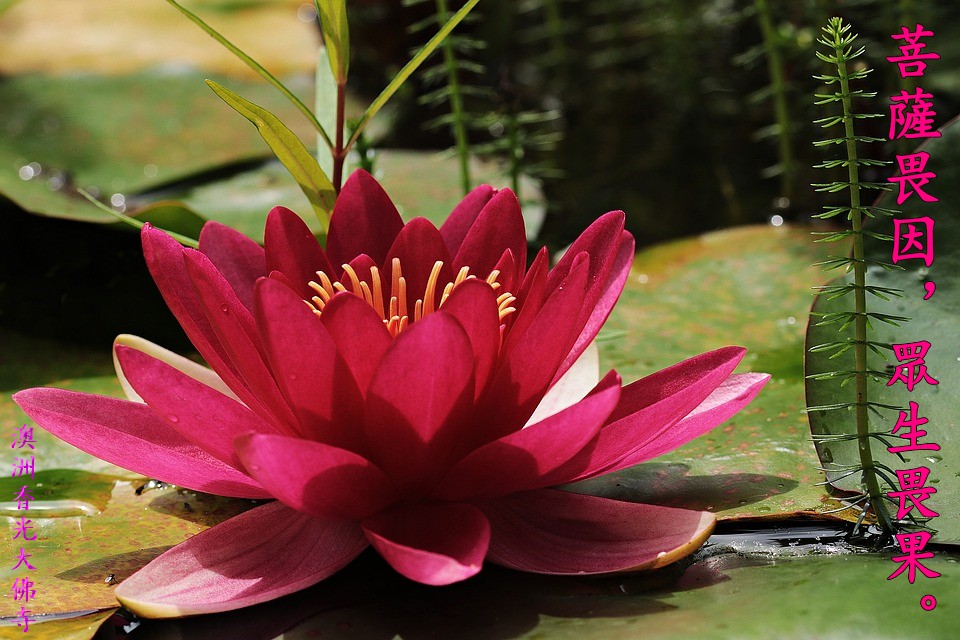
Every sentient being possesses the Buddha-nature. Whether we look at the six realms of existence, the ten directions, the physical world—wishing to be as free as the wind, mountains & rivers—or even the flowers, trees, insects, and the inanimate objects around us like tables and chairs, all are manifestations of spiritual life. Because all possess the Buddha-nature, we have the ancient stories of the patriarchs and venerable masters who could preach the to the point where even the stubborn stones would nod in agreement.
This inherent Buddha-nature is our true self. It is the source of our Prajna wisdom, our capacity for Goodness, our , and our vast mind-capacity. However, throughout countless lifetimes of wandering in the six realms of rebirth, this nature has been heavily obscured by pollution. It has been buried, replaced by the "self," personal ego, and selfishness. Consequently, we find ourselves trapped in a cycle of negative traits: selfishness and self-interest, jealousy, resentment, the tendency to reject others, a critical and judgmental attitude, arrogance, and the of greed, anger, delusion, arrogance, and doubt. These habits are contrary to the Truth. They are based on incorrect views and that permeate this Five Turbidities and Evil World in which we live during this Dharma-ending age.
The Struggle Between Nature and Habit
The purpose of Buddhist education and practice is to understand these truths. We must work to purify and improve these habits, ultimately rediscovering the Buddha-nature that every being inherently possesses. In the tradition of Chinese scholars, it is often said that human nature is originally good; this refers to our Buddha-nature. Conversely, when people speak of human nature being evil, they are referring to the habits accumulated through lifetimes of reincarnation. These habits manifest naturally whenever we encounter specific situations. When they arise, they cause harm to both ourselves and others. This process is a fundamental part of the laws of and cause and effect.
If we allow these habits to dictate our actions, our journey through the cycle of rebirth will continue to be governed by these and the causes and effects. In such a state, how can we speak of liberation or leaving suffering behind? Only through Buddhist education can we continuously purify ourselves. We must not allow our habits the opportunity to summon or attached spirits. If we can eliminate these habits, we break the cycle of . Only then will our true, luminous awareness manifest, allowing us to realise our true self.
The Roots of Jealousy
In the human world, children begin to interact with the world around them from a very young age. Beyond their primary bond with their parents, they observe and interact with people and objects. It is within these interactions that their habits begin to surface. If a child perceives that the attention or love they once received is now being shared with others, a sense of jealousy naturally arises. This jealousy stains the child’s originally free and joyful heart.
Jealousy manifests in many ways: in childhood, a child may feel deprived by the birth of a sibling, leading to of resentment, rejection, or even harmful behaviour toward the new arrival. In adulthood, an elderly person might feel jealous when they see another person achieving more than they have. In positions of power, those who are respected may succumb to jealousy. When such individuals act out of jealousy, the resulting harm or retaliation is severe, and the impact is far-reaching. These negative actions generate a powerful reactive force that eventually returns to the source. Ultimately, the person who suffers the most is the one who initiated the harm. This is the reality of karmic retribution. As the saying goes in the Buddha’s gate: "Bodhisattvas fear the cause, while ordinary beings fear the result."
The Antidote of Sincere Praise
The jealousy that children exhibit is not something they are taught; it arises naturally from the habits brought over from past lives. Everyone possesses these tendencies to varying degrees. Great patriarchs and venerable masters and those who return to this world with a vow to save the world may not exhibit these traits. Through rigorous education and cultivation, they have developed a level of virtue and integrity that transcends these habits.
The Buddhas and Bodhisattvas are compassionate. They know that it is difficult for people to overcome these habits through alone. Therefore, Buddhist education provides many methods to help us work from the heart, preventing evil thoughts and habits from manifesting and harming ourselves or others. One of the most effective methods for countering jealousy is the practice of "rejoicing in merit," as taught by Samantabhadra in his Ten Great Vows. This involves the practice of Generosity and sincere praise.
To practise sincere praise, one must have a vast mind-capacity. When you see the achievements of others, offer them genuine, heartfelt praise. This praise must be free from ulterior motives and devoid of any reluctance. When it is sincere, it becomes a form of encouragement and a manifestation of compassion. If the praise is superficial or calculated, it loses its meaning and becomes tainted. When you see someone who surpasses you, you should feel that it is a rare and precious occurrence. By maintaining a sense of oneness and joyfully accepting their success, you recognise that their achievements contribute to the progress of everyone. When you view their success as your own, jealousy cannot take root.
A Call to Practice
Buddhist education is not something high and unreachable; it is a necessary tool for personal purification. Those who have the karmic affinity to read these words should be grounded and practical. Repent and turn towards goodness. Practise the method of chanting Namo Amituofo. Make a firm vow to be reborn in the Western Pure Land. Only by reaching the Western Pure Land can one truly transcend the cycle of birth and death and attain ultimate, perfect achievement.
This message was recorded by the Buddha's disciple, Venerable HaiZe.
Namo Amituofo
More from Teachings of Great Master Xuanzang
The Vision of Great Master Xuanzang
Great Master Xuanzang shares his profound vision for the Hsiang Kuang Pure Land Buddhist Centre, reflecting on the power of the Dharma, the mission of Practitioner Su, and the ongoing work of saving infinite suffering beings through the light of Namo Amituofo.
Great Master Xuanzang's New Year Joyful Purification Dharma Assembly
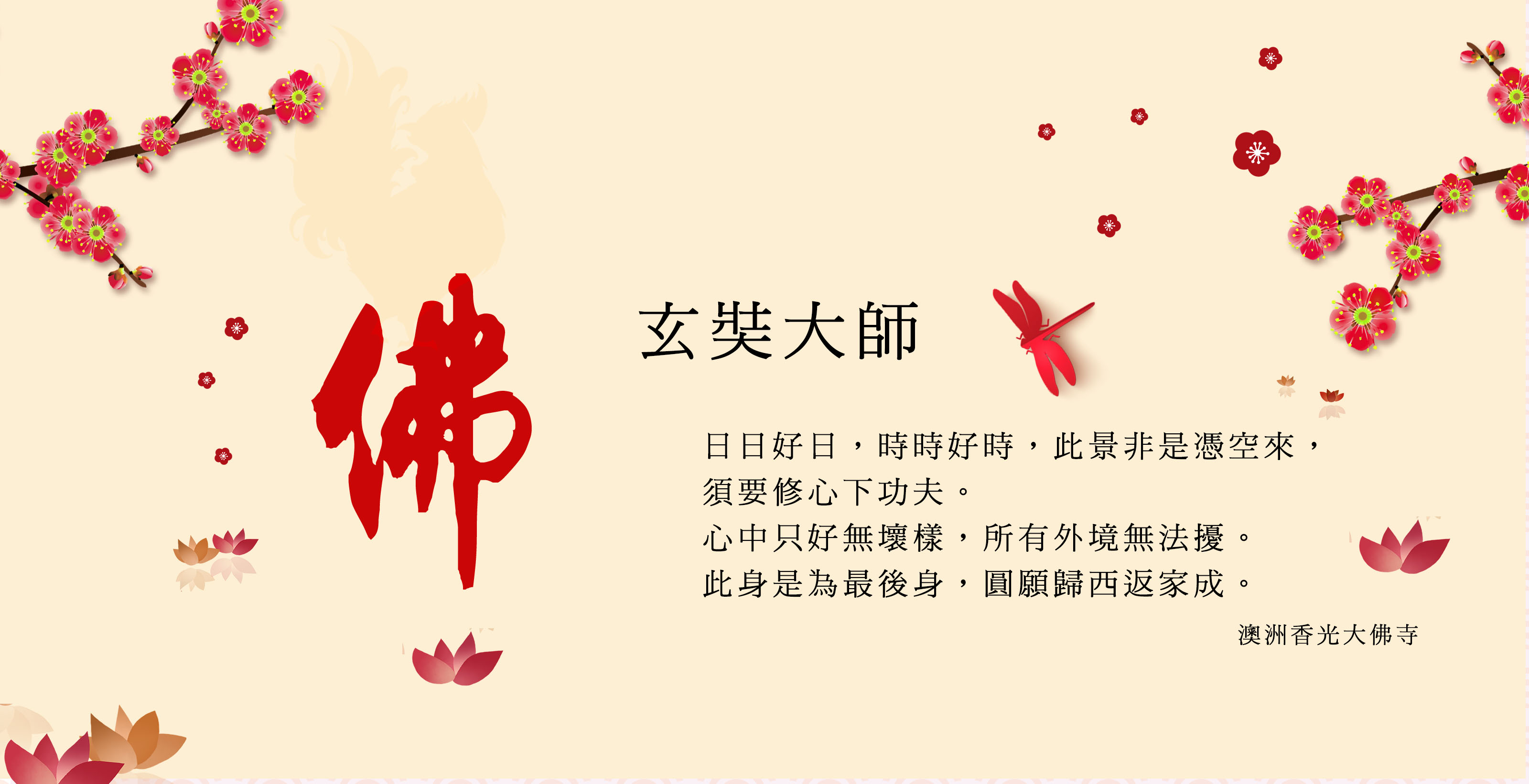
Great Master Xuanzang offers profound guidance on the occasion of the New Year, reminding us that the path to the Western Pure Land of Ultimate Bliss requires constant purification, the letting go of ego, and unwavering devotion to Namo Amituofo.
Awakening and the Path to the Western Pure Land
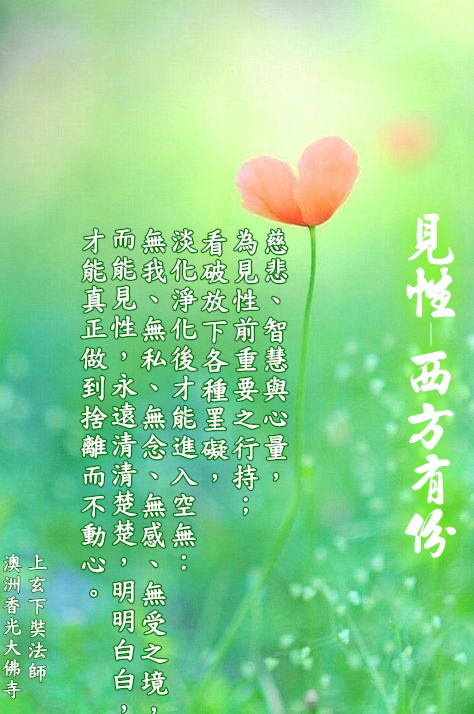
A profound exploration of how to transcend worldly attachments, purify the mind, and secure one's path to the Western Pure Land of Ultimate Bliss through Awakening and diligent practice.
Realising the Profound Meaning of the Dharma
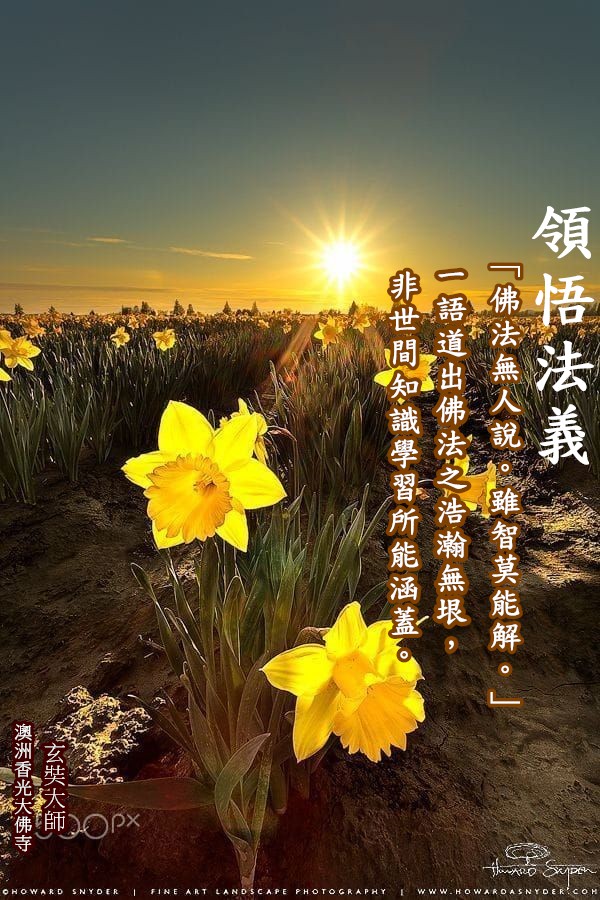
Great Master Xuanzang explains that the Dharma is vast and boundless, transcending worldly knowledge. To truly realise the profound meaning of the Dharma, one must move beyond attachment to words and names, cultivate a pure heart, and engage in diligent practice to attain Awakening.
More by Hsiang Kuang Pure Land Buddhist Centre
The Final Curtain Call of Chu Ke-liang
A candid reflection from the late Taiwanese entertainer Chu Ke-liang on his life, his career, the karmic weight of his influence, and his ultimate deliverance to the Western Land of Ultimate Bliss.
The Soul's True Equality: A Conversation with Mahatma Gandhi
This is a record of an interview with Mohandas Karamchand Gandhi, who sought deliverance at the Hsiang Kuang Pure Land Buddhist Centre in Australia. He now resides in the Western Land of Ultimate Bliss. This account reflects upon his life and his journey to the Pure Land.
A Reflection from the Western Pure Land
This is a record of an interview with Zhao Puchu, who sought deliverance at the Hsiang Kuang Pure Land Buddhist Centre in Australia. He now resides in the Western Land of Ultimate Bliss. This account reflects upon his life in the 20th century. Recorded by the chief writer, Shi Fa Hui, on April 18, 2026.
The Truth Behind My Rebirth: A Message from Liu Suqing
Liu Suqing, the elder sister of the renowned practitioner Liu Suyun, shares her harrowing journey through the spirit realms and her ultimate deliverance to the Western Land of Ultimate Bliss through the Hsiang Kuang Pure Land Buddhist Centre.
The Burden of a Historical Name
This is a record of an interview with Lin Biao, who sought Chao Du at the Hsiang Kuang Pure Land Buddhist Centre in Australia. He now resides in the Western Land of Ultimate Bliss. This account reflects upon his life approximately 54 years ago. Recorded by the chief writer, Shi Fa, on May 18, 2026.
The Poet’s Journey to the Western Pure Land
A reflection on the life, tragedy, and ultimate spiritual liberation of the ancient statesman Qu Yuan, who found peace through the teachings of Practitioner Su.
About the Author
Hsiang Kuang Pure Land Buddhist Centre
Contributed to Pure Land Buddhism knowledge library