The Burden of Attachment and the Path to Awakening
An Interview with the Spirit of Ke Mengping of 1,320 Years Ago
Recorded by Disciple Shi Fajing on October 28, 2019
This is a record of an interview with Ke Mengping, who sought at the Hsiang Kuang Buddhist Centre in Australia. He now resides in the Western Pure Land of Ultimate Bliss. This account reflects upon his life approximately 1,320 years ago. Recorded by the chief writer, Shi Fajing, on October 28, 2019.
Ke Mengping speaks:
"Namo Amituofo. I am Ke Mengping. I have spent my existence circling round and round, only to return to the very starting point. What is the true purpose of coming into this world? I felt as though I had never found the real answer, constantly playing in this game of life, forever watching and wondering what the next step should be. The card of 'fate' seemed to be pulling me along, and my life followed it quite naturally. But was this truly the life I wanted? A strong feeling in my heart told me: 'This is not it.' This intense sense of suffering is what we call 'unease.'
The Flow of Life and the Search for Home
Life can pause and stop, but existence is like flowing water—it never ceases, never breaks, until the candle of life burns out and the final moment arrives. I walked forward in a thick, hazy fog, unable to see the edges or the direction ahead. Every step I took was so uncertain; I did not know if I would land on solid ground or a cliff. I did not know how long I would have to walk before I could stop. Without a certain future, my heart was always restless, until the first ray of hope appeared to light a clear path for me. Only then did I see the hope of life and realise that everything in this world is false; the most real thing is the simple spirit within the heart.
When I saw a flock of migratory birds rushing to fly south, I often wondered: 'Where is their true home?' Even when strong winds blew, making it difficult for them to move forward, they still flapped their wings hard, flying toward their home in the south. No matter how great the obstacles, their hearts were set only on the path 'home.' I turned my head and looked at the pigsty in our backyard. The largest sow had given birth to several piglets yesterday, and they were lined up, suckling on her milk. To these piglets, the sow before them was their mother, and this pigsty was their home. They would rely on this home for their entire lives. I turned again and saw a boy passing by outside the door, holding his mother's hand and clamouring for candy. His mother said, 'Your father is coming back from the city today; he said he would buy you candy. Let's hurry home and wait for him!' The boy jumped as he walked, his face immediately lighting up with . He tugged at his mother's hand and said, 'Mother! Hurry! Let's hurry home and wait for Father!' Watching the boy's retreating figure, I thought to myself: 'Home.' The boy wanted to go home, the birds had their home, the pigs had their home, and the boy had his home. Everyone has a home, but what exactly is 'home'?
The Weight of Family and the Illusion of Separation
The humble wooden house behind me was my home, and I had lived there for ten years. In this home, there was Father, Mother, and two older sisters. I was the youngest child, yet I bore the responsibility of carrying on the family line. From a young age, I was taught how to raise pigs because the litter in the backyard was one of our family's sources of income. Selling one pig provided enough money for us to eat for a good while, so my parents took special care of the pigs in the sty. My eldest sister would sometimes get jealous of the pigs, saying Father loved the pigs more than her. I found it funny; why would my sister compare herself to a pig? Now that I think about it, it was because my sister had a large heart—she saw herself and the pigs as one, treating the pigs as Father's children and as her own sisters, which is why she would bicker over who Father loved more! That was a joke, of course. I always said funny things to cheer her up, otherwise, she would have kept bickering with the pigs for a long time.
Every day, I had to walk a long way to several places to find food for the pigs. In our village, everyone was poor, and finding swill was not an easy task. As long as it was edible, even if it was sour and smelly, people would eat it because food was so hard to come by in our impoverished life. Every household cherished food. After searching for a long time, I finally filled my bucket with sour, smelly food for the pigs. Walking on the road, my nose was constantly assaulted by the stench drifting from the bucket. I looked at this food; to humans, it was called 'swill' or 'kitchen waste,' but to the pigs waiting for me to return, it was a 'gourmet meal.' Humans and pigs are only different in body, yet the food they eat is so vastly different! Now, I see Father's face, hands, and feet looking more and more like a pig's, and I feel a sense of worry. Will Father become a pig one day? Wouldn't he have to live his days eating swill like the pigs in the sty? Thinking of this, I suddenly realised that I worried about Father becoming a pig, yet I felt no sadness for the pigs in the sty. This sense of discrimination is so natural, seemingly born with us—to treat one's own family as a family, even if the pigs raised in one's own home are not considered part of that family. Is the scope of 'home' limited only to the four of us? I always had so many strange thoughts. When I asked my parents, they always said I was letting my imagination run wild, but these questions seemed to arise naturally in my heart, and I always wanted to find a true answer to satisfy my doubts.
The Quietude of the Heart
Many children in the village called me a freak because I did not like to hang out in the streets with others; instead, I preferred to be alone, listening to the wondrous sounds of nature. Whenever I calmed my heart, the world between heaven and earth suddenly became so quiet—so quiet that even a mosquito flying before my eyes, the sound of its wings vibrating, felt like a massive creature making a huge noise. My ears could hear sounds from very far away because I had lived in a pure environment since I was young. Depending on the degree of purity in my heart, the subtlety of the sounds I could hear varied.
Looking at the world before me, I felt as if I had been a person here before, and yet also as if I had nothing to do with this place. All the people around me who were related to me sometimes became as strange as strangers. I did not understand why this was so. I always felt that this was a wondrous world, and there were many truths I had yet to understand.
The Dust of the World and the Impermanence of Life
Standing by the seashore, I opened my arms. The sea breeze blew against my face, carrying a hint of salt. Is this, too, the taste of life? Huge waves crashed onto the shore, instantly turning into broken little waves, and finally disappearing on the beach. Is life also like this? Like the waves, a life that seems exciting is beautiful only for that instant, and then it quickly vanishes before one's eyes. What can one truly grasp in life? I could not find it. At that time, I really could not find it. My life felt as if it were being pushed along, forced to keep moving forward. Even if I wanted to stop and look back at the past, I could not stop the time flowing before my eyes; the years always passed in a hurry. In life, what is truly mine?
I placed a cup of clear water on the table. Its clarity allowed the naked eye to see the bottom of the cup, just like a newborn baby whose heart is pure and flawless, without a single stain. I left the cup on the table, and as the days passed, the water began to gather a layer of dust. Looking closely, there were small particles of dust and thread-like dust, all falling into this once-clear water. Life is just like this. Even if one originally possesses a pure and flawless heart, living in a world of turbidity, if one does not have a settled heart, one will be influenced by the world and become different from at birth, even without intentional contamination. This transparent heart gradually becomes covered by a thin veil, unable to be seen through clearly. As the years go by, it starts to be wrapped in a layer of coloured cloth, the colour chosen according to one's own personality. Those who like black wrap their hearts in black cloth; those who like red wrap them in red cloth, making it impossible to see the heart hidden inside. If one could keep the heart in its original, flawless state, this world would definitely be very different.
A Lesson in
Just as I was about to step out the door, a white pigeon carrying a message flew into the sky. I took the letter from its leg and walked home to give it to Father. Father shook his head as he read it and said, 'I knew this day would come.' I asked Father what was going on. Father said, 'My good friend has passed away. This friend never did an honest day's work, relying on his inheritance to eat, drink, and play every day. He especially loved horse racing; seeking excitement was the most important thing in his life, as if he could not live without it. The letter says his favourite horse suddenly went out of control, he fell from the horse, his head hit a stone on the roadside, and he stopped breathing in a very short time.' I asked Father, 'Is life really so impermanent?' Father said, 'Life is truly impermanent; impermanent things can happen at any time.' I looked at the leaves falling from the tree and asked Father, 'Is this falling leaf also a kind of impermanence?' Father said, 'Of course. It is not just yellow leaves that fall; sometimes newly grown green leaves can also be separated from the branches because of wind and rain. Wouldn't you call that impermanence?' I asked Father again, 'Why is there impermanence in life?' Father told me, 'Because of impermanence, we know how to cherish things more.'
I walked on the road, and Father's words kept circling in my mind: 'Because of impermanence, we know how to cherish things more...' I walked with my head down, my mind constantly thinking about this sentence, when suddenly I heard someone screaming: 'Help! Help!' I ran quickly to where the sound came from, and a crowd had already gathered. I asked an auntie among them, 'What happened?' The auntie told me, 'The rich woman in the village just ate a piece of sweet cake and choked on it. In just a moment, she stopped breathing!' I asked in surprise, 'The rich old grandmother?' The auntie nodded. I pushed through the crowd and ran to the front to look. The old grandmother was indeed lying there, having stopped breathing. Yesterday, the old grandmother was happily sharing stories about her son's childhood with me, and she even said she wanted to live to be a hundred to accompany her grandson as he grew up. How could it be that in just one day, the old grandmother and I were separated by life and death! At this moment, I understood more deeply what Father had said about 'the impermanence of life.' It turns out that this body is so fragile; in an instant, it no longer belongs to oneself. Why then should one be attached to possessing this body? It would be better to use this body to do some good deeds; wouldn't that be more meaningful?
The Turning Point: A Spirit in the Form of a Pig
The world is illusory, short, and ethereal. I do not know why, but at the age of ten, I felt that the world was not worth lingering over. I always felt that I was just a passerby in this world, coming in a hurry and leaving in a hurry. Many things do not need to be too attached to or longed for. The children on the street of the same age as me were arguing with their parents to buy new clothes. I looked at the clothes I was wearing; although they were patched again and again, I still wore them because, to me, these clothes were just for covering my body and keeping warm. There was no need to be attached to their beauty or age. Looking at the shoes on my feet, Mother made them a bit larger to save money. Although it was inconvenient to walk, it saved Mother a lot of money. I learned to let go of these trivial matters in life and not be attached to them, so that life could be meaningful. Otherwise, with so many big and small things in life, if one grasped every single one of them, even breathing would become difficult. How could one breathe in any fresh air?
When I was twelve, Father handed over the pig-raising work to me entirely. This could be considered our Ke family's family business! Since Father could remember, from his great-great-grandfather, great-grandfather, to his grandfather, every generation had made a living by raising pigs, though the size and breed of the pigs were slightly different. Of course, in my generation, I was also expected to inherit the pig-raising business. Father even asked me to open a pork stall and slaughter our own pigs to sell. I could not do this at all. A pig is a life. If I killed the boar, the piglets would lose their father; if I killed the sow, the piglets would lose their mother; if I caught the piglets to sell, the boar and sow would lose their children. I could not do such a cruel thing. I discussed this with Father many times, but Father insisted on the tradition. No matter how many times I said it, Father still demanded that I continue raising pigs.
The Monk in the Pig's Body
I walked alone in the deserted mountains and forests. The air in the mountains carried the fragrance of the forest, and the sunlight shone through the gaps between the trees, just hitting me as I sat on a large rock. The morning sun was still quite gentle. I felt a warmth all over my body. Looking at the flowers and plants in the forest, the stones on the ground, and the tall trees, I knew they all had spirits because when I remained silent, I could clearly converse with them. Suddenly, it flashed through my mind: 'Yes! I can also talk to the pigs in the sty! Perhaps they can tell me what to do!' I was so happy that I jumped off the large rock and ran toward home. At that moment, my heart was so hopeful that I could save the lives of these pigs. Back home, I took a chair and sat in the pigsty. The smell of pig manure immediately hit my nose. When these pigs saw me, they immediately ran toward me. I told them, 'Stop thinking about eating! Isn't being a pig bitter enough?' They made a few pig sounds at me, and after confirming there was nothing to eat, they walked away one by one. After all the pigs had left, one piglet remained standing in place, staring at me with both eyes. Its eyes were full of pleading. I looked at it for a long time and suddenly heard the sound of it speaking to me. This piglet hoped that I could take it out for a trip. I had never thought such a thing would happen! I could actually talk to a pig! If I told Father this, he probably wouldn't believe it in eight lifetimes! I tied a rope to the piglet, held the rope in my hand, and opened the door so the piglet could walk out of the sty. As soon as the piglet left the sty, before I could even lock the door, it kept walking forward. I pulled the rope on the piglet and let it lead me. I did not know where it was going. Although it seemed to have a goal, the habit of eating is hard to change when one is a pig. Along the way, smelling the scent of food, it was still attracted by the aroma and kept using its pig nose to search for food on the ground, until I tugged on the rope tied to its body, and it came back to its and continued walking forward.
We walked a long way, paths I had never walked before. I did not know why this piglet knew these paths. We finally stopped in front of a temple. I looked at the temple before me; although the architecture was a bit old, it did not lose its dignity. I looked at the piglet again, its eyes constantly looking into the temple. What was going on? Just as I was puzzled, a master suddenly walked out of the temple. I immediately bowed to the master. Before I could explain why I had brought a pig to the temple, the master began to speak to the piglet. The master said to the piglet, 'The path of reincarnation is always dark and lightless; one lifetime of delusion brings many lifetimes of suffering. If not for diligent practice in the past, how could you have the spirituality to return here today?' Hearing what the master said to the piglet, I seemed to understand something. Could it be that this piglet was once a practitioner in this temple? The master nodded to me and said, 'In the past of the past, he was a monk in this temple. At that time, his skills were very high, and he was a respected senior brother. But never did he expect that a single thread of emotion would remain unreleased. Even with profound skills, it was hard to resist the that found him unexpectedly. In the end, he returned to secular life, married the woman he loved deeply, and spent the rest of his life working hard for a home. By the time he regretted it, life had already passed and could not be recovered.' Hearing what the master said, I looked at the piglet I was holding. I could hardly imagine that its past was that of an eminent monk! I sat under a big tree with the pig, and the master taught me to chant the Buddha's name. This pig seemed to have a strong reaction to every Buddha-name and every word of scripture the master spoke. Every day, I brought this pig to the temple and tied it under a tree outside, letting it hear the sounds of the masters chanting scriptures inside. When I returned to the pigsty, I would tell all the pigs the scriptures I had heard. After a long time, I told Father about this. Father did not believe it at first, but after many invitations, he finally agreed to go to the temple with me. When Father saw with his own eyes all the actions and reactions of this pig, he had to believe that this pig was truly a practitioner in the past.
The Path to
I am grateful to this pig; it was it that helped me end the fate of raising pigs, and it was it that saved all the pigs in the sty from the suffering of slaughter. Closing the pigsty at home and saying goodbye to my parents, I packed my bags and prepared to embark on the path of practice.
Along the way, my heart was so pure and bright. It turned out that this path of practice was so solid and pure. An ant was preparing to walk past me; I took refuge and chanted the Buddha's name for it, hoping it would soon leave the insect body and be reborn in the Pure Land.
Entering the temple to practice, I did not have many opportunities to meet the master. I remember the day I arrived at the temple, the master only gave me one sentence: 'Let go of what you should not possess.' Although it was a simple sentence, it contained profound meaning and accompanied my practice throughout my life. I never forgot to be diligent, listening to the scriptures and practicing diligently every day, following the teachings. At every moment of practice, I did not forget to reflect on what the master said to me: 'Let go of what you should not possess.' In ten years of practice, I let go of all the desires that worldly people crave, let go of emotions, and let go of all the past. But I was still a long way from the path of awakening. One day, I sat under a tree chanting the Buddha's name, turning the prayer beads in my hand, focusing on every Buddha-name. It was not until I stood up that I noticed the master standing behind me. The master asked me, 'How long do you sit here every day?' I replied to the master, 'Disciple sits here chanting the Buddha's name whenever I have time.' The master nodded and said, 'Very good, but can you see what the master is doing now?' I replied to the master, 'You are talking to the disciple.' The master told me, 'The master is chanting the Buddha's name.' I looked at the master in surprise, and the master told me, 'When there is truly no self, the heart is the Buddha-heart, and the action is the Buddha-action. One is always chanting the Buddha's name, without distinguishing between this place or another place. Diligence lies in this heart of .' When the master said this, my eyes instantly brightened. It turned out that what I had not yet let go of in all these years of practice was this 'self.' I was practicing with a 'self,' and I was making all efforts to change with a 'self.' It was precisely because of this 'self' that no matter how diligent I was, I could not awaken to my true nature.
In this lifetime of practice, when I achieved no-self, I understood what compassion was. It turns out that when there is truly no self, there is no distinction between the heart and sentient beings. A heart of no-self only pities the suffering of beings, which is naturally true compassion. In this life, I acted for all beings at all times. Every step I took forward was no longer a foggy path where I could not see ahead, but a clear and bright one—a bright road leading to the West. I am grateful to the Buddha for his compassionate guidance, which gave me the opportunity to encounter the Buddha's teachings, to return to the Western Land at the end of my life, and to listen to the scriptures before the Buddha. Namo Amituofo.
The Compassion of Practitioner Su
Practitioner Su's heart, no matter where he is, is always thinking of sentient beings. Sentient beings are suffering every second, and Practitioner Su's heart is clear and understanding, unable to bear the suffering of beings. Therefore, he is constantly contemplating spiritual deliverance, only to let more beings leave suffering behind. There is no place in space that is not filled with sentient beings, which means the sea of suffering is endless, and it is difficult for beings to escape from it. Practitioner Su's great heart, great capacity, and great compassionate heart use the to discipline himself and suffering as his teacher. He always treats sentient beings as himself, and every bit of effort is devoted to sentient beings. After several years, he achieved a that can travel freely in space, pervading the ten directions, saving all spirits widely. Even in the universe, one can see Practitioner Su's Dharma Body, leading immeasurable and boundless Buddhas and Bodhisattvas to save countless suffering spirits.
A lifetime lasts for decades, and one can only wake up after losing the human body. Practitioner Su's Dharma-voice is awakening human hearts every day, hoping that the beings still suffering in the human world can wake up and leave suffering behind soon. Those who have awareness should be aware, and those who have awareness and are willing to act should put it into real, actionable change. Saving one person means one less spirit suffering. The sea of suffering is boundless; I only hope for the compassionate rescue of the Dharma boat.
Grateful for the compassion of Practitioner Su.
Namo Amituofo.
Disciple Shi Fajing: May I ask, where are the ancestors of the Venerable who raised pigs for generations now?
Words of Namo Amituofo:
The stupidity of the world, the sea of is endless.
The pigs in the sty—are they pigs? Are they family?
It is tragic that those slaughtered under the knife are one's own kin.
To this day, the Venerable's ancestors are still in the pigsty, on the meat stall,
And in the pork dishes of households and restaurants, unable to escape.
Practitioner Su compassionately saved the Venerable's great-great-grandfather, great-grandfather, grandfather, and father.
Interview message written by Buddha disciple Shi Fajing.
More from Revered Ones
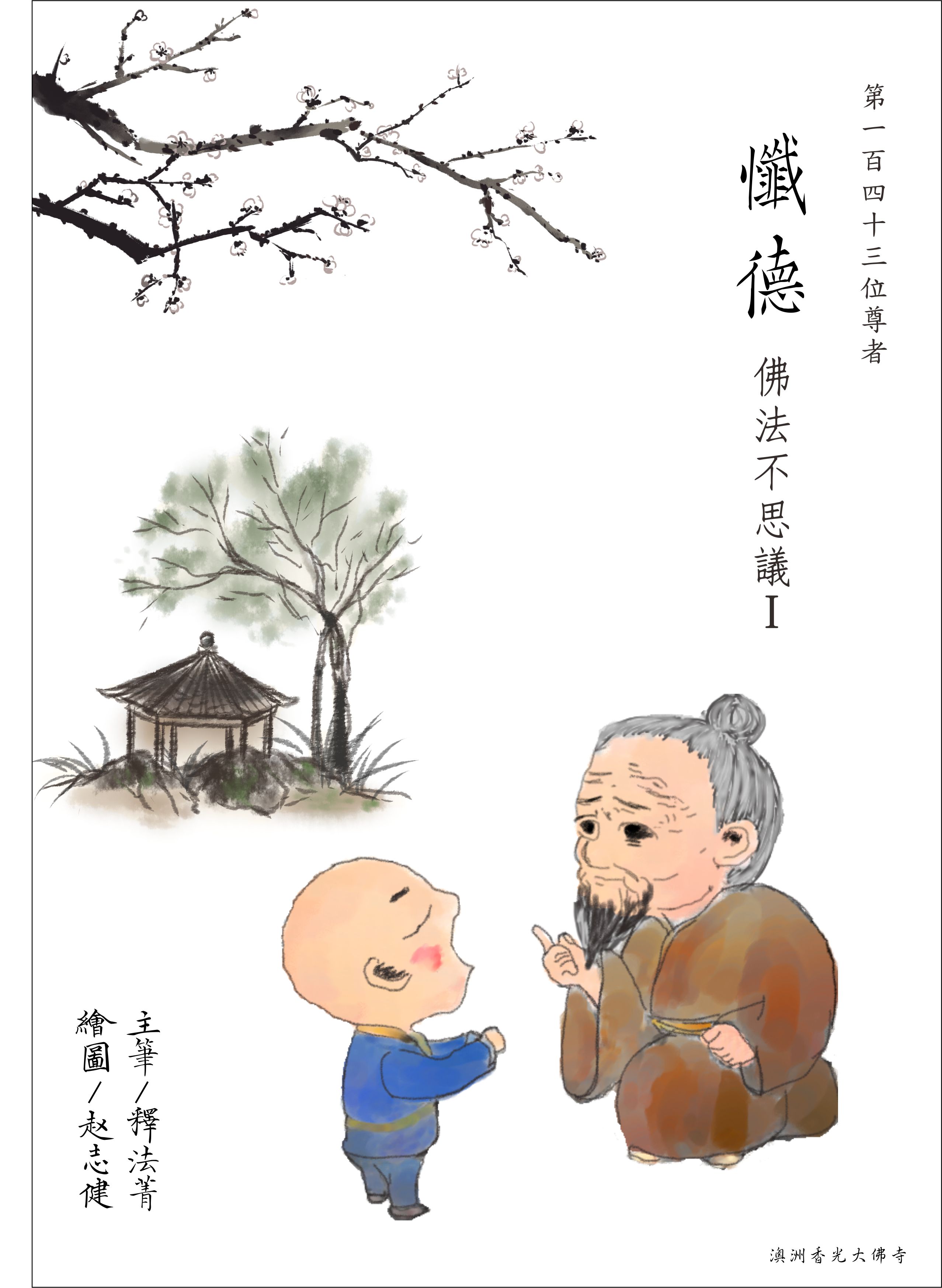
The Virtue of Repentance
A profound reflection on the journey of repentance and the cultivation of virtue from the 143rd Venerable, Chande, as he recounts his path to the Western Pure Land.
The Spiritual Anatomy of Practitioner Su's Leg
Venerable Feng An, representing a collective of 1,162 Venerables, provides a profound look into the spiritual dimensions within Practitioner Su's leg, revealing the hidden reality of karmic burdens, the nature of spiritual attachment, and the ultimate sacrifice of a Bodhisattva.
The True Meaning of Filial Piety
A touching testimony from Zhu Hongchang, who reflects on his life nine centuries ago, his journey from being rejected as a 'dull' child to discovering the profound, selfless nature of true filial piety through service to all beings.
The Path of No-Self and the Boundless Ocean of Wisdom
A poignant reflection on a life of hardship, the realization of the 'no-self' nature, and the ultimate vow to deliver sentient beings through the power of Namo Amituofo.
More by Hsiang Kuang Pure Land Buddhist Centre
The Final Curtain Call of Chu Ke-liang
A candid reflection from the late Taiwanese entertainer Chu Ke-liang on his life, his career, the karmic weight of his influence, and his ultimate deliverance to the Western Land of Ultimate Bliss.
The Soul's True Equality: A Conversation with Mahatma Gandhi
This is a record of an interview with Mohandas Karamchand Gandhi, who sought deliverance at the Hsiang Kuang Pure Land Buddhist Centre in Australia. He now resides in the Western Land of Ultimate Bliss. This account reflects upon his life and his journey to the Pure Land.
A Reflection from the Western Pure Land
This is a record of an interview with Zhao Puchu, who sought deliverance at the Hsiang Kuang Pure Land Buddhist Centre in Australia. He now resides in the Western Land of Ultimate Bliss. This account reflects upon his life in the 20th century. Recorded by the chief writer, Shi Fa Hui, on April 18, 2026.
The Truth Behind My Rebirth: A Message from Liu Suqing
Liu Suqing, the elder sister of the renowned practitioner Liu Suyun, shares her harrowing journey through the spirit realms and her ultimate deliverance to the Western Land of Ultimate Bliss through the Hsiang Kuang Pure Land Buddhist Centre.
The Burden of a Historical Name
This is a record of an interview with Lin Biao, who sought Chao Du at the Hsiang Kuang Pure Land Buddhist Centre in Australia. He now resides in the Western Land of Ultimate Bliss. This account reflects upon his life approximately 54 years ago. Recorded by the chief writer, Shi Fa, on May 18, 2026.
The Poet’s Journey to the Western Pure Land
A reflection on the life, tragedy, and ultimate spiritual liberation of the ancient statesman Qu Yuan, who found peace through the teachings of Practitioner Su.
About the Author
Hsiang Kuang Pure Land Buddhist Centre
Contributed to Pure Land Buddhism knowledge library