The Compassionate Heart of Chen Feng
An Interview with the Spirit of Chen Feng from 1,400 Years Ago
Recorded on September 29, 2018
This is a record of an interview with Chen Feng, who sought at the Hsiang Kuang Buddhist Centre in Australia. He now resides in the Western Pure Land of Ultimate Bliss. This account reflects upon his life approximately 1,400 years ago. Recorded by the chief writer, Shi Fa Jing, on September 29, 2018.
Chen Feng speaks:
"Namo Amituofo. I am Chen Feng. When I was just one year old, my mother made me new clothes to wear for a special ceremony. My family placed various items before me—brushes, ink, an inkstone, books, coins, toys, and precious treasures—to test what I would reach for. My grandparents and parents sat before me, calling out, urging me to crawl forward and choose. I crawled quickly, straight to my grandmother. She had placed her most beloved treasure right in front of her. My family looked at each other and smiled. My grandmother laughed, 'Our Feng-er is no ordinary child! This treasure is a precious heirloom from our ancestors. Our boy is truly a wise person. It seems the Chen family will never have to worry about food or clothing again because of him! Hahaha!'
A Surprising Choice
But before my grandmother could react, I reached out and snatched the Buddhist prayer beads right off her wrist, happily playing with them in my hands. Everyone was stunned by my sudden move. It turned out that what I really wanted were the beads! My grandmother was even more delighted than before. She could not stop smiling, and she exclaimed loudly, 'The Chen family is going to produce a monk! The Chen family is going to produce a monk!'
I was the firstborn son of the Chen family, the young master. The Lin family next door, also wealthy, had a son who had been spoiled since childhood. Now that he was a man, he was rebellious, lazy, addicted to gambling, and obsessed with women, leaving behind a trail of romantic entanglements. My parents had long used him as a warning. They were determined that I would never become like the young master of the Lin family. Therefore, I was taught to work from a young age. I had to learn everything; I was granted no airs of a young master and no special privileges.
The Seeds of Practice
When I was seven, I was holding a hoe, heading to the backyard to plant vegetables. My grandmother was there picking fruit. Seeing me dressed in my work clothes, she asked, 'What are your plans for life?' At seven, I did not know what I could do. I simply replied, 'Father has taught me many things. I could be a farmer, a carpenter, a businessman, or even wash clothes for others. I can do anything.' My grandmother asked again, 'But what do you like to do?' I shook my head. 'I just do what I am supposed to do. I have no distinction between what I like and what I dislike.' I raised my hand and looked at the prayer beads on my wrist. I had worn them since I was one year old. Although they were still a bit large for my wrist, I could not bear to take them off. My grandmother asked why I liked them so much. I told her, 'I do not know, but these beads naturally bring me a sense of peace and comfort. I like to be alone, to be quiet, and to chant Namo Amituofo.' My grandmother saw then that I had a heart that longed to learn the Buddha’s teachings.
The next day, my grandmother took me to the temple to pay respects to the Buddha and offer alms to the monks. It was my first time seeing the monastics. Their dignity and solemn presence immediately captivated me. I saw the little novices beside the master; they were my age, following the master and learning from him in their daily lives. Even though we were the same age, their temperament was entirely different from mine.
The Meaning of
My grandmother told me, 'The master is a person of great practice and virtue. You can ask him any questions you have.' I bowed to the master and respectfully asked, 'I also wish to practise. What preparations do I need?' The master told me, 'Practice is nothing more than maintaining a heart of compassion. The purpose of practice is not in outward appearances, but in truly radiating great love and compassion from within. It is to have pity for all sentient beings and to make the deliverance of sentient beings the purpose of one's life.' I understood what the master said. From that day on, I began to learn 'compassion.' The first thing I had to achieve was to think of others in everything I did. No matter what I did, I prioritized the benefit of others, considering their situations, showing more care, and practicing empathy. No matter what happened, I would not stand on my own position to blame or judge. This was the first part of my learning. I had always been a child with high self-discipline. Once I knew something was right and needed to be done, I would demand it of myself strictly, never slacking. I nurtured my heart of compassion in every detail of daily life. Two years later, I finally found the meaning of practice.
I realised that everyone before me had obtained a human body, and everyone treated this human body as real, working and contributing for their own lives. On the street, one could clearly see young people starting to struggle, middle-aged people at the peak of their careers, and elderly people who were sick and aging. Whether young or middle-aged, everyone eventually walks toward old age and finally steps onto the path of death. A life ends just like that. I once asked these people, 'What is the purpose of your life?' Out of ten people, eight answered, 'I want to support my family.' A young man had just married and was starting a new family; a middle-aged man had children growing up and had to work harder to support them; an elderly man was already sick and could not earn money, but he spent all the money he had earned in his life on medical treatment. In the end, everyone had a little money left, which was then spent on funerals. A life ended just like that.
The Illusion of Life
I was stunned. It turned out that life was nothing more than this. No matter how many joys and sorrows one experienced from youth to old age, one would eventually return to the starting line. I continued to work diligently every day, but my heart was different. I was no longer working to complete the tasks my father assigned, but to understand life through every single action.
The prayer beads from my childhood were still turning on my wrist. I finally made up my mind. At ten years old, I said goodbye to my grandparents and parents, packed a simple bag, and left home alone to go up the mountain to practice. I did not set any goals for my practice; I simply used a heart of compassion to continuously deliver sentient beings. As long as I had a breath left in this world, I would not stop for a moment. I did not chant Namo Amituofo for myself. Every sound of the Buddha-name I chanted was to learn the Buddha's compassionate heart, to learn the same Buddha-heart as the Buddha, and to learn the Buddha's conduct and spirit through the teachings of the sutras. I hoped to help all people in the world to thoroughly realise the birth and death of humans, and the unborn and undying nature of the spirit. To sacrifice the spirit in a short life of birth and death, only to fall into the cycle of rebirth, meant that the undying spirit would eventually suffer endless pain.
The Path of Deliverance
I expounded the Buddha’s teachings to others and pointed out the way for those who were lost. For every problem a person encountered, I could help them find the true and ultimate solution. If one were to summarize the solution to everyone's problems, it would be nothing more than the two words: 'let go.' It is easy to say, but not easy to do. People in the world are deeply burdened by afflictions, ego-attachment, and spiritual obstacles. The phrase 'let go' makes them fearful and uneasy. I had to teach according to their capacity, allowing sentient beings to find peace of mind through the Buddha’s teachings, to learn to let go from that sense of stability, and finally to untie the bonds of their lives and chant the Buddha-name to be reborn in the Western Pure Land of Ultimate Bliss.
In this life, I also returned to the West. Namo Amituofo is always waiting for all children to return to their Western homeland, yet He sees that the children are becoming more and more lost in the maze of reincarnation. Those who truly make the vow and practice to return to the West are few and far between. It was not until Practitioner Su began the great work of Chao Du that these billions of children who could not return to the West were separated from their spaces one by one and led back to the West in a grand procession.
I am grateful to be able to join Practitioner Su’s ranks of saviors, returning to the spaces where I once resided to deliver the sentient beings with whom I have karmic affinity. One thought leaves behind one space. When I arrived in the universe, there were as many spaces as there were thoughts. The density of overlapping spaces was countless. Every day, I work hard to help these spirits remaining in the spaces, to chant Namo Amituofo to break free from the space, return to the embrace of the Compassionate Father, and gather together in the West. Gratitude to Namo Amituofo, gratitude to Practitioner Su.'"
More from Revered Ones
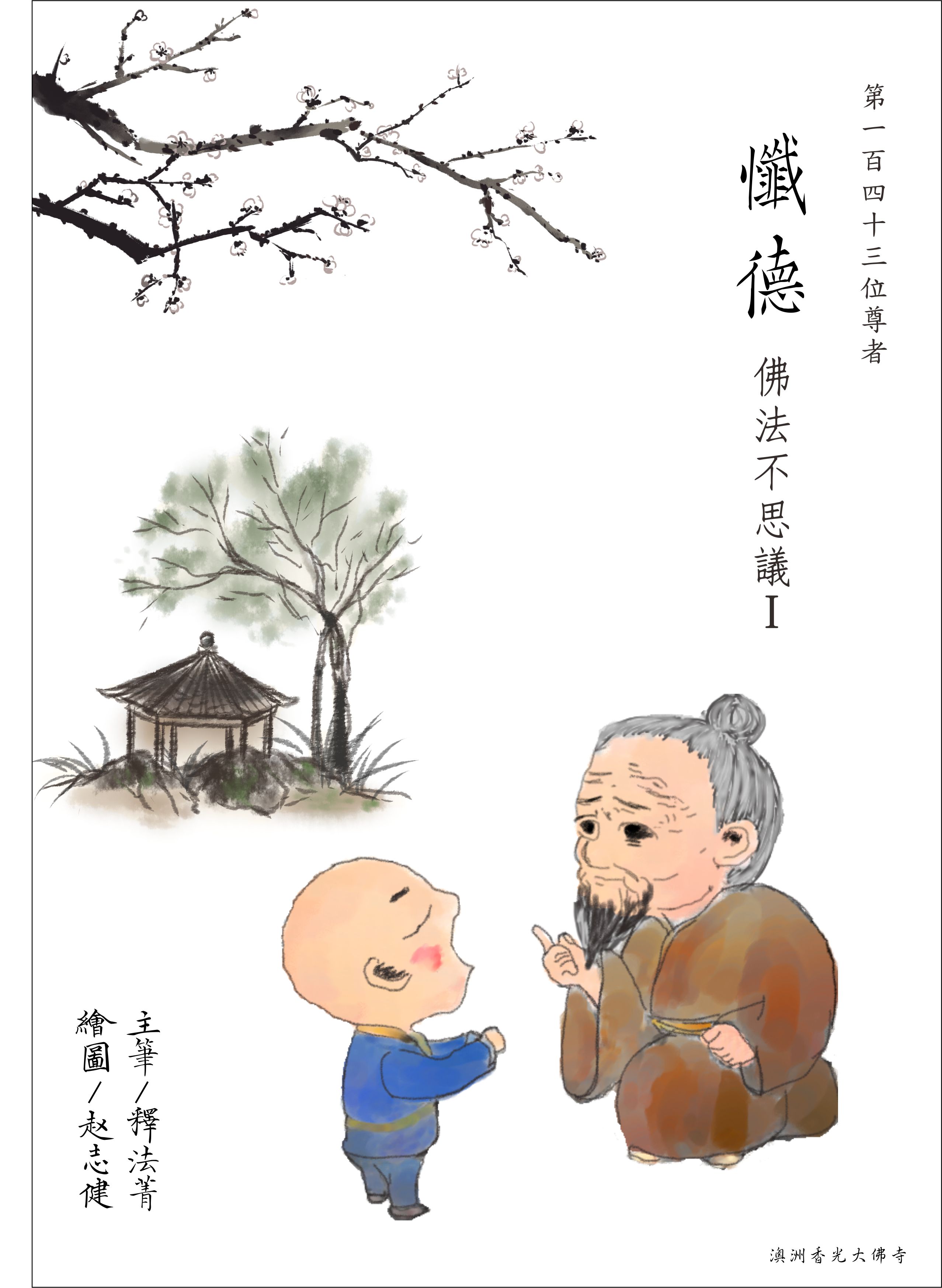
The Virtue of Repentance
A profound reflection on the journey of repentance and the cultivation of virtue from the 143rd Venerable, Chande, as he recounts his path to the Western Pure Land.
The Spiritual Anatomy of Practitioner Su's Leg
Venerable Feng An, representing a collective of 1,162 Venerables, provides a profound look into the spiritual dimensions within Practitioner Su's leg, revealing the hidden reality of karmic burdens, the nature of spiritual attachment, and the ultimate sacrifice of a Bodhisattva.
The True Meaning of Filial Piety
A touching testimony from Zhu Hongchang, who reflects on his life nine centuries ago, his journey from being rejected as a 'dull' child to discovering the profound, selfless nature of true filial piety through service to all beings.
The Path of No-Self and the Boundless Ocean of Wisdom
A poignant reflection on a life of hardship, the realization of the 'no-self' nature, and the ultimate vow to deliver sentient beings through the power of Namo Amituofo.
More by Hsiang Kuang Pure Land Buddhist Centre
The Final Curtain Call of Chu Ke-liang
A candid reflection from the late Taiwanese entertainer Chu Ke-liang on his life, his career, the karmic weight of his influence, and his ultimate deliverance to the Western Land of Ultimate Bliss.
The Soul's True Equality: A Conversation with Mahatma Gandhi
This is a record of an interview with Mohandas Karamchand Gandhi, who sought deliverance at the Hsiang Kuang Pure Land Buddhist Centre in Australia. He now resides in the Western Land of Ultimate Bliss. This account reflects upon his life and his journey to the Pure Land.
A Reflection from the Western Pure Land
This is a record of an interview with Zhao Puchu, who sought deliverance at the Hsiang Kuang Pure Land Buddhist Centre in Australia. He now resides in the Western Land of Ultimate Bliss. This account reflects upon his life in the 20th century. Recorded by the chief writer, Shi Fa Hui, on April 18, 2026.
The Truth Behind My Rebirth: A Message from Liu Suqing
Liu Suqing, the elder sister of the renowned practitioner Liu Suyun, shares her harrowing journey through the spirit realms and her ultimate deliverance to the Western Land of Ultimate Bliss through the Hsiang Kuang Pure Land Buddhist Centre.
The Burden of a Historical Name
This is a record of an interview with Lin Biao, who sought Chao Du at the Hsiang Kuang Pure Land Buddhist Centre in Australia. He now resides in the Western Land of Ultimate Bliss. This account reflects upon his life approximately 54 years ago. Recorded by the chief writer, Shi Fa, on May 18, 2026.
The Poet’s Journey to the Western Pure Land
A reflection on the life, tragedy, and ultimate spiritual liberation of the ancient statesman Qu Yuan, who found peace through the teachings of Practitioner Su.
About the Author
Hsiang Kuang Pure Land Buddhist Centre
Contributed to Pure Land Buddhism knowledge library