The Final Test: A Practitioner's Journey from Doubt to Deliverance
An Interview with Lay Practitioner Lin Daoqi
Recorded on June 3, 2017
The of a Spiritual Journey
On the third of June, 2017, the disciple Li Jiaxian performed ten prostrations to pay respects to the Buddha. With a heart full of gratitude for the Buddha's kindness, she invited Lay Practitioner Lin Daoqi to share his story. The purpose of this account is to repay the Buddha's grace by explaining the causal conditions that led him to the Hsiang Kuang Buddhist Centre and the process of his rebirth in the Western Pure Land of Ultimate Bliss. Namo Amituofo.
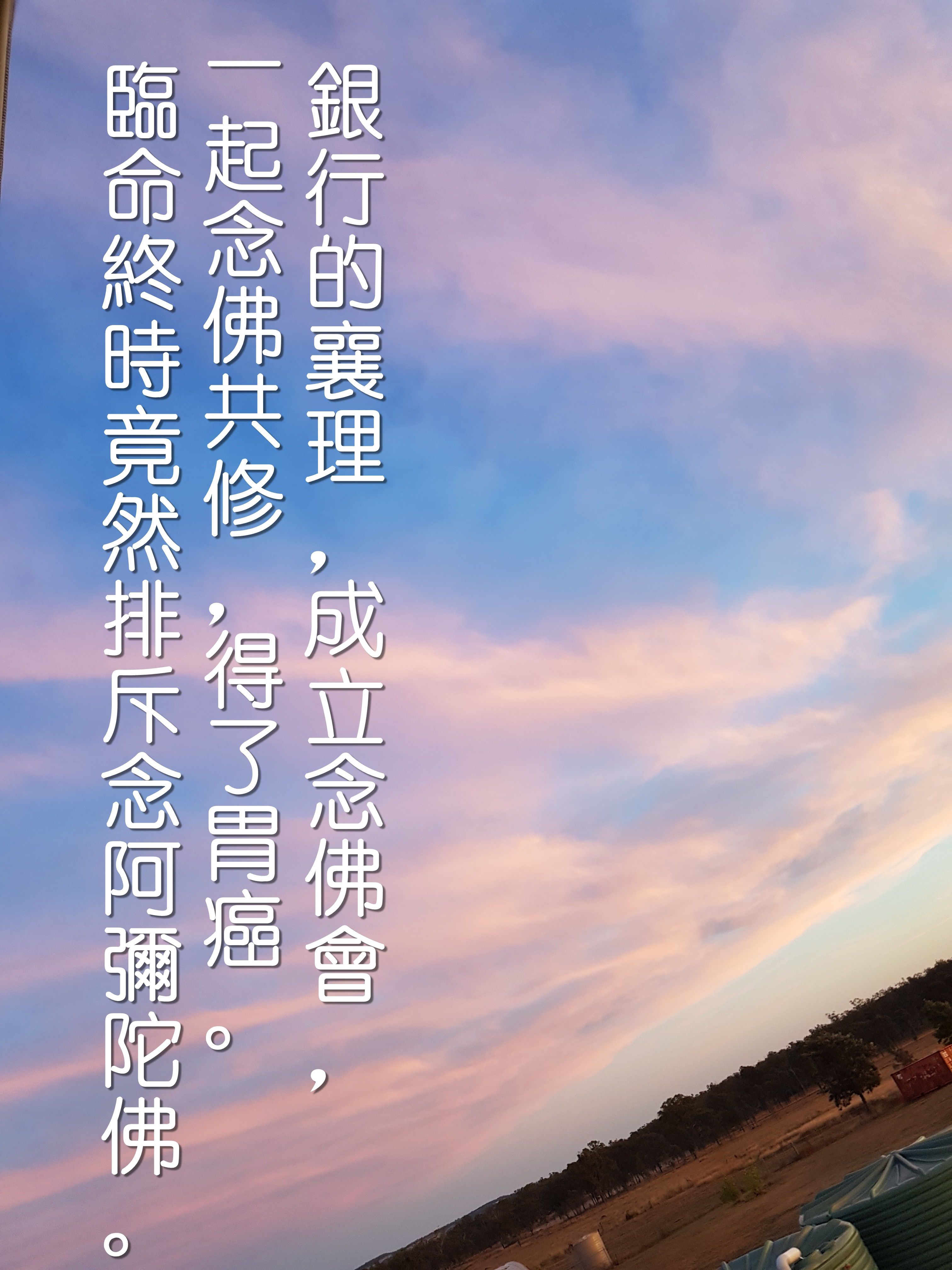
Lay Practitioner Lin Daoqi began his account by reflecting on his life before his illness. He was once a bank manager, a position of responsibility and status. His interest in the Buddha's teachings was sparked by a chance encounter when a fellow villager introduced him to the Linji Temple. After listening to the , he felt a deep resonance with the Pure Land Dharma Gate. During his holidays and spare time, he would visit the temple to pay respects to the Buddha and listen to the teachings. Eventually, he and several fellow practitioners discussed the importance of chanting the name of Namo Amituofo and decided to establish a dedicated chanting group. At first, there were only a few of them, but as time passed, the group grew. Lin Daoqi became the vice-president, leading others in chanting and enthusiastically seeking out like-minded individuals to join their practice.
The Shadow of Doubt and the Fear of the Unknown
For three years, the chanting group flourished under his leadership. However, life is unpredictable. Lin Daoqi was diagnosed with stomach cancer. As a practitioner of the Pure Land Dharma Gate, he had always believed in Namo Amituofo and the existence of the Western Pure Land of Ultimate Bliss. He had hoped that at the end of his life, Namo Amituofo would guide him to rebirth. Yet, when the illness struck, his resolve crumbled. He became consumed by a fear of death and a desperate attachment to his life. He began to reject the practice of chanting Namo Amituofo, fearing that doing so would hasten his departure from this world. Instead, he insisted on chanting to Avalokiteshvara , hoping for a reprieve.
This shift in his practice had a devastating impact on those around him. By displaying such fear and doubt, he set the worst possible example for the members of the chanting group. Many lost their confidence in the practice, and the years of effort spent building the group were undermined by his own lack of faith. In his final moments, he was too afraid to face Namo Amituofo, preferring to cling to this world. Consequently, upon his death, he fell into the hells, specifically the Digging Intestines Hell, to suffer the retribution for his actions.
The Compassionate Hand of Deliverance
It was only through the boundless of the Buddha that his cries of repenting from within the hells were heard. The causal conditions matured, and Practitioner Su of the Hsiang Kuang Pure Land Buddhist Centre, with great compassion, rescued him from that place of suffering. It was only after arriving at the Dharma-Nature Land of the Hsiang Kuang Pure Land Buddhist Centre and listening to the teachings that he truly understood what it meant to practise the Pure Land Dharma Gate. He realised that true practice is about purification of , heart, and spirit, and the genuine transformation of one's personality. He came to understand that the Forty-eight Great Vows of Namo Amituofo are entirely dedicated to saving beings.
Reflecting on his past, he admitted that while he had led others in chanting, he had never truly delved into the sutras or transformed his own habits. He had allowed his own ego to take charge. When he first entered the path, he had a heart full of enthusiasm, wanting to help his fellow villagers and friends achieve rebirth. However, he had failed to notice the subtle seeds of greed and anger within his own heart. Because he had not been taught how to look inward, he remained blind to his own flaws. He had wanted to protect his fellow villagers, but this small, selfish attachment had already allowed his to gain a foothold. During his time leading the group, his arrogance grew alongside his hard-headed personality. He insisted that everything in the temple be done according to his will, which further weakened his spiritual foundation.
The Essence of True Cultivation
As the chanting group grew, the diversity of the people involved increased. Some had strong personalities and did not always follow the rules. When he tried to counsel them and they did not listen, he would become filled with nameless anger and resentment. This further eroded his spiritual integrity. Within three short years, he had developed cancer. He had the outward appearance of a practitioner, but deep down, he had not changed. When the pain came, he complained about heaven and blamed others, wondering why he, who had done so much, should suffer such a terminal illness. He had not truly understood the Pure Land Dharma Gate, nor had he used it to change himself or find his true nature. His goal should have been to propagate the Buddha's teachings, save beings, and help them leave the six realms of rebirth behind.
He expressed his deep repenting for the ignorance that led him to project such a poor image. By turning to Avalokiteshvara Bodhisattva out of fear at the end of his life, he had caused many others to retreat from their own practice. He expressed his gratitude to Practitioner Su for rescuing him and sending him to the Western Pure Land of Ultimate Bliss. He hoped his story would serve as a mirror for monastics and lay practitioners alike. If one does not truly study and change one's habits, one is merely an empty shell. Arrogance, if left unchecked, will only lead to a poor image that discourages others from seeking the truth. Because he had not changed his habits, his karmic creditors from past lives were able to pull him away, leading to his illness and his eventual descent into the hells.
Echoes of and the Seeds of Virtue
Li Jiaxian asked Lin Daoqi about his past lives, noting that his success as a bank manager in this life must have been the result of significant . Lin Daoqi explained that about six lifetimes ago, his family was very poor. His mother, unable to support all her children, gave him away to be raised by another family. His foster parents were kind and treated him as their own, providing him with an education. His mother had encouraged him to study hard to bring honour to the family. He succeeded and became a local county magistrate. While he wished to serve the people, he found himself trapped in a web of corruption and collusion between officials and merchants. He often felt helpless, knowing that innocent people were being wrongly convicted under pressure from above. He would often kneel in his home shrine, repenting to the Buddha or Bodhisattva. To make amends, he did his best to help the poor and resolve their disasters.
Once, when a wind disaster struck the village, he opened the granary to provide relief and even used his own ill-gotten gains from his official position to help the people, hoping to compensate for his failures as an official. Eventually, he resigned and returned home with his family, refusing to continue acting against his conscience. He lived the rest of his days in peace. Looking back, he realised that the innocent people he had wrongly judged in that life were the very karmic creditors who had sought him out in this life, leading to his cancer. However, his single thought of goodness in using his wealth to help the villagers had also planted the seeds for the blessings he enjoyed in this life, such as his successful career as a bank manager. He concluded by reminding everyone that goodness and evil are decided in a single thought. Human life is difficult to obtain, and the Buddha's teachings are hard to hear. He urged all fellow practitioners to cherish this life, hold fast to Namo Amituofo, and practise diligently, so that they do not let these causal conditions slip away and fall back into the six realms of rebirth. Namo Amituofo.
Li Jiaxian thanked Lay Practitioner Lin Daoqi for the interview, expressing the hope that this account would help more people understand the true essence of practice. Namo Amituofo.
More from Lay Practitioners
The Truth Behind Auspicious Signs: An Interview with Lay Practitioner Zhong Canzeng
Many have asked why a practitioner who displayed auspicious signs during chanting still fell into the hells. Lay Practitioner Zhong Canzeng, father of Venerable Ding Hong, shares his personal testimony on the reality of karmic debt and the saving grace of Namo Amituofo.
A Message from the Western Pure Land: Lay Practitioner Huang Nianzu
Lay Practitioner Huang Nianzu speaks from the Western Pure Land, offering profound insights on the mission of Practitioner Su, the presence of Namo Amituofo at the Hsiang Kuang Pure Land Buddhist Centre, and a heartfelt call for practitioners to seize this rare opportunity for Awakening.
Transforming the Mind: An Interview with Lay Practitioner Li Bingnan
In this profound interview, Lay Practitioner Li Bingnan explores the deep connection between our mental state, the laws of karma, and the path to true healing. By understanding the role of karmic creditors and the compassionate guidance of Namo Amituofo, we can learn to transform our minds and find liberation from suffering.
The Crucial Choice: To Change or Not to Change
In this profound dialogue, Lay Practitioner Li Bingnan explores the vital necessity of repentance and the courage required to change one's ways. He addresses the heartbreaking reality of those who refuse to listen to guidance, the cycle of karmic retribution, and the urgent call for practitioners to act with compassion to save suffering beings.
More by Hsiang Kuang Pure Land Buddhist Centre
The Final Curtain Call of Chu Ke-liang
A candid reflection from the late Taiwanese entertainer Chu Ke-liang on his life, his career, the karmic weight of his influence, and his ultimate deliverance to the Western Land of Ultimate Bliss.
The Soul's True Equality: A Conversation with Mahatma Gandhi
This is a record of an interview with Mohandas Karamchand Gandhi, who sought deliverance at the Hsiang Kuang Pure Land Buddhist Centre in Australia. He now resides in the Western Land of Ultimate Bliss. This account reflects upon his life and his journey to the Pure Land.
A Reflection from the Western Pure Land
This is a record of an interview with Zhao Puchu, who sought deliverance at the Hsiang Kuang Pure Land Buddhist Centre in Australia. He now resides in the Western Land of Ultimate Bliss. This account reflects upon his life in the 20th century. Recorded by the chief writer, Shi Fa Hui, on April 18, 2026.
The Truth Behind My Rebirth: A Message from Liu Suqing
Liu Suqing, the elder sister of the renowned practitioner Liu Suyun, shares her harrowing journey through the spirit realms and her ultimate deliverance to the Western Land of Ultimate Bliss through the Hsiang Kuang Pure Land Buddhist Centre.
The Burden of a Historical Name
This is a record of an interview with Lin Biao, who sought Chao Du at the Hsiang Kuang Pure Land Buddhist Centre in Australia. He now resides in the Western Land of Ultimate Bliss. This account reflects upon his life approximately 54 years ago. Recorded by the chief writer, Shi Fa, on May 18, 2026.
The Poet’s Journey to the Western Pure Land
A reflection on the life, tragedy, and ultimate spiritual liberation of the ancient statesman Qu Yuan, who found peace through the teachings of Practitioner Su.
About the Author
Hsiang Kuang Pure Land Buddhist Centre
Contributed to Pure Land Buddhism knowledge library