The Path to Awakening and the Light of Dharma
An Interview with the Venerable Hong Jiao
A Record of a Spirit from Six Hundred and Fifty Years Ago
This is a record of an interview with the one hundred and thirteenth Venerable, Hong Jiao, who lived approximately six hundred and fifty years ago. He now resides in the of Ultimate Bliss. This account was recorded by the chief writer, Shi Fa Jing, on December 8, 2019.
Venerable Hong Jiao speaks:
"Namo Amituofo. I am Hong Jiao. Today, the seeds had just been sown in the fields. After a busy day, I was finally finished. I carried my hoe, walking behind my father, admiring the beautiful sunset along the way. No matter how many times I have seen this scenery, it always retains its beautiful and charming side, making one unable to resist looking again and again. In a moment of distraction, I bumped into my father's hip. He looked at me, and I smiled foolishly, saying, 'The sunset glow is so beautiful.' Father looked toward the sunset in the west and said, 'It is truly beautiful, but no matter how beautiful it is, it is only for a brief moment.'"
The Simple Joys of a Humble Life
"Before we even reached the front door, we could smell the fragrance of rice and vegetables. I took a deep breath and said happily, 'It smells so good! Mother has already cooked dinner!' I leaned my hoe against the door frame and walked quickly into the house, shouting, 'Mother! We are back!' A hen suddenly walked out from inside. I asked my father in confusion, 'Why is this hen in the house?' Father replied, 'It was probably sent by Uncle Lin next door.' The hen waddled out of the house, and I did not pay much attention to it. My stomach was already empty, and now I just wanted to sit at the dining table and eat heartily to reward myself for the day's hard work in the fields.
'Delicious! Truly delicious!' I said, showing a satisfied expression while eating. Mother asked, 'Did everything go smoothly in the fields today?' Father told her, 'Very well, but the drought is severe now. If we want the crops to grow well, we must have a large source of water for irrigation. Seeing so much land already cracked and dry, I do not know what to do.' Mother looked at the sky outside the house and said, 'Yes, it has not rained for a long time. Many animals and plants are starting to die due to lack of water; it is truly pitiful. I hope Heaven will have mercy on us and bring some rain so that all things can continue to survive.' I was eating with great relish, rubbing my full stomach with a few grains of rice still stuck to my lips, and told Mother, 'Mother, do not worry! It will rain soon!' Mother looked at me suspiciously: 'How do you know?' I smiled and said, 'I do not know why either; it just seems natural to know.' Mother looked at Father with a joyful expression and said, 'If it really rains, that would be wonderful! The villagers will surely be very happy! In this way, they will not have to plan to move, and they will not have to worry about the crops being unable to grow. That is truly great!' That night, a strong wind blew outside. In my sleep, I heard Mother shouting happily outside the room: 'It is raining! It is raining! It is really raining hard!' Father also happily walked outside to see, then took many buckets to collect water. He said to Mother, 'Only after experiencing this drought do we know the preciousness of water. We should collect as much rainwater as we can; at least it can be used for irrigation or watering flowers. Not a drop should be wasted.' I was so happy to hear this good news that I fell back into a deep sleep with a smile on my face."
A Legacy of
"In this lifetime, I was born in this simple countryside. My parents were local residents who grew up in the village and had lived there for decades. They were recognised as a model couple in the village. They had known each other since childhood; they were neighbours, friends, and lovers, and now they were an affectionate husband and wife. My parents both had very good tempers. Since I could remember, I rarely saw them argue or speak loudly. They were respectful and polite to others, always thinking of others in every situation. Therefore, my parents were very popular in the village, and everyone liked to be with them; there was a natural sense of intimacy.
Although we grew vegetables at home, Mother still often went out to buy vegetables. I asked her, 'Mother, we grow these vegetables at home, so why do you still buy them?' Mother replied, 'We are indeed not short of vegetables, but look at these people who make a living selling vegetables. They stand on the street every day from morning until afternoon just to earn a little money to support their families. If we have the ability, buying some vegetables from them can help them a little. At least they can go home earlier that day.' I asked Mother, 'Then what about all the vegetables we grow?' Mother said, 'These vegetables were originally grown to give to those who have no money to buy food. You are still young and do not know. Your father has been growing vegetables for over twenty years, and they are all grown for the purpose of Generosity.' Hearing Mother say this, I was astonished. I never imagined that the vegetable garden my father took such great care of was not for our own consumption, but for giving away!
Mother said, 'Your father does this because your grandfather taught him. When I first married your father, our family's land was several times larger than it is now. Later, your grandfather was compassionate. Seeing that many poor tenant farmers had no money to pay rent and had families to support, he gradually distributed the land piece by piece to the poor who needed it. By the end, only this piece of land was left for your father to farm. But in fact, your father did not keep it for himself; the vegetables he grew were still given to others. You should learn from such a mind-capacity.'"
The Infinite Painting
"Father was indeed the role model I learned from since I was a child. Many people could not tell that he could grow such delicious vegetables because his appearance did not look like someone who would farm at all. Instead, he looked like a scholar; not only was he young, but he was also quite refined. He spoke very politely and was extremely respectful to everyone. In fact, Father could do anything; whether it was rough work or delicate work, he was very skilled at it. I once asked Father, 'Why does Father want to learn to do so many things?' Father told me, 'Knowing one more thing means having one more skill to help others. Father's wish since childhood has been to serve others. That is what Father learned from Grandfather.' I said, 'It sounds like Grandfather was truly great. His heart was so kind, always thinking of helping others.' Father said, 'Do you see that ink painting on the living room wall?' I nodded, 'Yes! That painting is so big, it takes up the whole wall, but why does it look unfinished? I always feel that if there were a bigger wall, that painting could extend infinitely.' Father smiled and said, 'You are very smart to see that at a glance. That painting can indeed extend infinitely. Do you know what that painting is depicting?' I said, 'I see many people, densely packed people, so many of them.' Father said, 'Yes, that is exactly how many people there are. Grandfather told me that this world has so many people, and not just these. This painting can extend infinitely, meaning there are an infinite number of people, all existing in this world. Not a single person can walk out of this world.' I asked in confusion, 'Do people not leave this world when they die?' Father said, 'No, Grandfather once told me that they are still here; it is just that we do not know where in this world they are, but they have not left this world. Therefore, Grandfather has been working hard to search, searching for the true destination of people's spirits.' I asked Father, 'Then where is Grandfather now?' Father replied, 'He is still searching. Grandfather said that once he finds it, he will return. So Father does not know where he went, but Father believes that no matter where Grandfather goes, he is definitely helping others. This was his life's vow: to find in helping others and to take benefiting others as his own responsibility.' I said, 'I hope to see Grandfather soon. I want to learn from his mind-capacity, kindness, and compassion.'"
The Impending Calamity
"The village's annual festival was about to be held, and every household was busy preparing offerings for the celestial deities. I asked Father, 'Can our family not participate in this festival?' Father turned and asked me, 'What happened?' I told Father, 'I see many households starting to slaughter pigs, and they have killed many chickens, ducks, and fish. All of these are to be used as offerings for this festival. I dare not step out of the house now for fear of seeing these animals being slaughtered. I really cannot bear to see their painful appearance. If we could not participate, we would not need to prepare these offerings, and we would not harm these animals. Father, do you not think that would be better?' Father touched my head and said, 'You are truly a kind child, unable to bear seeing these animals being slaughtered. But this year's festival is even grander than in previous years because the drought has finally ended. Everyone attributes all the credit to the celestial deities, believing that it was the deities who brought us rain! Therefore, every household is killing, just to offer the most delicious meat to the respected deities.' Just after Father finished speaking, I seemed to see a scene. That scene was flickering; although I could not see it clearly, I knew it was an omen. I told Father, 'If this festival could be cancelled, the village could avoid a great disaster. But now everyone is looking forward to this month-long festival. If a little kid like me says something, everyone will only treat it as childish talk; surely no one will believe it.' Father knew that I could often see the past or future inadvertently. He believed that I had already seen something, but for a moment, he really did not know what to do."
The Mission of a Lifetime
"Once, a fortune teller told my father that I was born as a lucky star, that my birth could benefit many people and resolve many disasters. Many villagers did not believe it. How could a child born in the countryside have such great ability and capacity! Everyone did not believe what the fortune teller said; they just felt that he was talking nonsense and wanted to cheat my father out of money because he looked honest, so everyone just listened and let it be. But Father told me that although everyone did not believe it at the time, he actually believed it in his heart. Because when I was about to be born, the whole village began to change. Places that originally had no vitality began to show life, and places where disasters were said to be imminent did not have them in the end. Father said he knew in his heart that it was because of my birth that the disasters were resolved. This sounds laughable; how could a child have such great ability? Father told me these things not to make me proud, but to let me know that my birth in this lifetime must have come with a mission and that I must never let my life pass in vain. Father's words, 'came with a mission,' made me keep it in my heart. Although I was young and could not do anything yet, I already had a premonition that one day, I would find the meaning of living in this world, and then I would know what I should do."
The Wandering Monk
"Seeing that the festival was about to be held, I had no ability to change anything. One day, I was sitting in a chair at home, lost in thought. Father and Mother told me that something had happened in a relative's home, and they had to go and show their concern. Because the journey was long, they would not be able to return home for two or three days, so I would be alone at home for these few days. I sat by the window, looking at the blue sky outside. In the blue sky, there were white clouds, but not many. After one drifted by, another drifted out. In an instant, the sky suddenly became covered with dark clouds. The clouds were very thick, looking like a very heavy rain was about to fall. I blinked, and the sky returned to a clear blue. I could not help but wonder, 'Is this another omen?'
Suddenly, someone knocked on the door. I wondered, 'Who would come at this time?' When I opened the door, it was actually a monk wearing a kasaya. I had seen people dressed like this before. At that time, Father told me they were monks, so I knew that someone dressed like this was a monk. The monk said to me, 'Little , a heavy rain that will last for several months is about to fall outside. Could this poor monk borrow a place to stay for the night?' I said without hesitation, 'Of course you can!' But hearing the monk say this, I was suddenly quite surprised. I did not expect that the scene I just saw was real, and the heavy rain was really coming! I secretly asked the monk in a low voice, 'Is there a disaster coming?' The monk looked at me and said, 'Whether it is a calamity depends on the Little Bodhisattva's Wisdom and compassion!' I looked at the monk in surprise: 'My Wisdom and compassion?' The monk nodded. I said again, 'Thank you, Monk, for thinking highly of a little kid like me, but I cannot even stop a festival; how could I have the ability to resolve such a disaster?' The monk told me, 'Believe in yourself; you will definitely find a way.'"
The Simplicity of Practice
"Fortunately, when Mother was at home, I would learn to cook by her side, so I could cook a few delicious dishes to offer to the monk. I put the dishes I cooked into the monk's bowl. After I put in just a few mouthfuls of food, the monk said, 'That is enough. This is sufficient for my body's needs. Any more is not a need of , but the arising of greed.' I looked at the food in the monk's bowl; it was only a little bit. Even if this were eaten, it would not provide full satisfaction, at most three or five parts full. I asked the monk, 'Is this really enough to eat?' The monk said, 'It is enough. Practice does not crave more, does not crave possession. Being able to have this meal to fill the stomach is already enough.' At night, I left the largest bed in the house for the monk to sleep in, but the monk declined. He pointed to that corner of the living room and told me, 'That place is enough.' No one in the house had ever slept in that corner. I watched the monk sit cross-legged on the ground, close his eyes, and stop talking to me; he was probably already resting! I walked out of the living room cautiously, for fear of disturbing the monk. After walking out of the living room, I had some : 'So life can be this simple.'
The next day, I got up earlier than usual for fear of making the monk wait too long. When I walked to the living room, I did not see the monk. Seeing the door half-open, I opened the main door and saw the monk sitting cross-legged in the cold outdoors. I presumptuously asked the monk, 'May I ask why the monk is not resting inside the house? The weather outside is very cold in the early morning.' The monk slowly opened his eyes and said to me, 'If this body is not lived for the sake of beings, it is not worth cherishing. Only by using this cold to temper my body can I maintain the clarity of my body and mind to save beings.' Hearing the words 'save beings,' I immediately remembered the painting by my grandfather in the living room. I asked the monk, 'Is it just like the people full of the painting in the living room, all of whom are beings waiting to be saved?' The monk nodded and said, 'Beings are indeed like that painting, immeasurable and boundless. If one does not have a heart of great compassion to make a vow to save them, beings cannot be saved.' I asked the monk again, 'Then what method should be used to save them?' The monk told me, 'Only the Buddha's teachings can truly save beings and help them stay away from the six realms and escape the cycle of rebirth.' I remembered what Father had told me before, that my grandfather was searching for a way to save beings. Now the monk had answered my question; this was the answer my grandfather was looking for. At this time, Father and Mother returned home. Seeing me talking to a monk in the courtyard, they respectfully bowed to the monk. When they saw the monk, they were both stunned. Father shouted, 'Father!' Father suddenly realised how he could call the monk 'Father,' so he quickly covered his mouth and immediately apologised to the monk in front of him. The monk smiled and said, 'After searching for so many years, I have finally found the way to save beings. Only the Buddha's teachings can truly help them.' Father still had a look of surprise on his face. He could not believe for a moment that his father had become a monk to save beings! The monk told Father, 'If this child can learn the Buddha's teachings, he will definitely be able to help beings in the future.'"
The Vow to Serve
"One evening, I sat in the courtyard with Father. The sun was setting, and in front of us was a beautiful sunset glow. The golden sunlight shone on my body. Father said:
'How many people are enjoying this beautiful sunset? But how many people can sit in the courtyard and enjoy it forever? Even the sunset is only for a brief moment. In the blink of an eye, it is a starry sky. Can you realise the transience of life? Your parents brought you into this world, not asking you to be rich or noble, nor asking you to marry and have children, but only hoping that you will not live this life in vain. Grandfather said that if you become a monk, you can help beings. Are you willing?' I replied, 'Of course I am willing. The world is so big, and I am just a tiny speck. If this tiny body of mine can exert strength to help beings, then I am absolutely willing.'
My body had not been washed for several days, and after sweating a little, a foul smell emanated from me. The smell of excrement in the latrine was even more unbearable. My hair was a little long, and it was stained with the dirt of my body. Observing this body, it is originally dust, filth, and turbidity. Why should I crave and cling to cleanliness and exhaust my efforts to maintain my hair and skin? I let go of this body to act for the sake of beings. My vow to become a monk is to resolve the suffering of the calamities and disasters suffered by beings. Putting on monk's shoes, every step I take is no longer a worldly path, but truly a path to save the world, real and not empty.
Between heaven and earth, it still operates freely. In seemingly ordinary days, I do not know how many beings fall into the cycle of rebirth every day. Grabbing a handful of sand from the ground, the more you grab, the more flows away. The more one possesses in the world, the more suffering one feels in the heart, suffering that cannot be described in words.
This life is simple and plain. Since childhood, I have learned compassion and mind-capacity. Grandfather becoming a monk is the role model for my growth. Learning the Buddha's teachings is a bright path. The unsolvable disasters and suffering are actually the evil done in the heart. When the heart is clear and understands the heart, everything follows Goodness, and the wide road is under the feet. Father and Mother protected me as I became a monk, helping me to move toward the true path without obstacles. For many years, I have been teaching the to benefit beings, only hoping that beings can see the true light in the lost path. The Buddha-light is right before our eyes, and the Buddha-body is clearly manifested. Returning to my true path, I vow to come back to the human world again to resolve the endless suffering of souls in space and pull them out of all suffering.
The world is illusory and undoubtedly not real. Walking to the end of the mountains and the exhaustion of the waters, it seems there is no path to move forward. Letting go of all attachments, seeing the sun rise and set before my eyes, I finally know that everything is empty. Practitioner Su has made a vow, a vow of true compassion, and through the Infinite Life Sutra, one can realise one's true nature and attain Buddhahood. The ocean of immeasurable Wisdom expands during the practice of saving beings. With boundless mind-capacity, one can accommodate endless beings in a heart of . How can one achieve true no-self? How can one find the ? Watching Practitioner Su's practice, what he does is not a shortcut, but truly honest, step-by-step, doing what others cannot do, enduring what others cannot endure, and truly working hard in the pursuit of the Dharma.
Letting go of one's own biased views and being able to make a vow to truly practice through Practitioner Su's teachings, one will surely find Dharma-joy in practice. The joy is in seeing the light, only then knowing that the past was foolish and ignorant, not understanding that the true path is the light in the heart. In the Dharma-ending age, deviant paths are prevalent. Even if they are not deviant, what they do is biased. Who suffers? The suffering is in the hearts of ignorant beings. They seek the Buddha to attain liberation, but after learning the Buddha's teachings for decades, they still fall into the six realms of rebirth. Where is the cycle of rebirth? Who can know? The seemingly dim Buddha-light finally reappears under the leadership of Practitioner Su. It can resolve the confused heart, extinguish all suffering, and is no longer a path sought in blindness; one can truly see the bright nature within the Buddha's teachings.
Gratitude to Practitioner Su for his compassion.
Namo Amituofo."
The interview message was recorded by the Buddhist disciple Shi Fa Jing.
More from Revered Ones
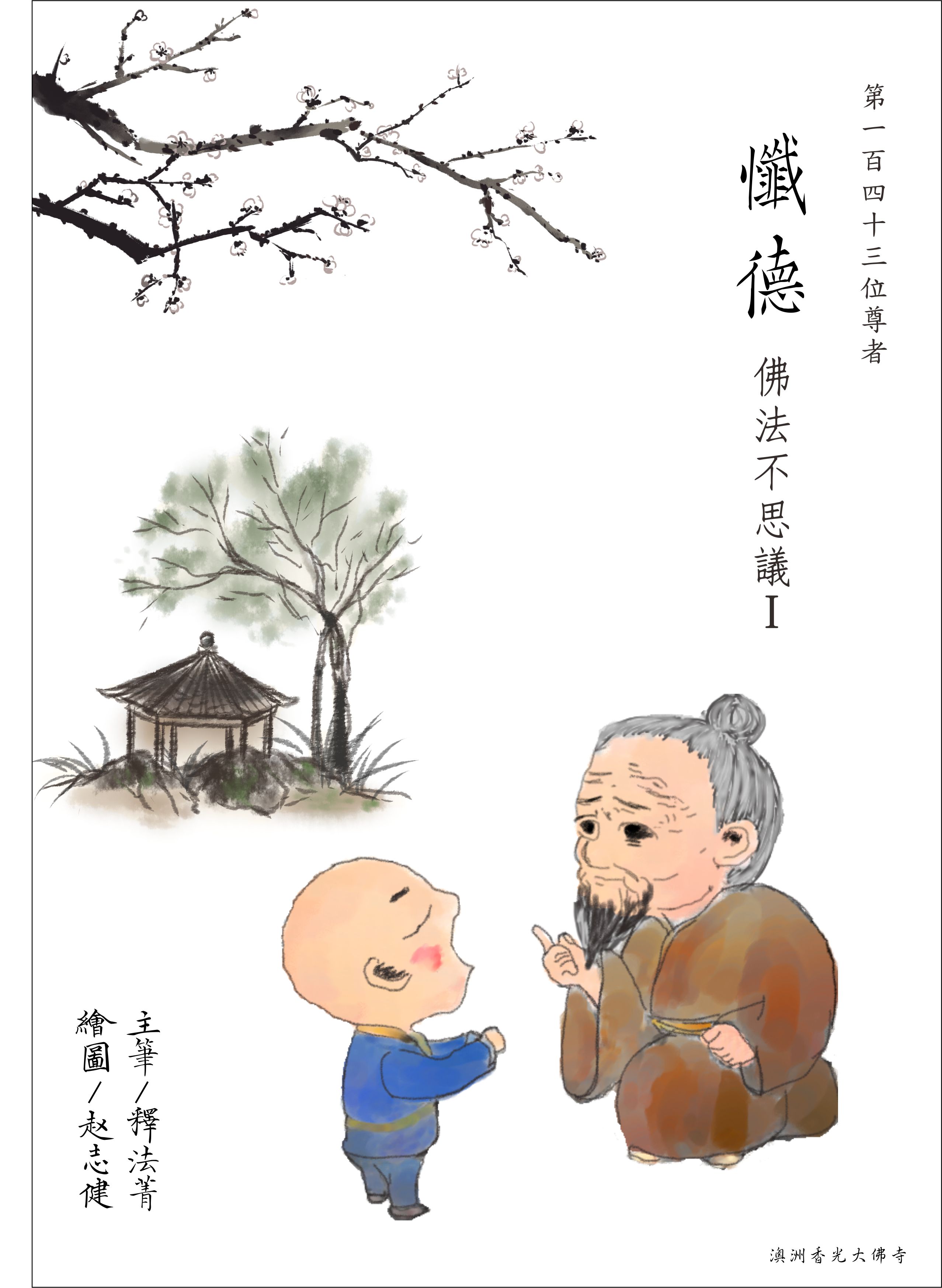
The Virtue of Repentance
A profound reflection on the journey of repentance and the cultivation of virtue from the 143rd Venerable, Chande, as he recounts his path to the Western Pure Land.
The Spiritual Anatomy of Practitioner Su's Leg
Venerable Feng An, representing a collective of 1,162 Venerables, provides a profound look into the spiritual dimensions within Practitioner Su's leg, revealing the hidden reality of karmic burdens, the nature of spiritual attachment, and the ultimate sacrifice of a Bodhisattva.
The True Meaning of Filial Piety
A touching testimony from Zhu Hongchang, who reflects on his life nine centuries ago, his journey from being rejected as a 'dull' child to discovering the profound, selfless nature of true filial piety through service to all beings.
The Path of No-Self and the Boundless Ocean of Wisdom
A poignant reflection on a life of hardship, the realization of the 'no-self' nature, and the ultimate vow to deliver sentient beings through the power of Namo Amituofo.
More by Hsiang Kuang Pure Land Buddhist Centre
The Final Curtain Call of Chu Ke-liang
A candid reflection from the late Taiwanese entertainer Chu Ke-liang on his life, his career, the karmic weight of his influence, and his ultimate deliverance to the Western Land of Ultimate Bliss.
The Soul's True Equality: A Conversation with Mahatma Gandhi
This is a record of an interview with Mohandas Karamchand Gandhi, who sought deliverance at the Hsiang Kuang Pure Land Buddhist Centre in Australia. He now resides in the Western Land of Ultimate Bliss. This account reflects upon his life and his journey to the Pure Land.
A Reflection from the Western Pure Land
This is a record of an interview with Zhao Puchu, who sought deliverance at the Hsiang Kuang Pure Land Buddhist Centre in Australia. He now resides in the Western Land of Ultimate Bliss. This account reflects upon his life in the 20th century. Recorded by the chief writer, Shi Fa Hui, on April 18, 2026.
The Truth Behind My Rebirth: A Message from Liu Suqing
Liu Suqing, the elder sister of the renowned practitioner Liu Suyun, shares her harrowing journey through the spirit realms and her ultimate deliverance to the Western Land of Ultimate Bliss through the Hsiang Kuang Pure Land Buddhist Centre.
The Burden of a Historical Name
This is a record of an interview with Lin Biao, who sought Chao Du at the Hsiang Kuang Pure Land Buddhist Centre in Australia. He now resides in the Western Land of Ultimate Bliss. This account reflects upon his life approximately 54 years ago. Recorded by the chief writer, Shi Fa, on May 18, 2026.
The Poet’s Journey to the Western Pure Land
A reflection on the life, tragedy, and ultimate spiritual liberation of the ancient statesman Qu Yuan, who found peace through the teachings of Practitioner Su.
About the Author
Hsiang Kuang Pure Land Buddhist Centre
Contributed to Pure Land Buddhism knowledge library