The Sacred Script of a Seven-Year-Old
An Interview with the Venerable Long Yue
A Journey of Faith from 1,915 Years Ago
This is a record of an interview with the Venerable Long Yue, who sought at the Hsiang Kuang Buddhist Centre in Australia. He now resides in the Western Land of Ultimate Bliss. This account reflects upon his life approximately 1,915 years ago. Recorded by the chief writer, Shi Fajing, on January 15, 2019.
Venerable Long Yue speaks:
"Namo Amituofo. I am Long Yue. I was the fifteenth child in my family, the youngest of many. My mother gave birth to a new child every year or two, and with so many mouths to feed, there was simply no time for her to care for us individually. We were left to our own devices, learning to navigate the world through our own intuition and observation.
From a very young age, I preferred the quiet of solitude. I did not spend much time with my brothers and sisters; I was almost always by myself. My parents were not concerned with how I spent my days, so long as all fifteen of us were present when it was time to eat. It was a simple, yet detached, existence.
The Discovery of the Sacred Text
My mother assigned a specific chore to each of us. When I was five years old, I waited for my older siblings to choose their tasks, and I was left with the final one: cleaning the Buddha table. I was a small child, so I had to use a little stool to reach the surface. As I began to wipe the table, my eyes fell upon a scripture resting there. I picked it up with the utmost reverence. Although I could not yet read, I felt an immediate, profound sensation throughout my entire body the moment I touched it. I knew, with absolute certainty, that the energy of the Buddha was contained within those pages.
None of my family members were literate, and my parents lacked the means to send us to school. My siblings spent their days running and playing in the fields, with no interest in learning to read or write. When I asked my mother where the book came from, she shook her head, saying she did not know. She recalled seeing my grandmother handle it when she was alive, so we assumed it was a family heirloom.
The statue of Namo Amituofo in our home had been carved by my grandfather, who was a devout Buddhist. My father, however, did not follow the path, and while my aunts and uncles would occasionally recite the name of Namo Amituofo, it was not a practice that took root in our immediate household.
A Labour of Devotion
Determined to understand the scripture, I borrowed a brush and ink from a neighbour. I began to copy the text, character by character, stroke by painstaking stroke. I had never learned to write, so each character took a long time to complete, but I was patient. As I focused on the brushwork, my heart naturally began to chant the Buddha-name, reciting it clearly and steadily within my mind. If no one disturbed me, I would spend the entire day copying the scriptures before the Buddha statue. My siblings thought I was wasting my time, finding my devotion far less interesting than their games outside.
Regardless of what my family said, I continued my work. Though I was illiterate, a miracle occurred: I began to grasp the philosophy of the within the text. It took me an entire year to finish copying the scripture.
The Sound of the Dharma
One day, while walking with my siblings, we passed a temple. I heard the monks chanting inside, and I immediately recognised the rhythm and the words—it was the very same scripture I had been copying: the Sutra. My siblings continued on, but I stood outside the temple, mesmerised, listening until the very last word was chanted. When I returned home and opened my copy of the Amitabha Sutra, I found that I could recite the entire text fluently. I believe this was the result of the Buddha's , which unlocked the memories of my past lives, allowing me to not only read the characters but to truly comprehend the profound meaning of the Amitabha Sutra.
A Vow to Save Beings
When I announced my intention to become a monastic, my family was shocked. I had come to realise that while our home contained a statue of Namo Amituofo and a copy of the Amitabha Sutra, no one truly understood them. Not a single person in my family had ever recited the holy name. I felt a deep sorrow that the Buddha was right before our eyes, yet remained a stranger to everyone. I realised that my home was likely no different from any other. My heart's only desire was to help people recognise the Buddha and to teach them how to chant the Buddha-name so they could be reborn in the Western Land of Ultimate Bliss.
Though I was only seven, I had already seen through the illusions of this world. Watching my parents toil their entire lives to raise fifteen children, I saw the suffering inherent in such a life and vowed never to enter the darkness of marriage. I observed many people living solitary lives, only to face Aging, sickness, and death alone. They spent their lives earning money, only to use it on doctors in their final years. No matter how much they enjoyed their youth or how beautifully they dressed, in the end, they were left lying in bed, waiting for death in simple, worn-out clothes.
The Illusion of the World
As I watched the crowds in the street—people laughing, arguing, or selling their wares—the scene suddenly shifted. For a brief moment, the buildings turned to ruins, and the people vanished. Then, just as quickly, the bustling market returned. I understood then that life is but a fleeting moment. The elderly woman haggling over the price of a scallion, the man arguing in anger—it was all an illusion. This world is entirely unreal; what is there to be attached to? What is worth holding onto for a lifetime?
I packed my bags, bid farewell to my parents and siblings, and set out on the path of practice. At seven years old, I entered the temple and began by serving others. I learned to temper my character and personality through service, and I learned how to live in harmony with others.
A Life of Service and Deliverance
For decades, I cultivated the merits necessary to save beings. I learned to let go of the "self", to have no "self" at all, and to focus entirely on the required to help others. I never counted how many beings I saved; I only looked at how many remained, vowing to return to the human world again and again to rescue them. I strove until the very last moment of my life, stepping forward to be reborn in the Western Land of Ultimate Bliss. I am eternally grateful for the compassion of the Buddha.
Practitioner Su’s body is already a Buddha-body, her actions are Buddha-actions, and her heart is a heart of great compassion. She manifests throughout the Dharma Realm to save all spirits. Countless beings have been guided to be reborn in the Western Land of Ultimate Bliss through her deliverance.
I now follow Practitioner Su as she performs Chao Du throughout the universe. The number of spirits is beyond imagination. Their suffering, having endured samsara for thousands of years, would have been endless had it not been for the deliverance of Practitioner Su. I am deeply grateful to Practitioner Su for her great compassion and for her Buddha-heart, which saves these suffering beings. Namo Amituofo."
More from Revered Ones
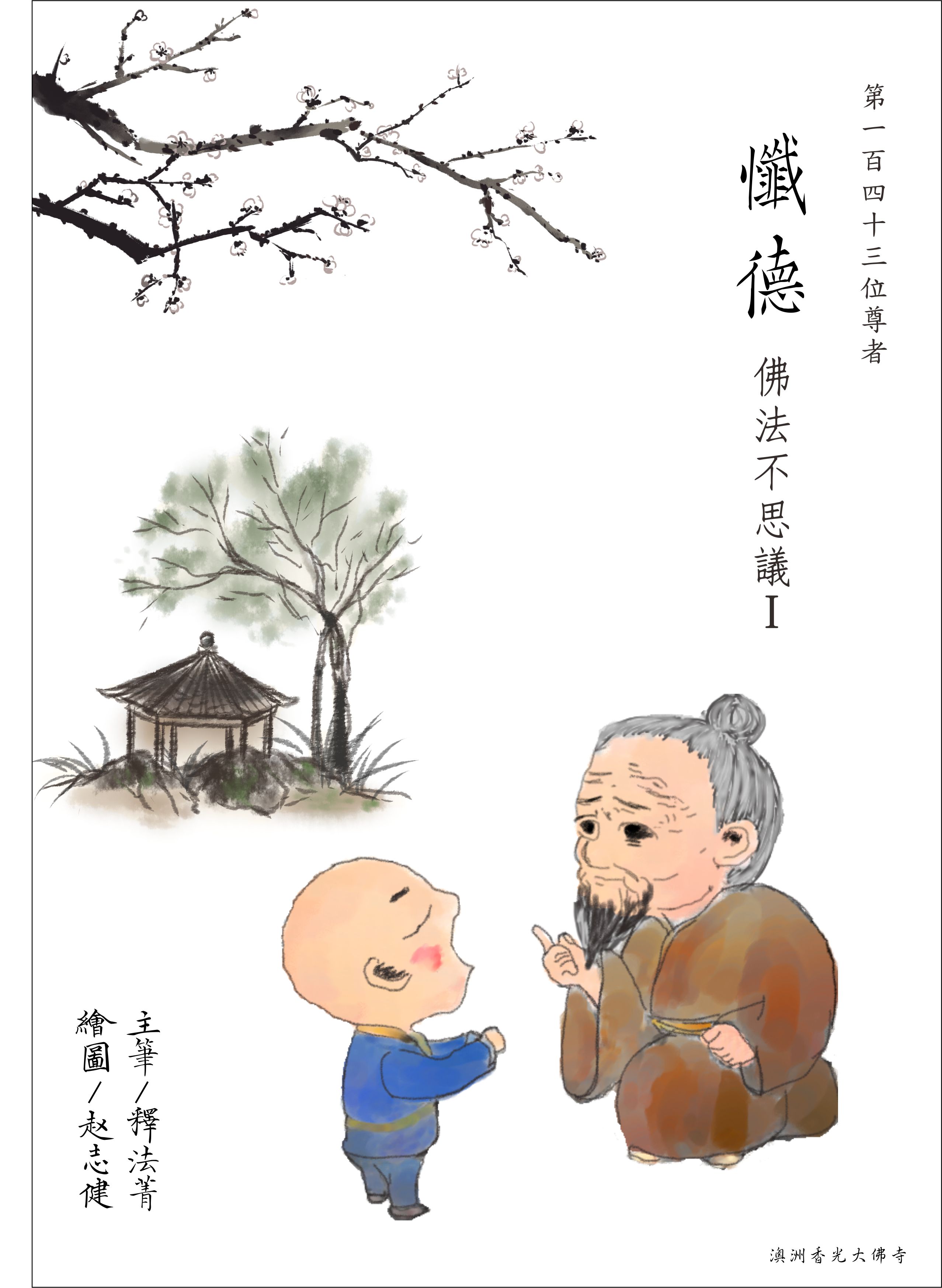
The Virtue of Repentance
A profound reflection on the journey of repentance and the cultivation of virtue from the 143rd Venerable, Chande, as he recounts his path to the Western Pure Land.
The Spiritual Anatomy of Practitioner Su's Leg
Venerable Feng An, representing a collective of 1,162 Venerables, provides a profound look into the spiritual dimensions within Practitioner Su's leg, revealing the hidden reality of karmic burdens, the nature of spiritual attachment, and the ultimate sacrifice of a Bodhisattva.
The True Meaning of Filial Piety
A touching testimony from Zhu Hongchang, who reflects on his life nine centuries ago, his journey from being rejected as a 'dull' child to discovering the profound, selfless nature of true filial piety through service to all beings.
The Path of No-Self and the Boundless Ocean of Wisdom
A poignant reflection on a life of hardship, the realization of the 'no-self' nature, and the ultimate vow to deliver sentient beings through the power of Namo Amituofo.
More by Hsiang Kuang Pure Land Buddhist Centre
The Final Curtain Call of Chu Ke-liang
A candid reflection from the late Taiwanese entertainer Chu Ke-liang on his life, his career, the karmic weight of his influence, and his ultimate deliverance to the Western Land of Ultimate Bliss.
The Soul's True Equality: A Conversation with Mahatma Gandhi
This is a record of an interview with Mohandas Karamchand Gandhi, who sought deliverance at the Hsiang Kuang Pure Land Buddhist Centre in Australia. He now resides in the Western Land of Ultimate Bliss. This account reflects upon his life and his journey to the Pure Land.
A Reflection from the Western Pure Land
This is a record of an interview with Zhao Puchu, who sought deliverance at the Hsiang Kuang Pure Land Buddhist Centre in Australia. He now resides in the Western Land of Ultimate Bliss. This account reflects upon his life in the 20th century. Recorded by the chief writer, Shi Fa Hui, on April 18, 2026.
The Truth Behind My Rebirth: A Message from Liu Suqing
Liu Suqing, the elder sister of the renowned practitioner Liu Suyun, shares her harrowing journey through the spirit realms and her ultimate deliverance to the Western Land of Ultimate Bliss through the Hsiang Kuang Pure Land Buddhist Centre.
The Burden of a Historical Name
This is a record of an interview with Lin Biao, who sought Chao Du at the Hsiang Kuang Pure Land Buddhist Centre in Australia. He now resides in the Western Land of Ultimate Bliss. This account reflects upon his life approximately 54 years ago. Recorded by the chief writer, Shi Fa, on May 18, 2026.
The Poet’s Journey to the Western Pure Land
A reflection on the life, tragedy, and ultimate spiritual liberation of the ancient statesman Qu Yuan, who found peace through the teachings of Practitioner Su.
About the Author
Hsiang Kuang Pure Land Buddhist Centre
Contributed to Pure Land Buddhism knowledge library