The Truth and the Precepts
Teachings from Master Shang Xuan Xia Zang
The Fragility of Human Reason
The concept of Truth can manifest as the philosophy of the , logical reasoning, the Universal Principle, the Truth, and the Right Way, emotional justification, and philosophical insight. These various interpretations exist within every person's heart, influencing our work, our practice in the bodhimanda, and our interactions within society. Often, people cling so tightly to their own version of truth that they engage in heated arguments, insisting that they are right and others are wrong. This leads to anger, resentment, and the destruction of harmony. When someone says, 'You are being unreasonable,' it is usually because the other person's words or actions do not align with their own internal standard. This friction can escalate from verbal disputes to physical confrontation, or even to legal battles in a court of law.
Conversely, when two people share the same truth or perspective, they live in harmony and treat one another with respect. Because their views align, they find a sense of mutual understanding and appreciation. They feel as though they are kindred spirits, leading to deep friendships, strong partnerships, or even romantic bonds. However, we must ask ourselves: is this personal truth truly the ultimate Truth, or is it merely a reflection of our own ego and preferences?
The Necessity of Shared Standards
To create a consensus and prevent the friction and disputes that arise from conflicting personal views, humanity has established various regulations and laws. These serve as a common standard, ensuring that we do not each speak our own language of truth and descend into chaos. Consider the structures that govern our lives: family rules maintain the order and harmony of the household; school regulations provide a framework for students to learn and grow together; workplace standards ensure that professional conduct remains consistent and productive; and national laws provide the legal foundation for a stable society.
In the same way, a temple, a bodhimanda, or a Buddha-recitation hall has its own and community guidelines. These are established for the fourfold assembly—monks, nuns, laymen, and laywomen—to help them restrain their Body, Speech, and Mind. By following these guidelines, we avoid creating negative . Regardless of the specific nature of these rules, they all share a singular purpose: to guide us in accordance with the ultimate Truth.
Truth as the Universal Principle
The ultimate Truth is the righteous path; it is the fundamental principle that governs the entire universe and the vastness of the Dharma Realm. The laws of karma and cause and effect, the six realms of rebirth, and the various punishments found in the hells are all direct consequences of violating this Truth and the Precepts. Even when different nations or religions establish their own laws and teachings, they must be based on this underlying Truth. If they are not, they will inevitably lead people astray, causing them to suffer the bitter fruits of their own misguided actions.
The Truth is in perfect sync with our true self. Therefore, everything we do, say, and think must be in complete alignment with this Truth. If we act in violation of it, we are distancing ourselves from our true self. Only by living in harmony with the Truth can we hope to realise our true self and reach .
The Precepts as a Path to Freedom
Because of the habits and , personal ego, and selfishness we have accumulated over accumulated lifetimes, it is incredibly difficult to tame our minds, and we suffer greatly as a result. For those who study the Buddha's teachings, the requirements and Precepts are often stricter than the laws of the world. This is because Buddhism is a 'Heart-Dharma.' The moment a negative thought arises in the heart, negative karma is created. Therefore, the Precepts are designed to address the root of the problem: the mind itself.
We must prevent our minds from being stirred. Once the mind is stirred, the opportunity to create negative karma arises. To be free, one must practise the state of 'no-mind,' 'no-thought,' ',' and 'no-selfishness.' This is the state of an unmoved mind—where one does not allow every thought and intention to arise, maintaining meditative concentration and preventing the creation of negative karma.
The Wisdom of the Awakened
Buddhism is a 'Heart-Dharma,' and this is especially true of Buddhism. Violating the 'heart-precepts' leads to evil consequences, and for those who commit grave offences, it can result in the suffering of the hells. Because of this, many people feel fear and distance themselves from the Precepts that monastics and lay practitioners are expected to uphold. They fail to realise that these Precepts are the very expression of the Great of Mahayana Buddhism.
These Precepts are established to protect the fourfold assembly from violating the heart-precepts. For monastics, who serve as teachers to celestial beings and humanity, the Precepts are even more rigorous. This is not a form of restriction, but a way to attain great freedom. Do not be tempted by fleeting pleasures or act on impulse, for the resulting evil consequences are not worth the price. The Truth does not change simply because you have many 'reasonable' excuses. What you consider 'reasonable' may not be so, and what you consider 'unreasonable' may actually be the Truth.
A Call to Cherish the Dharma Affinity
The perception of an ordinary people, trapped in a body governed by , does not necessarily align with the Truth; often, it is in direct opposition without the person even knowing it. In contrast, the perception of those who have realised their true nature, who have realised their , is in perfect harmony with the Truth. Even when they act to teach beings, they flows naturally with the Dharma without ever violating the Truth. Therefore, when those who have realised their true nature say something can be done, it can be done; when they say it cannot, it must not be done. The words of Practitioner Su, who has realised his true self, serve as a standard for us. The fourfold assembly should listen to and follow these words with the utmost sincerity.
The students of Hsiang Kuang Buddhist Centre are truly blessed to hear the teachings of Namo Amituofo. Just as the teachings of Shakyamuni Buddha were established, what is forbidden becomes the Precepts for lay practitioners or monastic. When the Buddha says something is permissible, it is the righteous path; when the Buddha says it is forbidden, it is a Precept that must be strictly observed. If you violate these, you will suffer the evil consequences of your negative karma in this life or the next. Many who claim to be practitioners end up at the gates of hells. To fall back into the six realms of rebirth and lose the magnificent Dharma affinity to be reborn in the Western Pure Land of Ultimate Bliss at Hsiang Kuang Pure Land Buddhist Centre would be a tragedy beyond words. Be cautious! Be extremely cautious!
Recorded by the Buddha's disciple, Venerable HaiZe.
More from Teachings of Great Master Xuanzang
The Vision of Great Master Xuanzang
Great Master Xuanzang shares his profound vision for the Hsiang Kuang Pure Land Buddhist Centre, reflecting on the power of the Dharma, the mission of Practitioner Su, and the ongoing work of saving infinite suffering beings through the light of Namo Amituofo.
Great Master Xuanzang's New Year Joyful Purification Dharma Assembly
Great Master Xuanzang offers profound guidance on the occasion of the New Year, reminding us that the path to the Western Pure Land of Ultimate Bliss requires constant purification, the letting go of ego, and unwavering devotion to Namo Amituofo.
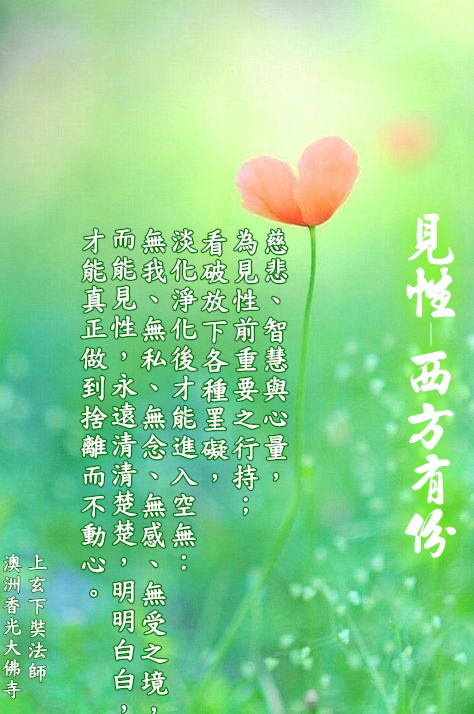
Awakening and the Path to the Western Pure Land
A profound exploration of how to transcend worldly attachments, purify the mind, and secure one's path to the Western Pure Land of Ultimate Bliss through Awakening and diligent practice.
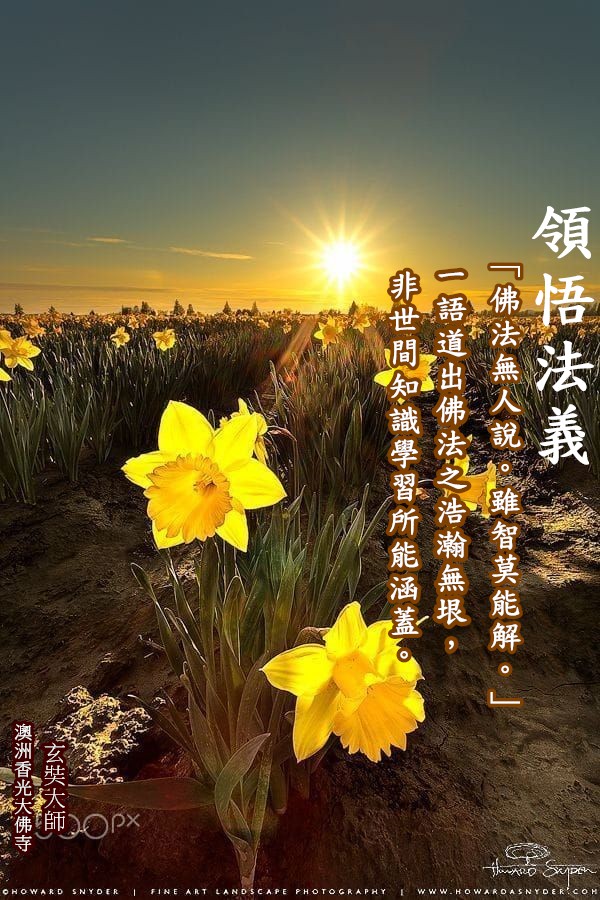
Realising the Profound Meaning of the Dharma
Great Master Xuanzang explains that the Dharma is vast and boundless, transcending worldly knowledge. To truly realise the profound meaning of the Dharma, one must move beyond attachment to words and names, cultivate a pure heart, and engage in diligent practice to attain Awakening.
More by Hsiang Kuang Pure Land Buddhist Centre

An Interview with Elizabeth Taylor (Famous Hollywood Actress)
A candid reflection from the spirit of Elizabeth Taylor, who shares her journey from the blinding lights of Hollywood to the serene, transformative teachings of the Buddha in the Western Land of Ultimate Bliss.
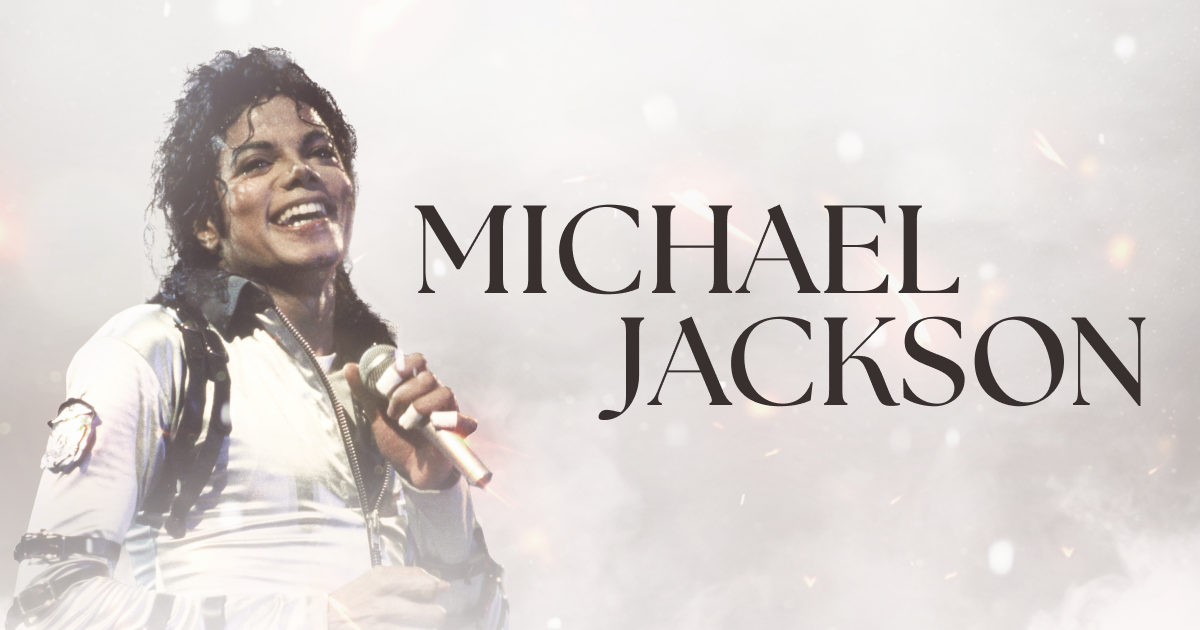
An Interview with Michael Jackson (King of Pop)
Michael Jackson shares his journey from the pressures of global fame to the peace of the Western Pure Land, revealing the truth behind his life and his ultimate deliverance.
A Voice from the Darkness: Helen Keller's Journey
Helen Keller, the renowned deaf-blind philanthropist, shares her journey from the darkness of the ghost realm to the light of the Western Pure Land of Ultimate Bliss, guided by the compassion of Namo Amituofo and Practitioner Su.
An Interview with Albert Einstein (Theoretical physicist)
Albert Einstein, once considered the most brilliant mind in human history, reflects on his life, the nature of 'science' versus the Truth of the Dharma, and his existence in the Western Pure Land.
A President's Repentance: Ronald Reagan's Journey to the Pure Land
Ronald Reagan, the 40th President of the United States, reflects on his life, his political career, and his profound journey from the depths of hell to the Western Land of Ultimate Bliss through the compassion of Namo Amituofo and Practitioner Su.
The Reflection of a Nation's Founder
This is a record of an interview with Kim Il Sung, the founder and former leader of North Korea, who sought deliverance at the Hsiang Kuang Pure Land Buddhist Centre in Australia. He now resides in the Western Land of Ultimate Bliss. This account reflects upon his life and the spiritual truths he has realised since his passing thirty-two years ago. Recorded by the chief writer, Venerable Fa Hui, on May 18, 2026.
About the Author
Hsiang Kuang Pure Land Buddhist Centre
Contributed to Pure Land Buddhism knowledge library