The Ancient Melody of Namo Amituofo
An Interview with the Venerable Li Xinzhai
A Testimony from Five Millennia Ago
This is a record of an interview with Venerable Li Xinzhai, who sought at the Hsiang Kuang Buddhist Centre in Australia. He now resides in the Western Land of Ultimate Bliss. This account reflects upon his life approximately 5,121 years ago. Recorded by the chief writer, Venerable HaiZe, on July 14, 2018.
Venerable Li Xinzhai speaks:
"Namo Amituofo. I am Li Xinzhai. My father composed this name for me using a very simple and rhythmic sequence of sounds. My father possessed an incredibly keen and direct sensitivity to sound; he was a master at expressing the deepest intentions of the heart through music. In our time, he was much like a modern musician. Because such talent was rarely seen, he was deeply admired and even worshipped by our fellow tribespeople. He had the remarkable ability to take natural materials—stone tools, seashells, bamboo, and even dried leaves—and, within a very short time, strike them to produce a beautiful, harmonious melody.
A Legacy of Sound and Rhythm
My father had an exceptional memory. Once he had struck an instrument a few times and determined the rhythm in his mind, he could recreate that same beautiful music perfectly whenever he wished. Our home was filled with all sorts of instruments, which were my father's most prized possessions. Every time he discovered a new sound, he would be filled with immense . Watching him tap and play, I eventually learned to do the same. I would pick up every object I could find and strike it from different angles, learning that each position produced a unique resonance. Through constant practice, I began to accumulate my own experience.
Among my father's four children, I was the one who loved to follow him everywhere. Whatever he played, I would follow along. Whenever we made a new discovery, we would gesture to each other and share a knowing smile. Sometimes, we would find that certain objects could mimic the calls of animals. We were particularly fond of tree leaves; by folding or rolling them into different shapes, thicknesses, and textures to create a hollow chamber, we could blow into them to produce a variety of distinct sounds. I shared my father's excellent memory, and I could often replicate the melodies he composed. Sometimes he would applaud my efforts, and other times I would dance with joy at his creative genius. Our figures could be seen all over the mountains and along the seashore, as we searched for new instruments to compose melodies to share with our tribe. Whenever the grain harvest arrived, music was essential to accompany the celebrations and dances, and my father’s instruments and melodies were always at the heart of these gatherings. Eventually, as the demand for our music grew, I became a young teacher, working alongside my father to instruct others in the craft of instrument making.
The Gift of the Sea
Whenever the people had a successful harvest or finished weaving clothing, they would bring us gifts, so we never lacked for food, clothing, or shelter. My father, however, had a deep aversion to seeing animals suffer or bleed. He knew that drums were typically made from animal skins—cleaned, dried, and stretched over wood to produce a powerful sound—and he understood that different skins produced different tones. Yet, because he refused to engage in killing, we never used such drums. Instead, we found other ways to produce sounds that could replace the beat of a drum.
One day, while walking along the beach, we discovered a large conch shell. It was clear that the creature inside had long since passed away. Under the brilliant rays of the sun, the surface of the shell shimmered with a beautiful lustre. Nearby, there were several other shells of various sizes. When we held them to our ears, we could hear the faint, rhythmic sound of the ocean waves. My father carefully cleaned the inside of the shell and left it to dry in the sun for two or three days. When he finally blew into it with all his might, it produced a deep, resonant sound with varying pitches. We were startled at first, and then we burst into laughter—another discovery! Each shell produced a different tone. We truly believed this was a gift from the heavens, a way to make music without the need for killing.
The Afternoon Revelation
One afternoon, while my father and I were resting, we both heard a melody of such exquisite beauty that it seemed to transcend anything we had ever collected or created. We strained our ears to listen. These were not sounds that could be produced by striking stones or blowing through leaves. The melody was accompanied by a voice singing, 'Namo Amituofo.' We did not understand the meaning of these words, but the sound was so profoundly captivating that it settled our hearts completely. We woke up at the same time, and the entire room seemed to be filled with this sacred sound. We could not help but sing along, and we continued for a long time, feeling a sense of peace and spiritual stillness we had never known before. My father tried to memorise the melody, hoping to play it on our instruments, but no matter how he tried, he could not replicate that divine harmony.
My father’s heart was incredibly soft and receptive, and it resonated perfectly with this Buddha-name. Throughout the day, he would hum this sacred phrase. After some time, I noticed a change in his appearance; he seemed to radiate a new kind of and dignity. He was at peace, and he no longer looked outward for support or comfort. We were overjoyed by his transformation, and we felt that this special melody must hold a profound significance.
A Transformation of Heart and Spirit
My father began to compose several melodies for the Buddha-name 'Namo Amituofo.' He taught the tribe to chant it. Whenever someone fell ill or suffered an injury while hunting, they would naturally chant the Buddha-name, and they would often experience inconceivable improvements or complete healing. Word spread quickly, and everyone came to believe that chanting this name could cure illnesses and restore health. During tribal ceremonies or before discussing important matters, the people would gather and, following the melodies my father had composed, play their instruments and chant 'Namo Amituofo,' hoping for a smooth outcome. Most of the time, their wishes were fulfilled. Because of this, many tribespeople were inspired to stop eating meat and instead adopted a vegetarian diet.
One day, my father told us that he was going to leave. He remained as he always was, his lips gently murmuring 'Namo Amituofo.' Suddenly, we smelled a wonderful fragrance filling the room. One of our people, who possessed the ability to see things that others could not, saw the room bathed in golden light. He saw a tall, majestic figure standing there, radiating light—it was Namo Amituofo. Amidst our collective awe, my father closed his eyes, a gentle smile on his face, and his body remained soft as he departed. It was our first experience with such a passing. We felt no sorrow, only immense joy, seeing how peacefully he had left us. From that day on, everyone knew that Namo Amituofo was the one who brought the golden light, the one who was tall, bright, and magnificent.
Continuing the Work Across Time
Many of our tribespeople, myself included, followed my father's example. We continued to teach the younger generation to chant the Buddha-name and to play the melodies he had left behind. We kept the Buddha-name in our hearts and on our lips throughout the day. A week before my own passing, I saw the Western Land of Ultimate Bliss. I knew my time had come, and I was blessed by the presence of the Buddha and many other beings—my father was among them—who came to lead me to rebirth in the Western Pure Land.
That was over five thousand years ago. Today, I am here with more than a thousand other Venerables by the side of Practitioner Su. Through the daily morning deliverance, Practitioner Su, in his great compassion, opens the space of the dynasty in which we once lived. This allows many of the spirits from that time to hear the Buddha-name, to see the Buddha-light, and to be guided by Practitioner Su to rebirth in the Western Pure Land. This is truly unprecedented, and it is a tremendous blessing for all those spirits.
I am filled with gratitude for the compassion of the Buddha! I am grateful for the compassion of Practitioner Su, who saves immeasurable and boundless suffering spirits.
Namo Amituofo."
More from Revered Ones
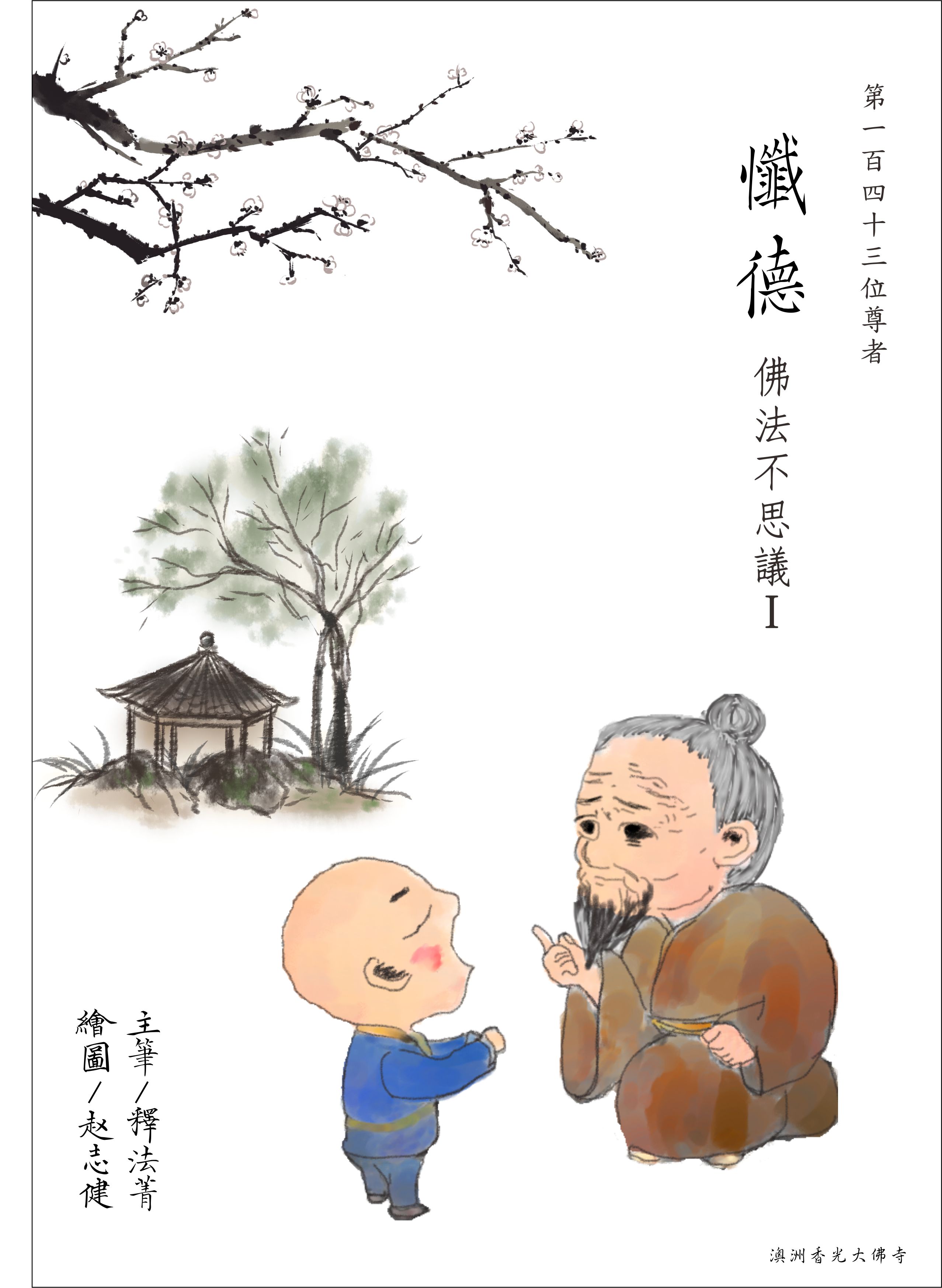
The Virtue of Repentance
A profound reflection on the journey of repentance and the cultivation of virtue from the 143rd Venerable, Chande, as he recounts his path to the Western Pure Land.
The Spiritual Anatomy of Practitioner Su's Leg
Venerable Feng An, representing a collective of 1,162 Venerables, provides a profound look into the spiritual dimensions within Practitioner Su's leg, revealing the hidden reality of karmic burdens, the nature of spiritual attachment, and the ultimate sacrifice of a Bodhisattva.
The True Meaning of Filial Piety
A touching testimony from Zhu Hongchang, who reflects on his life nine centuries ago, his journey from being rejected as a 'dull' child to discovering the profound, selfless nature of true filial piety through service to all beings.
The Path of No-Self and the Boundless Ocean of Wisdom
A poignant reflection on a life of hardship, the realization of the 'no-self' nature, and the ultimate vow to deliver sentient beings through the power of Namo Amituofo.
More by Hsiang Kuang Pure Land Buddhist Centre
The Final Curtain Call of Chu Ke-liang
A candid reflection from the late Taiwanese entertainer Chu Ke-liang on his life, his career, the karmic weight of his influence, and his ultimate deliverance to the Western Land of Ultimate Bliss.
The Soul's True Equality: A Conversation with Mahatma Gandhi
This is a record of an interview with Mohandas Karamchand Gandhi, who sought deliverance at the Hsiang Kuang Pure Land Buddhist Centre in Australia. He now resides in the Western Land of Ultimate Bliss. This account reflects upon his life and his journey to the Pure Land.
A Reflection from the Western Pure Land
This is a record of an interview with Zhao Puchu, who sought deliverance at the Hsiang Kuang Pure Land Buddhist Centre in Australia. He now resides in the Western Land of Ultimate Bliss. This account reflects upon his life in the 20th century. Recorded by the chief writer, Shi Fa Hui, on April 18, 2026.
The Truth Behind My Rebirth: A Message from Liu Suqing
Liu Suqing, the elder sister of the renowned practitioner Liu Suyun, shares her harrowing journey through the spirit realms and her ultimate deliverance to the Western Land of Ultimate Bliss through the Hsiang Kuang Pure Land Buddhist Centre.
The Burden of a Historical Name
This is a record of an interview with Lin Biao, who sought Chao Du at the Hsiang Kuang Pure Land Buddhist Centre in Australia. He now resides in the Western Land of Ultimate Bliss. This account reflects upon his life approximately 54 years ago. Recorded by the chief writer, Shi Fa, on May 18, 2026.
The Poet’s Journey to the Western Pure Land
A reflection on the life, tragedy, and ultimate spiritual liberation of the ancient statesman Qu Yuan, who found peace through the teachings of Practitioner Su.
About the Author
Hsiang Kuang Pure Land Buddhist Centre
Contributed to Pure Land Buddhism knowledge library