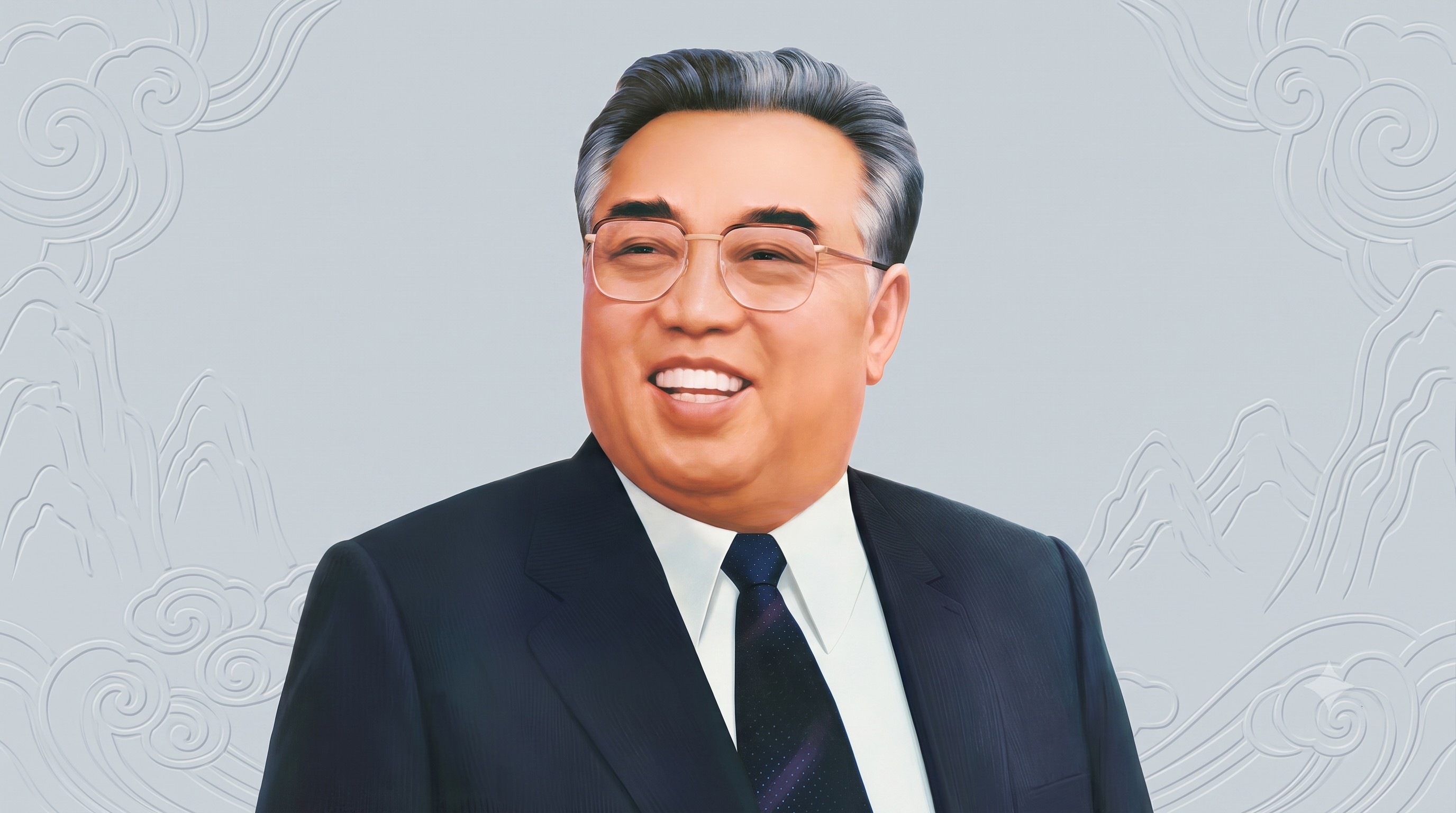
This is a record of an interview with the spirit of Venerable Master Chin Kung, who sought deliverance at the Hsiang Kuang Buddhist Centre in Australia and now resides in the . This account reflects upon his teachings regarding the balance of progress and retreat in spiritual practice. Recorded by the chief writer, Venerable HaiZe, on November 17, 2022.
Venerable Master Chin Kung speaks:
". Today, the topic Namo Amituofo has given me to discuss is 'advancing and retreating.' Truly, when walking through this world, one must understand how to navigate the space between moving forward and stepping back. If you handle it well, you understand the proper measure; your advances and retreats are graceful and appropriate. If you handle it poorly, you lose your sense of proportion, and your actions become excessive or deficient, which inevitably creates ."
The Measure of a Person
"In the past, people would judge a child’s or a person’s upbringing by observing their conduct in these moments of advance and retreat. This is something that must be cultivated as a daily habit; it is absolutely not something you can just 'put on' for show. If you try to fake it, you might hide your true nature for a while, but as the days and months pass, your true colours will eventually show. At that point, people’s and opinions of you will inevitably change.
In truth, how others perceive you is one thing, but what matters most is the impact of your own choices. If your actions only affect yourself, then whether you do good or evil, the —be it positive or negative—is yours alone to bear. However, if your actions in these moments of advance and retreat affect a wider circle, then if you do good, the merit is vast; if you do evil, the suffering is profound. Because the harm caused to others, whether through excess or deficiency, is ultimately laid at your feet—you are the one who started it. This is why those in positions of leadership must be all the more cautious. Ksitigarbha tells us that every thought and intention of beings in the Jambudvipa world is karma, and every one of them is a transgression. In such circumstances, if one must be the person who makes decisions, we can call that person someone who carries responsibility. Generally speaking, most karma is created out of selfishness. What I have said so far pertains more to general conduct in the world."
The Path of Practice
"When it comes to spiritual practice, however, advancing and retreating should be natural. A practitioner’s goal is to realise their true nature. If a task is conducive to this goal, then you should do it—do it quickly—as this is moving forward toward . If a task interferes with your practice and prevents you from realising your true nature, then you must avoid it. Step back! When it is time to let go, let go immediately! The path of practice often requires adjusting your pace and your mindset; it is never static. What remains unchanged is our heart that seeks the , our goal of awakening, our faith in Namo Amituofo, and our firm vow to be reborn in the Western Pure Land of Ultimate Bliss. These must never change.
You must be precise in your judgment to walk steadily and swiftly on this great Pure Land path of Namo Amituofo. If you find yourself veering off course, becoming crooked or distorted, you must correct yourself immediately to avoid drifting further away from the righteous path and your true nature. You may discover this through the guidance of a true spiritual friend, or through the heightening of your own awareness. The guidance of a true spiritual friend is vital; everyone must take it to heart. Do not think that because you have heard it before, it is 'ordinary,' and let it pass by your ears—that is a waste of your own life. When you cannot see the truth of a situation, you must heighten your awareness and stop to examine whether your heart has become lax, for the heart drives the change in behaviour. You must constantly examine whether your heart is compassionate, wise, and diligent."
Navigating Favourable and Adverse Conditions
"If your practice is progressing well, do not stop. Whether you encounter favourable or adverse conditions will affect the results of your practice. Generally speaking, people prefer favourable conditions—this is understandable—and fear adverse ones—this is also understandable. Especially if you lack confidence or focus too much on one aspect while neglecting others, your behaviour is likely to become biased. Of course, matters that are irrelevant to your diligent practice should be avoided. Life is limited; do not waste your time on such things. This is especially true for modern online games and the handling of many worldly affairs. People today spend too much time on computers and mobile phones, neglecting the need to wash away the pollution in their hearts. It becomes difficult to regain a pure heart, and even harder to realise your true nature.
Practice also requires knowing when to hold on and when to let go. In favourable conditions, you must never be lax or indulgent; instead, you should be even more fiercely diligent. If you can maintain your awareness at such times and move straight ahead without your heart wavering, you will often achieve twice the result with half the effort. You put in only half the energy, but receive double the result—this is 'advancing' for a practitioner. If you relax your practice in favourable conditions, or even become lax and indulgent, it is easy to see that your practice will retreat. Especially in favourable conditions, if external circumstances come to interfere or pull you away, you must never follow them, or you will easily go astray. If you are vigilant in favourable conditions and know that you cannot be indulgent or lax, at the very least, you can hold your ground and not lose your resolve.
As for adverse conditions, for a true practitioner, they are rare and precious opportunities, because it is in adversity that you can see the level of your own attainment. Most people fear adversity, but I believe that adversity is a way to test the level of your practice. Suppose you are doing something that you usually do well and quickly, but suddenly it becomes blocked, or instructions are issued that do not fit the actual situation. You must stop yourself; otherwise, you may commit a transgression."
The Wisdom of 'Retreating to Advance'
"If, in adversity, things do not progress as smoothly as usual, or if you encounter situations you have never faced before, you should accept them with . When you face problems, people, or objects in adversity that you cannot solve or overcome, you must make a choice as a practitioner. If facing and breaking through these obstacles helps your practice, and you accept the opinions of others, then do not interrupt your practice. Instead, break through these obstacles even more fiercely. Congratulations! The moment you break through an obstacle is the moment you make progress.
As mentioned before, if your goal is to realise your true nature, you must see clearly what situation you are in. Moving straight ahead is absolutely necessary; otherwise, how can you smooth out the habits and tendencies brought over from countless past lives? If there were no adversity to serve as a test, these habits would continue to exist, and realising your true nature would be out of the question.
If you encounter adversity and obstacles while moving forward, facing and overcoming them is necessary—you cannot just escape. If you have no desire to realise your true nature, then escaping and losing your resolve is understandable, because you have been led away by your , your karma, or even by demons. This attitude is not proactive enough. In adversity, you should do even better than you normally would, and your heart must face all people and things with a positive attitude. You must know that many things are illusory, and often, it is your own attachments that have not been let go of, causing these obstacles to manifest. Others may not know, but you should know. When an attachment manifests, your heart must know. At this time, your heart must act as a supervisor, telling your body: there is a method called 'retreating to advance.' This requires a wise practitioner to execute. Not everyone can do it; often, people retreat and stay retreated, needing to start all over again to move forward. But 'retreating to advance' means that if the current situation cannot help beings, you retreat for a moment, use your own strength—without relying on external forces—to become diligent, and then move forward again. This is the smartest method. External conditions rely on external forces and must be followed according to causes and conditions, but internal conditions are always present; they rely on yourself.
In short, you must have wisdom. If you have wisdom in your practice, it is a great help. This help means you know your goal and your current situation, your judgment is correct, and what you do is helpful to your spiritual achievements. Then, of course, you move forward. If you encounter obstacles, and you have wisdom, you would rather walk a little slower than collide head-on. Some people retreat and let the other party take the upper hand—this is very clever. Can you do it? If you cannot, you suffer a loss; if you can, you make progress. Some people, no matter who they meet or what happens, completely retreat until there is no 'self' left. This is the smartest state of all, as everything is seen clearly. With such clarity, as long as your practice does not stop—meaning your daily practice or your duties are still fulfilled—this practitioner who has no 'self' and prioritises the needs of others is truly wise. This is what is called 'retreating to advance.' In the end, such a person most easily finds their true nature, provided they remain fiercely diligent and do not lose their resolve. In our view, they are likely to realise their true nature, because what they manifest is in sync with their true nature."
The Final Call to Diligence
"Therefore, with the goal of realising your true nature, a practitioner must constantly examine whether their behaviour, speech, and thoughts are appropriate. If they are in sync with your true nature—meaning your mind-capacity, , and wisdom are manifested in a way that a realised being would act—then you must continue. One day, you will realise your true nature. If what you do is contrary to your true nature or violates the , and you do not know how to change your ways or be diligent, and even manifest negative behaviour or speech that affects not only yourself but other practitioners or monastics, then you are truly retreating. Because what you manifest is contrary to your true nature, it is not the appearance of an awakened being. In this case, your practice will yield half the result with double the effort. You spend double the energy, physical strength, and time, yet gain only a little, or even regress. It is not worth it. Life is limited; there are really not many opportunities for you to retreat and try again. For most people to realise their true nature, they must have perseverance, determination, patience, the guidance of a true spiritual friend, the ability to change their ways, and an environment conducive to awakening. These will help you realise your true nature and attain Buddhahood sooner.
There is another situation: if you are slandered by external circumstances, you must use wisdom to judge whether what you are doing is right or wrong, righteous or evil. If the result is correct and righteous—and the guidance of a true spiritual friend confirms this—then you must have the courage to cast aside the slander. Do not keep it in your heart; it is pollution. If you are attached to it, holding onto it and looking at it, it will cause you great harm. Generally speaking, if you treat slander as an adverse condition, you must have the determination to overcome it and move forward. Never be defeated by slander, and never be defeated by the manifestation of your own karma. This is very important. Because, to put it plainly, practice is the process of transforming karma—it is a process of confronting your karma. If you can transform it, you will not be interfered with by karma, and you will not even let karma manifest. You will be able to practice in a down-to-earth manner, and thus you can succeed and realise your true nature.
What is called karma is birth, aging, sickness, and death, or... the term is like this. Although I do not want to keep mentioning these terms, the meaning can be brought out. For example, the suffering of not getting what you want, the suffering of separation from loved ones, the suffering of being with those you dislike, and the suffering of the five aggregates—birth, aging, sickness, and death—these are the eight sufferings. The wisdom of the Buddha’s teachings lies here, using words to express them. Even wiser is to be able to express them without using these terms. Regardless, if you can grasp the measure between advancing and retreating, it will be of immense help to your practice, helping you find your true nature and realise it sooner. If you do not grasp the measure, it is easy to regress, and that would be a great pity for your practice!
Having the guidance of a true spiritual friend is the greatest advantage at the Hsiang Kuang Pure Land Buddhist Centre. Everyone must grasp this well.
Alright, that is all for today. Namo Amituofo."
Venerable Chin Kung, with palms joined.
At the Western Dharma-Nature Land of the Hsiang Kuang Pure Land Buddhist Centre, Australia.