The Dignity of Conduct: Teachings from Master Xuanzang
Teachings on the Three Thousand Manners of Conduct
Recorded on March 27, 2019
The Mirror of the Heart
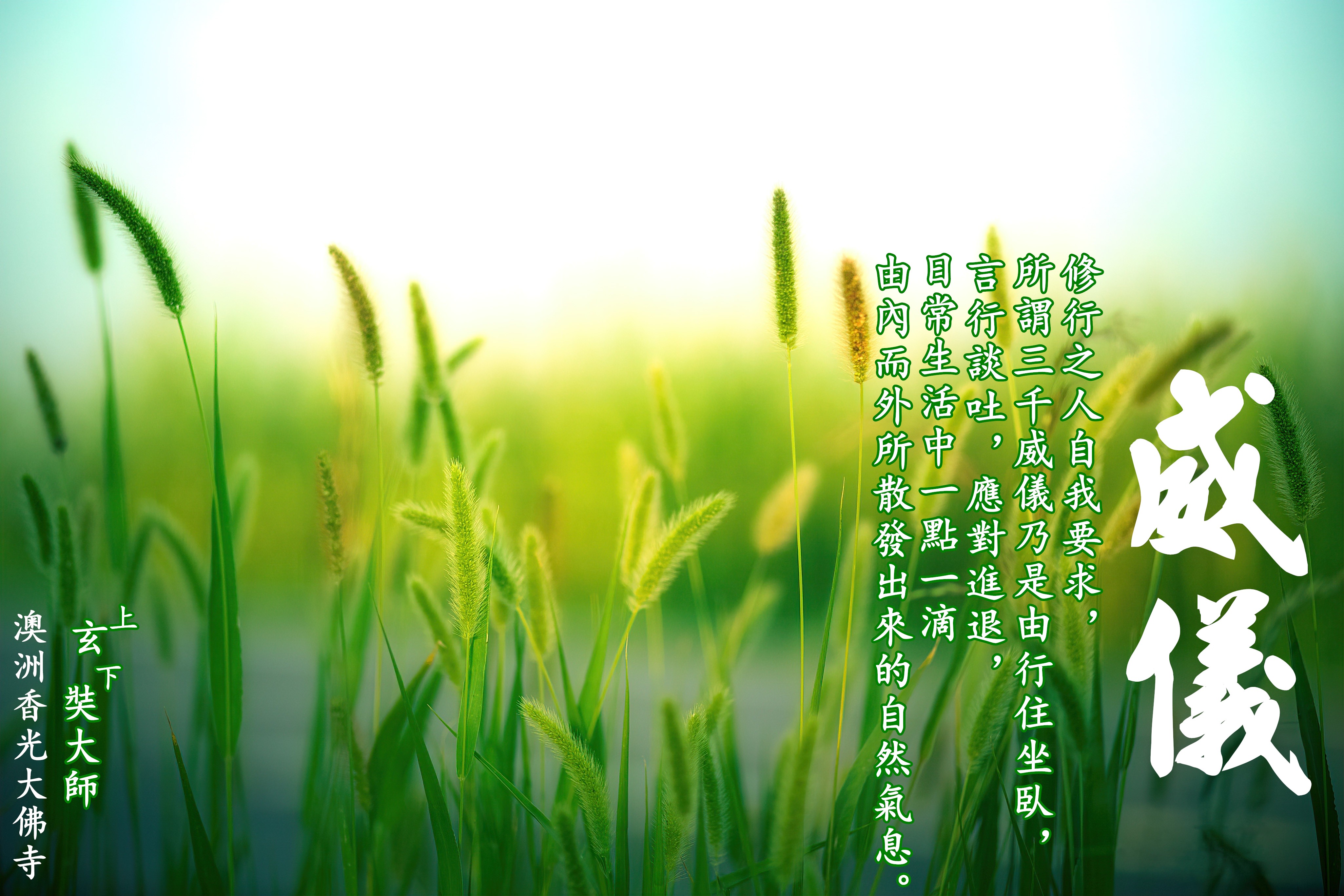
Most people in this world judge others based on their conversation and their outward appearance. However, those with clear eyes—the wise—look deeper. They observe the subtle movements of the heart, the flickers of intention, and the minute details of a person's behaviour. For a practitioner, the requirement for self-discipline is absolute. What we call the three thousand manners of conduct is not merely a set of rules; it is the natural aura that radiates from within, manifesting through our every action, our way of walking, standing, sitting, and lying down, our speech, and how we respond to the world around us.
This dignity of conduct is not something that can be cultivated overnight. If one is taught these principles from a young age, they become a natural part of one's character. However, once we have grown, many of our personal habits and ego-driven tendencies have already set like concrete. To refine and transform these requires a high level of awareness and firm determination. You must constantly remind yourself not to become lax. Regardless of your position, you must fulfil your duties with integrity. This is especially true for the monastic community, whose mission is to serve as teachers for celestial beings. It is imperative that they overcome unwholesome habits and cultivate a dignified and exemplary demeanour.
The Four Pillars of Conduct and Vigilance
To walk like the wind, to sit like a bell, to stand like a pine, and to lie like a bow—these are the fundamental manners of conduct for the monastic community. To walk like the wind means to move with a lightness and ease, not with haste or agitation. To sit like a bell means to be steady and grounded, not restless or slouching. To stand like a pine means to be upright and straight, free from any crooked or awkward posture. To lie like a bow means to rest on your right side, rather than sprawling with limbs spread wide. Speaking in a soft, gentle voice is the external manifestation of an internalised dignity. The Lion’s Roar is one of the methods used to teach sentient beings, but to employ it effectively, one must possess true virtue.
Walking, sitting, standing, and lying down are the four activities that encompass our daily lives. Because we are engaged in these four activities every second, we must ensure that our conduct remains dignified at all times. Do not let your guard down, for negligence is the enemy of progress. In the world, people often think that being relaxed means letting go of all discipline, but for a practitioner, this is a dangerous trap. It is precisely when we forget to gather our body, speech, and mind that spiritual obstacles manifest. Therefore, we must use the Buddha’s teachings to counter this laxity, maintaining our dignity to save ourselves from the shackles of .
The Weight of Our Actions
The Buddhas and Bodhisattvas remind us with compassionate hearts: chant the Buddha-name 24/7. This is to counter the invasion of wandering thoughts. We are warned that every thought and intention of beings in this world is nothing but karma and sin. We must be vigilant not to let our thoughts wander, lest we create further negative karma. If you speak a word that should not be said, even if you did not intend harm, the karma of speech is already created. If you perform an action that should not be done, even if no one sees it, the karma of is already created. If you harbour an evil thought or contemplate something unwholesome, the karma of the mind is already created. Once these three karmas of body, speech, and mind are formed, the time for receiving the consequences will inevitably arrive. For this reason, you must heighten your awareness. Always be polite and respectful to others, and be cautious in your own speech and actions. This is all part of maintaining your dignity.
Within the temple, whether in the dining hall or the Buddha hall, there are always Buddhas, Bodhisattvas, protectors, and other sentient beings present. When we recite the Sutras, prostrate to the Buddha, chant the Buddha-name, read the Dharma Jewel, or organise materials, we must purify our hearts and focus our minds. We must gather our body, speech, and mind so that we may truly benefit from our group cultivation and individual practice. Therefore, idle chatter is something that must be avoided in the temple. At all times and in all places, you should speak softly to avoid disturbing the practice of others. This is especially important in the dining hall when everyone is gathered to eat. You should remain silent, and if you must speak, do so in a low whisper.
The Harmony of Shared Spaces
Do not use the excuse that you are naturally loud or that this is just your personality to justify speaking as you please, arguing, or looking at others with anger. This disturbs sentient beings and shows a complete lack of dignity. The laws of karma and cause and effect will not lessen your sins simply because that is your nature. You should be even more mindful to lower your volume and use gentle language. It is said that one should rather disturb the water of a thousand rivers than disturb the heart of a practitioner. Strictly speaking, if you say something that causes a practitioner to lose their focus, to give rise to evil thoughts, or to feel afflicted, you are creating karma. Everyone should be mindful of this.
In all public affairs and spaces, you should think of others. Always place the benefit of the community first. Do not prioritise your own convenience, as this causes trouble for others or leaves a burden for those who come after you. This is not the way of a practitioner, and it is a form of creating karma.
Cultivating the Seeds of
Regarding children, it is best to teach them proper etiquette and the practice of a vegetarian diet from a young age. Children have a strong capacity for learning and adaptation. Cultivating good manners and nurturing their inherent goodness helps to grow their and makes it easier for their potential and wisdom to manifest. You should guide them well and help them gather their minds; do not indulge or neglect them. If they are allowed to follow their own ego and selfish habits, it is easy for them to be pulled into the cycle of rebirth. Be cautious and avoid this.
The points mentioned above are but a glimpse into the vast subject of dignity. Those who have realised their true nature, who have properly upheld the , and who have attained meditative concentration and Wisdom, will naturally reveal a dignified, gentle, and upright character in any situation. This is the demeanour of an awakened being. Practitioner Su embodies this, and all of you should take this as your foundation. Practise diligently, guard your body, speech, and mind, and never depart from the original intent of the Buddha-heart, so that you may soon realise your true nature.
More from Teachings of Great Master Xuanzang
The Vision of Great Master Xuanzang
Great Master Xuanzang shares his profound vision for the Hsiang Kuang Pure Land Buddhist Centre, reflecting on the power of the Dharma, the mission of Practitioner Su, and the ongoing work of saving infinite suffering beings through the light of Namo Amituofo.
Great Master Xuanzang's New Year Joyful Purification Dharma Assembly
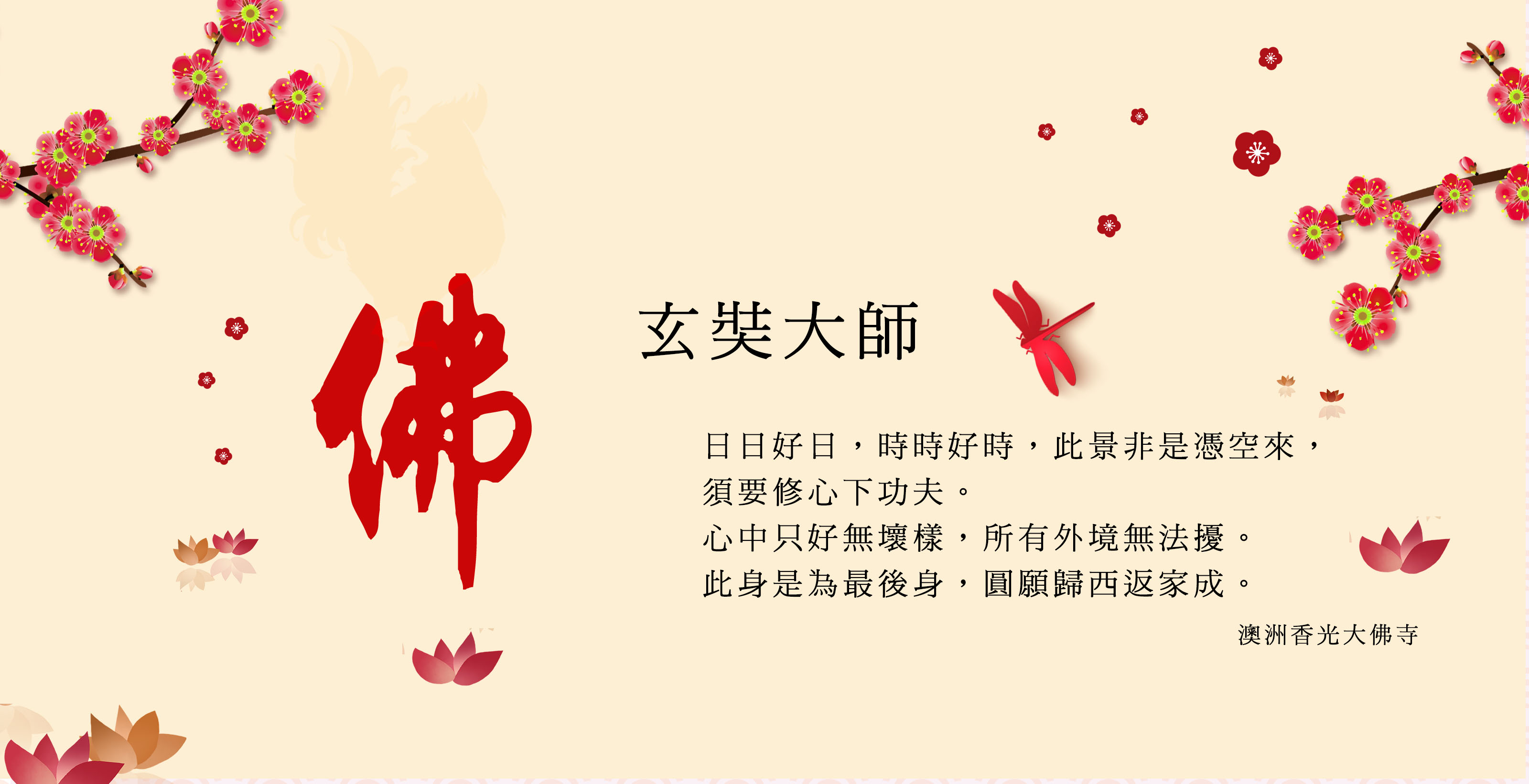
Great Master Xuanzang offers profound guidance on the occasion of the New Year, reminding us that the path to the Western Pure Land of Ultimate Bliss requires constant purification, the letting go of ego, and unwavering devotion to Namo Amituofo.
Awakening and the Path to the Western Pure Land
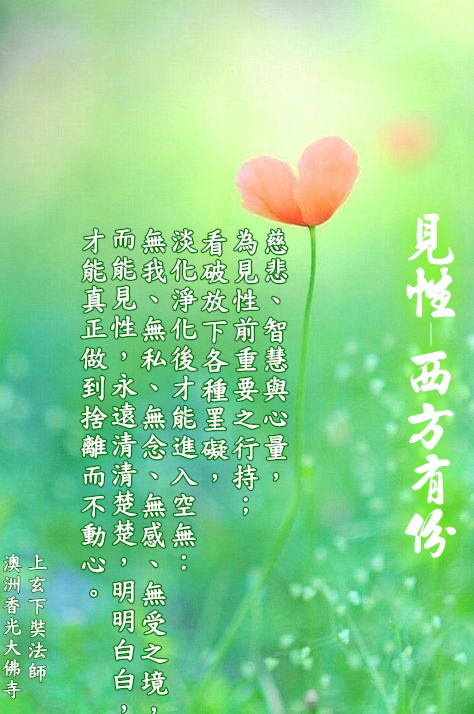
A profound exploration of how to transcend worldly attachments, purify the mind, and secure one's path to the Western Pure Land of Ultimate Bliss through Awakening and diligent practice.
Realising the Profound Meaning of the Dharma
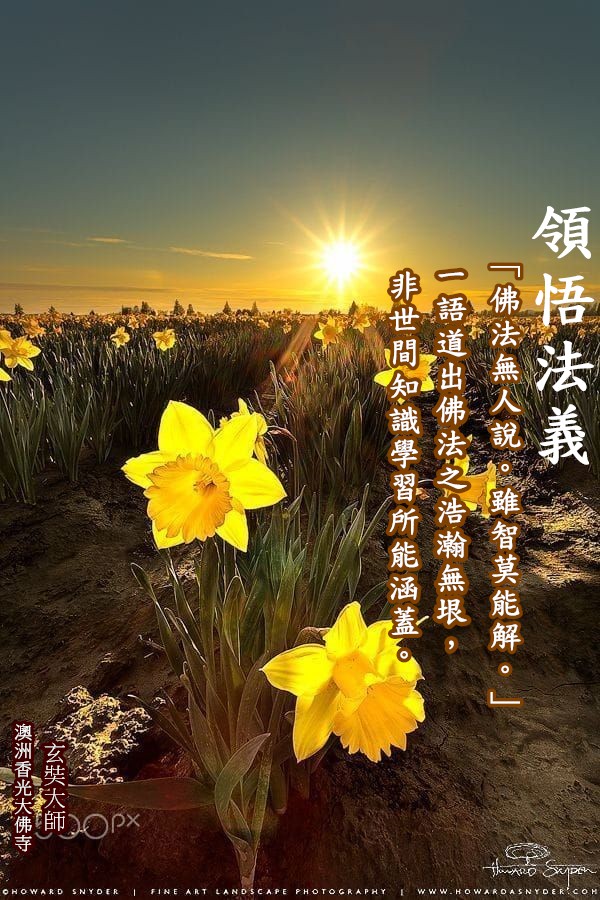
Great Master Xuanzang explains that the Dharma is vast and boundless, transcending worldly knowledge. To truly realise the profound meaning of the Dharma, one must move beyond attachment to words and names, cultivate a pure heart, and engage in diligent practice to attain Awakening.
More by Hsiang Kuang Pure Land Buddhist Centre
The Final Curtain Call of Chu Ke-liang
A candid reflection from the late Taiwanese entertainer Chu Ke-liang on his life, his career, the karmic weight of his influence, and his ultimate deliverance to the Western Land of Ultimate Bliss.
The Soul's True Equality: A Conversation with Mahatma Gandhi
This is a record of an interview with Mohandas Karamchand Gandhi, who sought deliverance at the Hsiang Kuang Pure Land Buddhist Centre in Australia. He now resides in the Western Land of Ultimate Bliss. This account reflects upon his life and his journey to the Pure Land.
A Reflection from the Western Pure Land
This is a record of an interview with Zhao Puchu, who sought deliverance at the Hsiang Kuang Pure Land Buddhist Centre in Australia. He now resides in the Western Land of Ultimate Bliss. This account reflects upon his life in the 20th century. Recorded by the chief writer, Shi Fa Hui, on April 18, 2026.
The Truth Behind My Rebirth: A Message from Liu Suqing
Liu Suqing, the elder sister of the renowned practitioner Liu Suyun, shares her harrowing journey through the spirit realms and her ultimate deliverance to the Western Land of Ultimate Bliss through the Hsiang Kuang Pure Land Buddhist Centre.
The Burden of a Historical Name
This is a record of an interview with Lin Biao, who sought Chao Du at the Hsiang Kuang Pure Land Buddhist Centre in Australia. He now resides in the Western Land of Ultimate Bliss. This account reflects upon his life approximately 54 years ago. Recorded by the chief writer, Shi Fa, on May 18, 2026.
The Poet’s Journey to the Western Pure Land
A reflection on the life, tragedy, and ultimate spiritual liberation of the ancient statesman Qu Yuan, who found peace through the teachings of Practitioner Su.
About the Author
Hsiang Kuang Pure Land Buddhist Centre
Contributed to Pure Land Buddhism knowledge library