The Child Who Saw Through the Illusions of the World
An Interview with the Spirit of Fang Yuan from Two Centuries Ago
Recorded at the Hsiang Kuang Pure Land Buddhist Centre
This is a record of an interview with Fang Yuan, who sought at the Hsiang Kuang Buddhist Centre in Australia. He now resides in the Western Pure Land of Ultimate Bliss. This account reflects upon his life approximately two hundred years ago. Recorded by the chief writer, Shi Fa, on April 15, 2019.
Fang Yuan speaks:
"Namo Amituofo. I am Fang Yuan. It was long ago, two centuries past, when I lived in the world of men. Even as a child, I found myself constantly questioning the strange, exhausting ways of the people around me. I remember one morning, before the sun had even dared to peek over the horizon, the air was shattered by a chorus of wailing. It grew louder and more frantic by the second. I rubbed the sleep from my eyes and stepped out of my room, only to find my mother standing at the front door, peering out into the gloom. 'Mother, what are you looking at?' I asked. 'Why is there such a commotion outside?' She jumped, startled by my sudden voice. 'Listen to that crying,' she whispered. 'It sounds as if Old Mrs. Dong has passed away.' I was stunned. 'Passed away? How could that be?' My mother just shook her head, as confused as I was.
The Performance of Grief
Old Mrs. Dong was not my grandmother, but she was the person who cherished me most in this world. I loved to visit her; despite her advanced age, her mind was as sharp as a needle, and she always had the most wonderful, imaginative games for us to play. I never grew tired of them. Fearing the worst, I scrambled out the door and raced to her house, desperate to see if she was truly gone. When I burst into the Dong household, I stopped dead in my tracks. There sat Old Mrs. Dong, perfectly alive, rocking in her chair and fanning herself with a steady rhythm. 'Old Mrs. Dong!' I cried out in shock. 'I thought you were dead!' She looked at me and let out a soft, amused chuckle. 'Dead? Me?' I pointed toward the wailing. 'But I heard everyone crying! I thought it was you!' She sighed, a look of weary resignation crossing her face. 'Oh, child, it is not me. It is the old man of the house who has passed. I told those children, there is no need to carry on like this, but the louder I tell them to stop, the louder they wail. I have no choice but to sit here and catch a breeze.' I nodded, finally understanding. 'So, it is the grandfather. But why should they not cry? Is it not natural to weep when a loved one dies? If the heart is heavy, the tears should flow, should they not?'
Old Mrs. Dong beckoned me closer with a wave of her hand. I leaned in, and she whispered into my ear, 'Look at our eldest son. He was just howling at the top of his lungs. Look at him now—what is he doing?' I followed her gaze and saw him standing in the corner, laughing and chatting away with someone as if nothing had happened. 'He is... he is laughing?' I asked, bewildered. 'Exactly,' she replied. 'Who was he crying for? For the old man? He cannot hear him now. For me? I have no desire to hear such hollow noise. Filial piety is not measured by the volume of one's tears; it is found in how one treats their parents while they are still alive.' I looked around the room and saw others being prompted: 'It is your turn now, cry louder!' The person pointed at would immediately burst into a theatrical sob, crawling on their knees from the doorway all the way to the old man’s side. It seemed as though everyone had to take their turn in this scripted play. The more I watched, the less I understood. What was the meaning of all this?
The Reality of the World
I returned home to find my mother finishing the morning meal. 'Fang Yuan, come and eat,' she said, noticing my pensive expression. 'What is troubling you, child?' I told her everything I had seen at the Dong house. 'Mother,' I asked, 'when you pass away, must I crawl to your side like that, wailing and competing with my siblings to see who can cry the loudest?' She looked at me, completely baffled. 'What on earth are you talking about?' After I described the scene, she finally understood. 'That family is only putting on a show because there is an inheritance to be divided,' she explained. 'We have no money, Fang Yuan. Even if you cried so loudly that people a hundred miles away could hear you, there is no fortune to be gained. You need not cry so hard.' I was even more confused. 'Why would one cry for money when their own father has died, rather than out of genuine sorrow?' My mother looked at me with a sad smile. 'This world is a cold, realistic place. When you grow older, you will understand.'
The Fruit Market Vanity
A few days later, as the Qingming Festival approached, my mother gave me some coins and sent me to the market to buy fruit for the ancestral offerings. As I reached the main street, I heard a great clamour. A large crowd had gathered, and curiosity pulled me into the fray. Two fruit vendors were locked in a heated argument. The vendor on the right was shouting, 'My plums are the sweetest!' The one on the left retorted, 'My peaches are the sweetest!' It went on and on—oranges, tangerines—each trying to outdo the other. I tugged on the sleeve of a bystander. 'What are they doing?' I asked. He replied, 'A customer asked them both whose fruit was sweeter, and they have been bickering ever since.' I was baffled. 'Why argue? Can they not just let the customer taste them?' The man leaned down and whispered, 'Hush, child. This is not just about the sweetness of fruit; it is about a man's pride. You are too young to understand, so keep quiet.' I nodded and slipped away from the crowd, muttering to myself, 'I truly do not understand why people make their lives so difficult.' A few steps later, I saw an old woman sitting on the ground, selling fruit she had grown herself. I walked up to her, beaming. 'Old grandmother, you are the smartest of them all! You did not join in their silly argument. You have earned my coins—I will buy all of your fruit!' She laughed, revealing a smile missing several teeth. 'People are so foolish,' she said, her words slightly slurred. 'They argue and fight just for the sake of this physical body. Look at them now—the argument is over, and they have not sold a single piece of fruit, while I have sold everything to you!'
The Cycle of Expectations
I walked home carrying two baskets of fruit, and feeling tired, I sat under a large tree to rest. Nearby, two children were playing a game. The girl was pretending to be a bride, and the boy was the groom. They were acting out a wedding. I watched for a while, finding it quite amusing, and finally asked, 'Why are you playing this game?' The boy replied, 'When I grow up, I am going to be a groom!' The girl added, 'And I am going to be a bride!' They were both filled with such bright, naive expectations for love and marriage. 'Why must you be a groom and a bride?' I asked. The boy said, 'My grandfather was a groom, my father was a groom, my uncle was a groom, and my eldest brother will be a groom the day after tomorrow. Of course I must be like them! Is that not just how life works?' The girl chimed in, 'My mother has had ten children, my aunt has had five, and my sister is currently carrying a baby. Every woman becomes a bride and has children when she grows up. I cannot wait to be like them and know what it feels like to be a mother!' I shook my head. 'Do you not know how exhausting marriage is? I watch my mother work until late every night just to care for my father and the five of us. When she is ill, she cannot rest like a lady; she must still cook, wash, and do everything. Her hands were once soft and delicate, but now they look like an old woman’s. And to be a 'good' daughter-in-law, she walks miles to visit my grandparents, bringing them food and keeping them company. Marriage is a heavy burden to carry!'
The boy and girl stared at me, completely dumbfounded. 'If marriage is so hard,' the girl asked, 'why does everyone want to do it?' I answered, 'I have asked myself that many times. I have observed so many lovers and couples, and I have come to realise that love is a terrifying thing. It can make people lose their minds, unable to eat or sleep, obsessed with the other person. It can even make them willing to die for one another! Is that not frightening? I have seen a wealthy young lady from a noble family give up everything to marry into a poor household, only to find that their sweet romance withered under the weight of reality, leaving them both gasping for air. They spent their days regretting their own foolishness. I have seen newlyweds who thought children were adorable, only to have twins and find themselves completely overwhelmed. One child is enough to turn a life upside down, let alone two; it destroyed all the sweetness of their new life.' The boy looked at me and asked, 'Then if we do not get married, what are we supposed to do when we grow up?' That question stumped me. I thought and thought, and finally told them, 'Wait until I find the answer, and I will come back and tell you!'"
Fangyuan immediately ran home to ask his parents, "If I don't get married when I grow up, what can I do?" His father replied, "You can farm just like me! From the time you are young until you are old!" Fangyuan shook his head. His mother suggested, "You could run a small business and earn some money for yourself." Again, Fangyuan shook his head. His mother sighed and told him, "Life is just like this. To be alive means you have to eat and get by. If you don't work, you'll have nothing to do. It is better to do something, earn some money, and live your life." It seemed that neither of his parents could imagine what one could do in life without marriage. Fangyuan decided to seek out the wise Grandmother Dong.
The Futility of Mundane Life
Grandmother Dong told Fangyuan, "I am over ninety years old now. If you want me to talk about life, I could tell you a hundred different life stories. But I only need to count from one to ten, and you would already be tired of listening. Because no matter how you look at it, it is all the same: it is either marriage and work, or work and marriage. The only difference is that some people earn money while others do not, and some marriages are happy while others are not. That is the only distinction. Take me, for example. I married my old man; he was very good at business and treated me wonderfully. I could say I was a very happy woman. But now that I am old and he has passed away, he left me a pile of money that I cannot even spend. I just sit here every day, not wanting to go anywhere. Tell me, which of those past things were real? It wasn't until a few days ago, when a master passed by and helped me up because I couldn't walk, that I learned to chant Namo Amituofo. He introduced me to the Buddha’s teachings, and only then did I realise that learning the Buddha’s teachings is the most valuable thing in life. Look, these prayer beads were a gift from that master. Now, I sit here every day, turning the beads and chanting Namo Amituofo. From that day on, I finally felt that life had some meaning, and I realised that after I die, there is a wonderful place called the Western Land of Ultimate Bliss to go to." Fangyuan exclaimed, "No wonder Grandmother’s complexion has looked so much better lately! It turns out it is because of chanting Namo Amituofo!" Hearing Grandmother Dong speak of the Buddha’s teachings, Fangyuan felt a spark of interest and decided to investigate the matter thoroughly.
The Clarity of the Temple
Fangyuan invited his parents to go to the temple with him to listen to the teachings, and after much effort, they finally found the time to go together. As soon as Fangyuan entered the temple, he began to observe the environment. The temple was incredibly pure, unlike the noisy and chaotic environment of the secular world. Some monastics were teaching the to followers, others were helping confused people resolve their problems, some were diligently practicing on their own, and others were preparing to go out into the world to introduce the Buddha’s teachings to others. Every monastic was working hard for the sake of all beings, unlike people in the world who spend their time in idle chatter, endless gossip, or worrying about things that never end—not to mention the burdens of caring for a spouse or children. The purity of the monastics' practice and their compassionate hearts, living entirely for the sake of all beings, deeply stirred Fangyuan’s heart. After listening to the master’s Dharma talk, Fangyuan became even more convinced: "This is what life is truly about."
A Regretful Encounter
When Fangyuan went back to the big tree to look for the boy and the girl, he could no longer find them. Someone told him that they were childhood sweethearts, and both sets of parents had decided they would marry when they grew up. Unexpectedly, when Fangyuan met them again, he was already a Bhikshu, and the two children he had once seen were now parents of three. Fangyuan told them, "Back then, I wanted to tell you that practicing the Buddha’s teachings for the sake of all beings is the wisest choice, but I never saw you again. Once I knew that practice was the clear path, I immediately entered the temple to cultivate, and today I have become a Bhikshu." The couple looked at Fangyuan’s pure and dignified appearance and let out a deep, heavy sigh: "We truly regret not knowing this sooner!" After Fangyuan introduced the Buddha’s teachings to them, he continued on his way to save more beings.
Living for the Infinite
The path of life does not fear when it will end, because every day is not lived for oneself, but for the sake of immeasurable and boundless beings struggling in this world. When there is no "self," there is no fear of death. When there is no "self," one can give everything for the sake of all beings, even if it means sacrificing this life to exchange for the Wisdom-life of others.
Fangyuan travelled everywhere, keeping his heart in a state of deep meditative concentration at all times. Even when walking through noisy streets, he remained pure, immersed in the Buddha-name. No temptation in the world could disturb his purity, and there was nothing left in the world that he was attached to. He practiced with such purity to save beings until he was over ninety years old, at which point he achieved rebirth in the Western Land of Ultimate Bliss.
The Trap of Emotion
If the Buddha’s teachings were not in this world, no one would be able to escape the six realms of rebirth. Deep emotion is terrifying; it is like a drunken web, and it is difficult for anyone to escape the temptation of romantic love. Even without romantic love, there are the bonds of familial affection. The word "emotion" is always present in everyone’s heart, unless one is an awakened being. Practitioner Su is one who has realised his true nature through learning the Buddha’s teachings. He no longer uses the word "emotion" in this world; instead, he saves beings with a heart of great . Practitioner Su gives Dharma talks every day to awaken every being from their stubborn attachments—attachments to worldly love and attachments to their own bodies. If one can gain insight from this, there is a chance for salvation. If one remains deluded and refuses to wake up, then the path of the six realms of rebirth will surely be walked once again.
The suffering of life is experienced over and over again, yet never once are we truly awake. The Buddha comes to this world to teach and transform people, hoping they will see clearly that this is a world of extreme suffering. He hopes they will stop binding themselves with ropes, over and over again, until they are gasping for their final breath and filled with endless regret. People of this world should wake up and not miss this magnificent Causal Condition to leave suffering behind. Namo Amituofo.
This interview was recorded and written by the chief writer, Shi Fajing.
More from Revered Ones
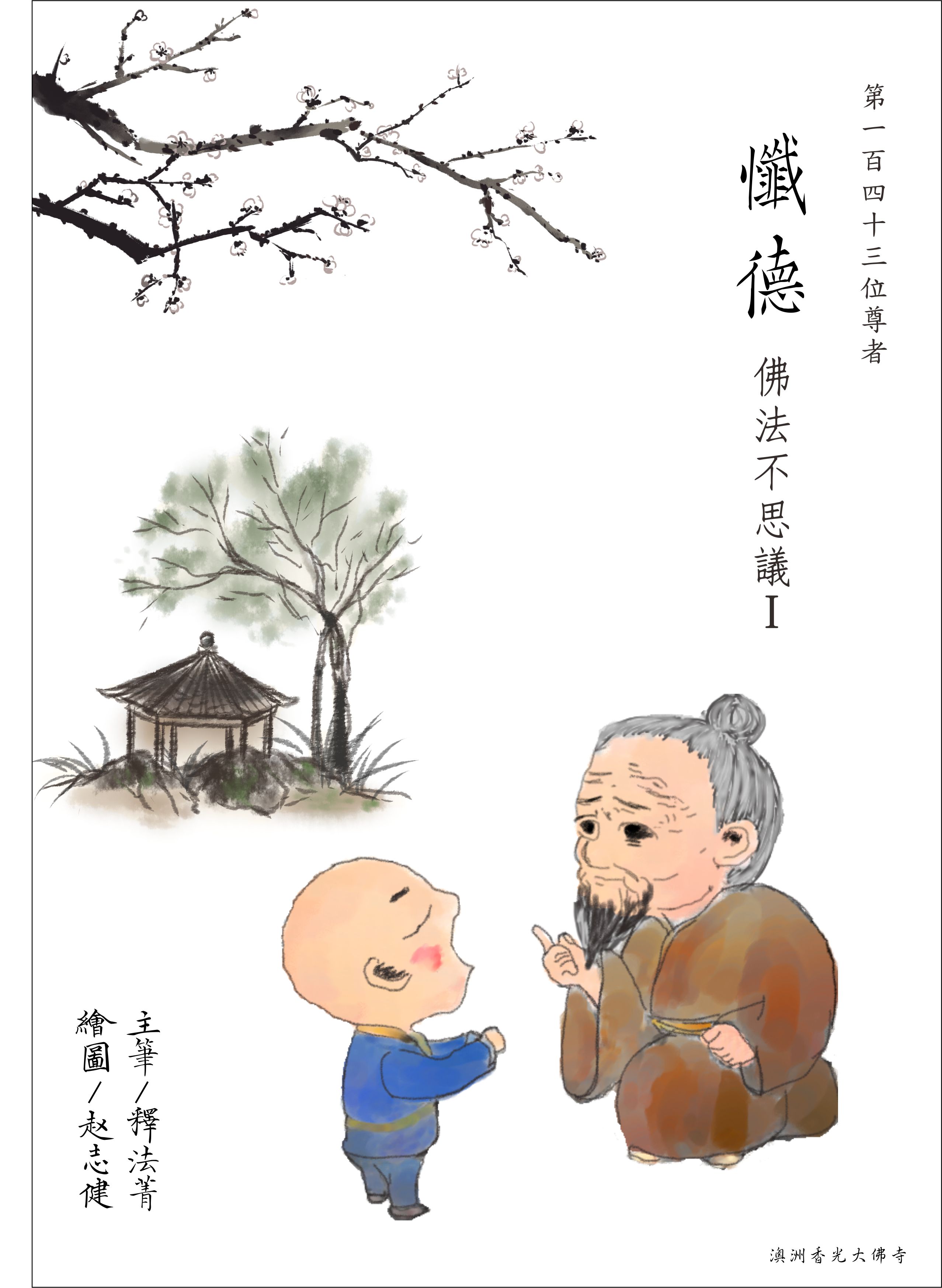
The Virtue of Repentance
A profound reflection on the journey of repentance and the cultivation of virtue from the 143rd Venerable, Chande, as he recounts his path to the Western Pure Land.
The Spiritual Anatomy of Practitioner Su's Leg
Venerable Feng An, representing a collective of 1,162 Venerables, provides a profound look into the spiritual dimensions within Practitioner Su's leg, revealing the hidden reality of karmic burdens, the nature of spiritual attachment, and the ultimate sacrifice of a Bodhisattva.
The True Meaning of Filial Piety
A touching testimony from Zhu Hongchang, who reflects on his life nine centuries ago, his journey from being rejected as a 'dull' child to discovering the profound, selfless nature of true filial piety through service to all beings.
The Path of No-Self and the Boundless Ocean of Wisdom
A poignant reflection on a life of hardship, the realization of the 'no-self' nature, and the ultimate vow to deliver sentient beings through the power of Namo Amituofo.
More by Hsiang Kuang Pure Land Buddhist Centre
The Final Curtain Call of Chu Ke-liang
A candid reflection from the late Taiwanese entertainer Chu Ke-liang on his life, his career, the karmic weight of his influence, and his ultimate deliverance to the Western Land of Ultimate Bliss.
The Soul's True Equality: A Conversation with Mahatma Gandhi
This is a record of an interview with Mohandas Karamchand Gandhi, who sought deliverance at the Hsiang Kuang Pure Land Buddhist Centre in Australia. He now resides in the Western Land of Ultimate Bliss. This account reflects upon his life and his journey to the Pure Land.
A Reflection from the Western Pure Land
This is a record of an interview with Zhao Puchu, who sought deliverance at the Hsiang Kuang Pure Land Buddhist Centre in Australia. He now resides in the Western Land of Ultimate Bliss. This account reflects upon his life in the 20th century. Recorded by the chief writer, Shi Fa Hui, on April 18, 2026.
The Truth Behind My Rebirth: A Message from Liu Suqing
Liu Suqing, the elder sister of the renowned practitioner Liu Suyun, shares her harrowing journey through the spirit realms and her ultimate deliverance to the Western Land of Ultimate Bliss through the Hsiang Kuang Pure Land Buddhist Centre.
The Burden of a Historical Name
This is a record of an interview with Lin Biao, who sought Chao Du at the Hsiang Kuang Pure Land Buddhist Centre in Australia. He now resides in the Western Land of Ultimate Bliss. This account reflects upon his life approximately 54 years ago. Recorded by the chief writer, Shi Fa, on May 18, 2026.
The Poet’s Journey to the Western Pure Land
A reflection on the life, tragedy, and ultimate spiritual liberation of the ancient statesman Qu Yuan, who found peace through the teachings of Practitioner Su.
About the Author
Hsiang Kuang Pure Land Buddhist Centre
Contributed to Pure Land Buddhism knowledge library