The Path from the Fields to the Western Pure Land
An Interview with the Spirit of Venerable Yanzhan (Tian Yuan)
A Testimony of Liberation and Gratitude
This is a record of an interview with the 460th Venerable, Shi Yanzhan (secular name: Tian Yuan), who sought deliverance at the Hsiang Kuang Buddhist Centre in Australia. He now resides in the Western Pure Land of Ultimate Bliss, protecting the physical form of Practitioner Su. This account reflects upon his life during the Tang Dynasty in China. Recorded by the chief writer, Venerable HaiZe, on June 24, 2018.
Venerable Yanzhan speaks:
A Flight from War and Hunger
"My birth name was Chen Yijun. I was born during a time when the nation had only just begun to stabilise. In those days, bandits were still rampant in many regions, so one had to be extremely cautious when travelling long distances or through remote mountain paths. If you were alone, you would be targeted in an instant. My parents' village had been devastated by war, leaving corpses everywhere and making survival impossible. The entire village had to relocate; those who had somewhere to go left on their own. My parents chose to seek refuge with my eldest uncle, who had loved my father dearly since childhood, long before my father started his own family and left home.
"Now, we were returning to our roots, carrying our children and hiding in fear, terrified that if bandits discovered us, our lives would be forfeit. After several days of arduous travel, we finally arrived. Before we even entered the city, my parents and we four children stood before the towering city walls, exhausted, thirsty, and starving. We just wanted to enter the city and end this journey. After being searched and questioned by the guards at the gate, we were finally allowed inside."
The Simple Joys of a Rural Haven
"What greeted my eyes was a bustling marketplace filled with vendors selling steamed buns, mantou, noodle stalls, and congee with fermented bean curd—everything made my mouth water. We children looked at our father with longing eyes. He understood, and taking out the few copper coins he had left, he bought hot mantou for the four of us. We didn't even care that our parents had nothing to eat; the four of us devoured those two buns in an instant, leaving no trace behind. As we walked further, we saw houses of varying sizes; some had grand gates, indicating the homes of the wealthy. Eventually, we reached a place enclosed by bamboo fences, with a simple gate made of tied bamboo stalks that looked like it would topple over with a single push. My father skillfully lifted the gate, ushered us in, and gently closed it behind us.
"There were chicken coops, but the chickens were roaming freely on the ground, pecking at millet seeds scattered everywhere. I was dumbfounded—the chickens were eating better than we were! I saw a rooster with its head held high, looking at me as if to say, 'What is so strange about this? This is how we grow up!' I couldn't help but reply, 'You eat so well, you must be very healthy!' The rooster kept its head high and answered, 'Of course! You can see it just by looking at me!' I thought to myself, 'Indeed, you look healthy and live well.' To my surprise, the rooster let out a long 'goo, goo, goo.' Looking around, I saw several roosters and hens with their chicks. 'What a tranquil, pastoral scene!' my father's voice came from behind me. 'Come in! Your uncle is waiting to see you!' As the only boy in the family, I followed my father, though I glanced back at that rooster one last time—and to my amazement, it was watching me too! I remembered that rooster; it had the longest tail and the brightest feathers of them all. Later, I learned that these chickens were highly spiritual because they were never sold or slaughtered; they lived out their natural lives, generation after generation."
A Legacy of Faith
"Inside, I saw two kind-hearted elders—my uncle and aunt—who beamed at me. My uncle immediately told my aunt to give me a red envelope. That was something usually reserved for the Lunar New Year, and even a few copper coins would have made us happy; but my uncle's red envelope felt different, more substantial. I looked at my parents, unsure if I should accept it, but seeing my father nod, I happily took it. My sisters received them as well. I told myself that I loved this place. That day, the table was filled with food, and we ate with such satisfaction. After a bath, I fell asleep the moment I hit the bed. In my dreams, I could still hear my father recounting our hardships to my uncle. I could faintly hear my mother sobbing, and my uncle saying, 'It has been hard for you, little brother!'
"Later, I learned that my grandparents were a prominent family in the city. After my father married my mother, he wanted to live independently, so he moved outside the city. But his luck was poor; he was swindled out of his money and then caught in the village war, leaving him no choice but to return. My father was the youngest, so there was a significant age gap between him and my uncle. My uncle preferred a life free from constraints, so he left his grand city home to live on this plot of land further out. Since his own children had grown up and moved into the city, our arrival was a blessing, allowing us to keep the two elders company.
"I noticed a statue in the main hall. My aunt said, 'This is a statue of Namo Amituofo. It has been passed down through our ancestors, protecting us from generation to generation. No matter how difficult things become, it preserves our family's lifeline. That is why we have offered incense morning and night without fail. Every generation produces a monastic who chants the Buddha's name. Your cousin has already become a monk and resides at a temple on Dongmen Mountain outside the city. It is a century-old temple that was once destroyed, but the city folk raised funds and provided labour to restore it. That is where your cousin took his vows.' I listened intently, feeling a strange connection. A thought emerged: I wanted to see my cousin and that old temple. Seeing my aunt wearing a string of prayer beads, she noticed my gaze, took them off, and said, 'These beads were given to me by your grandmother before she passed away. I have held them while chanting Namo Amituofo ever since. If you like them, I will give them to you.' I nodded. My aunt looked surprised and delighted as she handed them to me. A warm current flowed through my heart as she instructed, 'Keep them safe and chant Namo Amituofo diligently!' I nodded again. From that day on, those beads never left my wrist. I was eleven years old, and fortunately, my wrists were thick enough that they fit perfectly without slipping off. My aunt taught me how to offer incense and chant, and she promised to take me to see my cousin. I lived in anticipation of that day!"
The Call of the
"Finally, the day arrived. My aunt dressed in simple but elegant clothes and called for me to do the same. Since coming here, we had no worries about food or clothing, and a teacher even came to our home to teach us. My father had taught us some characters, so it wasn't too difficult, and I was the most praised among the four children—I understood everything instantly. I put on a clean set of clothes, the one I liked best, which brought out my scholarly temperament. My aunt was taking me to the temple to offer incense and visit my cousin. She instructed me to keep chanting Namo Amituofo in my heart along the way. We walked out of the city gate—my first time leaving since we arrived—and I saw that everyone's expression was tense, especially as the soldiers questioned us thoroughly and searched us before letting us out.
"We arrived safely at the temple where my cousin resided. The temple gate bore the words 'Mituo Zen Temple.' I stared at the characters in a daze. My aunt patted my shoulder, and we entered. What a refined environment! Although it was somewhat dilapidated, it radiated a peaceful and steady aura. I immediately calmed down, and hearing the sound of chanting from the main hall, I joined in. Soon, a monk approached and exchanged a few words with my aunt. We were led to the reception room, where a little novice served us water—even the water tasted sweet. Before long, a monk appeared, and my intuition told me he was my cousin. My aunt bowed respectfully and said, 'Namo Amituofo, Venerable Yingzhen.' The monk returned the gesture with equal respect: 'Namo Amituofo.' My aunt explained our situation. The monk looked at me with a compassionate face, his sharp eyes noticing the prayer beads on my wrist. My aunt recounted how she had given them to me, adding, 'This child has very good roots!'
"Because news of war was circulating in the city, my aunt asked me to stay at the temple for a few days to avoid the situation, as the temple was safer than the outside world. I agreed. To my surprise, that stay lasted a year, and there was no news from home. At first, I was anxious, wondering if something had happened, but I gradually adapted to the environment. The monk was very kind to me, and I became close with the little novice. Since we were the same age, I learned alongside him, and we were inseparable except when sleeping or walking in meditation. With the monk's guidance, I quickly became a part of the temple."
A Life Transformed
"A year later, my father appeared. He had aged so much. Seeing him, I burst into tears, as if all my suppressed longing had finally been released. After I finished crying, my father told me what had happened at home. Because enemy troops had entered the city, everyone had fled or gone into hiding. My uncle and aunt, refusing to abandon their home, were killed by the enemy. However, they passed away peacefully, without suffering. When my father returned to handle the funeral, he saw that the two elders had died with smiles on their faces. Everyone believed they were good people, and that Namo Amituofo had led them to the Western Pure Land of Ultimate Bliss. I was heartbroken; it was my first experience of the pain of parting with loved ones and the reality of impermanence. Before my father left, he asked if I was willing to stay and become a monk like my cousin. Having lived there for a year, I had grown accustomed to monastic life and loved chanting Namo Amituofo, so I nodded. When my father met with the monk—they were cousins, after all—I saw the awe and relief on my father's face. He lamented how unpredictable life is! He entrusted me to the monk, and from then on, I never saw my parents or family again. I felt as if I had grown up and become independent overnight. Over the next few years, I progressed from a little novice to a formal monastic, taking the Dharma name: Shi Yanzhan.
"During this time, I experienced the sorrow of parting with my family and the struggle to rise above it. I understood the powerlessness of being governed by fate; there is no eternal worldly affection, and I did not want to live the same helpless life as my parents. I practised diligently in the temple, initially to forget the uncontrollable thoughts and longing in my mind, and later to seek the path of liberation. When I saw devotees coming to the temple to ask the monk for teachings and deliverance from suffering, I saw in them my own parents, who had been helpless and without recourse before leaving the village. I asked my master, 'How can I help them leave suffering behind?' My master taught me that only by first leaving suffering myself, attaining meditative concentration, entering the , and being reborn in the Western Pure Land of Ultimate Bliss, could I truly help others by counselling them to chant Namo Amituofo and make vows to be reborn in the Western Pure Land."
Rebirth and Gratitude
"I began to gather my wandering and scattered mind. Aside from necessary duties like serving in the dining hall, I spent my time in the meditation hall, chanting Namo Amituofo with a focused heart. I observed my nose, and my nose observed my heart, keeping the Buddha-name entwined in my mind so that it never left for even a moment. I chanted until I reached the state of 'chanting without chanting, and without chanting, I am chanting.' I spared no effort in leading others in chanting, and whenever I met someone, I would counsel them to chant. For those who were ready, I would remind them to make the vow to be reborn in the Western Pure Land of Ultimate Bliss. With no worldly concerns, I chanted every day, filled only with . At the age of sixty-three, I let go of all worldly ties. I saw the Buddha manifest before me, reaching out to lead me, bringing a lotus pedestal. With the Buddha in my heart and chanting his name, in an instant, I was reborn in the Western Pure Land.
"My master in this life was Practitioner Su. It is only through my master's guidance and support that I was able to be reborn in the Western Pure Land. Today, as a Venerable of the Western Pure Land, I have descended to protect my master's physical form, to repay the debt of gratitude to my master and to the Buddha."
Namo Amituofo.
More from Revered Ones
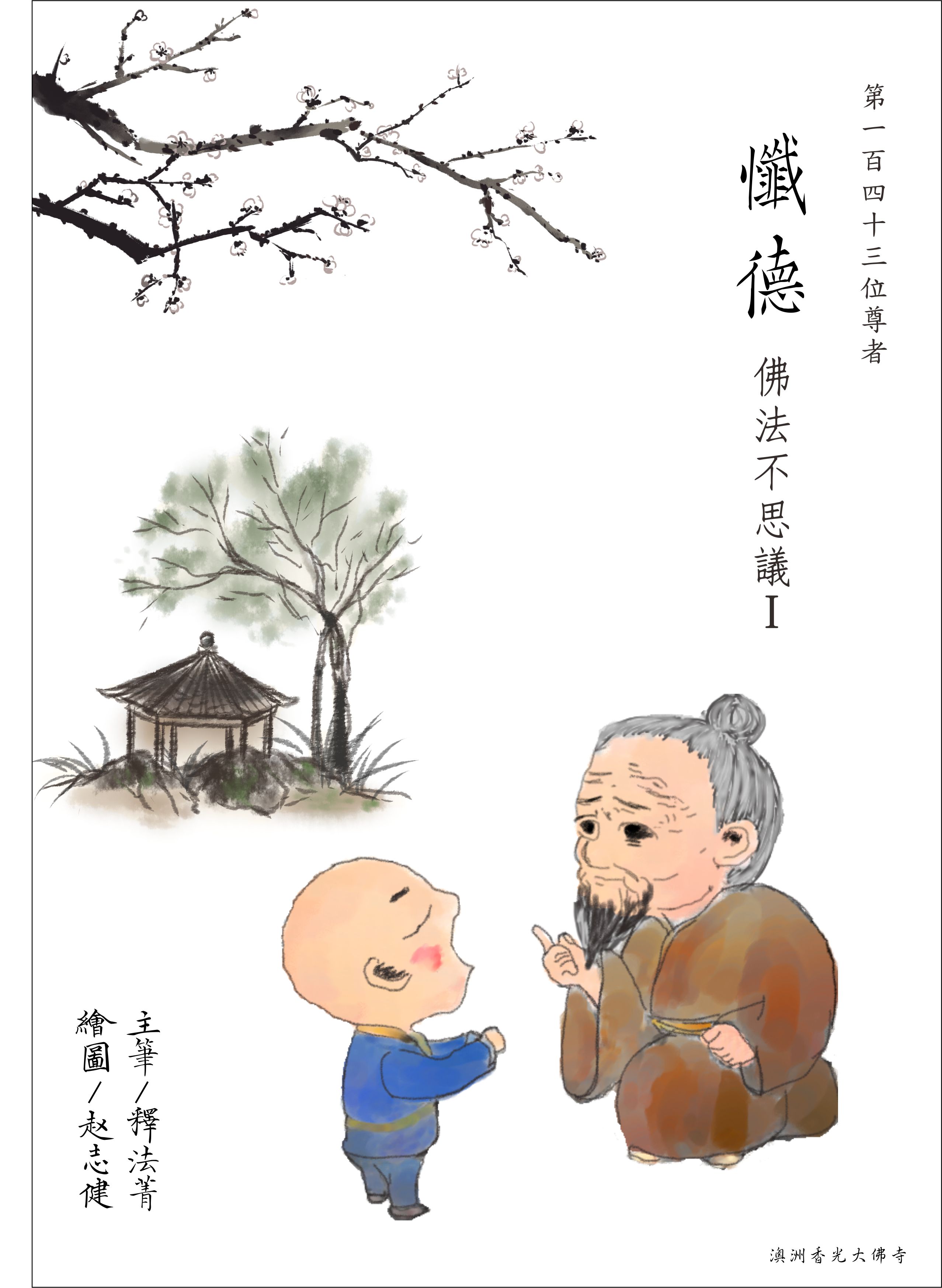
The Virtue of Repentance
A profound reflection on the journey of repentance and the cultivation of virtue from the 143rd Venerable, Chande, as he recounts his path to the Western Pure Land.
The Spiritual Anatomy of Practitioner Su's Leg
Venerable Feng An, representing a collective of 1,162 Venerables, provides a profound look into the spiritual dimensions within Practitioner Su's leg, revealing the hidden reality of karmic burdens, the nature of spiritual attachment, and the ultimate sacrifice of a Bodhisattva.
The True Meaning of Filial Piety
A touching testimony from Zhu Hongchang, who reflects on his life nine centuries ago, his journey from being rejected as a 'dull' child to discovering the profound, selfless nature of true filial piety through service to all beings.
The Path of No-Self and the Boundless Ocean of Wisdom
A poignant reflection on a life of hardship, the realization of the 'no-self' nature, and the ultimate vow to deliver sentient beings through the power of Namo Amituofo.
More by Hsiang Kuang Pure Land Buddhist Centre
The Final Curtain Call of Chu Ke-liang
A candid reflection from the late Taiwanese entertainer Chu Ke-liang on his life, his career, the karmic weight of his influence, and his ultimate deliverance to the Western Land of Ultimate Bliss.
The Soul's True Equality: A Conversation with Mahatma Gandhi
This is a record of an interview with Mohandas Karamchand Gandhi, who sought deliverance at the Hsiang Kuang Pure Land Buddhist Centre in Australia. He now resides in the Western Land of Ultimate Bliss. This account reflects upon his life and his journey to the Pure Land.
A Reflection from the Western Pure Land
This is a record of an interview with Zhao Puchu, who sought deliverance at the Hsiang Kuang Pure Land Buddhist Centre in Australia. He now resides in the Western Land of Ultimate Bliss. This account reflects upon his life in the 20th century. Recorded by the chief writer, Shi Fa Hui, on April 18, 2026.
The Truth Behind My Rebirth: A Message from Liu Suqing
Liu Suqing, the elder sister of the renowned practitioner Liu Suyun, shares her harrowing journey through the spirit realms and her ultimate deliverance to the Western Land of Ultimate Bliss through the Hsiang Kuang Pure Land Buddhist Centre.
The Burden of a Historical Name
This is a record of an interview with Lin Biao, who sought Chao Du at the Hsiang Kuang Pure Land Buddhist Centre in Australia. He now resides in the Western Land of Ultimate Bliss. This account reflects upon his life approximately 54 years ago. Recorded by the chief writer, Shi Fa, on May 18, 2026.
The Poet’s Journey to the Western Pure Land
A reflection on the life, tragedy, and ultimate spiritual liberation of the ancient statesman Qu Yuan, who found peace through the teachings of Practitioner Su.
About the Author
Hsiang Kuang Pure Land Buddhist Centre
Contributed to Pure Land Buddhism knowledge library