The Power of Faith and Unyielding Resolve
An Interview with the Spirit of Lou Xin, a Performer from 1,300 Years Ago
Recorded on December 21, 2019, at the Hsiang Kuang Pure Land Buddhist Centre
This interview was recorded on December 21, 2019, at the Hsiang Kuang Buddhist Centre. It features the spirit of Lou Xin, a performer who lived 1,300 years ago. After a lifetime of seeking meaning through the stage and enduring the harshness of the desert, Lou Xin sought deliverance through the Buddha’s teachings and now resides in the Western Pure Land of Ultimate Bliss.
Lou Xin speaks:
"Namo Amituofo. Lou Xin was the name I bore in that lifetime. My parents brought me into this world, cared for me until I was five, and then simply walked out of my life. They provided a monthly allowance for me to spend as I pleased, ensuring only that I remained alive. Beyond that, they had no spare heart to concern themselves with me. Whether I grew up straight or crooked, round or flat—it seemed to become entirely my own affair.
The Child King of Stories
At seven years old, I would pick up a bronze gong and strike it with all my might. Very soon, the children from every household would come running. They all knew that I was about to begin my storytelling. Although I was only seven, I was the 'child king' among that large group. Every day, I led them in play and spun tales for them. I loved sitting under the theatre stage watching performances; every play I had ever seen or heard became material for my stories. As soon as the gong rang, everyone would immediately gather under the great tree to listen to me, Lou Xin, tell my tales.
Sometimes, it wasn't just the children who listened; even eighty-year-old men would sit with us. Everyone would roar with laughter, their emotions rising and falling with the plot. Sometimes they were furious, sometimes they were moved to tears. After the stories ended, they would even discuss the plot together. You can see that I told my stories with such vividness! I deeply stirred the hearts of my audience.
The Mask of the Performer
No one taught me how to live. I learned about life through the theatre; many worldly matters I did not understand seemed to become clear within the plays. My ambition from childhood was to join a troupe and perform. Someone once asked me, 'Why do you want to walk this path?' I replied, 'Only in the moment of performing can I feel a shred of satisfaction and happiness.' Although I said that, I knew clearly in my heart that such happiness was not true . I only wanted to stand on the stage and be noticed. I loved the feeling of being the centre of attention; only when I was being watched did I feel that I truly existed.
The Loneliness of a Cold Home
The day would eventually turn to darkness, and I would wander home at the very last moment. I would open the door to a pitch-black house, fumble in the dark to light a candle on the table, and the room would instantly brighten. Looking around, the wall held only the shadow of one person—me. Seeing the money bag on the table, I knew my parents must have sent someone to deliver funds again. Seeing this money, I felt no joy at all, because what I truly needed was not money. I tossed the bag into a bucket nearby, but it bounced out and fell to the floor. I looked back and saw that the bucket was already overflowing with money. I did not pick it up; instead, I sat blankly in my chair, staring at the candle flame on the table.
The night breeze blew in from the window, causing the candle flame to flicker. Watching my own shadow on the wall swaying with the flame—growing large and then small—I could see how incredibly lonely that shadow was. The candlelight faintly illuminated a portrait on the other wall. It was a picture of my father, my mother, and me. That was my happiest memory. My parents had taken me to the street to shop, and seeing an artist by the roadside, we sat before him to have a family portrait painted. That time, I truly felt the existence of a home. Father sat on my left, Mother on my right, and I sat in the middle like a child protected by his parents. Looking at that painting now, one can still see how brightly I was smiling. Compared to the lonely shadow on the wall behind me now, it was as if we were two completely different people.
The Departure of My World
Two years ago, my father left home for work. At first, Mother was still by my side, but after a month, she could no longer bear the days without him. She left all her money with me, keeping only enough for her boat fare. Before leaving, she told me, 'Mother is going to find Father. Once I find him, I will come back to take you with me. Keep this money for your expenses; Mother will be back soon.' I knew that Father was Mother's 'sky.' When he was home, she focused on him every moment. If he returned home even a little late, she would anxiously watch out the window. Now that he had left her for a distant place, she felt as if she had lost her sky and could not live normally. Only by finding him and returning to his side could she be the person she once was. I wanted so much to go with her, but she had no intention of taking me. She said she would return quickly. I watched her retreating figure; she walked with such urgency, showing how much she longed to see Father. That year, I was only five.
Learning to Survive
The most painful period was likely the first six months after my parents left. I was completely unable to adapt to living alone. There were many things I did not know how to do and had never done, but I had to learn. I would walk to the houses nearby, peering through windows to watch how the women cooked. At dawn, I would go to the mountains to learn from the woodcutters how to chop wood. At night, I was in such agony that I could not sleep, for my mind was filled with the shadows of my parents. My heart would twist into a knot—it was a violent pain. No matter how I tossed and turned, that feeling of suffering would not vanish. I would stand up from my bed, go to the woodpile, and pick up the thickest log, striking my own hands and legs with it. Only by using the physical pain of this body could I momentarily forget the pain in my heart.
Half a year passed, and my heart finally calmed somewhat; I gradually adapted to life. My parents sent me the first letter. At first, I did not know it was a letter from them because I was illiterate. I took it to an educated uncle nearby and asked him to read it to me. When he read it, I burst into tears instantly. It was indeed a letter from my parents. I cried for a long time, unable to stop—it was the tears I had held back for half a year, all pouring out at that moment. In the letter, they told me Mother was pregnant again. To ensure a safe pregnancy, she could not return to fetch me yet. I knew Mother's health was poor; if she were pregnant, she truly could not travel about, so I had to continue waiting. After that letter, it took another year before the second one arrived. In it, Mother told me my younger brother had been born, but Father needed to earn money, and she had to help with manual labour while caring for the baby. They were truly too busy. I had to continue waiting until their lives were more stable so they could come back for me. I waited another year, but I never saw their shadows, and eventually, they stopped writing letters altogether. Only the monthly money continued to arrive. Looking at those strange silver coins in the bag, I could not feel my parents' existence, let alone the warmth of a home. Although the house was not large, the flame of a single candle could not warm the entire space. The wind blowing in from the house grew colder and colder. I let out a massive sneeze, and the candle flame was instantly extinguished. Everything before me turned to pitch darkness, so thick I could not see my own hand. In the past, I would have been terrified of such darkness, but now I felt nothing. It was not numbness; it was simply that the changes in life forced me to learn independence and self-reliance. Only by being brave could I continue to move forward.
Finding Life on the Stage
In my sixth year, a theatre troupe came to the village. I still remember the day I first watched a play; I sat in front of the stage and cried for a long, long time. The protagonist in the play was just like me—having lost his parents at a young age. It was the first time I felt someone understood my heart. He acted out the boy's state of mind exactly as I felt it. That day, I did not go home; I slept right under the stage. Although the weather was cold, that play warmed my heart. From then on, I fell in love with theatre. I immersed myself in every play. In those moments, I felt like a living person—breathing, feeling.
At seven, I began wanting to learn to perform. At first, I practiced alone under the great tree. When the village children saw my performance, they were curious. They thought I sang well, and the audience grew larger and larger. I seemed to have found the joy of life. Singing and storytelling were my happiest times. I loved being surrounded by people watching me perform. In those moments, my heart was no longer lonely, and the world was no longer a place where I lived alone. Because so many eyes were fixed on me, I felt that my existence in this world had some use.
The Price of Glory
My true life as a performer began at eight. Relying on my own day-and-night practice, combined with my naturally handsome face, I gained some fame in the troupe. Although I was young, singing various tunes was not difficult for me because I was brave enough to challenge myself and did not fear hard work. To show the most brilliant version of myself to the public, even if it required a great price behind the scenes, I was willing. Once, during a very important performance, I played a female role. To make my voice sound more like a woman's, I endured the pain of swallowing irritating medicine to make my throat sound sharper than usual. In that play, I became the focus of the entire audience, winning thunderous applause. Even though my throat was so injured that I could not speak a single word for half a year after leaving the stage, I did not regret it. I was willing to make such sacrifices with my body just to find a taste of life.
The Illusion of the Stage
In the life of a performer, was it my heart that was suffering, or the protagonist in the play? I often could not tell. Someone asked me, 'Do you intend to sing like this for your whole life?' That question woke me up a bit. I couldn't help but wonder, 'Must I sing like this for a lifetime?' At the height of my popularity, the entire troupe relied on me, but I had no heart to continue. The urge to end it was so strong. Unexpectedly, at the moment of near-success, I chose to abandon everything. They were unwilling to let me go and threatened, 'If you dare to leave, we will break your legs!' This threat meant nothing to me. A performer's life is a performer's life; even if I had a broken leg, it would just be another act in my life's drama. I could play along. Seeing that my mind was made up, they did not break my legs and let me leave.
I asked myself, 'What is this heart still pursuing?' I asked once, then again, but my heart gave me no answer. I could not find anything to fill the black hole deep within it—a deep, dark, terrifying hole. I was hiding there, small and dark, thinking that such darkness would allow me to avoid the reality of the world, thinking that such a deep hole would allow me to never have to lift my head to face the truth. But that was ultimately an illusion I created for myself. Real life is still real; I had no right to escape, and even less chance to hide. Since that was the case, I chose to continue the challenge!
The Desert of Survival
Walking aimlessly in the desert, I was in danger of losing my life at any moment. The desert was so vast, and I had lost my way. I was not walking across this desert with a heart seeking death, but with an active will to survive, battling for my life. I wanted to know how much power of survival I possessed; only then would I know how much value remained in my living.
In the desert, I was so thirsty that not a single drop of water remained to quench it, yet I continued to move forward. In this struggle and pain, I could feel how much I wanted to live. If I had simply let myself lie in the desert to be scorched to death, then even if this life were saved by someone in the end, it would have no meaning. So I continued to fight, to see how great and deep my will to survive was, to see if it could support me in walking out of this desert.
I stepped barefoot on the desert sands. The skin on the soles of my feet had been scalded by the high temperature. Even with broken skin, swelling, bleeding, and oozing, I bravely continued to walk forward, because any further stopping or resting would only accelerate the loss of moisture from my body. I had to leave this desert in the shortest possible time; this was a complete test of my willpower. With every step, I asked myself, 'Why am I taking this step?' If life were just like all the plays I had performed in the past, then I truly could not go on, because I had already acted out the birth, old age, sickness, and death that one encounters in life over and over again. Even the most intoxicating love—I knew that script by heart. The final ending of love is always two bodies separating; there is no possibility of becoming one, because they are two people who were originally unrelated. Driven by desire in the brief spark of love, they become so lost in the web of emotion that they cannot extricate themselves. When the lifespan of comes to an end, regardless of whether the two are reluctant to part or willing to leave, they ultimately return to being two independent individuals, walking back onto their own separate paths, completely unrelated.
The Vision of Fire
Since that was the case, what could I live for? When I could not find a goal or direction, I began to walk one step and stop the next in the desert. If I could not find a goal, I would rather die in the desert, because a life without a goal is not worth living. Perhaps it was a sign from the heavens. When I had only a shred of strength left and was about to collapse, I saw a vision before me. I knew it was a mirage, but the scene was so strange. In this desert, I was already dry, hot, and thirsty, but the people in the mirage before me were all struggling in a sea of fire. The suffering of burning they endured was a thousand, ten thousand times more painful than my current situation. What surprised me even more was that I clearly saw, among these struggling people, the one who was most prominent, the one I saw most clearly, was not a stranger—it was me. At that moment, I woke up. It turned out that as long as I could save myself, I could save everyone in this sea of fire! This vow increased my speed and motivation. In that instant, I firmly believed that willpower could overcome everything. It was this powerful faith that allowed me to successfully crawl out of this desert, even without a single drop of water to quench my thirst. Even though I collapsed to the ground the moment I crawled out, I knew clearly: I had succeeded! My life, at this moment, had been reborn.
When my body regained and I drank the first sip of water, I understood in my heart: this water was the goal I had been searching for. What I was looking for was the water that could save people's lives when their lives were about to be squeezed dry.
The Mission of the Spirit
The suffering I endured over these years was not the physical suffering of lacking food for three meals, but the spiritual torment that made life unbearable. I believe that the people in this sea of fire are all like me—it is the soul within the body that is suffering. What I want to save is this suffering spirit. Only when the spirit is no longer tortured can the body and mind find stability, and the heart can stop suffering.
Searching everywhere, I used my life to look for the fountain of light that saves lives. When I learned that the Buddha’s teachings could save people, I clung to them tightly, like a leech. Since I could abandon my own life in the desert at any moment, there was nothing in this body that I could not let go of. Now, I have chosen to continue living for the sake of all sentient beings. My life is no longer lived for myself. Every Buddha-name I chant is chanted for the sake of saving beings. In every thought, there is no 'self'; in every thought, there is the Buddha, and there are sentient beings.
In three years, my understanding opened wide. I continued to travel thousands of miles on my own two feet. I was still alone, just like my childhood self, but my state of mind was vastly different from before. When the sunlight shone on me, the shadow behind me was no longer a powerless figure, but a vibrant, sturdy, and confident back, truly living in this world for those who need the Buddha’s teachings.
The True Meaning of Learning Buddhism
Looking back now, what is the meaning of life? In delusion, there seems to be joy, but that is not true joy; it is a false, illusory joy. Behind that joy is extreme suffering, suffering beyond words. At this moment of attaining true joy, I feel for all beings still seeking joy in delusion. I only wish to descend to the human world again to save more deluded ones, so they may soon awaken their true nature, leave suffering behind, and gain happiness.
When I see the of Practitioner Su flying everywhere to save beings, I know that the true meaning of learning Buddhism lies in this heart. Practitioner Su, in the Eternal Stillness and Light, shines with golden light; it is a compassionate heart that cares for all beings, willing to let the physical body remain in this world to save it. This vow is a vow to let the physical body bear all suffering on behalf of beings, a vow to let this heart let go of all things difficult to let go of—letting go of emotion, letting go of desire, letting go of the 'self.' Truly, all that is difficult to let go of can be let go. If this is not a heart that is truly '' and only thinks of beings, it is indeed a difficult thing to achieve.
Why is it necessary to have people to spread the ? If the turbulence of body and mind can be subdued, if one can truly let go of attachment to this body and attachment to worldly emotions, this heart of true practice, this heart truly for the sake of beings, can indeed shake the universe and master the universe within this heart. Then, how is this heart different from anyone else's? There is no difference; it is truly fused into one. Therefore, one does not see this heart, because there is no longer a 'heart' of .
How much power can a human body exert? It is immeasurable, uncountable, and indescribable, because this body can truly exert vast, boundless, and unimaginable potential. Like the Buddha, with boundless Dharma power, awe-inspiring to all beings, it all depends on how much compassion this heart can exert. Speaking of saving people, Practitioner Su demonstrates the Dharma, wholeheartedly for the sake of beings, with no path of retreat. If it were not to save people, he would never live in this world. This is truly sailing the boat of compassion on the boundless ocean of wisdom with bold courage. This boat can take in endless suffering spirits crying for help and save them all to the other shore. This is true learning of Buddhism—like the Buddha-heart, saving those in suffering and difficulty, helping to resolve the deluded mind, and clearing away dust to leave suffering behind.
Gratitude to the compassion of Practitioner Su.
Namo Amituofo.
Interview recorded by the chief writer, Buddhist disciple Shi Fajing.
More from Revered Ones
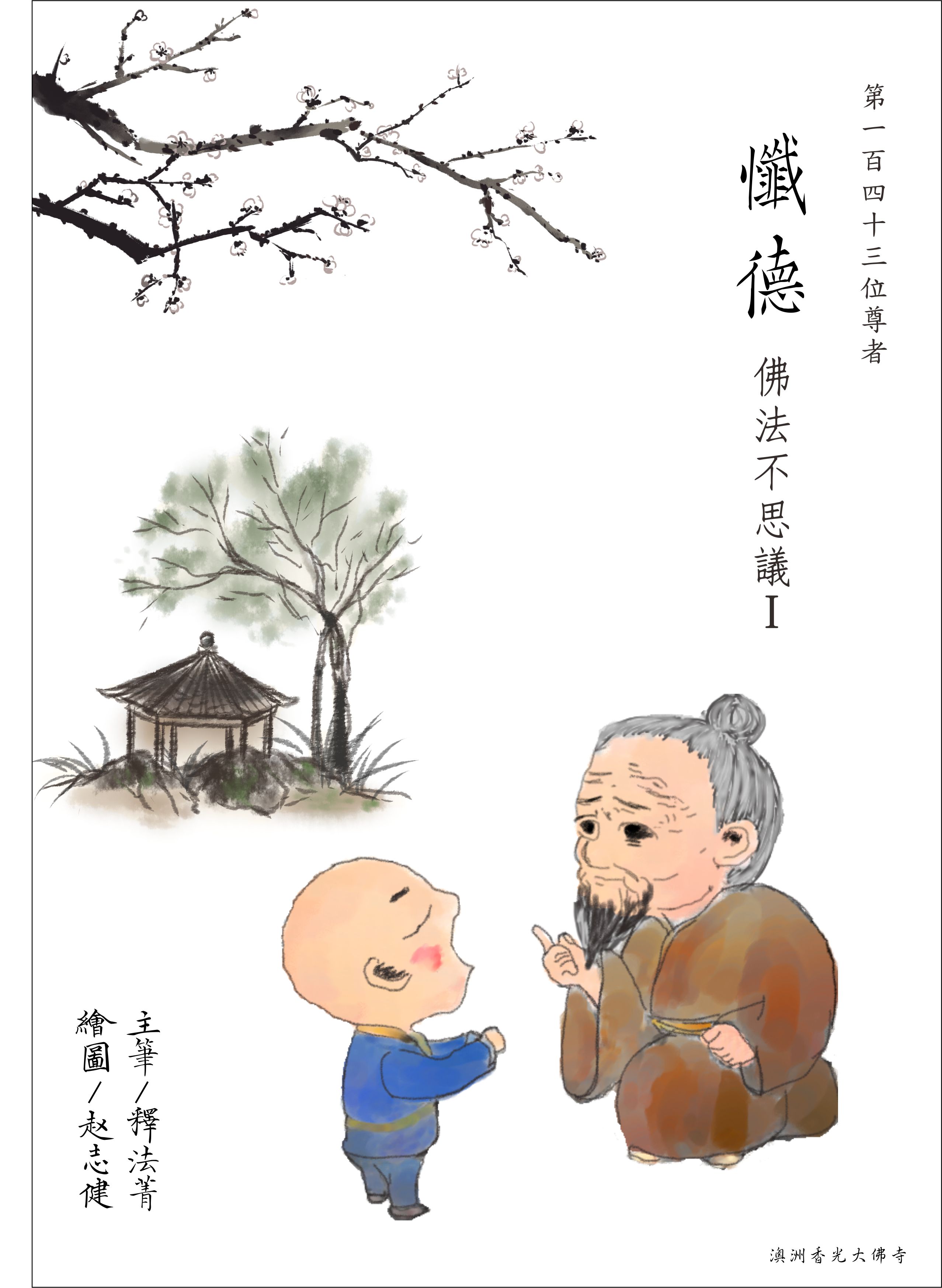
The Virtue of Repentance
A profound reflection on the journey of repentance and the cultivation of virtue from the 143rd Venerable, Chande, as he recounts his path to the Western Pure Land.
The Spiritual Anatomy of Practitioner Su's Leg
Venerable Feng An, representing a collective of 1,162 Venerables, provides a profound look into the spiritual dimensions within Practitioner Su's leg, revealing the hidden reality of karmic burdens, the nature of spiritual attachment, and the ultimate sacrifice of a Bodhisattva.
The True Meaning of Filial Piety
A touching testimony from Zhu Hongchang, who reflects on his life nine centuries ago, his journey from being rejected as a 'dull' child to discovering the profound, selfless nature of true filial piety through service to all beings.
The Path of No-Self and the Boundless Ocean of Wisdom
A poignant reflection on a life of hardship, the realization of the 'no-self' nature, and the ultimate vow to deliver sentient beings through the power of Namo Amituofo.
More by Hsiang Kuang Pure Land Buddhist Centre
The Final Curtain Call of Chu Ke-liang
A candid reflection from the late Taiwanese entertainer Chu Ke-liang on his life, his career, the karmic weight of his influence, and his ultimate deliverance to the Western Land of Ultimate Bliss.
The Soul's True Equality: A Conversation with Mahatma Gandhi
This is a record of an interview with Mohandas Karamchand Gandhi, who sought deliverance at the Hsiang Kuang Pure Land Buddhist Centre in Australia. He now resides in the Western Land of Ultimate Bliss. This account reflects upon his life and his journey to the Pure Land.
A Reflection from the Western Pure Land
This is a record of an interview with Zhao Puchu, who sought deliverance at the Hsiang Kuang Pure Land Buddhist Centre in Australia. He now resides in the Western Land of Ultimate Bliss. This account reflects upon his life in the 20th century. Recorded by the chief writer, Shi Fa Hui, on April 18, 2026.
The Truth Behind My Rebirth: A Message from Liu Suqing
Liu Suqing, the elder sister of the renowned practitioner Liu Suyun, shares her harrowing journey through the spirit realms and her ultimate deliverance to the Western Land of Ultimate Bliss through the Hsiang Kuang Pure Land Buddhist Centre.
The Burden of a Historical Name
This is a record of an interview with Lin Biao, who sought Chao Du at the Hsiang Kuang Pure Land Buddhist Centre in Australia. He now resides in the Western Land of Ultimate Bliss. This account reflects upon his life approximately 54 years ago. Recorded by the chief writer, Shi Fa, on May 18, 2026.
The Poet’s Journey to the Western Pure Land
A reflection on the life, tragedy, and ultimate spiritual liberation of the ancient statesman Qu Yuan, who found peace through the teachings of Practitioner Su.
About the Author
Hsiang Kuang Pure Land Buddhist Centre
Contributed to Pure Land Buddhism knowledge library