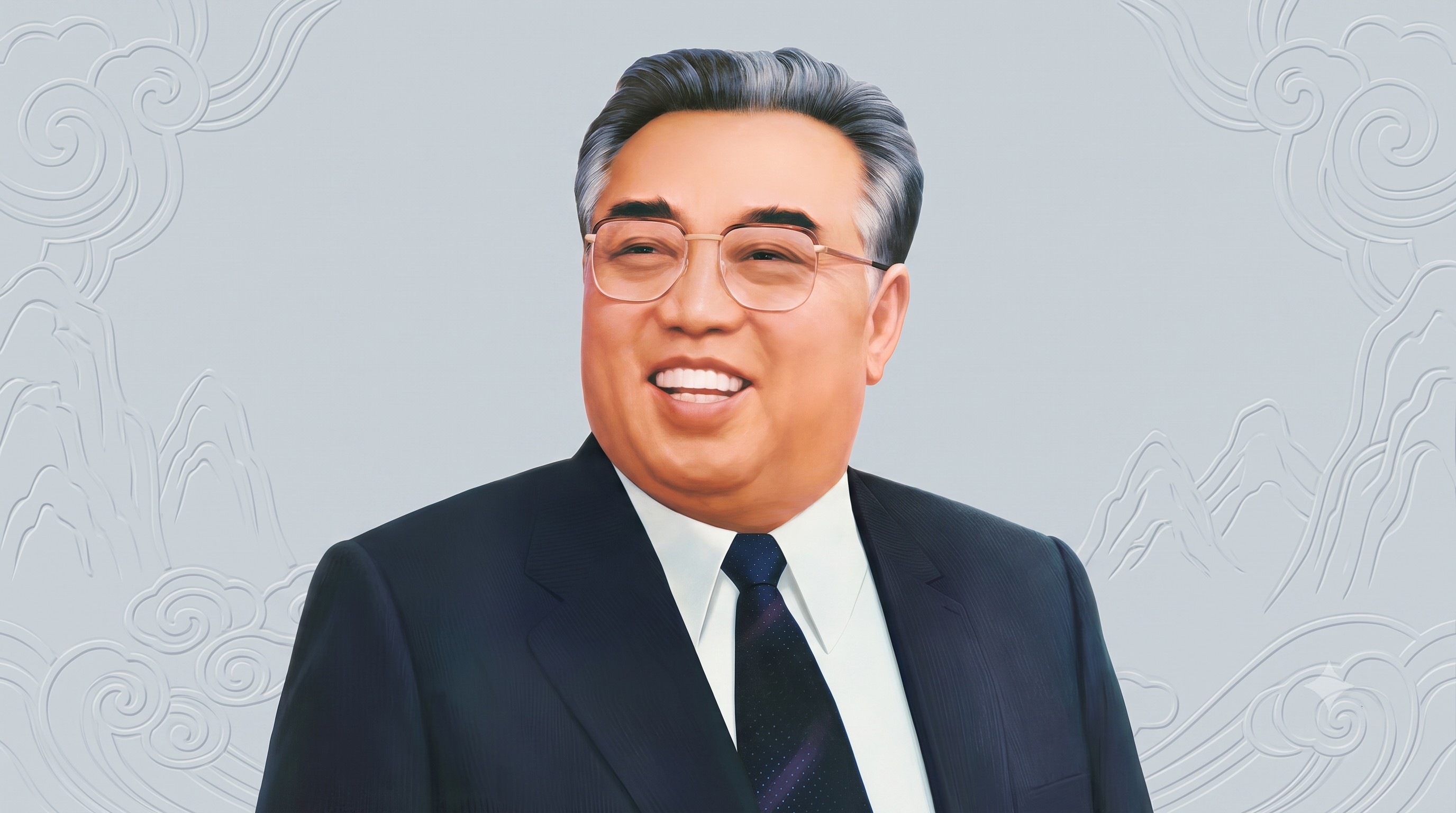
This is a record of an interview with the spirit of Venerable Master Chin Kung, who now resides in the . This account was recorded by the chief writer, Venerable HaiZe, on October 11, 2022.
Venerable Master Chin Kung speaks:
". Today, the topic Namo Amituofo has given me to discuss is 'Neither Good Nor Bad.' I imagine none of you have ever encountered such a title before, have you? In my view, this is the realm of the Buddha! Aside from the Buddha, perhaps no one else would think to use these four words as a title. I feel a deep, intuitive resonance with this concept. This is not to say that my current state is equal to that of the Buddha; rather, it is a matter of heart-to-heart understanding. Based on my own shallow understanding of the Buddha’s teachings and my humble experience in practice, the Buddha has always viewed every being with absolute equality. In the Buddha’s eyes, all beings are equal—there is no high or low, no good or bad, no discrimination, and no right or wrong. There is only the difference between being deluded and being awakened."
The Trap of Dualistic Thinking
"High and low, good and bad, discrimination, and right and wrong—these are the habitual mindsets of people. We use these distinctions to treat others and to handle interpersonal issues. 'You are like this, I am like that, he is like this,' and everyone assumes that this is just how things are. Without guidance, people do not realise that they can elevate their own spirituality. They do not know that they should treat every being with equal respect, nor do they understand that every being possesses Buddha-nature. People fall into the traps of ignorance, wisdom, good, bad, and right or wrong only because they are deluded. If one were awakened, everyone could be just like the Buddha. If people understood this truth, they would no longer hold such strong of superiority or discrimination. They would learn to respect others more and treat everyone with equality, allowing for more harmony and peace between one another. This is how a practitioner of the Buddha’s teachings should be."
"'Neither good nor bad' does not mean that there is no good or bad at all. Rather, it is because we are deluded that we cannot act in accordance with the Universal Principle, the Truth, and the Right Way. However, this does not mean that if someone is a 'good' person, everything they do is automatically good, right, or without fault. That would be subjective. Unless one has realised their true nature, no matter how one turns, one must align with the Universal Principle, the Truth, and the Right Way. In the worldly realm, right and wrong are often mixed, and good and evil are intertwined. This is the human heart, and it is a reflection of the state of society. This state is what we call 'pollution.' To practise under such conditions, one must purify these pollutions. The method of purification is to refrain from making judgments. Whether something is good or bad, right or wrong, or kind or evil, the laws of and cause and effect will naturally judge and handle it. If you insist on adding your own opinions, you create confusion and impurity. This is the meaning behind the saying that a true practitioner does not see the faults of the world. The rights, wrongs, and mistakes of the world are not decided by your words alone. People often have selfish motives and subjective views when judging people and events. If you add your own personal likes and dislikes into your judgment, how objective and fair can the result be? In reality, these are all karma, unfolding according to karmic force. Only those who have realised their true nature—free from the interference of karma, free from subjectivity, free from selfishness, and free from the 'self'—can speak and act entirely for the sake of other beings rather than for themselves. Only they can ensure that their words and actions align with the Universal Principle, the Truth, and the Right Way, thereby making truly objective and fair judgments. This is why those who have realised their true nature are so rare; it is not without reason."
Facing the Laws of Karma
"The laws of karma and cause and effect are something everyone must face. However, for those who have realised their true nature, they not only refrain from creating negative causes and avoid committing transgressions, but they also clearly understand how to respond and face the fruits of their past lives when they manifest. They accept these fruits calmly without creating new negative causes. This is where their wisdom lies. If the situation is good, they will practise Generosity and dedicate the merit, remaining completely unattached. Even if there is merit, they dedicate it to all beings. This is the Buddha-heart, because while merit exists, the Buddha-heart is 'empty.' Therefore, the Buddha can practise Generosity, and do so thoroughly. It is not just material Generosity; to save beings, the Buddha can even offer their own body, taking on the suffering of beings. If that is the case, what else could they not let go of? What else could they not put down? To worldly people, is extremely important. One could say that worldly people live their entire lives for this body, living entirely within the world of the body. But the bodies of Buddhas and Bodhisattvas are used to save people, even used for Generosity. Because they are 'neither good nor bad,' they can attain the state of 'Suchness.' The state of 'Suchness' is equality. Only with this can one look at a speck of dust, a person, or a living creature and treat them all with the same respect and reverence as one would a Buddha. Under such conditions, how could one possibly create negative karma?"
The Heart of
"Many of the bitter fruits people suffer are caused by discrimination, attachment, and delusions. Someone might say, 'But you can't expect me to have no discrimination or attachment toward food, and eat food that has gone bad, right? That would harm the physical body.' Indeed! And no one is asking you to eat food that has gone bad. But you must understand that food is also a living being. Since it has gone bad and can no longer nourish you, we should treat it with respect and gratitude, handle it properly, and clean it up carefully. Furthermore, you should hold a heart of repenting, acknowledging that you were not careful with storage or expiration dates, which caused it to spoil and lose its original nutritional value. You should hold this kind of heart when handling spoiled food; that is the correct way. Do not feel disgust, hatred, or contempt for it. If you do, you are polluting your own heart. Food is also a living being, and it can receive your heart! You have formed a negative karmic affinity with it, and it is hard to say when this affinity will bear fruit. Perhaps in some future life, your roles will be reversed: you become the food, and it becomes your master. It lets you spoil and treats you with the same disgust, hatred, and contempt. This is called retribution. Although the spoiled food will not be eaten by you, the mindset you carry while handling it is a profound matter. To be able to treat this food with gratitude, repentance, and compassion, to pack it away properly while chanting Namo Amituofo to purify it, and then to send it to the appropriate place for disposal—that is the correct way."
"Compassion radiates naturally; it is not forced. For a truly compassionate person, compassion has been internalised as a part of themselves. Whatever they encounter, they naturally view it with compassion. They do not need others to tell them what compassion is; it happens spontaneously. This is why practitioners with virtue and practice are respected and emulated by everyone."
Facing Adversity with
"'Neither good nor bad' means one is not especially respectful or kind just because someone is 'good,' nor does one feel disgust, hatred, or a desire to avoid or hide from someone because they are 'bad.' A true practitioner with compassion and wisdom treats both with the same heart, showing equal respect. What is being respected is the essential nature of both. Every being possesses Buddha-nature. The reason for the difference between good and bad is that they have become deluded, acted wrongly, and created negative causes, resulting in the current bad fruit; or they created good causes in the past and are now receiving good rewards. There are differences, but one does not develop discrimination because of these differences. One respects both. For the good, one is respectful; for the bad, one is equally respectful, though in practice, different actions may be required."
"If this 'bad' thing will cause us harm, it is necessary to handle it appropriately or to distance ourselves from it, because we have a body that can be harmed. If a bad situation manifests and you cannot avoid it, then you naturally accept it and face the reality without generating resentment, hatred, or disgust. If a truly evil person comes to your door, you must still treat them with respect. Even if they harm you or even take your life, a true practitioner understands clearly why they are treating you this way. It is certainly due to negative causes created in the past, and when the conditions mature, the fruit naturally manifests. Since it is before you now and you cannot escape, you must face it. You must resolve this karmic debt. If they want your life, you have no choice but to give it; you owed it to them in the past. When they are harming you and taking your life, if your heart can remain 'unmoved' and you are willing to accept it, then this debt is settled. If, when they take your life, you generate evil thoughts, resentment, or anger, you create a new cause. When the conditions mature in the next life, they may have to repay the negative fruit of harming your body. You take their life, and they generate hatred, and in the next life, you have to repay that life. You tell me, is this cycle of cause and effect, where beings continue to grow and consume each other without pause, bitter? It is bitter! But people naturally do this. When they encounter situations, they generate these thoughts and actions, which is why they continue to revolve in samsara without end, unable to escape!"
"It is different for Buddhas and Bodhisattvas. Buddhas and Bodhisattvas know the terror of cause and effect. They know not to create new negative causes, so they are willing to accept, without generating thoughts, without moving the mind, and without generating hatred. In a state where the heart has no fluctuations, they resolve this debt. When the two meet again in the next life, you do not owe me, and I do not owe you. Thus, no negative karma or polluted karma is created. They remain at peace and continue to achieve their own spiritual success. This is the difference between practising the Buddha’s teachings and not practising. It is not easy to do this, truly not easy. But if you can do it, you have the opportunity to realise your true nature and attain Buddhahood. A true person of wisdom can see at a glance whether the other person has practice or not, because everything is revealed in every gesture, every word, and every action."
The Example of the Sage of Patience
"When Shakyamuni Buddha manifested in the human world to attain Buddhahood, in a past life, he was a sage named the Sage of Patience. I have told this story many times, and you have all heard it. It happens to resonate with what I am saying today, so I will mention it here. At that time, the King, known as King Kali, brought people from the palace, including consorts and palace maids, to the countryside. They saw this Sage of Patience meditating, his appearance dignified. Many palace maids went to listen to the and were very joyful. The King misunderstood the Sage of Patience and, in a fit of rage, ordered his men to cut the flesh off the Sage of Patience piece by piece, torturing him to death. The Sage of Patience did not generate hatred; he calmly accepted it all. Because of this, the Sage of Patience, who was originally destined to attain Buddhahood after Maitreya , instead attained Buddhahood before Maitreya Bodhisattva. This story illustrates that the Sage of Patience at that time possessed such wisdom and compassion that he was able to face this event with such a state of mind and in such a situation, thereby perfecting his practice of patience. His spirituality naturally elevated, and he attained Buddhahood ahead of Maitreya Bodhisattva."
"You might say, 'Oh, I am not at that level yet. I would still be afraid and terrified. This is not something I can do.' Yes, it is indeed not easy! But you must know that this body is false. When you practise to that stage and truly 'see through' and 'let go,' all of this happens naturally, without any force. We have the practice process of Buddhas and Bodhisattvas as a mirror, so we know we must be more diligent in cultivating compassion and wisdom. There are still many pollutions to remove. When you truly reach a state of pure goodness, all of this happens naturally, not by force. Of course, this does not mean you must have your flesh cut to become a Buddha; that is not the meaning. What we must learn is this spirit, which allows for spiritual elevation."
The Power of Amituofo’s Vows
"Buddhas and Bodhisattvas have great compassion. They know that in this age of the Dharma’s decline, beings face many obstacles and heavy karma when trying to practise and purify themselves. Therefore, Namo Amituofo, with great compassion, uses the method of 'Two Powers' to help everyone. As long as you truly generate the heart and make vows earnestly and diligently, hoping to realise your true nature and attain Buddhahood—and this vow you make is not for your own fame or wealth, but for the sake of saving beings—this vow is a pure vow, not a polluted one. You will certainly receive the blessing of Namo Amituofo. This 'blessing' is to help you purify and realise your true nature. If your own power cannot reach the level of purification required for realising your true nature, the Buddha will help you, allowing you to naturally elevate your spirituality and realise your true nature sooner."
"When you encounter situations and tests, you will be able to pass through them one by one. As long as you pass the test, your spirituality will naturally elevate. However, if there is still pollution, a test will appear again. This test is not from the outside; it is often just that little bit of pollution in your own heart manifesting. It is your own test! If at this time you have a sincere heart and vow to 'seek the Buddha’s path above and save beings below,' Namo Amituofo, in his compassion, will certainly help you. He will help you purify and face your own problems. After passing a test, if there are still stains that have not been purified, another test will appear. In this way, passing through one test after another, you purify the pollutions that have manifested from your accumulated lifetimes, until you are purely good, without a trace of turbidity, and you realise your true nature and attain Buddhahood. In such a diligent process, your compassion, wisdom, mind-capacity, and tolerance are tested. Your awareness is tested. In this process, you must remove discrimination, let go of attachment, and have no selfishness. The 'self' must not exist, and thoughts and evil thoughts must disappear without a trace. The phrase 'give rise to all and achieve the fruit of ' happens naturally, not by force. It is done this way; this is what practice is."
True Cultivation
"These tests and learning experiences require a human body to be practised and faced. The result is the elevation of spirituality, allowing practice to move forward. This is 'True Cultivation' using the false. As for how to face them, it is this heart that takes charge. Therefore, the body, mind, and spirit are interconnected and complement each other, with the heart as the leader. Thus, it is said that the Buddha’s teachings are the 'Dharma of the Heart.' One must put in the work from the heart to face any test that appears in the body, mind, and spirit, helping to elevate one’s spirituality and realise one’s true nature sooner."
"The Buddha’s teachings are truly profound. They are education, not religion. They teach us how to be kind, content, grateful, wise, and how to be people who do not complain, are not greedy, do not generate hatred, are not ignorant, are not arrogant, do not doubt, and are purified. They teach us to be people who understand cause and effect, have no sense of superiority or inferiority, and do not harm others out of selfishness or self-protection. They teach us to be people who would rather suffer a loss than take advantage of others, and who can make others feel joyful. They teach us to be people who can calmly face physical problems without creating negative causes, preventing the manifestation of bitter fruits of negative karma. They teach us to be people who know how to respect teachers, care for the young and juniors, help others, and serve others."
"This kind of Buddhist education is what society currently lacks and urgently needs. Most importantly, because you do this, you elevate your own spirituality, and your natural instincts manifest one by one. These instincts are used to help everyone, not for your own enjoyment. Then your abilities will continue to elevate. If you use these abilities for non-virtuous or selfish purposes, naturally, these abilities will gradually weaken and disappear, or you will not have the opportunity to elevate. This is not something decided by anyone’s words; it is the natural law, the Universal Principle that causes such situations to occur."
The Role of Hsiang Kuang
"Therefore, Buddhist education teaches everyone correct concepts, teaches everyone about cause and effect, helps everyone purify, elevates the life of spirituality, and further helps one find one’s true self, attain the fruit of Buddhahood, and then help others learn, be diligent, and realise their true nature and attain Buddhahood. This is the transmission of the Buddha’s teachings, and the plays a very important role. At this time, many practitioners, lay practitioners, Dharma protectors, and volunteers are working hard to let everyone know about the Pure Land, to enter the gate of the Pure Land, and to practise and purify within it. The most important thing is that you yourself must be able to achieve success."
"The Hsiang Kuang Pure Land Buddhist Centre shoulders an important role because Namo Amituofo is here. This is very important. As long as everyone believes in the Buddha and has the vow, the Buddha will naturally lead everyone forward to help beings. The Buddha’s Dharma power, merit, virtue, and Dharma affinity are immeasurable and boundless. It depends on the extent to which you can exert yourself and the extent of your vow. As long as you act according to the Truth and the Dharma and are good to beings, the Buddha will help you. If your vow is not pure or good, but selfish and for yourself, then you cannot truly practise. Naturally, your ability to implement will be insufficient, and the Buddha’s blessing power cannot be fully exerted. This is not because the Buddha does not bless you; this is the Universal Principle. Even if the Buddha-light shines equally upon everyone, the amount of Buddha-light everyone receives will differ in strength. This is not because the Buddha is unequal, but because of your own body and the degree to which your spirituality has been purified. Depending on the degree of your pollution, you naturally receive that much Buddha-light."
"Of course, if you receive the shining Buddha light completely, then you are truly a lucky person, because your vow is in sync with the Buddha. Naturally, the Buddha-light can shine without obstruction, and you can receive it directly. If your selfishness, bias, self-protection, greed, hatred, ignorance, arrogance, and doubt exist and have not been purified, even if the Buddha-light is shining on you with full intensity, these hearts will block the Buddha-light. You might only receive two or three parts of the Buddha-light. It is your own pollution that blocks you, not that the Buddha only gives you that much. Of course, some people say: 'I am just like this; I have not practised to that level yet. I still have selfishness and self-protection. My sincere heart cannot be generated. Does the Buddha not protect me, not bless me, and does the Buddha-light not shine on me?' That is not the case! If that were the case, he would not be the Buddha! The Buddha still shines equally and still gives you ten parts of Buddha-light, but because of the pollutions you just mentioned, they block the Buddha-light, and you naturally only receive one or two parts of the Buddha-light’s blessing power, or perhaps none at all. You cannot blame the Buddha. This is not because the Buddha did not bless you, but because you blocked yourself. That is why you must practise and purify."
"The more you practise and purify, the less pollution you have, and the more you can receive the Buddha’s blessing. Naturally, you will be filled with Dharma and be in sync with the Buddha-heart. Consequently, your vows will become more and more in line with the Buddha, and your actions will be able to be in sync with the Buddha. That is very good! Your practice will have reached its goal. After you purify, your instincts will naturally manifest one by one. When your pollutions are all removed, the Buddha will still shine on you equally, and you will be able to receive it completely. This energy is naturally full. Added to your own purification, without pollution, you will also be able to radiate natural light, which is called the 'Light of the True Self.' Look, how wonderful this is! Yes, everyone can naturally immerse themselves in the silence and joy of 'neither good nor bad.'"
"Students of Hsiang Kuang, every one of you has the opportunity because Namo Amituofo is here. For those outside the Hsiang Kuang Pure Land Buddhist Centre, especially those who study the Pure Land and chant the Buddha’s name, I also hope that everyone can know that Namo Amituofo is here waiting for you. Everyone must practise well, come here to be close to the Buddha, and you will all have the opportunity to realise your true nature, attain Buddhahood, and return to the Western Land of Ultimate Bliss."
"Well, I have talked and chatted with everyone enough for today."
"Namo Amituofo."
Venerable Chin Kung, with folded palms.
At the Western Dharma-Nature Land of the Hsiang Kuang Pure Land Buddhist Centre, Australia.