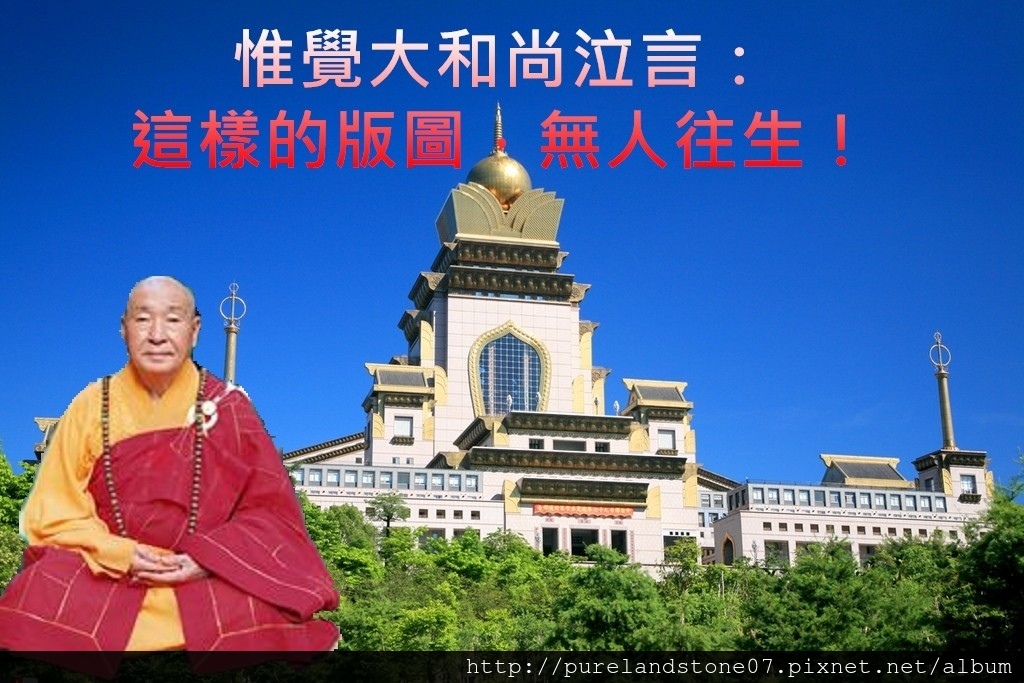
This is a record of a message from the late Venerable Master Wei Chueh, who now resides in the of Ultimate Bliss. This account was transcribed by the chief writer, Shi Faxi, on July 18, 2017.
Venerable Master Wei Chueh speaks:
"How does one truly study the ? One must not harbour bad habits. Whether you are a monastic or a lay practitioner, the fourfold assembly must take these words of counseling to heart. Do not let your entire life pass by, only to complain at the end that did not come to guide you. You must realise that the path you walk is, in the end, a path you have chosen for yourself.
The Trap of Mundane Thinking
What is the purpose of your practice? If you have been studying the Dharma for many years, yet you remain entangled in the and , trapped by greed, anger, delusion, and arrogance—if your thoughts are still constantly occupied by your family, your physical health, your wealth, or your romantic attachments—then it is a great pity. From what I have observed, it is truly a tragic waste. Because you remain stuck in this way, you will not only fail to achieve rebirth in the Western Pure Land of Ultimate Bliss, but you are also likely to remain trapped within the six realms of rebirth. It is very difficult to escape, because you have placed strict limitations upon your own destination.
Though you claim to study the Dharma, you are not truly practising it. What you do is still the business of ordinary people, and what you think is still the thinking of ordinary people. You do not have to be a monastic to transcend the status of an ordinary person. You can practise in a way that is truly magnificent; you can even become a Sage. You were originally a Sage, but you have lost your way. Now, if you turn back immediately, it is not too late. As long as you are willing, it is always in time.
Service vs. True Transformation
Everyone must understand that the intention behind studying the Dharma should not be limited to volunteering, working in the kitchen, or helping with administrative tasks. These are all very good, and such intentions are commendable. Every bodhimanda welcomes such dedicated lay practitioners. However, it seems that no one has told you what the true study of the Dharma is: it is about changing your personality traits; it is about reaching a state of 'no-mind'. Perhaps this has been mentioned in various Dharma talks, but to actually achieve it is very difficult. This is because there is a lack of true education and a lack of true leadership. Even if there is a monastic community within a temple, that community does not necessarily fulfil its responsibility to lead. Instead, they often enjoy the enthusiastic support of lay practitioners. I would like to take this opportunity to tell the monastics of today: all offerings are not free. If your virtue is insufficient, you will have to pay a price. True virtue is defined by dedication. If you accept offerings, you are equally required to dedicate your abilities and your entire being. This is what it means to be a monastic, and only then can you truly accept offerings from the ten directions.
The Necessity of Genuine Practice
Today, especially in China and Taiwan, there are many enthusiastic lay practitioners who are very dedicated and work hard. However, it seems they are still very far from achieving rebirth in the Western Pure Land of Ultimate Bliss. This is because they have not changed—they have not changed their personality traits. Because they have not achieved this, all their dedicated service remains merely a matter of accumulating , not Merit. You have not suffered a loss, but you have not made any progress either, because your destination remains very far away. To explain how to educate oneself and how to truly study the Dharma is perhaps not something I can fully clarify here, but I can make one point clear: you must not have bad habits.
Whether you are a monastic or a lay practitioner, the fourfold assembly must take this counseling to heart. Do not let your life pass by, only to complain at the end that Namo Amituofo did not come to guide you. The path you walk is ultimately the one you have chosen. Often, things are hidden in the heart, but that does not mean no one knows. True practice, if it is still a practice that carries concealment, will result in a great loss. You must walk this path with absolute sincerity. If you are still feeling lost, the Hsiang Kuang Pure Land Buddhist Centre can be a very good choice for you. I, Wei Chueh, give you my personal guarantee. You may come and see how to practise. If you learn well, the people around you will also learn how to study the Dharma through you, and they will understand how to grasp their own opportunity for rebirth. This is extremely important. Everyone must take this seriously. I hope you all understand these principles and can all achieve rebirth in the Western Pure Land of Ultimate Bliss with ease. Namo Amituofo."