The Wisdom of Emptiness
An Interview with Bodhisattva Ashvaghosha
Recorded on April 7, 2019, at the Hsiang Kuang Pure Land Buddhist Centre
This interview with Ashvaghosha was recorded on April 7, 2019, by the Buddhist disciple Shi Faxi at the Hsiang Kuang Buddhist Centre. In this profound session, the Bodhisattva offers essential guidance on the nature of emptiness, the illusion of worldly attachments, and the path to reclaiming one's original to transcend the cycle of samsara.
Bodhisattva Ashvaghosha speaks:
"Namo Amituofo. To understand emptiness is to truly awaken. If one’s heart and character possess the nature of this realization, then within that heart, one naturally gains the ability to transcend the cycle of life and death within the three realms. This is the true power to escape samsara. The essence of this lies in to one's true nature and reclaiming the Body.
The True Path to Awakening
The path of genuine practice, the true actions of a practitioner, must be grounded in reality. When one truly falls into the 'real,' then that reality naturally becomes empty. The principle of emptiness allows one to perceive form, yet not be attached to the illusory nature of that form. This is the way of 'emptiness within emptiness,' a state of being that is natural, spontaneous, and aligned with one's true life purpose.
In this world, nothing is more important than the Truth. The Truth exists within your original heart. This original heart is natural; from the moment you were born, it was already present within your body. Throughout your life, from birth to the present, this original heart has never been extinguished. However, your heart has been 'blood-stained'—it has been tainted by the karmic ties of blood relations and the deep attachments to those closest to you. Within these karmic ties, the heart is naturally not empty. The realm of emptiness lies in the absence of such attachments. Blood ties are merely dust upon , born from the debt of life and the grace of our parents. If one can truly understand this and let go, one will see their parents as they truly are—as beings in a cycle of rebirth. In this realization, one sees them as parents, yet also understands that they are not merely parents in the ultimate sense. This is the 'emptiness within the real,' the path of true understanding, and the genuine meaning of emptiness.
Transcending the Illusion of Blood Ties
Emptiness is autonomy; it is natural. It exists beyond the 'blood-staining' of the world. This staining occurs within the ignorance of samsara. Emptiness allows one to be free from worldly conventions and to exist autonomously within the world. The highest form of filial piety is to carry one's parents back to the Western Pure Land of Ultimate Bliss. By knowing emptiness, one realises that this life is but a dream within a dream. It is not what appears in your self-perception; the blood-related kin and the karmic ties you hold so dear are all illusory. They are not the Truth; they are purely transient. They are not equal to the supreme awakening of the Buddhas. This body is difficult to awaken, but one must strive to understand this, so as not to waste this dream-like life.
Waking from the Dream of Samsara
To awaken while walking through this dream requires a great, clear vow. One must know not to be extinguished in the darkness, and even if one finds oneself in the underworld, one must know that it is time to depart. Within the seven types of emotions and the entanglements of love, one must know how to awaken. Do not let your heart be polluted or stained. You must awaken from the desires of love, perceive the reality of emptiness, and if you can truly realise this, you will surely attain true awakening.
Do not let your heart be lost in the fog. Even in the vast, boundless ocean, one can find the way in and out. Although you have lived through many layers of life and death in samsara, you must know that at this very moment, you can see the West. Do not wander aimlessly in the world any longer. Knowing is not enough; you must act upon that knowledge. The dream must be shattered immediately. Put down the illusory affairs of the world, for only then can you have true insight and clarity of purpose.
The Nature of the Unmoving Mind
The world is a place of dust, busy and bustling. Most people are busy with the trivialities of life, and most are busy within the cycle of samsara, unable to see the path to liberation. Their are insufficient, and they cannot listen to the good words of the Dharma. They are trapped in their own views, unable to escape, blinded by selfish, worldly concerns. They talk only of life and death, yet they do not understand the true nature of life and death. This is truly a pity, but without the necessary blessings, there is little that can be said.
The heart must be awakened to emptiness. Emptiness knows itself to be natural; there is nowhere that is not empty. The heart should be natural in the face of all phenomena. Even when facing phenomena, the heart should not be moved or stained. Whether it is form or non-form, what does it have to do with me? When the heart is naturally at peace, when the heart is at ease, the true nature will naturally shine. You will know, you will understand, and you will realise the Truth.
Do not be led by illusory appearances, and do not be swayed by the intentions of others. Let the heart remain in its natural state of emptiness. Do not let the heart enter into the traps of others. Awakening of the heart, awakening of the realisation, awakening of the clarity—the awakening comes from the heart itself. The heart is naturally awakened, naturally empty, and the empty form is naturally at ease. Knowing the truth, one is naturally magnanimous, playing freely in the dust of the world, yet the heart remains unattached, like a bamboo grove that leaves no trace of the wind.
Emptiness does not approach extinction. Life and death have no extinction. There is no birth, no death, no reality, and no entry into samsara. If there is no entry, how can one be in samsara? Namo Amituofo."
More from Revered Ones
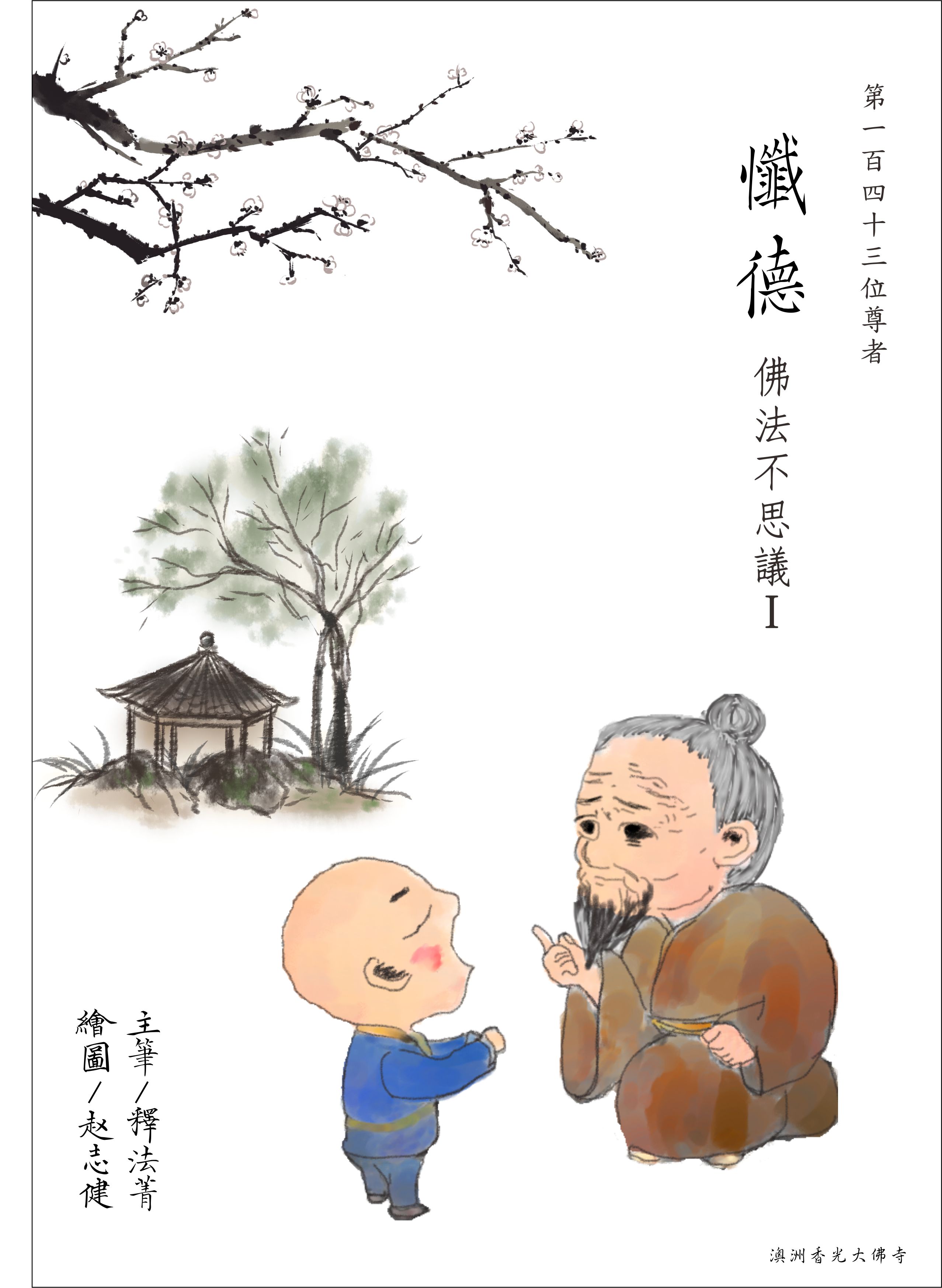
The Virtue of Repentance
A profound reflection on the journey of repentance and the cultivation of virtue from the 143rd Venerable, Chande, as he recounts his path to the Western Pure Land.
The Spiritual Anatomy of Practitioner Su's Leg
Venerable Feng An, representing a collective of 1,162 Venerables, provides a profound look into the spiritual dimensions within Practitioner Su's leg, revealing the hidden reality of karmic burdens, the nature of spiritual attachment, and the ultimate sacrifice of a Bodhisattva.
The True Meaning of Filial Piety
A touching testimony from Zhu Hongchang, who reflects on his life nine centuries ago, his journey from being rejected as a 'dull' child to discovering the profound, selfless nature of true filial piety through service to all beings.
The Path of No-Self and the Boundless Ocean of Wisdom
A poignant reflection on a life of hardship, the realization of the 'no-self' nature, and the ultimate vow to deliver sentient beings through the power of Namo Amituofo.
More by Hsiang Kuang Pure Land Buddhist Centre
The Final Curtain Call of Chu Ke-liang
A candid reflection from the late Taiwanese entertainer Chu Ke-liang on his life, his career, the karmic weight of his influence, and his ultimate deliverance to the Western Land of Ultimate Bliss.
The Soul's True Equality: A Conversation with Mahatma Gandhi
This is a record of an interview with Mohandas Karamchand Gandhi, who sought deliverance at the Hsiang Kuang Pure Land Buddhist Centre in Australia. He now resides in the Western Land of Ultimate Bliss. This account reflects upon his life and his journey to the Pure Land.
A Reflection from the Western Pure Land
This is a record of an interview with Zhao Puchu, who sought deliverance at the Hsiang Kuang Pure Land Buddhist Centre in Australia. He now resides in the Western Land of Ultimate Bliss. This account reflects upon his life in the 20th century. Recorded by the chief writer, Shi Fa Hui, on April 18, 2026.
The Truth Behind My Rebirth: A Message from Liu Suqing
Liu Suqing, the elder sister of the renowned practitioner Liu Suyun, shares her harrowing journey through the spirit realms and her ultimate deliverance to the Western Land of Ultimate Bliss through the Hsiang Kuang Pure Land Buddhist Centre.
The Burden of a Historical Name
This is a record of an interview with Lin Biao, who sought Chao Du at the Hsiang Kuang Pure Land Buddhist Centre in Australia. He now resides in the Western Land of Ultimate Bliss. This account reflects upon his life approximately 54 years ago. Recorded by the chief writer, Shi Fa, on May 18, 2026.
The Poet’s Journey to the Western Pure Land
A reflection on the life, tragedy, and ultimate spiritual liberation of the ancient statesman Qu Yuan, who found peace through the teachings of Practitioner Su.
About the Author
Hsiang Kuang Pure Land Buddhist Centre
Contributed to Pure Land Buddhism knowledge library