Worldly Affairs and Harmony: The Teachings of Master Xuanzang
A Discourse on the Path of the Practitioner
Recorded by the Buddha's disciple, Venerable HaiZe
March 2, 2019
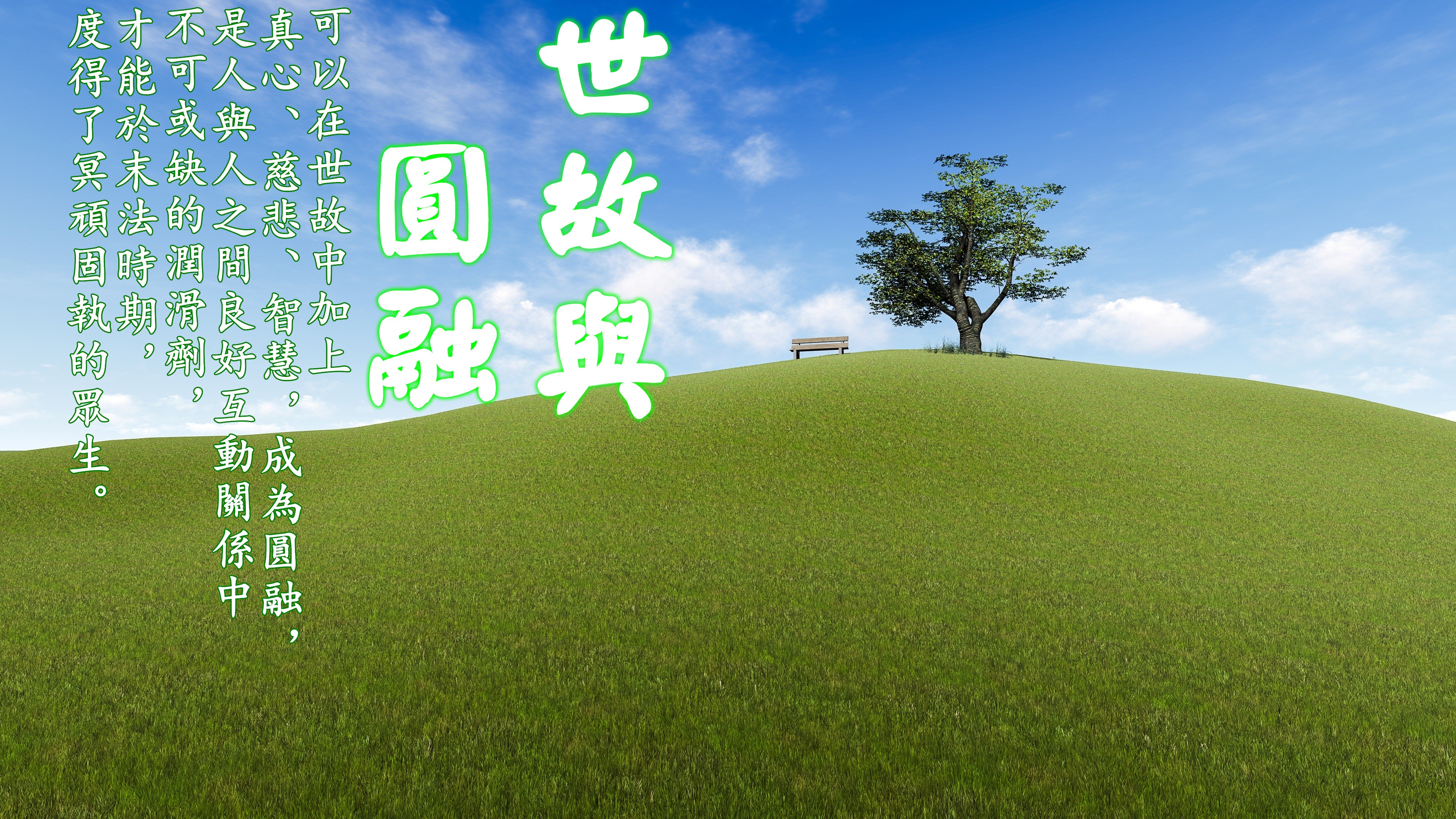
There is a common saying in the world: one must understand human nature and worldly affairs to avoid offending others. As we walk through this world, we encounter beings who are all caught within the cycle of six realms of rebirth, each carrying their own unique habits, the "self," personal ego, and selfishness. Yet, there exists a set of behaviours and etiquettes that are generally accepted in human interaction. It is often said that one cannot be blamed for being overly polite; it is always better to maintain proper decorum. If a lapse in etiquette is unintentional, it is usually forgivable, and there is a worldly saying that can resolve the conflict: those who do not know are not to be blamed, and those who do not know are innocent. However, if one knows the proper way but chooses not to act accordingly, it will inevitably lead to gossip and cause others to create negative through their speech. This is certainly not the path of a practitioner.
The Skillful Means of
When Buddha or Bodhisattvas appear in the world to deliver sentient beings, they must first use what the beings desire as a hook, and only later lead them into the Wisdom (Prajna) of the Buddha. The desires mentioned here refer to what beings most want, what they wish to accomplish, and what they seek to resolve their suffering. When these desires are fulfilled, the beings feel that their wishes have been granted. In truth, these desires and wishes are often things that the beings were already destined to receive because their Causal Conditions had matured. Therefore, when beings feel a deep need, they may receive a response from the Buddha, Bodhisattvas, or patriarchs and venerable masters, who help them fulfil their wishes. This encourages the beings to be willing to come into contact with the Buddha’s teachings. From there, the Buddha leads them step by step, tailoring the guidance to their specific roots, helping them to comprehend the Wisdom (Prajna) of the Buddha, and encouraging them to practise and change their behaviour. Eventually, they may become members of the monastic community, protectors, or lay practitioners.
The Art of Harmony
If a practitioner is walking in the world, especially when the goal is to save beings, how can they skillfully use human nature and worldly affairs as a resource for this purpose? One can infuse human nature and worldly affairs with sincerity, compassion, and wisdom, transforming them into harmony. This harmony acts as an indispensable lubricant in the positive interactions between people. Only in this way can one save stubborn and obstinate beings in this age of the Dharma’s decline. If one is too blunt or direct, it is easy to offend the other party. If either side becomes angry, it will create and may even lead to the cycle of revenge, which is truly not appropriate. If one acts out of self-interest, their Body, Speech, and Mind will be tainted, and their actions will be neither true nor Goodness. This is why the Buddha’s gate includes practices such as silence, not speaking, or speaking very little; these are all excellent methods for maintaining purity.
The Necessity of
Whether in the worldly realm or the transcendental realm, beyond sincerity and harmony, one must walk the Middle Way. One should not lean towards either extreme—not too much or too little, not too fast or too slow. However, in the course of practice, one will sometimes encounter situations that are extremely good or extremely bad, or scenarios that are clearly right or wrong. These are necessary to temper and test the practitioner’s sincerity and true heart. The degree of intervention in these situations requires the teacher to act with compassion and wisdom. Therefore, since ancient times, it has been understood in the Buddha’s gate that one who has not realised their true nature cannot serve as a teacher. Only those who have realised their true nature can see the roots of the practitioner and provide guidance according to their capacity. In this, there is no fixed Dharma; there is no right or wrong to speak of. The practitioner can only respond with a heart of , no-mind, and no-selfishness. Only then can they pass through various tests, find their true self, manifest their six fundamental abilities, and attain complete Supernatural Freedom, thereby escaping the six realms of rebirth.
The Eighteen Skills of the Dharma-Ending Age
Originally, there is no fixed Dharma, but for the sake of teaching beings, various methods are established. A wise person can understand this; those who do not understand need descriptions in words. If one can realise even a little bit of this, it is worth it! Because only by realising the path can one walk the path, and only then is there a chance to verify the path and realise one's true nature. Sincerity, harmony, and "skillful means" are indispensable abilities for saving beings in this age of the Dharma’s decline. Since ancient times, the monastic community has passed down the tradition of needing three tools: the razor for shaving the head, the kitchen knife, and the scissors. Today, in this age of the Dharma’s decline, to save beings, one must be equipped with eighteen kinds of martial arts—it is truly not easy! It requires one who has realised their true nature and attained meditative concentration to do so. Otherwise, one cannot withstand the various tests of beings and the reality of society, and one will create karma and fall into the hells. This is why it is said that there are many monastics before the gates of hell; one must be extremely cautious.
The Unshakeable Heart of Namo Amituofo
Regardless of how others treat me—whether they scold me, hit me, look down on me, or insult me—let them do as they please. In my heart, there is only one phrase: Namo Amituofo. If they scold me, I do not scold back; I chant Namo Amituofo in my heart. If they hit me, I do not hit back; I chant Namo Amituofo in my heart. If they look down on me, I still respect them as beings who are originally Buddhas, and I chant Namo Amituofo in my heart. If they insult me, I remain clear and pure in my heart, chanting Namo Amituofo. Whether in the world or within the monastic community, various situations and tests will inevitably occur. By facing them with a heart of meditative concentration, a Buddha-heart, a heart of no-self, a heart of no-mind, and a heart of no-selfishness, one can pass every test. If one allows greed, anger, delusion, arrogance, or doubt to arise, that is merely the cycle of revenge, and one remains trapped within the cycle of rebirth.
In this life, one experiences the ways of the world and then learns the Buddha’s teachings. If one can understand the preciousness of a sincere heart and is willing to offer that sincerity—being selfless and without ego—then one can, within harmony, fulfil the wish to become a Buddha and save beings. In the of Ultimate Bliss, one will be able to perform and lead all beings to chant Namo Amituofo and be reborn in the Western Pure Land of Ultimate Bliss. For a human life, this is truly enough!
More from Teachings of Great Master Xuanzang
The Vision of Great Master Xuanzang
Great Master Xuanzang shares his profound vision for the Hsiang Kuang Pure Land Buddhist Centre, reflecting on the power of the Dharma, the mission of Practitioner Su, and the ongoing work of saving infinite suffering beings through the light of Namo Amituofo.
Great Master Xuanzang's New Year Joyful Purification Dharma Assembly
Great Master Xuanzang offers profound guidance on the occasion of the New Year, reminding us that the path to the Western Pure Land of Ultimate Bliss requires constant purification, the letting go of ego, and unwavering devotion to Namo Amituofo.
Awakening and the Path to the Western Pure Land
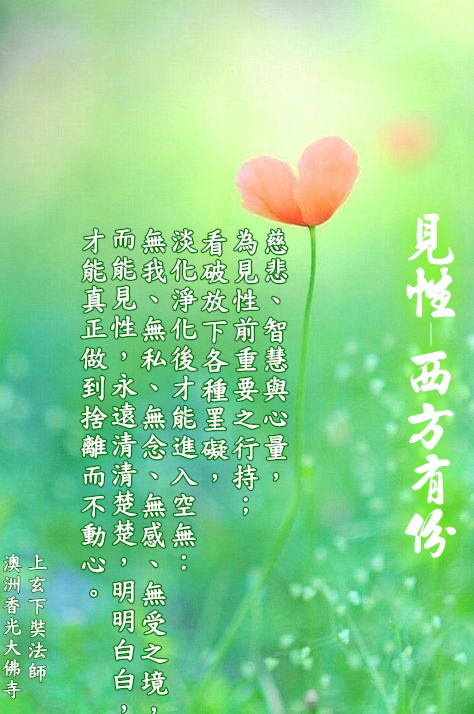
A profound exploration of how to transcend worldly attachments, purify the mind, and secure one's path to the Western Pure Land of Ultimate Bliss through Awakening and diligent practice.
Realising the Profound Meaning of the Dharma
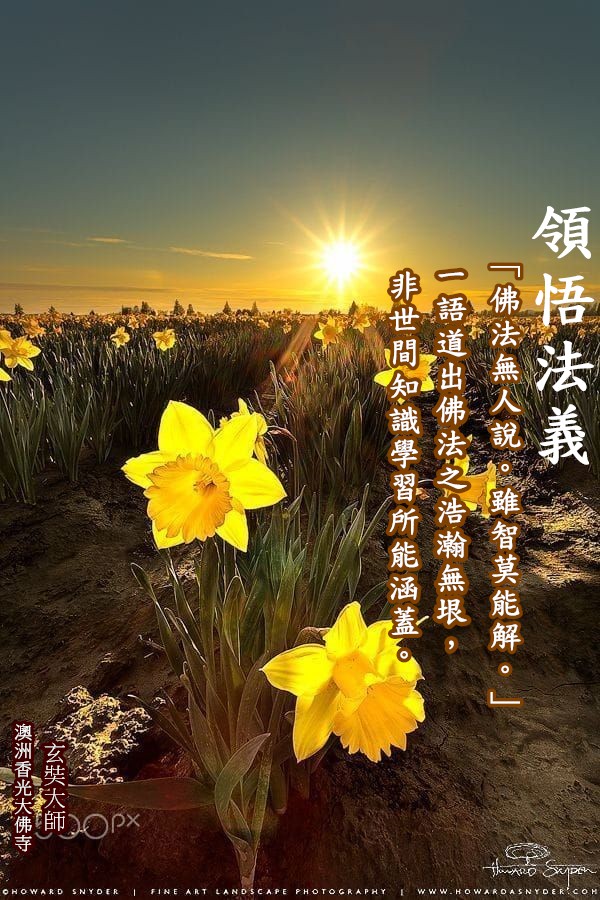
Great Master Xuanzang explains that the Dharma is vast and boundless, transcending worldly knowledge. To truly realise the profound meaning of the Dharma, one must move beyond attachment to words and names, cultivate a pure heart, and engage in diligent practice to attain Awakening.
More by Hsiang Kuang Pure Land Buddhist Centre
The Final Curtain Call of Chu Ke-liang
A candid reflection from the late Taiwanese entertainer Chu Ke-liang on his life, his career, the karmic weight of his influence, and his ultimate deliverance to the Western Land of Ultimate Bliss.
The Soul's True Equality: A Conversation with Mahatma Gandhi
This is a record of an interview with Mohandas Karamchand Gandhi, who sought deliverance at the Hsiang Kuang Pure Land Buddhist Centre in Australia. He now resides in the Western Land of Ultimate Bliss. This account reflects upon his life and his journey to the Pure Land.
A Reflection from the Western Pure Land
This is a record of an interview with Zhao Puchu, who sought deliverance at the Hsiang Kuang Pure Land Buddhist Centre in Australia. He now resides in the Western Land of Ultimate Bliss. This account reflects upon his life in the 20th century. Recorded by the chief writer, Shi Fa Hui, on April 18, 2026.
The Truth Behind My Rebirth: A Message from Liu Suqing
Liu Suqing, the elder sister of the renowned practitioner Liu Suyun, shares her harrowing journey through the spirit realms and her ultimate deliverance to the Western Land of Ultimate Bliss through the Hsiang Kuang Pure Land Buddhist Centre.
The Burden of a Historical Name
This is a record of an interview with Lin Biao, who sought Chao Du at the Hsiang Kuang Pure Land Buddhist Centre in Australia. He now resides in the Western Land of Ultimate Bliss. This account reflects upon his life approximately 54 years ago. Recorded by the chief writer, Shi Fa, on May 18, 2026.
The Poet’s Journey to the Western Pure Land
A reflection on the life, tragedy, and ultimate spiritual liberation of the ancient statesman Qu Yuan, who found peace through the teachings of Practitioner Su.
About the Author
Hsiang Kuang Pure Land Buddhist Centre
Contributed to Pure Land Buddhism knowledge library