The Four Virtues of the Bodhisattva Path: Teachings from National Master Xianshou
A Record of the Sixty-Sixth Interview
November 30, 2017
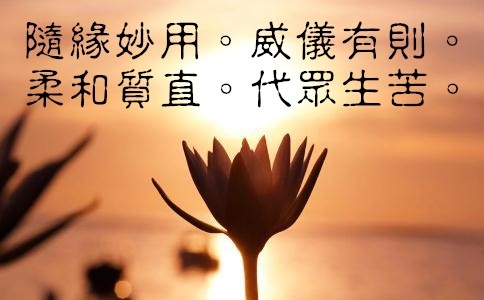
The Silent Work of the Heart
While it is easy to understand these principles intellectually, putting them into practice is a profound challenge. If you are able to embody these virtues, do so quietly and without seeking recognition. In this silence, you will naturally reap the benefits of the . The process of purification is not measured by how many tasks you complete, but by the depth of the work you perform within your own heart.
If one were to quantify the affairs of this world, the vastness of the Dharma Realm could not contain them. The true capacity of the heart is infinite, and it can only be known once you realise it yourself. Once you have reached this state, you will find that there are no external boundaries and no sense of a separate self. Where does the spirit of these four virtues reside? It exists only when there is . When there is no-self, the mind is vast enough to contain all things.
The Boundless Path of the Buddha
The focus must always remain on this: save those who are connected by karmic affinity, and for those who are not, create the conditions to connect with them. The ultimate goal of the Buddha’s teachings is to learn from the Buddha and become a Buddha. Once a Buddha is formed, they work to save all beings, guiding them together onto the Buddha's path. Once you become a Buddha, you possess total freedom in your transformations. When the Buddha is in your heart, your own body is the Buddha.
All beings are you, and you are all beings. You can perceive the desires of all beings. You will know how to provide healing for their illnesses and how to return to them what they truly seek. Even without being asked, you will know how to study and teach the Dharma extensively. This is the path of selfless contribution, where one sees only the suffering of others. When you see Practitioner Su acting in this way, you should strive to emulate such conduct.
Embodying the Virtues in Daily Life
How do we practise these four virtues in our daily lives? We must follow these principles:
- Act according to conditions, but do not cling to them:
- Use your skills wisely and with purpose, not according to personal whims.Save beings and invite those with karmic connections:
- Let your true self guide your . When you apply the wonderful Dharma, you will naturally reap the benefits.Maintain dignified conduct:
- Let your presence inspire respect and cause others to follow the right path.Ensure your conduct is virtuous: In every action—whether walking, standing, sitting, or lying down—let your heart be free from attachment and distraction.
The Compassionate Vow to Relieve All Suffering
Gentleness brings peace to the heart, while sincerity allows one to see the true nature. When your Body, Speech, and Mind are gentle and harmonious, your true nature will shine through. To take on the suffering of all beings is the only way they will be willing to leave their pain behind. However, to truly take on the suffering of others is a rare feat. Most people are primarily concerned with their own bodies; they see the suffering of others only in passing. If they can save them, they might, but if it is difficult, they simply let them be.
Those connected by karmic affinity at the Hsiang Kuang Buddhist Centre are fortunate to be saved. If they can be saved, we must save them. If they are difficult to save, we must let the Buddha-name enter their hearts. There will surely come a day—perhaps even this very moment—when they will find liberation in the Dharma-Nature Land. Only a true can act in this way. When all four virtues are achieved, you will advance steadily upon the Buddha's path. This message was recorded by the Buddha's disciple, Venerable HaiZe.
More from Teachings of State Preceptor Xianshou: The Third Huayan Patriarch
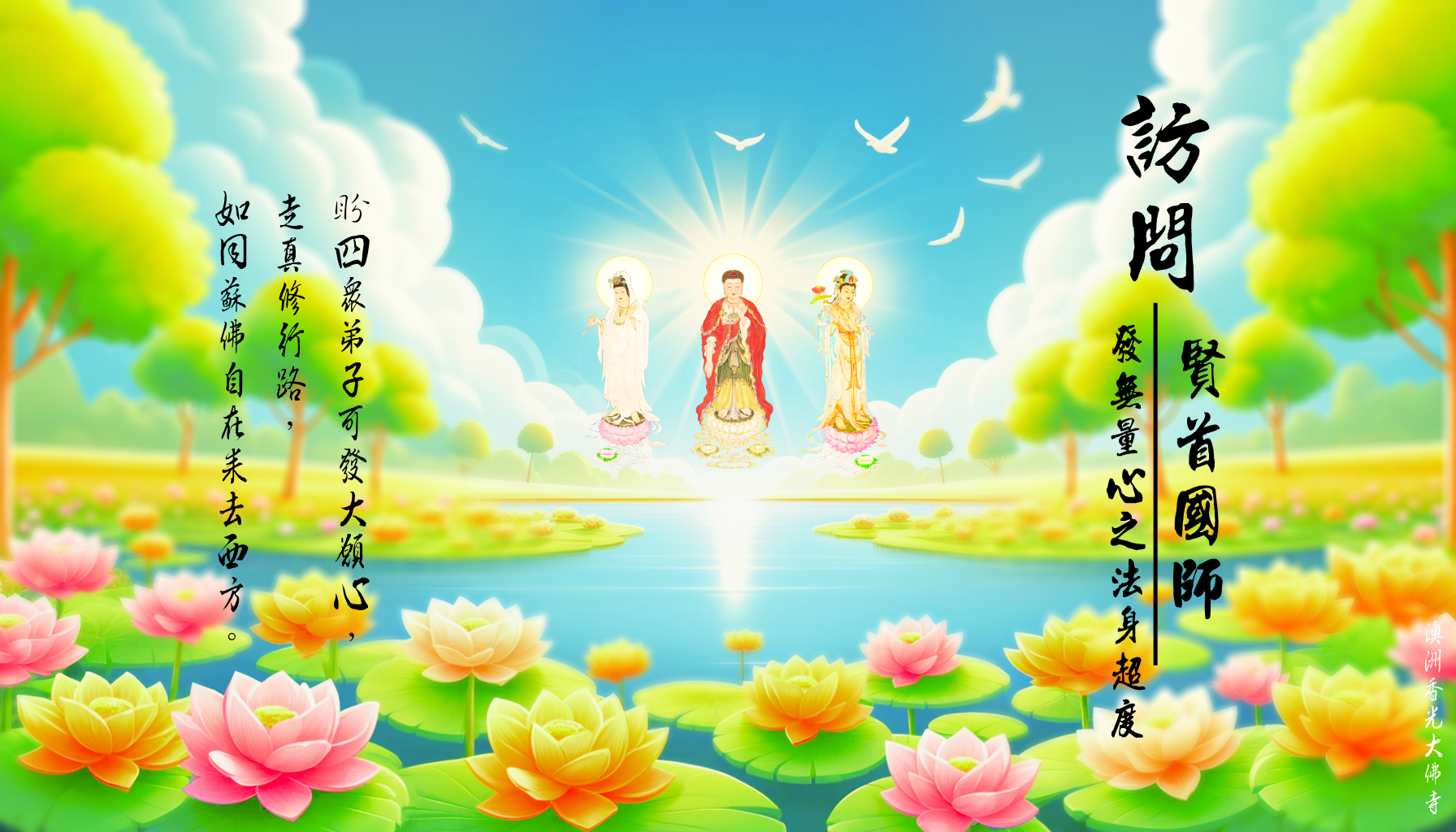
The Boundless Power of Dharma Body Chao Du
National Master Xianshou shares profound insights into the cosmic scale of Chao Du performed by Practitioner Su, revealing how the boundless heart of the Buddha transforms the universe and guides all beings toward the Western Pure Land of Ultimate Bliss.
The Reality of Chao Du in China: Teachings from National Master Xianshou
A profound dialogue with the Third Patriarch, National Master Xianshou, regarding the magnificent work of Dharma-Body Visualisation Deliverance performed by Practitioner Su to save suffering beings across China and the world.
The Nature of Appearances and the Path to Awakening
National Master Xianshou provides profound insights into the nature of reality, the layers of space that cloud our perception, and the vital importance of aligning our hearts with the Truth to overcome karmic interference.
The Profound Structure of the Human Body
National Master Xian Shou explains the intricate nature of the human body, the cycle of rebirth, and how the power of Namo Amituofo can purify the spirits residing within us.
More by Hsiang Kuang Pure Land Buddhist Centre
The Final Curtain Call of Chu Ke-liang
A candid reflection from the late Taiwanese entertainer Chu Ke-liang on his life, his career, the karmic weight of his influence, and his ultimate deliverance to the Western Land of Ultimate Bliss.
The Soul's True Equality: A Conversation with Mahatma Gandhi
This is a record of an interview with Mohandas Karamchand Gandhi, who sought deliverance at the Hsiang Kuang Pure Land Buddhist Centre in Australia. He now resides in the Western Land of Ultimate Bliss. This account reflects upon his life and his journey to the Pure Land.
A Reflection from the Western Pure Land
This is a record of an interview with Zhao Puchu, who sought deliverance at the Hsiang Kuang Pure Land Buddhist Centre in Australia. He now resides in the Western Land of Ultimate Bliss. This account reflects upon his life in the 20th century. Recorded by the chief writer, Shi Fa Hui, on April 18, 2026.
The Truth Behind My Rebirth: A Message from Liu Suqing
Liu Suqing, the elder sister of the renowned practitioner Liu Suyun, shares her harrowing journey through the spirit realms and her ultimate deliverance to the Western Land of Ultimate Bliss through the Hsiang Kuang Pure Land Buddhist Centre.
The Burden of a Historical Name
This is a record of an interview with Lin Biao, who sought Chao Du at the Hsiang Kuang Pure Land Buddhist Centre in Australia. He now resides in the Western Land of Ultimate Bliss. This account reflects upon his life approximately 54 years ago. Recorded by the chief writer, Shi Fa, on May 18, 2026.
The Poet’s Journey to the Western Pure Land
A reflection on the life, tragedy, and ultimate spiritual liberation of the ancient statesman Qu Yuan, who found peace through the teachings of Practitioner Su.
About the Author
Hsiang Kuang Pure Land Buddhist Centre
Contributed to Pure Land Buddhism knowledge library