The Wisdom of Noble Silence: Teachings from Master Shang Xuan Xia Zhuang
Reflections on the Karmic Weight of Our Words
Recorded on March 4, 2019
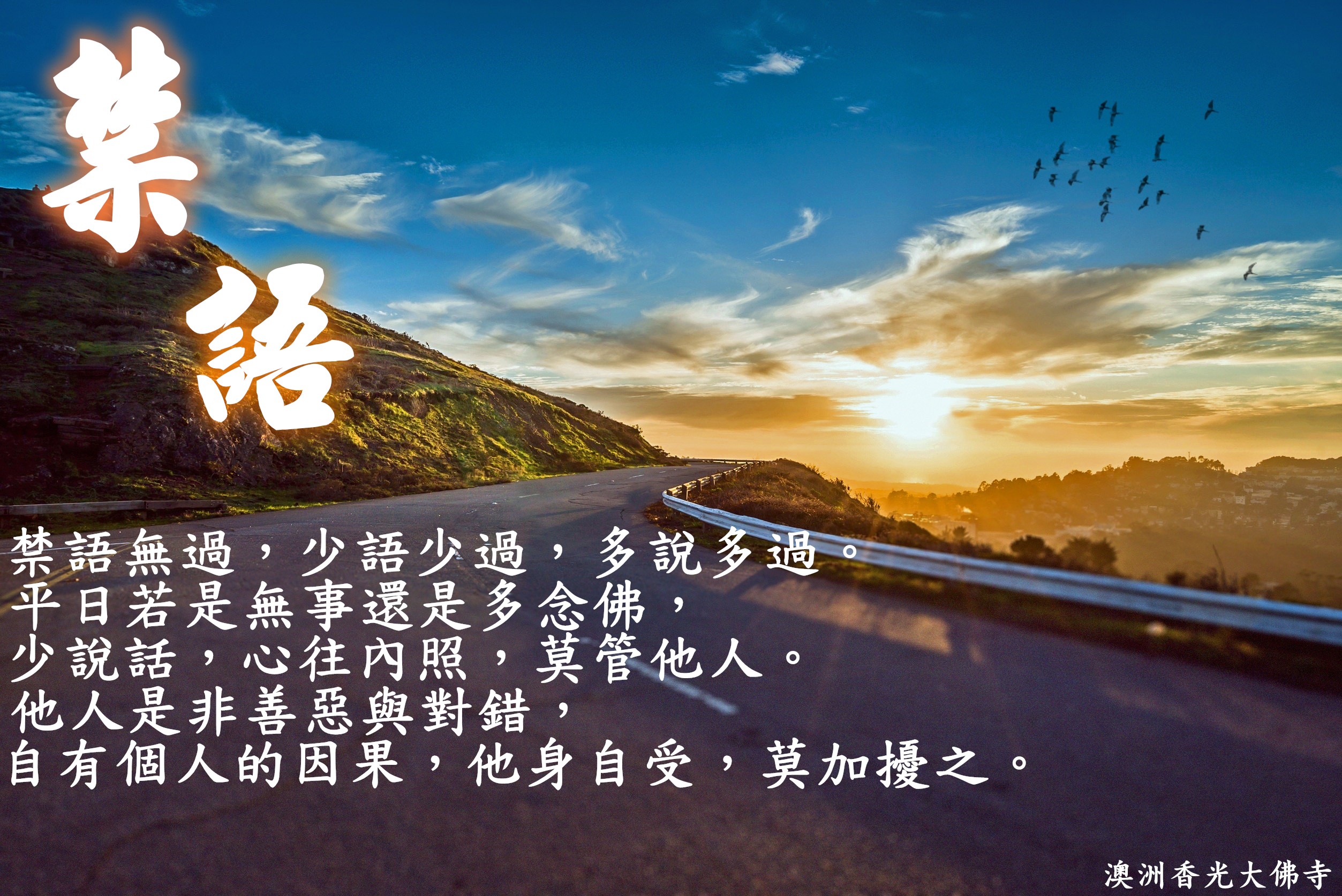
In the world, people often admire those who can speak with great eloquence, describing their words as flowing like a river. We listen to such speakers with fascination, viewing their ability to articulate thoughts as a mark of intelligence or success. However, we rarely pause to consider the hidden dangers that lie beneath this constant stream of speech. Every interaction we have is governed by the laws of and cause and effect. When we speak, we are not merely exchanging information; we are creating karmic connections that will inevitably bear fruit in this life or the next.
The Echoes of Our Karmic Footprints
If we are speaking of mundane matters between two people, we are weaving the laws of karma and cause and effect between ourselves. If we speak to a large audience, we are creating a karmic bond between the speaker and every listener. When a teacher delivers lectures or shares Buddha’s teachings, the sound of the spreads, and a profound karmic relationship is established between the speaker and all the sentient beings in the Dharma Realm who hear these words. These connections are not fleeting; they are recorded in the and will be verified in time, whether in this present life or in future existences.
The Subtle Veil of Arrogance
Unless one is an awakened being who has truly realised their true nature, the act of speaking—especially when one is in the position of a teacher—can easily trigger arrogance. When we become enamoured with our own eloquence, we lose our sense of respect for beings and forget the true purpose of our words: to provide genuine benefit to both parties. Once a word is spoken, it is like water spilled upon the ground; it cannot be gathered back. This is why, from ancient times to the present, those with awareness have always practised caution in their speech and conduct. To speak softly, to speak less, and to observe silence are manifestations of one's personal integrity within the Buddha’s gate.
The great Master Hong Yi once offered this profound advice: "Say one less word, chant one more Buddha-name. When the wandering thoughts are put to death, your will come alive." These are words of supreme truth that every practitioner should keep close to their heart.
The Sanctuary of Stillness
There is no fault in silence; there is little fault in speaking little; but there is much fault in speaking too much. In your daily life, if there is no pressing need to speak, it is far better to chant Buddha's name and keep your heart turned inward. Do not concern yourself with the affairs of others. Whether others are right or wrong, or whether their actions are good or evil, is their own cause and effect to bear. They must experience the consequences of their own actions. Why should you disturb your own peace by interfering? What could possibly be more important than your own liberation from the cycle of birth and death, or the goal of realising one's true nature? If you understand this, you will not be moved by external circumstances. If your heart fluctuates and follows external conditions, afflictions will arise. If you still possess good fortune, you may be protected from suffering, but if you lack the merit to handle these afflictions, they will inevitably lead to sorrow and pain.
The Four Gates of Oral Transgression
The practice of silence allows one to gather , mind, and spirit and avoid creating negative karma through speech. However, even if you do not speak, if your heart is agitated, you are still creating negative karma. In Buddhism, the movement of the heart itself is considered the creation of negative karma, which will eventually bring about its own retribution. Among the Ten Evil Deeds, four are related to speech: lying, double-tongued speech, harsh speech, and frivolous speech. It is easy to see how quickly one can accumulate negative karma through these four channels. The hells—such as the Tongue-Pulling Hell, the Hanging-Tongue Hell, and the Hooked-Throat Hell—are specifically designated places where one experiences the retribution for these oral transgressions.
The Mirror of the Monastic Life
A wise person or a keen listener can discern a person's character simply by the words they speak. While one cannot see the entirety of a person's heart, the way they speak reveals a significant portion of it. This is especially true for the monastic community. Cultivating the mind is the core of our practice, and the external manifestation of our physical conduct, our speech, and our intentions all serve to reveal our virtue and authority. These are vital conditions for the ability to deliver sentient beings, and one must be extremely careful.
The Infinite Refuge of the Holy Name
Our is filled with . Knowing that it is difficult for beings to sever their delusion, discrimination, and attachment, He has placed the entirety of Namo Amituofo’s Forty-eight Great Vows into the Holy Name "Namo Amituofo". A wise person should know to hold fast to this name and chant Buddha's name with diligence. Holding the name is not merely a matter of reciting it with the mouth; the true spirit lies in being able to manifest the Buddha-heart, the Buddha-vow, and the Buddha-actions24/7. To hold the Holy Name within your heart at all times is the true meaning of diligence. If you can truly do this, you will surely attain , achieving a state of deep peace and wisdom even in the midst of a busy life. When you are in this state, if you enter the world to save others, you may set aside silence, and those who are able to listen to your teaching will be truly blessed. This is the path of Practitioner Su!
Recorded by the Buddha's disciple, Venerable HaiZe, acting as chief writer.
Namo Amituofo
More from Teachings of Great Master Xuanzang
The Vision of Great Master Xuanzang
Great Master Xuanzang shares his profound vision for the Hsiang Kuang Pure Land Buddhist Centre, reflecting on the power of the Dharma, the mission of Practitioner Su, and the ongoing work of saving infinite suffering beings through the light of Namo Amituofo.
Great Master Xuanzang's New Year Joyful Purification Dharma Assembly
Great Master Xuanzang offers profound guidance on the occasion of the New Year, reminding us that the path to the Western Pure Land of Ultimate Bliss requires constant purification, the letting go of ego, and unwavering devotion to Namo Amituofo.
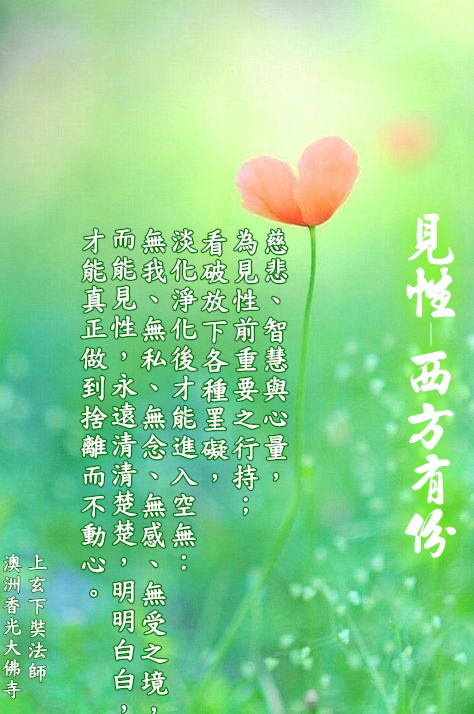
Awakening and the Path to the Western Pure Land
A profound exploration of how to transcend worldly attachments, purify the mind, and secure one's path to the Western Pure Land of Ultimate Bliss through Awakening and diligent practice.
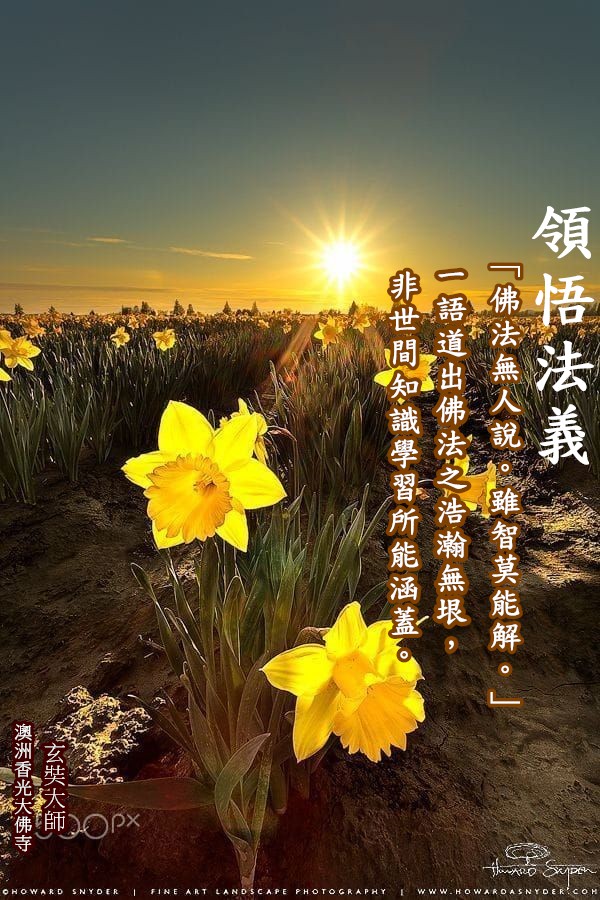
Realising the Profound Meaning of the Dharma
Great Master Xuanzang explains that the Dharma is vast and boundless, transcending worldly knowledge. To truly realise the profound meaning of the Dharma, one must move beyond attachment to words and names, cultivate a pure heart, and engage in diligent practice to attain Awakening.
More by Hsiang Kuang Pure Land Buddhist Centre
The Final Curtain Call of Chu Ke-liang
A candid reflection from the late Taiwanese entertainer Chu Ke-liang on his life, his career, the karmic weight of his influence, and his ultimate deliverance to the Western Land of Ultimate Bliss.
The Soul's True Equality: A Conversation with Mahatma Gandhi
This is a record of an interview with Mohandas Karamchand Gandhi, who sought deliverance at the Hsiang Kuang Pure Land Buddhist Centre in Australia. He now resides in the Western Land of Ultimate Bliss. This account reflects upon his life and his journey to the Pure Land.
A Reflection from the Western Pure Land
This is a record of an interview with Zhao Puchu, who sought deliverance at the Hsiang Kuang Pure Land Buddhist Centre in Australia. He now resides in the Western Land of Ultimate Bliss. This account reflects upon his life in the 20th century. Recorded by the chief writer, Shi Fa Hui, on April 18, 2026.
The Truth Behind My Rebirth: A Message from Liu Suqing
Liu Suqing, the elder sister of the renowned practitioner Liu Suyun, shares her harrowing journey through the spirit realms and her ultimate deliverance to the Western Land of Ultimate Bliss through the Hsiang Kuang Pure Land Buddhist Centre.
The Burden of a Historical Name
This is a record of an interview with Lin Biao, who sought Chao Du at the Hsiang Kuang Pure Land Buddhist Centre in Australia. He now resides in the Western Land of Ultimate Bliss. This account reflects upon his life approximately 54 years ago. Recorded by the chief writer, Shi Fa, on May 18, 2026.
The Poet’s Journey to the Western Pure Land
A reflection on the life, tragedy, and ultimate spiritual liberation of the ancient statesman Qu Yuan, who found peace through the teachings of Practitioner Su.
About the Author
Hsiang Kuang Pure Land Buddhist Centre
Contributed to Pure Land Buddhism knowledge library